Artwork
Christ Bearing the Cross
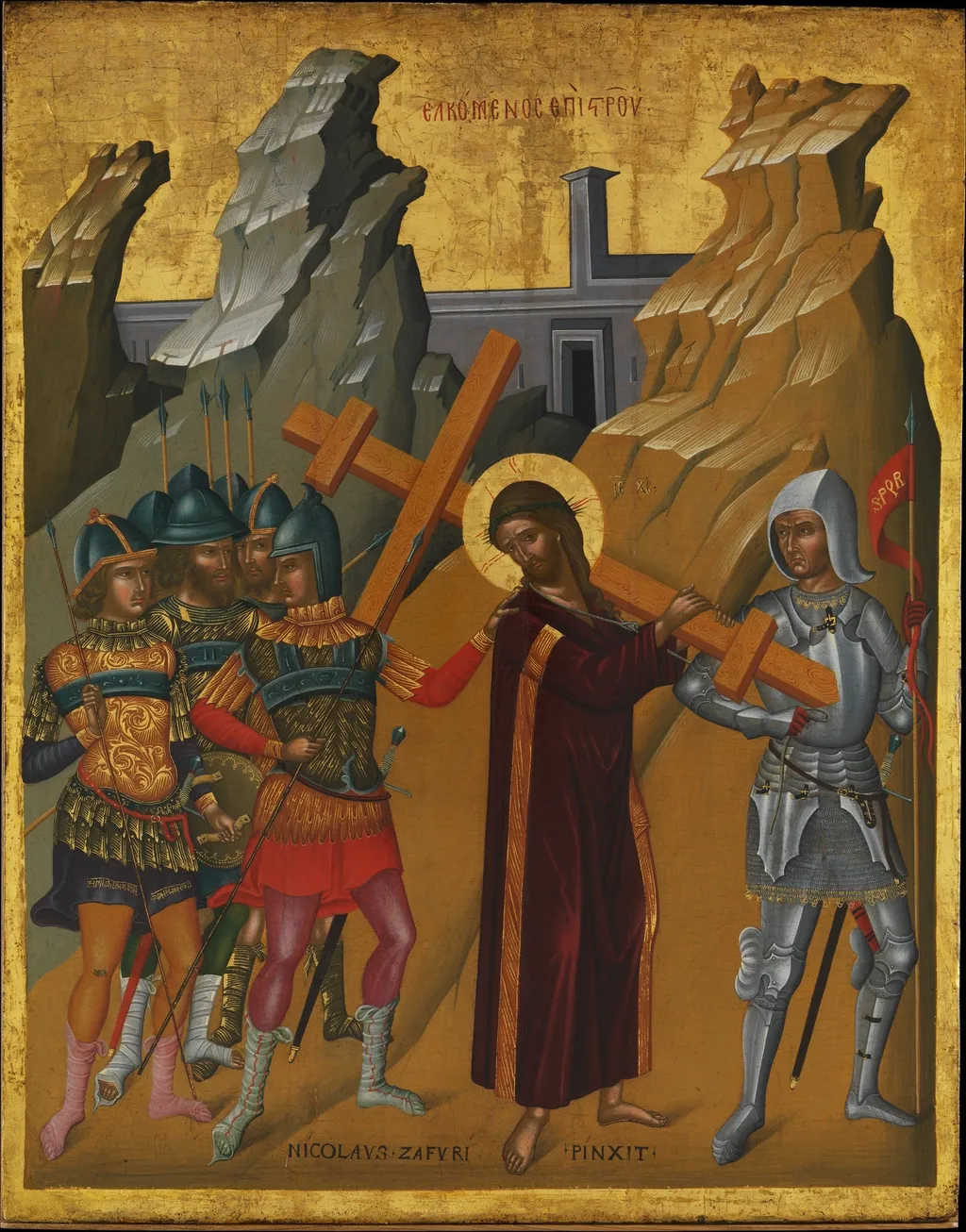
Christ Bearing the Cross is an oil painting by the Cretan school artist Nikolaos Tzafouris. It dates from 1498 and is held in the collection of the Metropolitan Museum of Art.
About this work
Subject & Meaning
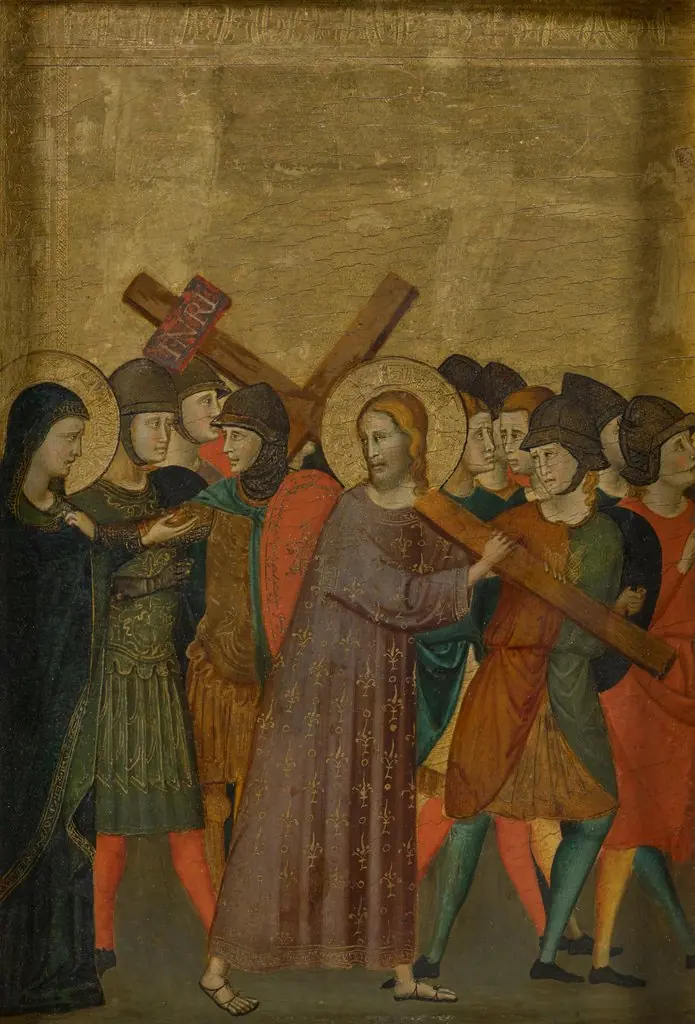
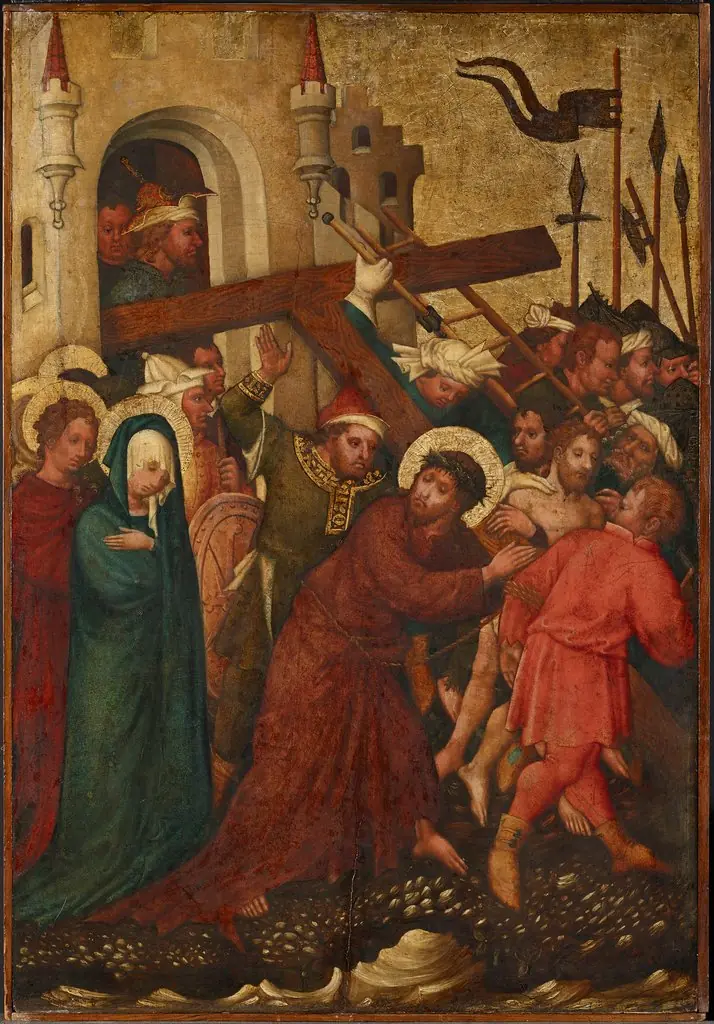
The painting shows Christ bearing the cross on the route to Golgotha, a conventional Passion scene that marks the final stage of the Crucifixion narrative.
The painting shows Christ bearing the cross on the route to Golgotha, a conventional Passion scene that marks the final stage of the Crucifixion narrative. Nikolaos Tzafouris renders the figure in egg tempera on wood, adding gold leaf and Latin-Greek inscriptions that heighten the sacred atmosphere. Soldiers on the left wear Cretan-Byzantine armor while those on the right are costumed in contemporary Venetian dress, illustrating a blend of local and foreign influences.
The composition attempts spatial depth through sfumato-like modeling and a gilded background, while the mountain's geometric form echoes works by Michael Damaskinos. Together these elements convey both the historical suffering of Christ and the artist's synthesis of Byzantine tradition with Renaissance techniques.
Technique & Style
Executed in 1498, this panel painting utilizes egg tempera and gold leaf applied to a wood support. Measuring 69.2 by 54.6 centimeters, the work exemplifies the Cretan School's synthesis of Italian Renaissance and Byzantine traditions. While adhering to the traditional maniera greca through its gilded background, the artist employs sfumato-like modeling to reject flattened surfaces, creating an illusion of spatial depth between foreground figures and the landscape.
The composition features a geometric mountain form and juxtaposes soldiers in Venetian armor against those in Byzantine-style dress, rendered with exquisite detail. Latin and Greek inscriptions appear within the scene. As one of only five surviving signed works by Nikolaos Tzafouris, the piece demonstrates a deliberate attempt to merge Western volumetric techniques with Eastern iconographic conventions.
History & Provenance
Christ Bearing the Cross is attributed to Nikolaos Tzafouris and dates to approximately 1498, created during the artist's active period between 1480 and 1501. Executed in egg tempera with gold leaf on a wood panel, the work emerged from Tzafouris's workshop in Heraklion, a center for the Cretan School. It is one of five surviving signed icons by the artist.
The painting is currently held in the collection of the Metropolitan Museum of Art in New York, having been accessioned from the Bashford Dean collection. The work has been included in exhibitions such as "Holy Image, Holy Space: Icons and Frescoes from Greece" and "The Origins of El Greco: Icon Painting in Venetian Crete," both of which contextualized it within the broader Cretan School and its dialogue with Italian Renaissance influences.
Context
Christ Bearing the Cross stands as a pivotal work within the Cretan School, representing the synthesis of Byzantine tradition and Italian Renaissance influence during the late 15th century. Created by Nikolaos Tzafouris, a foundational figure of this movement alongside Andreas Ritzos and Andreas Pavias, the painting exemplifies the transition from the flattened maniera greca toward spatial depth. Art historical analysis highlights Tzafouris's incorporation of Venetian painting techniques, such as sfumato, and the depiction of soldiers in mixed Venetian and Byzantine armor to bridge cultural aesthetics.
The work is one of only five surviving signed icons by the artist, who operated a workshop in Heraklion between 1480 and 1501. Its significance is underscored by its inclusion in major scholarly exhibitions regarding the origins of El Greco and the broader context of Greek icons in Venetian Crete.
Legacy
Christ Bearing the Cross has endured as a key example of the Cretan School's synthesis of Byzantine tradition and Venetian Renaissance influences. As one of only five signed icons by Tzafouris that survive, the work offers rare insight into his hand and workshop practice. Its presence in the Metropolitan Museum of Art and inclusion in exhibitions such as "Holy Image, Holy Space: Icons and Frescoes from Greece" and "The Origins of El Greco: Icon Painting in Venetian Crete" have highlighted its role in tracing the transmission of Cretan iconography to later artists, reinforcing its lasting reputation in art historical discourse.
Overview
Christ Bearing the Cross is a tempera painting on wood, attributed to the Greek artist Nikolaos Tzafouris. Dating from the late 15th century, this small work depicts a common religious theme, illustrating Christ's journey to Calvary. Tzafouris was a prominent figure within the Cretan School, a significant artistic movement of the era that flourished on the island of Crete.
Own this work as a print
Artist & collection
Artist
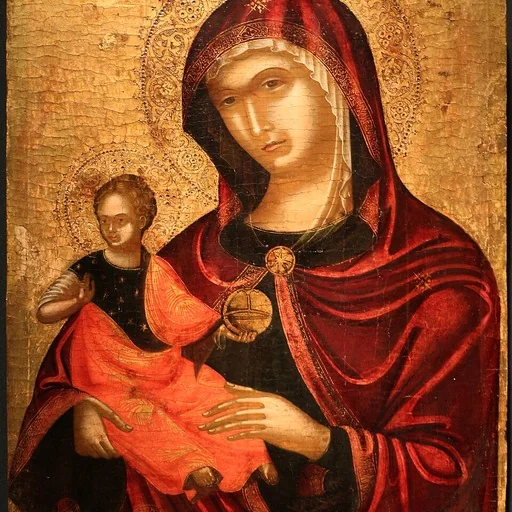
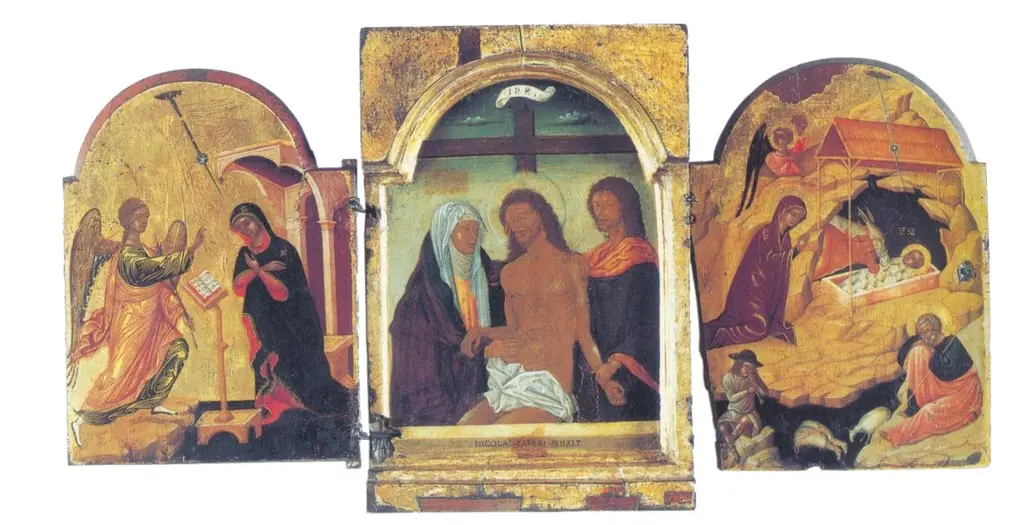
Nikolaos Tzafouris (Greek: Νικόλαος Ζαφούρης η Τζαφούρης; 1468–1501; also Niccolo, Niccolò, Niccolö, Zafuri, Zafuris) was a Greek Renaissance painter.

 The Carrying of the Cross
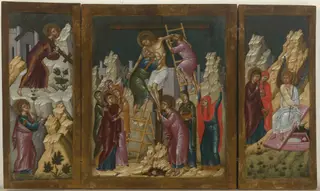 Tryptyk bizantyński ze Zdjęciem z krzyża w części środkowej i scenami pasyjnymi na skrzydłach bocznych
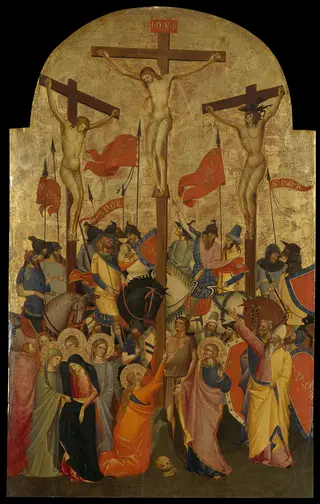 The Crucifixion
 Carrying the cross of Christ
 Portable Triptych Icon: The Crucifixion
 Răstrile
 The Crucifixion
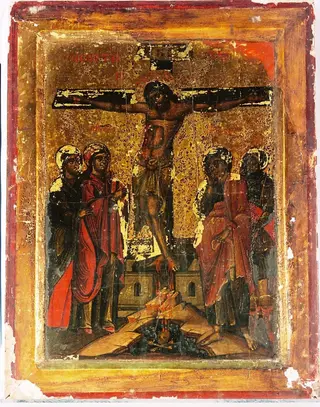 RASTIGNIREA
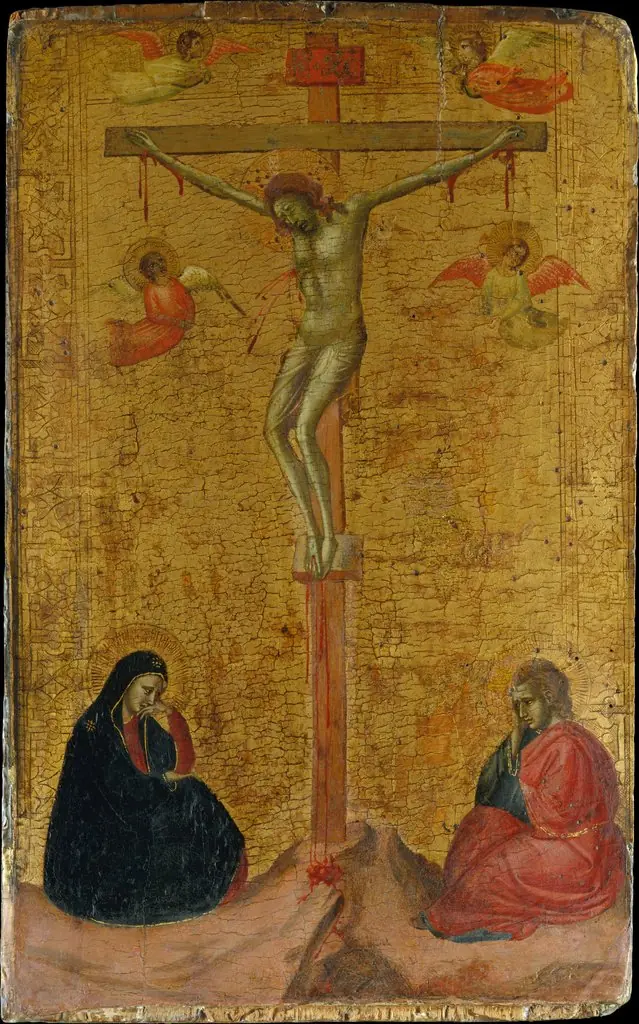 The Crucifixion
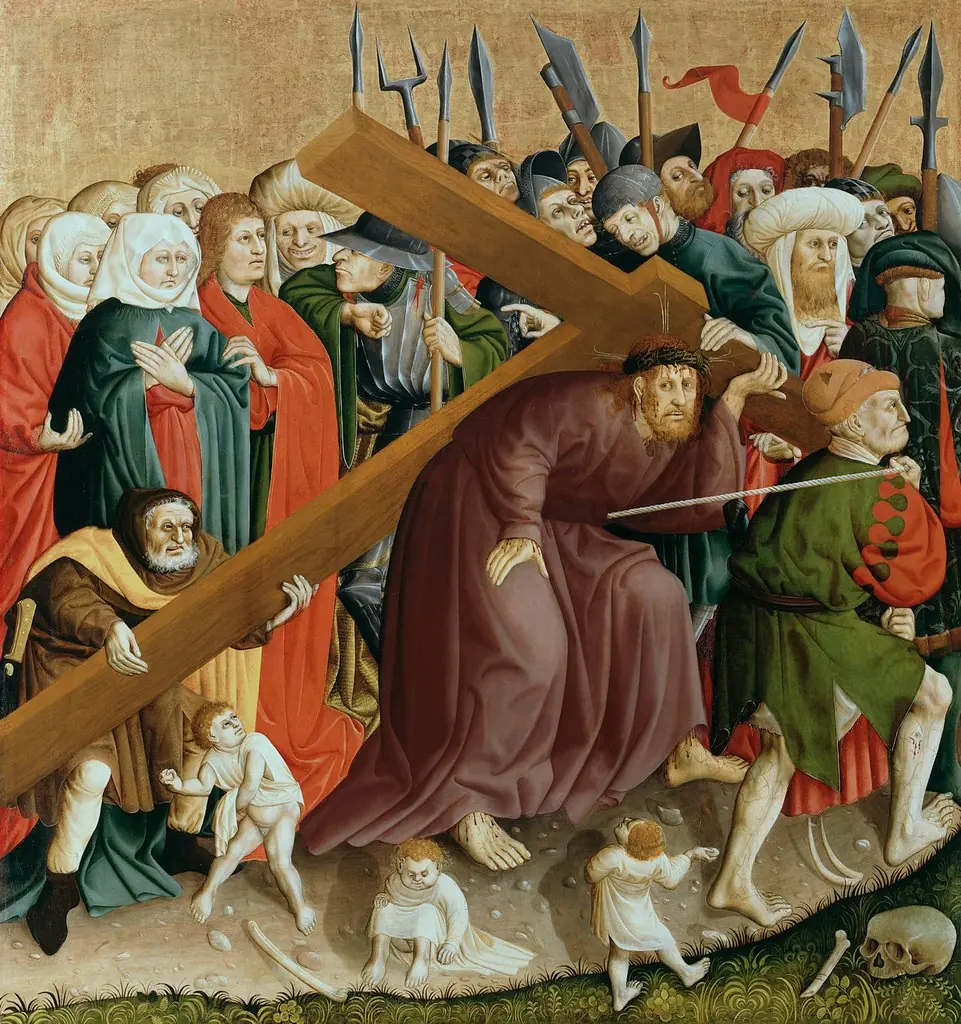 Jesus Christ carrying the Cross, inner wing
- Christ Bearing the Cross
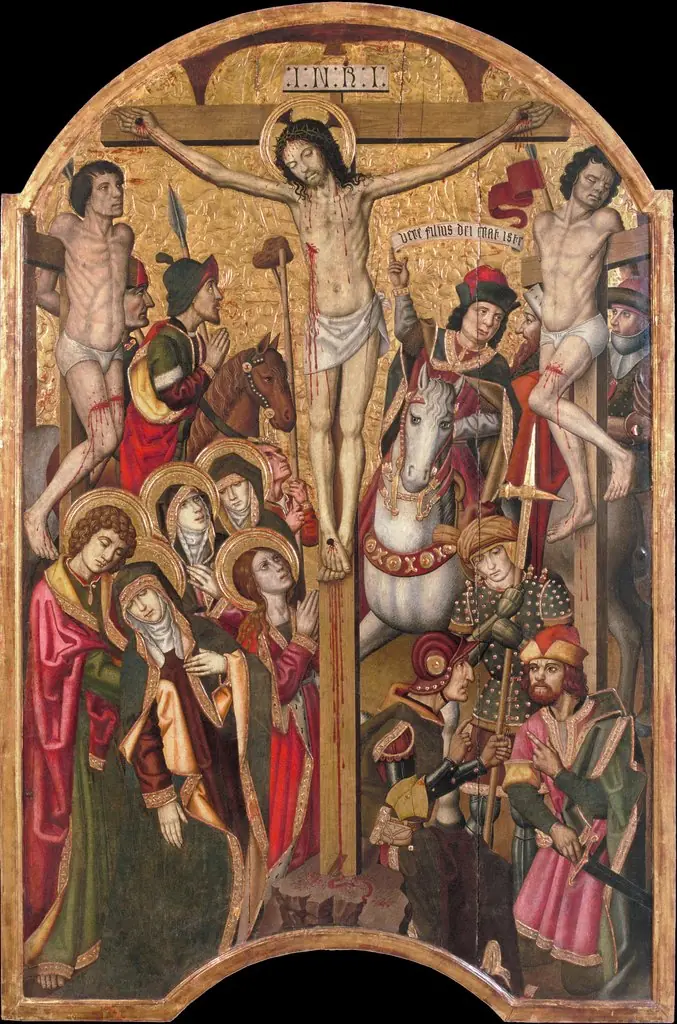 Calvary