Movement
Fairy painting
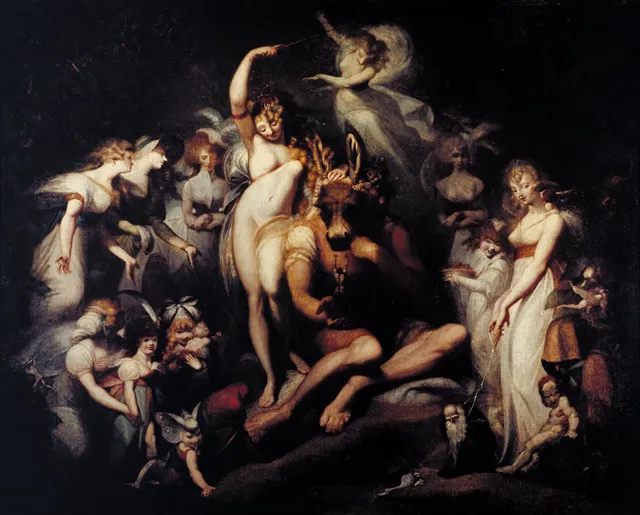
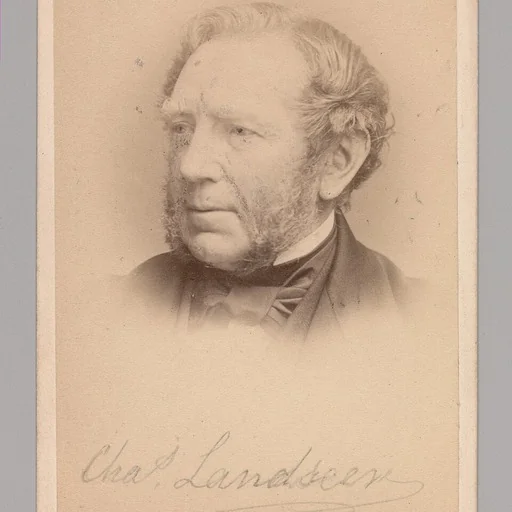
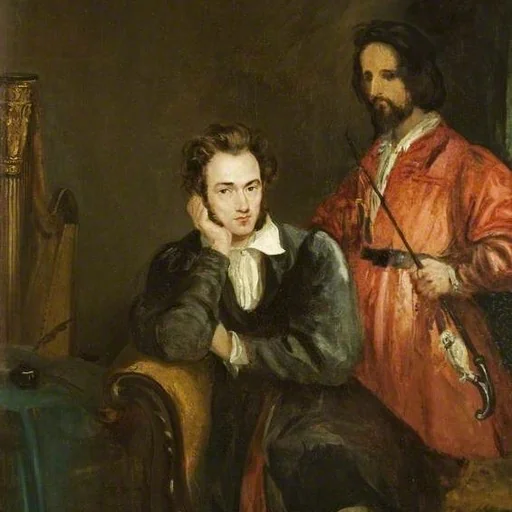
Fairy painting is an art movement. The gallery holds 1 work in this movement, including works by Henry Fuseli, William Blake and Charles Landseer. Browse Fairy painting paintings, portraits, pictures and artworks from the world's public-domain museum collections.
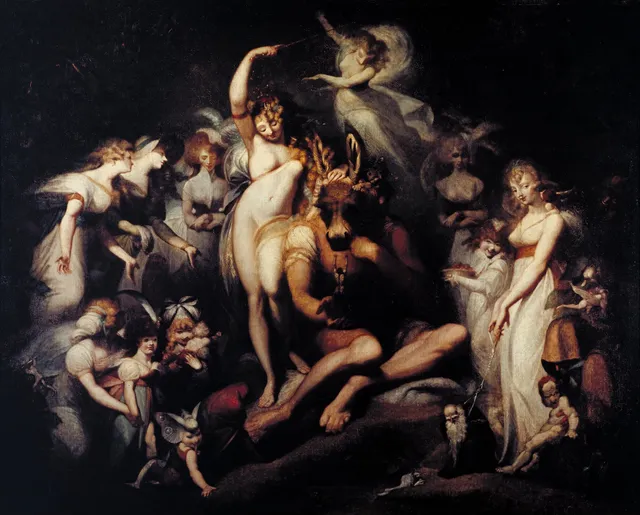
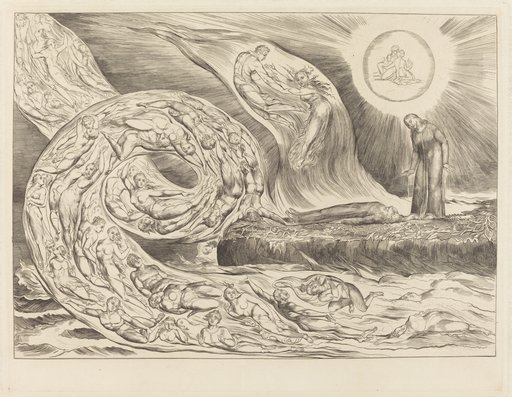
Fairy painting is a predominantly British genre that emerged in the late eighteenth century and reached its zenith during the Victorian era (1837–1901), with a golden age running from roughly 1840 to 1870. Its roots lie in Romanticism's fascination with dreams and the supernatural and, above all, in literature: the fairies of Northern European folklore as filtered through Shakespeare, whose A Midsummer Night's Dream (c.1595) — with Oberon, Titania, and Puck — supplied the genre's enduring cast. The Swiss-born Henry Fuseli (1741–1825) and William Blake (1757–1827) established the subject; Blake's watercolour Oberon, Titania and Puck with Fairies Dancing (c.1786) and Fuseli's Titania and Bottom (c.1790) translated the play into otherworldly, theatrical vision.
The genre's Victorian flowering is often read as an imaginative refuge from industrialisation, urban squalor, and the rationalising pressures of science, Darwinism, and early photography. Paradoxically, fairyland also licensed material that conventional morality suppressed: nudity, eroticism, violence, and intoxication could be staged among the gossamer-winged. Stylistically, fairy paintings are marked by jewel-like colour, translucent tonal effects, and an obsessive concentration on minute detail, conjuring miniature, teeming worlds nested within moonlit woods and pastoral landscapes.
The central Victorian figures are Richard Dadd (1817–1886), John Anster Fitzgerald (1819–1906), and Joseph Noel Paton (1821–1901). Dadd produced his hallucinatory masterpiece The Fairy Feller's Master-Stroke (1855–64) while confined at Bethlem and Broadmoor after killing his father; the painting's frozen, microscopically rendered throng is the genre's most famous image. Fitzgerald — nicknamed 'Fairy Fitzgerald' — painted small, brilliantly coloured, often nightmarish scenes laced with ghouls and references to drug-induced dreams. Paton's paired The Quarrel of Oberon and Titania (1849) and The Reconciliation of Oberon and Titania (1847) won acclaim and royal favour.
Fairy painting overlapped with Romanticism and shared the Pre-Raphaelites' love of saturated colour and exacting detail, while anticipating the dreamlike mood of Symbolism. After mid-century its energies migrated into book illustration, culminating in the Edwardian fairy books of Arthur Rackham (1867–1939) and his contemporaries before the First World War dissolved the genre's enchanted mood.
Key artists
Works
Frequently asked questions
What is Fairy painting?
Fairy painting is an art movement. A specifically Victorian British genre (active roughly 1820–1870) depicting fairy tales and supernatural folklore, from the tiny sprites in Richard Dadd's Fairy Feller's Master-Stroke to the dreamlike forest scenes of John Anster Fitzgerald.
Who are the key Fairy painting artists?
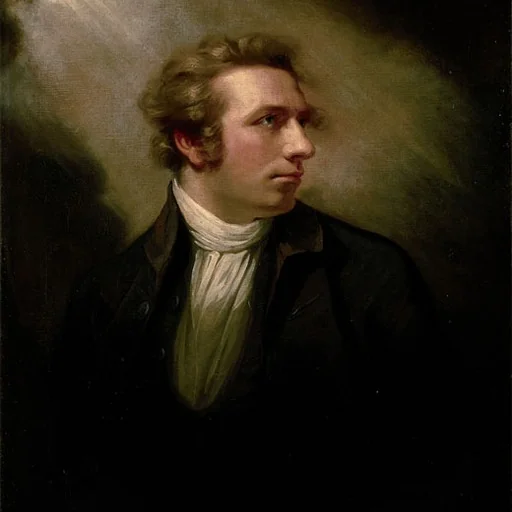
Key Fairy painting artists in the collection include Henry Fuseli, William Blake and Charles Landseer.
Where can I see Fairy painting works?
Fairy painting works in the collection are held by National Gallery.