Movement
Intimism
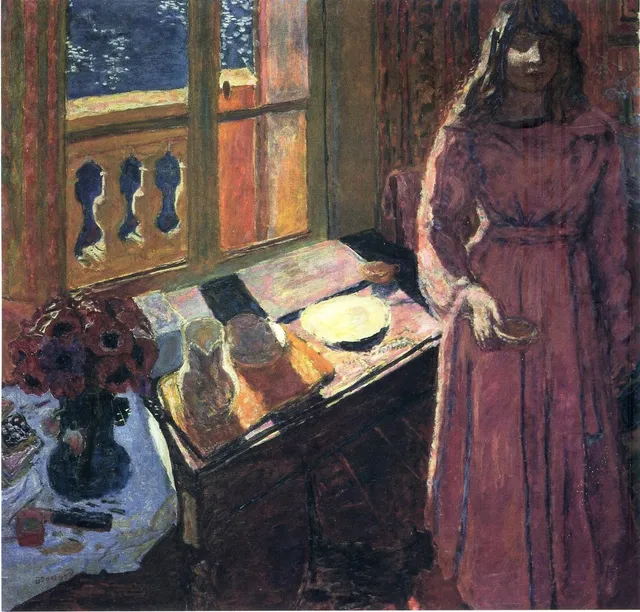
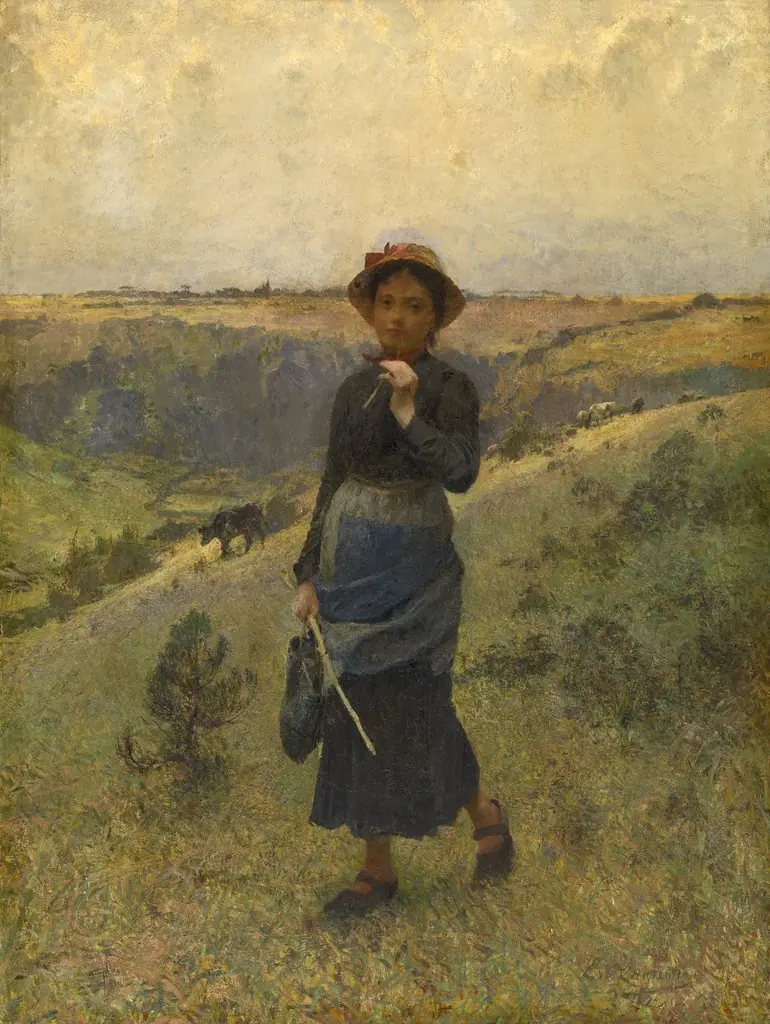
Intimism is an art movement of the 1880–1920 period. The gallery holds 1 work in this movement, including works by Émile Berchmans. Browse Intimism paintings, portraits, pictures and artworks from the world's public-domain museum collections.
Intimism (French *intimisme*) is the name given to a current in French painting of the late nineteenth and early twentieth centuries devoted to quiet, unremarkable scenes of domestic life — figures at a table, a woman dressing, a sunlit interior glimpsed in passing. It emerged in Paris in the 1890s from within Les Nabis, the Symbolist-influenced brotherhood founded under the spell of Gauguin, and crystallised as a distinct sensibility after that group dissolved around 1899. Where most of the Nabis pursued mystical, religious or decorative subjects, two members turned inward to the apartments, workrooms and gardens they inhabited, making the overlooked rituals of household life their lifelong theme.
Its defining technique married Impressionist broken colour to a Post-Impressionist freedom of invention. Intimist painters built their interiors from flickering, mosaic-like touches, but unlike the Impressionists they exaggerated and distorted observed colour to convey mood — warmth, stillness, reverie, a faint melancholy. Space is characteristically flattened and crowded: patterned wallpaper, printed fabrics, floral cloths and lamplight press together until figures half-dissolve into their surroundings, and the boundary between person and room nearly disappears. Composition is informal and snapshot-like, as if the scene had been caught unawares.
The movement's two canonical figures are Édouard Vuillard and Pierre Bonnard. Vuillard, who lived for decades with his widowed mother, a dressmaker, made her cluttered sewing workrooms his great subject; works such as *La Robe à ramages* (The Flowered Dress, 1891) assemble women out of dense fields of pattern. Bonnard pushed colour toward radiant intensity in domestic pictures like *The Bowl of Milk* (c. 1919, Tate), painted in the south of France, and in his celebrated series of his companion Marthe in the bath, made through the 1920s and 1930s.
Though rooted in Bonnard and Vuillard, the term was later applied more broadly to any painter of such hushed private subjects — the Welsh artist Gwen John is a frequently cited example. Intimism stands as a bridge between Impressionism, Symbolism and the decorative ambitions of the Nabis, and its emotionally charged, pattern-saturated handling of colour anticipated aspects of Fauvism and modern interior painting, securing it a lasting place in the story of early modern French art.
Key artists
Works
Groups & collectives
Frequently asked questions
What is Intimism?
Intimism is an art movement. A tendency — closely associated with Pierre Bonnard and Édouard Vuillard around 1890–1910 — that depicted small-scale domestic interiors and intimate scenes with dappled, pattern-rich color.
Who are the key Intimism artists?
Key Intimism artists in the collection include Émile Berchmans.
When did Intimism take place?
Intimism dates from 1880–1920.
Where can I see Intimism works?
Intimism works in the collection are held by Tate.