Artwork
A Florentine Flower Seller
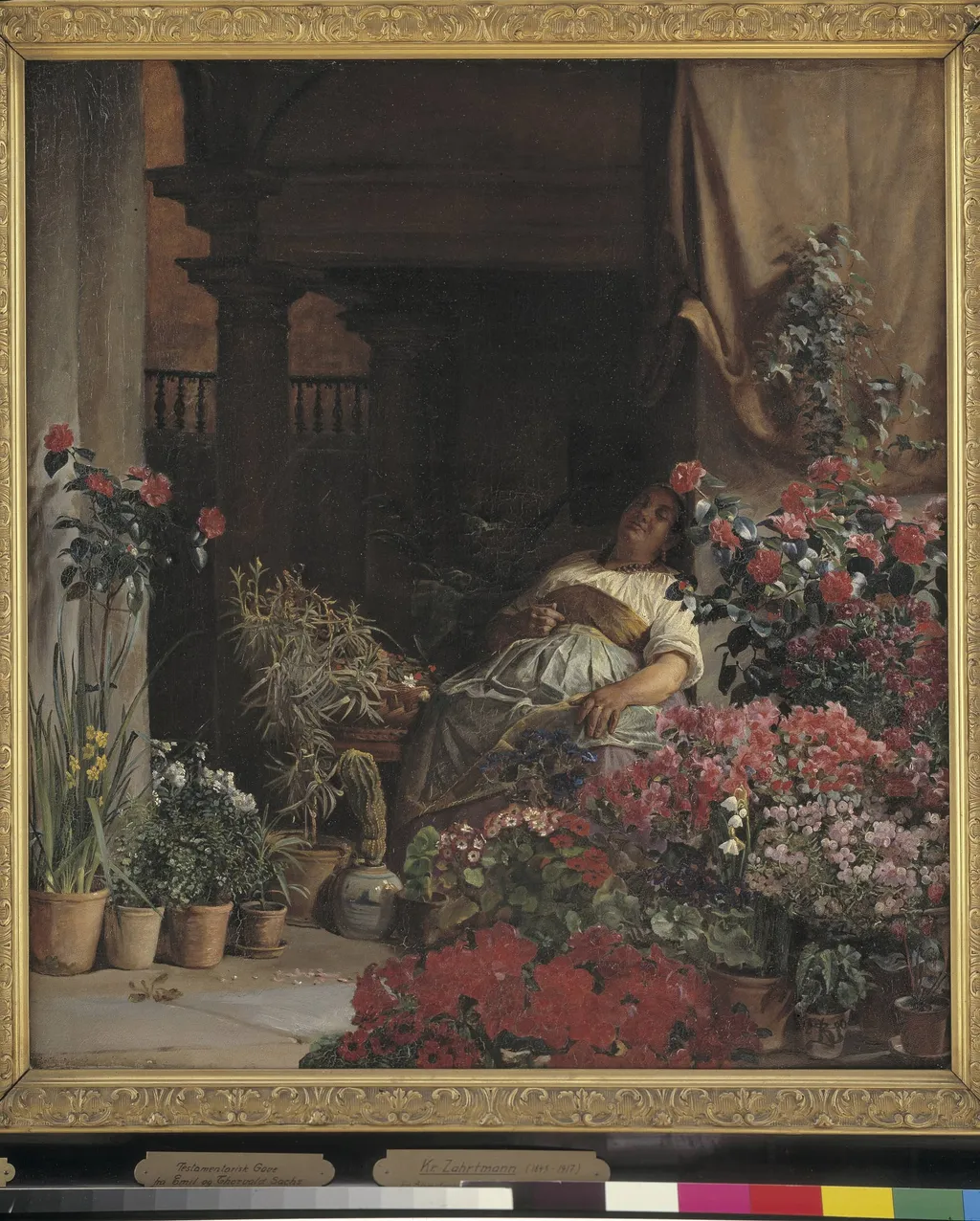
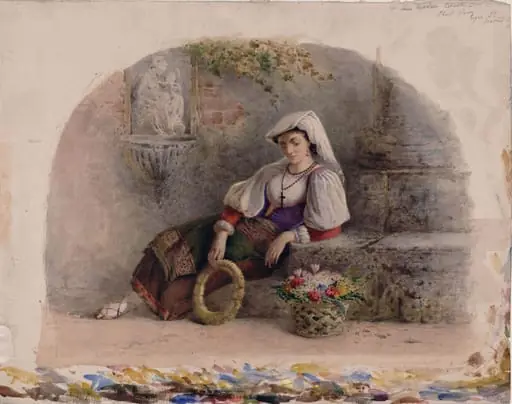
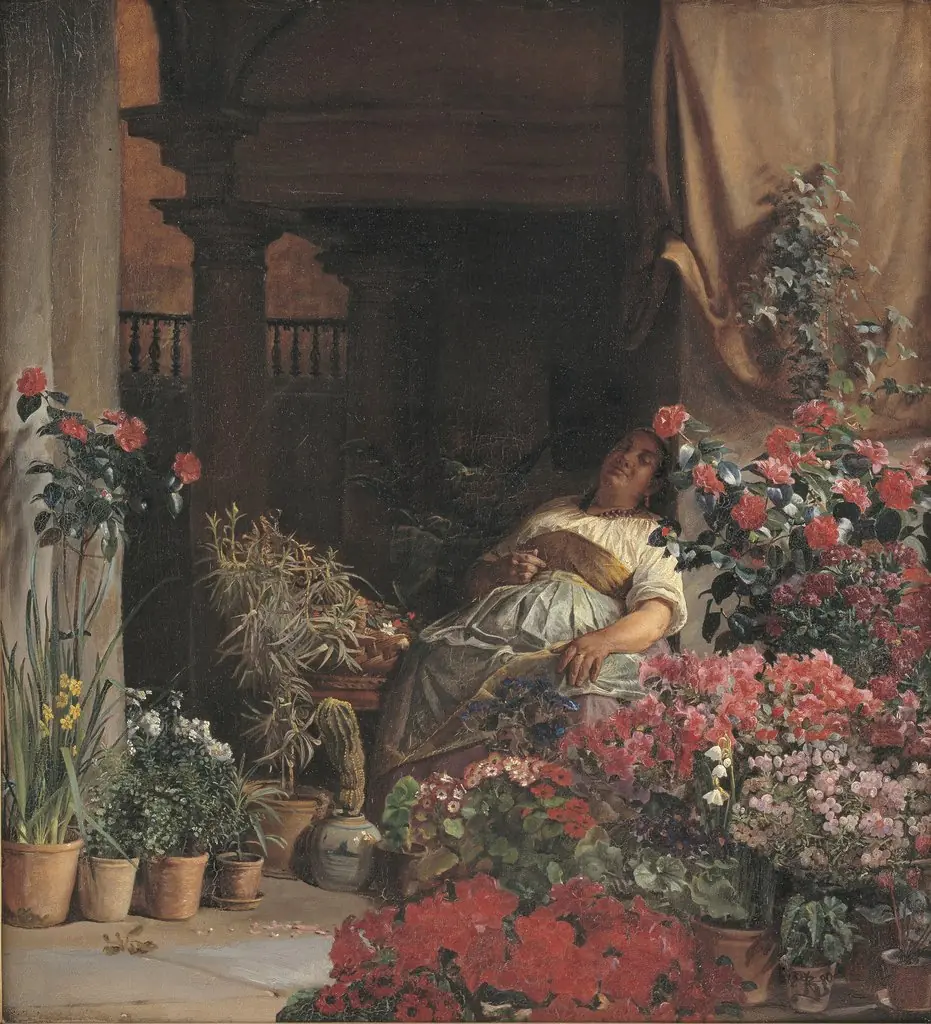
A Florentine Flower Seller is a photography by the Impressionist artist Unknown. It dates from 1880 and is held in the collection of the Statens Museum for Kunst. Created in 1880, this photograph captures a woman resting amid an arrangement of fresh flowers and potted plants in Florence.
About this work
The photo was taken in 1880, blending two styles, Impressionism’s loose brushwork and Realism’s focus on everyday life.
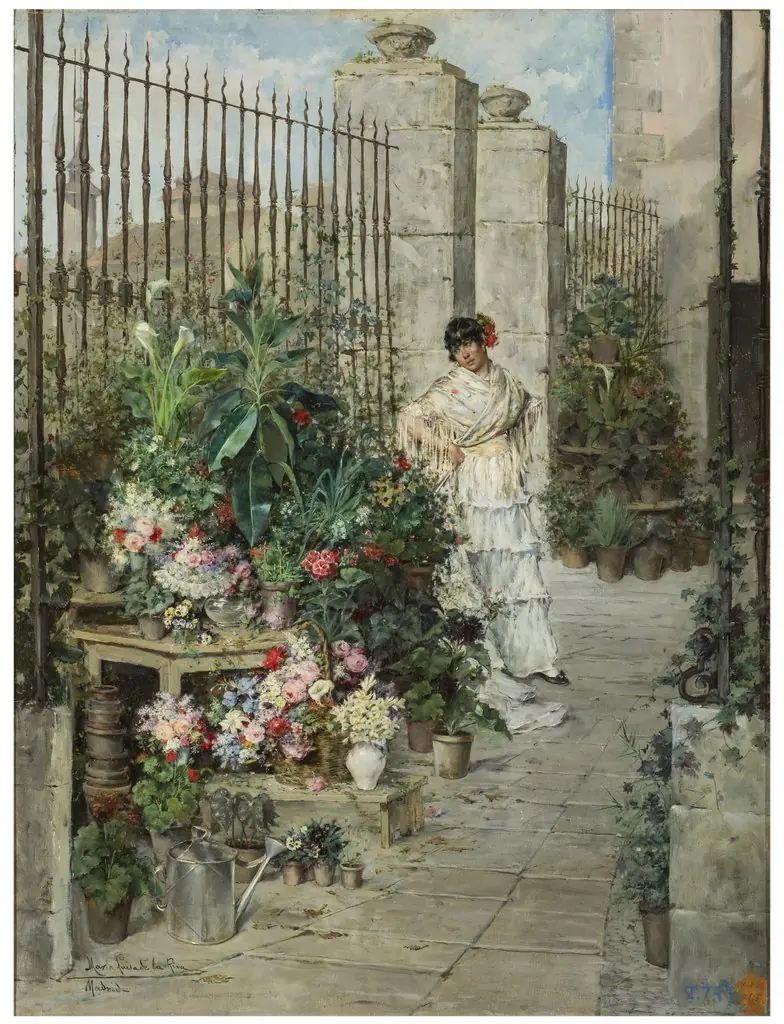
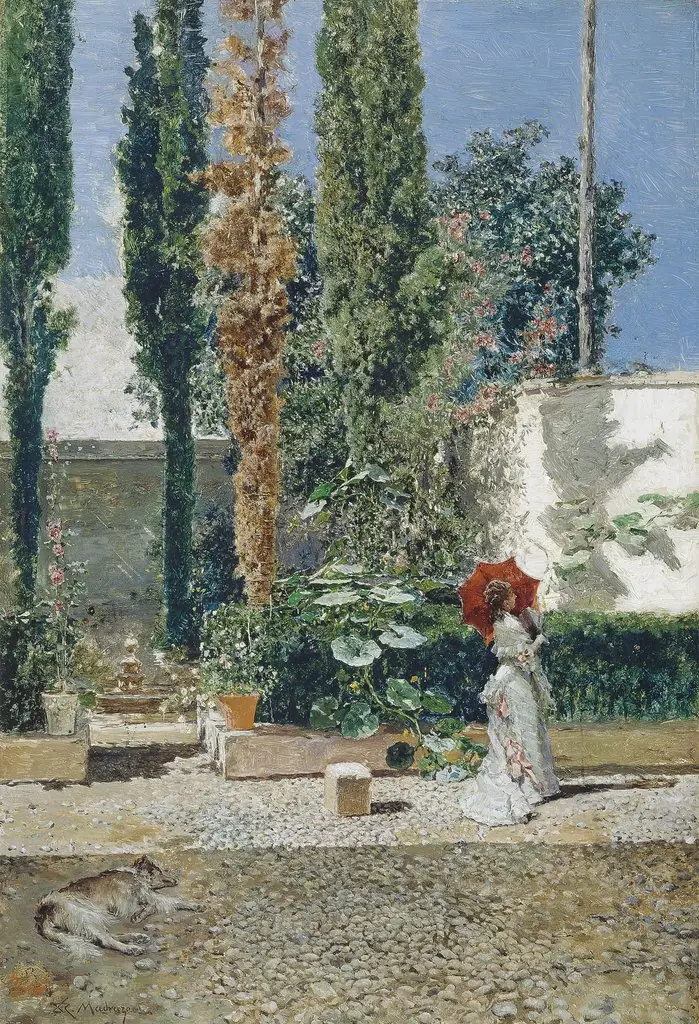
This photo shows a woman lying among bright flowers and potted plants. She’s resting on a cloth, surrounded by red and pink blooms, with pots of greenery around her. Behind her, a stone wall and a small building peek through the greenery.
The photo was taken in 1880, blending two styles, Impressionism’s loose brushwork and Realism’s focus on everyday life. The flowers look almost too real, with vivid colors and soft light.
Next, look up Impressionism to see how artists used light and color in this way.
Overview
Created in 1880, this photograph captures a woman resting amid an arrangement of fresh flowers and potted plants in Florence. Though labeled as an image, its composition reflects painterly concerns, merging photographic precision with the atmospheric qualities of contemporary art movements. It resides in the Museum of Ethnography, where it is studied for its depiction of everyday labor and regional culture.
Subject & Meaning
The woman, likely a flower vendor, lies on a cloth surrounded by vibrant blooms and greenery, suggesting a pause in her daily trade. Her posture conveys exhaustion or quiet repose, grounding the image in the realities of working-class life. The abundance of flowers contrasts with her stillness, hinting at the tension between beauty and labor in urban economies of the time.
Technique & Style
The image employs soft focus and natural lighting to evoke the luminous effects of Impressionist painting, while retaining the documentary clarity of Realism. Colors are rendered with heightened saturation, and the arrangement of flora appears carefully composed, blurring the line between staged scene and candid moment. The texture of petals and leaves is rendered with meticulous detail, enhancing tactile realism.
History & Provenance
Photographed in Florence in 1880, the work entered the Museum of Ethnography’s collection as part of a broader effort to document regional customs and labor practices. Its origins as a commercial or artistic photograph remain unclear, but its preservation suggests early recognition of its cultural significance within ethnographic and visual studies.
Context
In late 19th-century Florence, flower selling was a common occupation for women, often conducted in public markets or along streets. The image reflects a moment when photography began to engage with artistic movements, adopting techniques from painting to elevate ordinary scenes. This convergence marked a shift in how daily life was visually recorded and valued.
Legacy
The photograph endures as an example of how early photography absorbed and reinterpreted artistic conventions. It contributes to ongoing discussions about the role of women in urban economies and the aestheticization of labor. Its presence in an ethnographic museum underscores its value as both cultural artifact and visual document of its era.
Artist & collection