Artwork
Tysk landskab
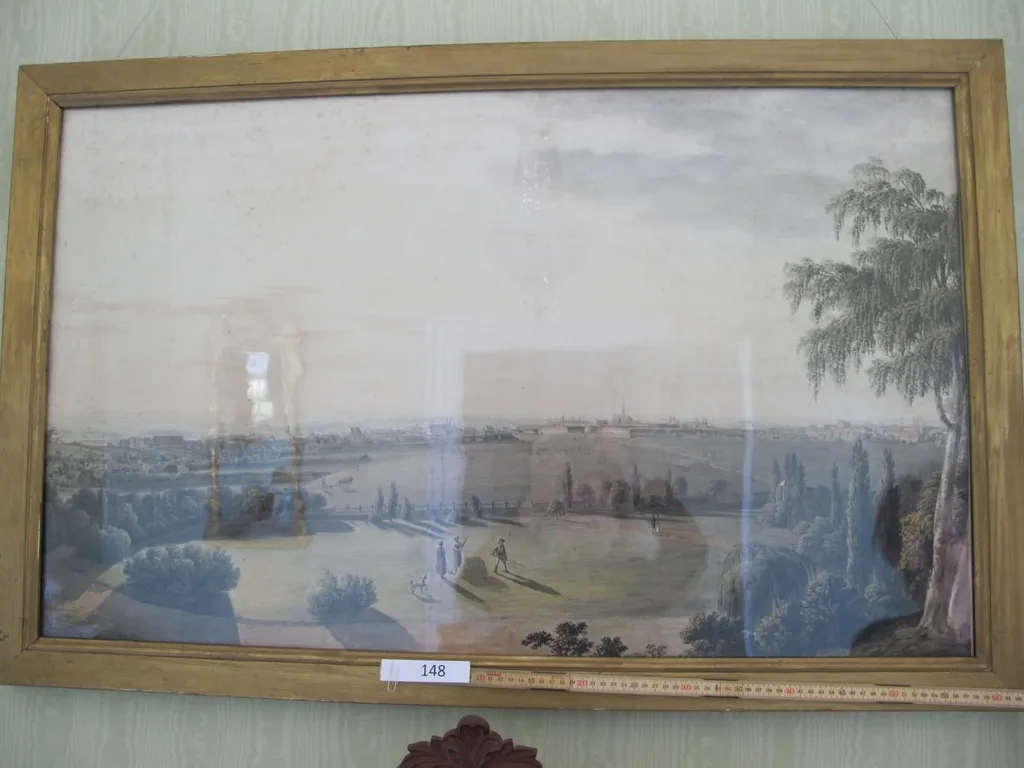
Tysk landskab is an unspecified work on paper by Unknown. It dates from 1750 and is held in the collection of the Statens Museum for Kunst.
About this work
Overview
Its quiet composition and muted palette reflect a contemplative approach to nature, typical of 18th-century Nordic interpretations of continental scenery.
Tysk landskab, dated around 1750, is a watercolor landscape attributed to an artist associated with the Museum of Ethnography. The work presents a tranquil, idealized view of a German-style park, rendered in delicate washes that suggest atmosphere over detail. Its quiet composition and muted palette reflect a contemplative approach to nature, typical of 18th-century Nordic interpretations of continental scenery.
Subject & Meaning
The scene depicts a serene park with a winding path leading toward a distant, hazy city skyline. A solitary tree anchors the right edge, while a few figures move subtly along the trail. The absence of dramatic action and the soft focus on architecture imply a mood of stillness and introspection, possibly evoking ideals of cultivated nature as a refuge from urban chaos.
Technique & Style
Executed in watercolor, the painting employs thin, translucent layers to achieve a luminous, ethereal quality. Blues and greens dominate, with pale skies and blurred horizons that dissolve boundaries between land and atmosphere. The technique avoids sharp contours, favoring gentle gradations that lend the scene a dreamlike, slightly faded appearance, characteristic of informal landscape studies of the period.
History & Provenance
The work resides in the collection of the Museum of Ethnography, suggesting its acquisition may have been tied to cultural documentation rather than fine art collecting. Its origins remain undocumented beyond the approximate date, and the artist’s identity is not firmly established, though the style aligns with Nordic artists engaging with German landscape traditions in the mid-18th century.
Context
During the 1750s, Scandinavian artists increasingly turned to landscape as a subject, influenced by German and English aesthetic ideals. Tysk landskab reflects this trend, blending observed naturalism with romanticized distance. Such works often served as visual records of foreign environments, filtered through local sensibilities rather than strict topographical accuracy.
Legacy
Though not widely exhibited, Tysk landskab contributes to understanding how Nordic artists interpreted continental landscapes during the Enlightenment. Its quiet aesthetic anticipates later developments in watercolor landscape traditions, particularly in the use of atmosphere and restraint. It remains a quiet example of cross-cultural visual exchange in 18th-century Europe.
Artist & collection









 Purley Hall, Berkshire
 Eton College and Windsor from the Playing Fields
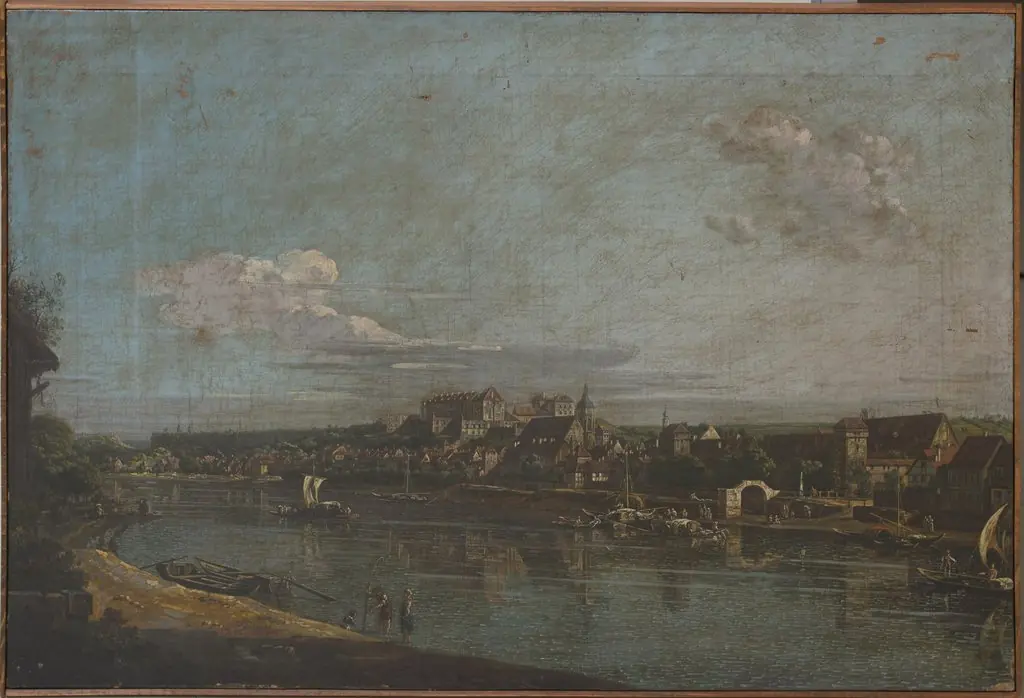 View of Pirna
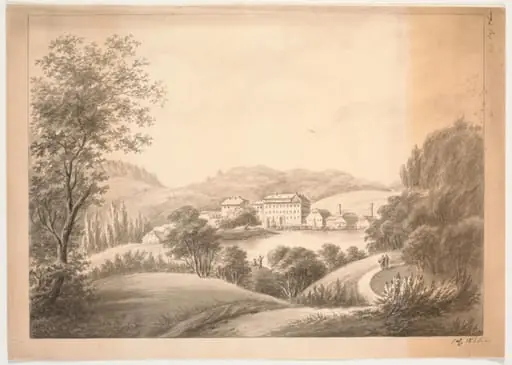 Flere tætliggende bygninger, bl.a. en hovedbygning og mindre huse med skorstene, ved vandløb eller sø, omgivet af træer og bakker
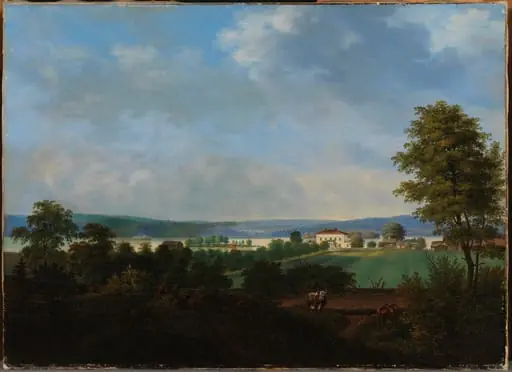 Kuljun kartano
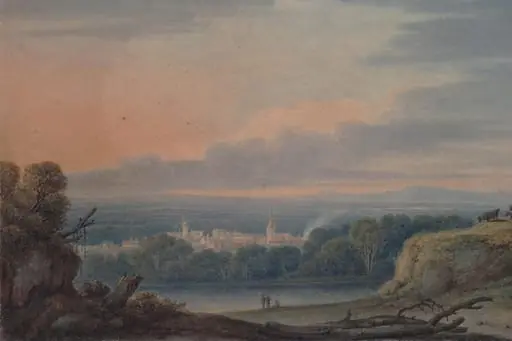 Landscape with River and Village
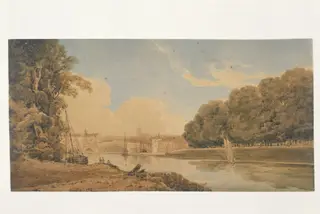 The Mayor's Walk on the Banks of the Ouse, Yorkshire
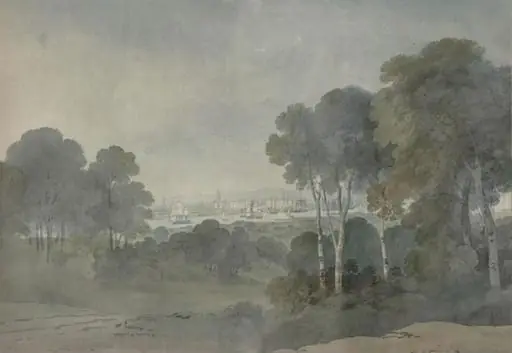 The Thames from Charlton
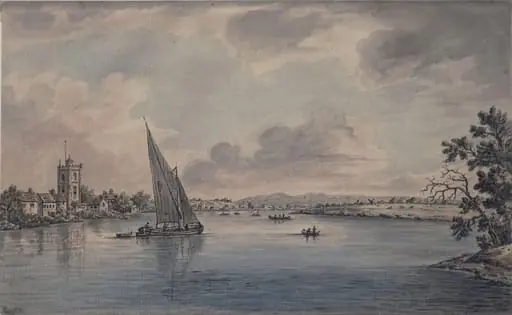 Battersea