Artwork
Christian VII.s modtagelse i Elysium af sine forfædre
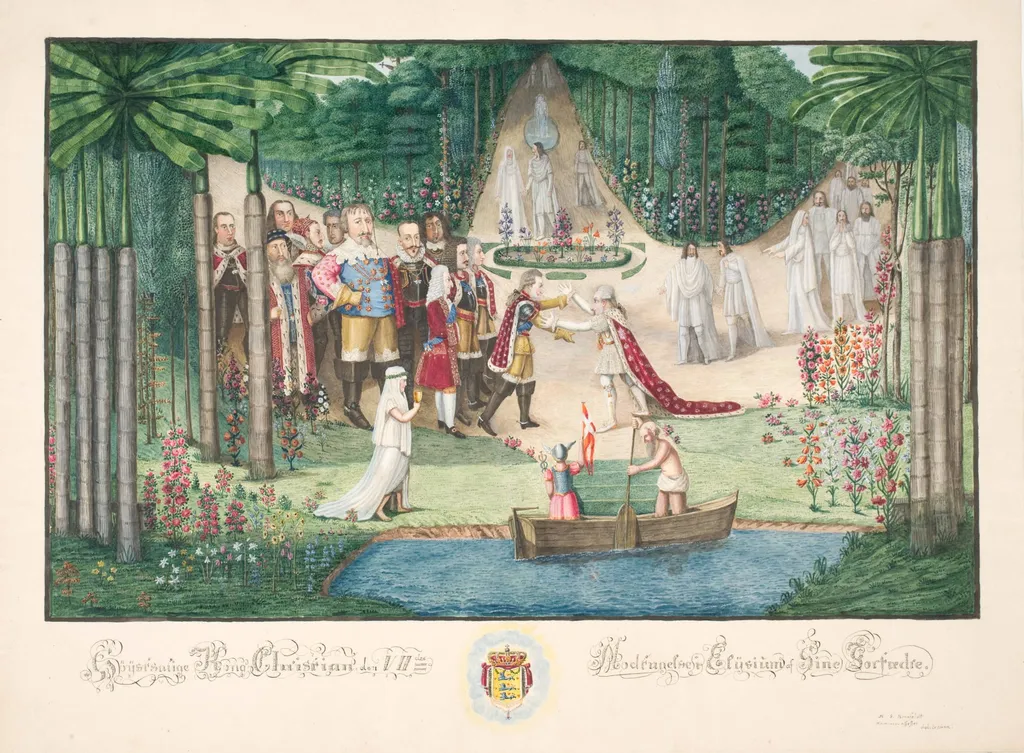
Christian VII.s modtagelse i Elysium af sine forfædre is an unspecified work on paper by the Romanticist artist Unknown. It dates from 1817 and is held in the collection of the Statens Museum for Kunst.
About this work
Overview
It resides in the Museum of Ethnography, where it is interpreted as a visual meditation on lineage, mortality, and royal legacy in early 19th-century Denmark.
Painted in 1817, this watercolor depicts a symbolic scene of King Christian VII being welcomed by his ancestors in a serene, otherworldly landscape. Executed in delicate layers of transparent pigment, the work blends naturalistic detail with allegorical elements. It resides in the Museum of Ethnography, where it is interpreted as a visual meditation on lineage, mortality, and royal legacy in early 19th-century Denmark.
Subject & Meaning
The composition portrays the deceased monarch greeted by royal forebears in a paradisiacal garden, a motif drawn from classical and Christian conceptions of the afterlife. Figures in white robes near a luminous mound suggest spiritual guides or ancestral spirits. The boatman and child with a flag may symbolize the passage of the soul or the continuity of dynastic memory, reinforcing the theme of inherited sovereignty beyond death.
Technique & Style
The artist employed watercolor with glazing techniques to achieve luminous, atmospheric effects. Soft transitions between greens, blues, and reds create depth without harsh outlines, enhancing the dreamlike quality. Delicate brushwork renders foliage and fabric with precision, while the glowing mound is built through layered washes, suggesting ethereal light rather than physical form.
History & Provenance
Commissioned shortly after Christian VII’s death, the work was likely intended for private or ceremonial use within royal circles. It entered the Museum of Ethnography’s collection in the late 19th century, where it was cataloged as a cultural artifact reflecting Danish royal ideology. Its survival suggests it was valued not merely as portraiture but as a ritualized image of dynastic continuity.
Context
Created during a period of political instability in Denmark, the painting reflects a broader cultural interest in legitimizing monarchy through ancestral reverence. Similar imagery appeared in literature and funerary art, where the afterlife served as a metaphor for enduring royal authority. The scene’s pastoral setting aligns with Romantic-era ideals of nature as a moral and spiritual refuge.
Legacy
Though not widely exhibited, the work remains a rare example of Danish Romantic allegory in watercolor. It contributes to scholarly understanding of how royal identity was visually constructed beyond official portraiture. Its preservation in an ethnographic context underscores its role as a cultural document, revealing how death and ancestry were negotiated in public consciousness during the early 1800s.
Artist & collection









- H Beard Print Collection
 H Beard Print Collection
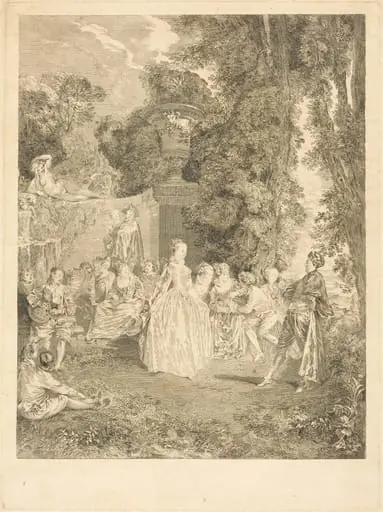 Fetes venitiennes
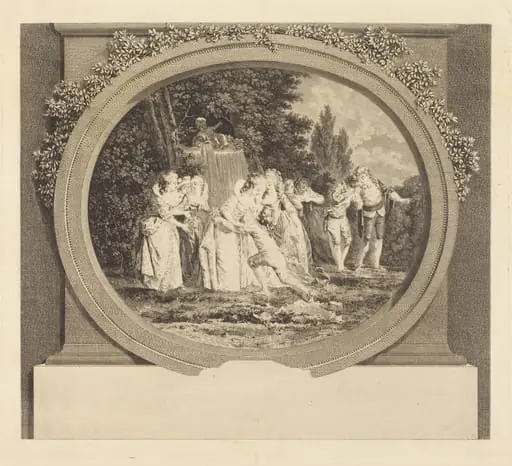 Les Voeux acceptees
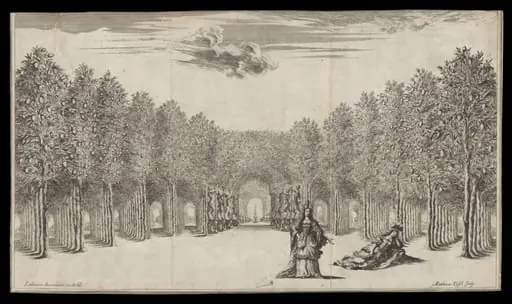 H Beard Print Collection
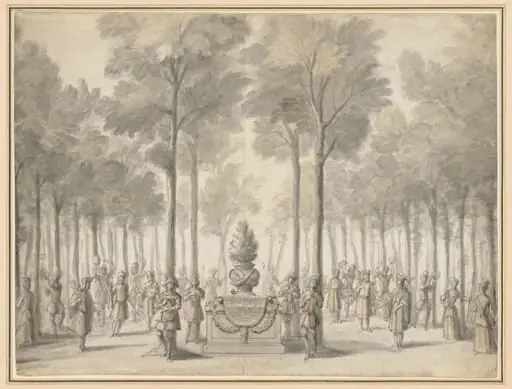 Design for the Divertissement from "La Pastorale" (First Entrée of the opera-ballet "Les Muses" by Danchet and Campra")
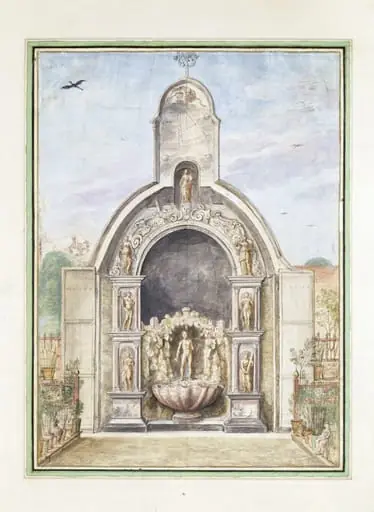 Red Peppers, Capiscum
 H Beard Print Collection
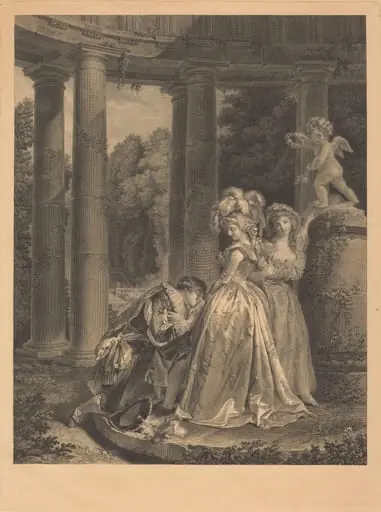 La Declaration
 H Beard Print Collection
 H Beard Print Collection
 The Tour of Dr. Syntax in Search of the Picturesque