Artwork
Untitled
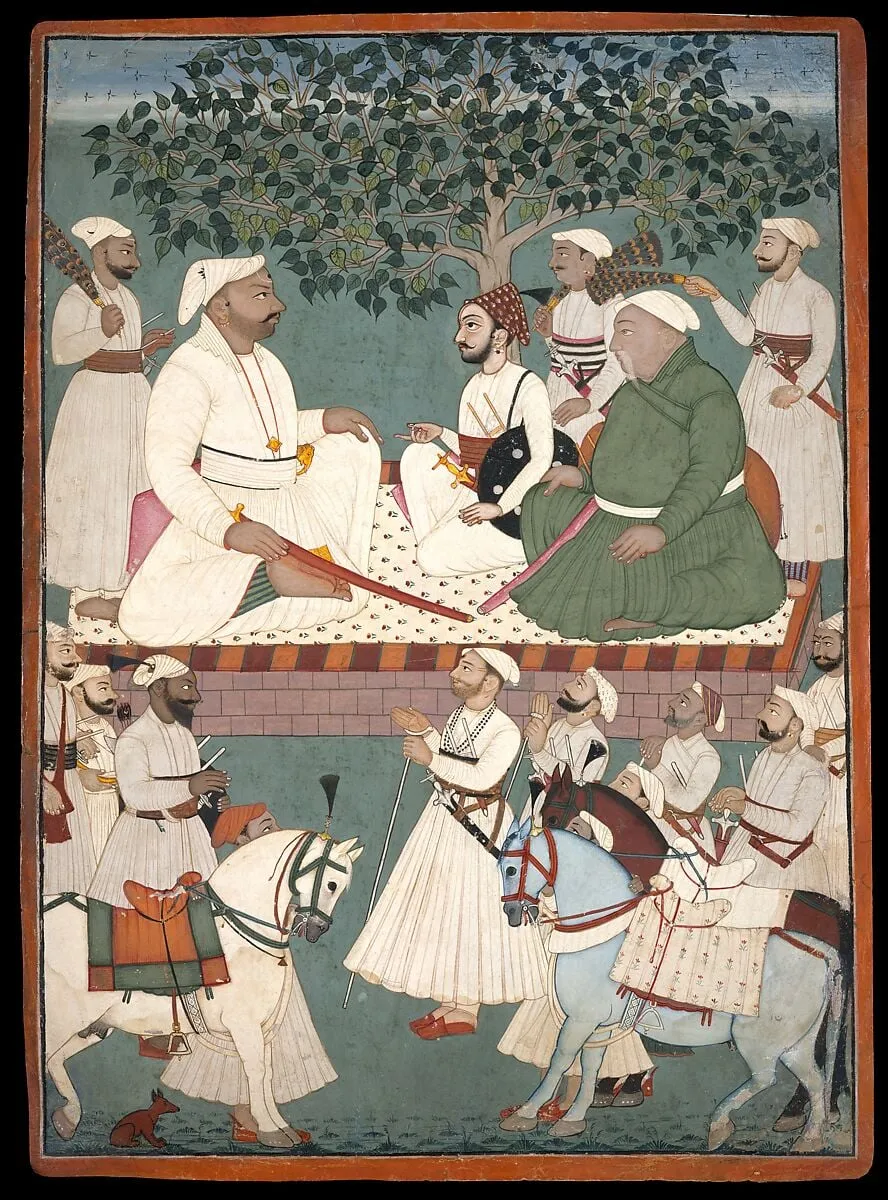
Untitled is a watercolor painting by the Baroque artist A Master of the Mandi atelier. It dates from 1705 and is held in the collection of the Metropolitan Museum of Art.
About this work
Subject & Meaning
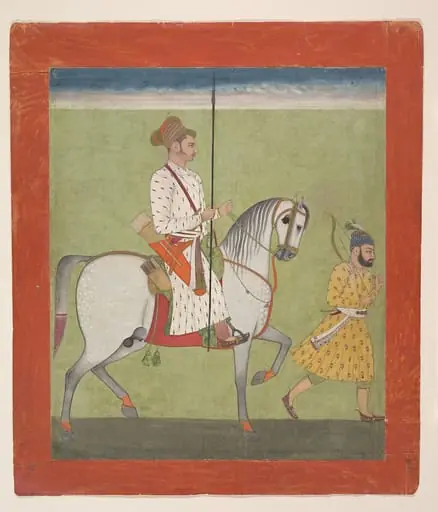
Created in 1705 by a master of the Mandi atelier, this work is a portrait centered on equestrianism, depicting a man mounted on a horse as its primary subject. Specific iconographic details of attire or background are not elaborated in the available records; the image functions as a study of horseman and steed within the context of early-eighteenth-century Indian painting.
Technique & Style
Created in 1705 in the Mandi atelier in India, this portrait uses ink and opaque watercolor on a paper support. It depicts a mounted figure and his horse, relying on the luminosity of opaque pigments to define the subject, with the composition focused on the man and animal in keeping with the genre's traditional scope.
History & Provenance
Untitled was produced in 1705 in India by an artist identified as a Master of the Mandi atelier, in ink and opaque watercolor on paper.
Untitled was produced in 1705 in India by an artist identified as a Master of the Mandi atelier, in ink and opaque watercolor on paper. Classified as a portrait illustrating an equestrian subject, it is held in the collection of the Metropolitan Museum of Art. No documentation of a specific commission survives, and the work is not recorded under a distinct accession number or exhibition history in the available sources.
Overview
This untitled work, created around 1705 by a master from the Mandi atelier, is a watercolor portrait on paper. It captures a lone equestrian figure, a man in a vivid red coat mounted on a white horse, traversing a flat, green landscape. The painting exemplifies the distinctive artistic output of workshops located in the Himalayan foothills.
Context
This painting originated from the Mandi atelier, a small artistic workshop situated in the Himalayan foothills. Such ateliers were significant centers for art production in the region, often patronized by local rulers. The work reflects the specific stylistic conventions and artistic practices prevalent in these specialized, regional painting traditions of the early 18th century.
Artist & collection

 Portrait of Raja with Nobles (probably Raja Jaswant Singh)
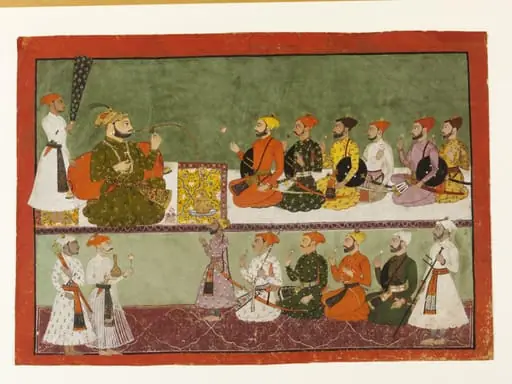 Prince Kanju Ram
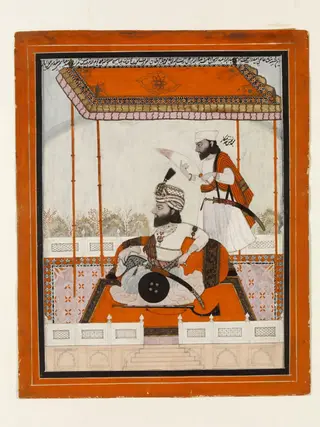 Muhammed Haji Khan
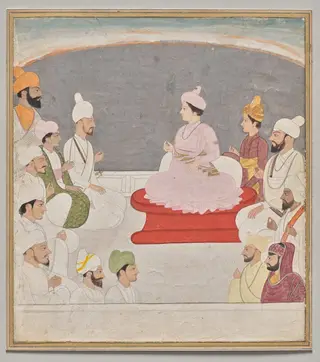
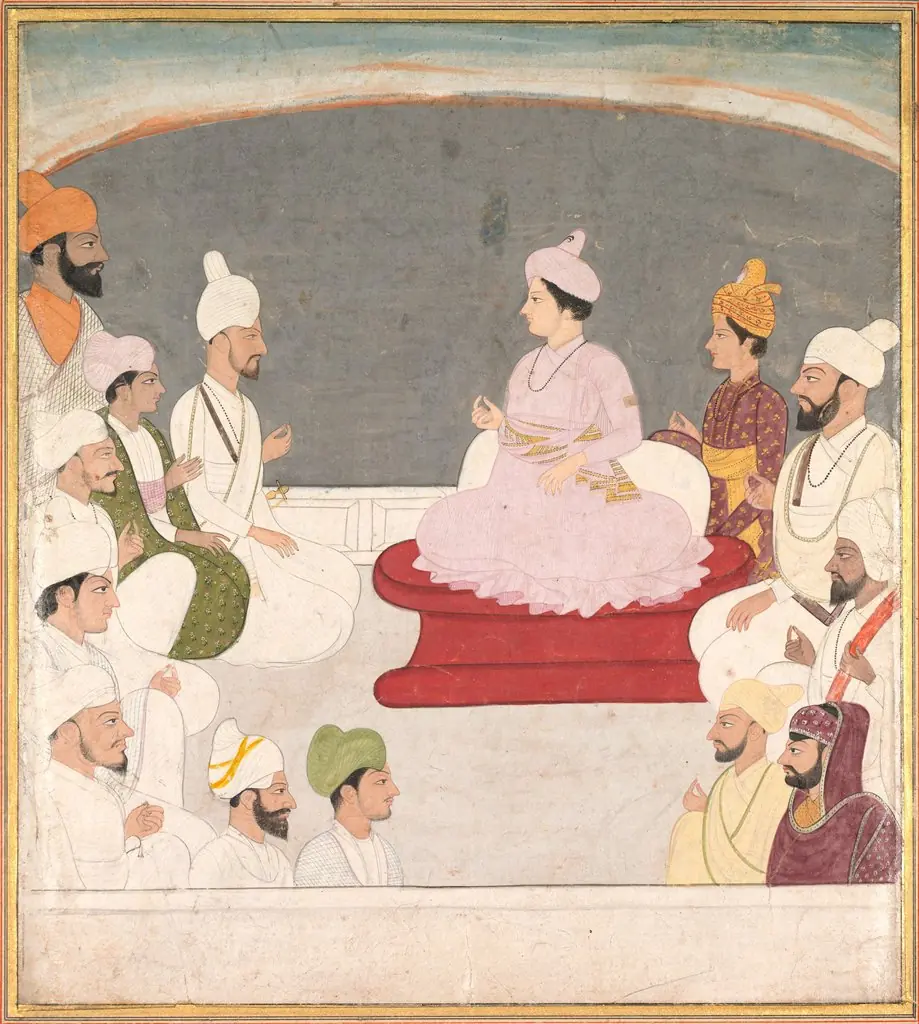 Raja Sansar Chand of Kangra and Courtiers
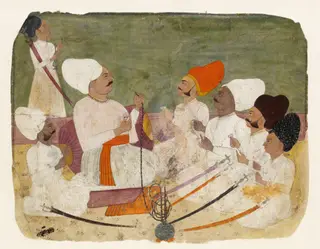 Untitled
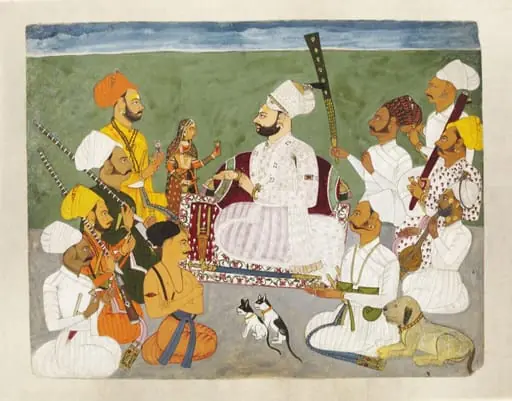 Thakur Padam Singh
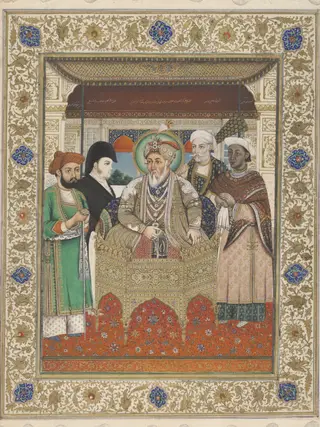 Portrait of Akbar II with Sir Charles Theophilus Metcalf and court dignitaries
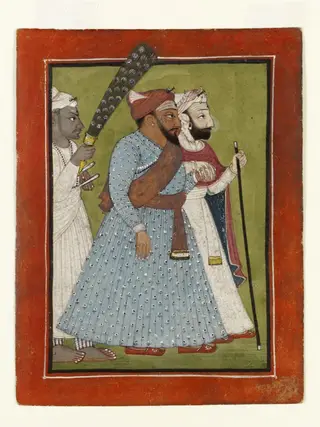 Raja Shamsher Sen and Dhurchatia Sen
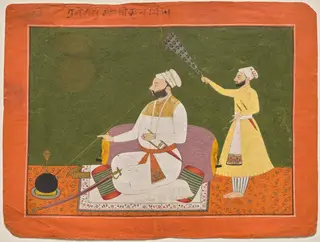 Raja Bikram Singh of Guler smoking a hookah
 Untitled
 Raja Sansar Chand of Kangra and courtiers
- Shishupala arguing with Rukmini’s father, Bhishmaka, from a Rukmini Haran