Artwork
Raja Sansar Chand of Kangra and courtiers
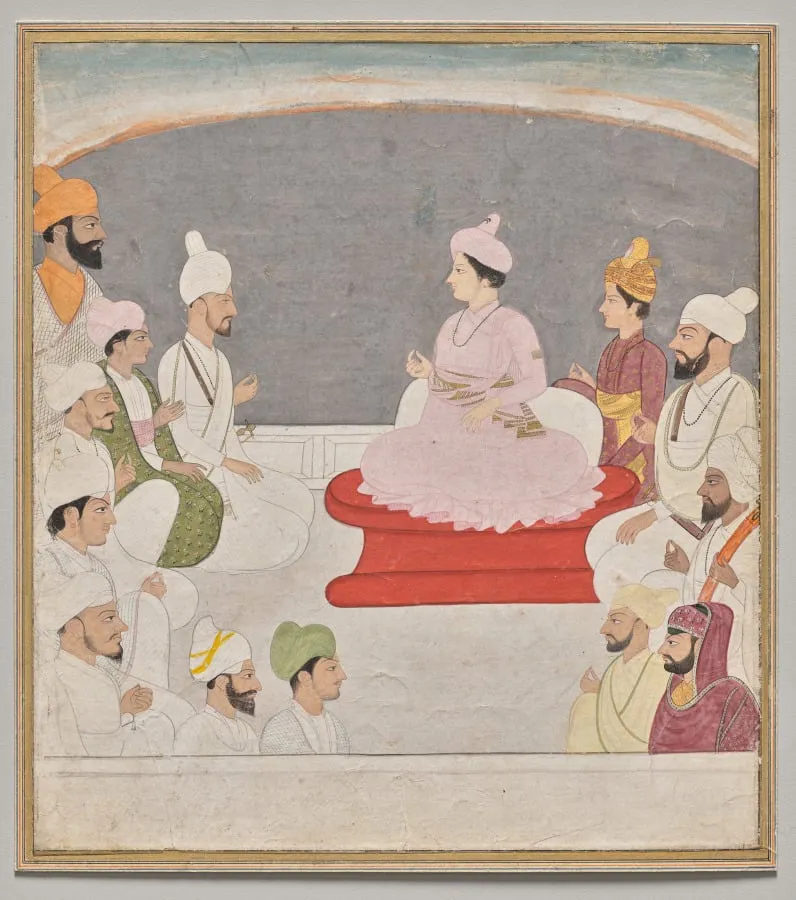
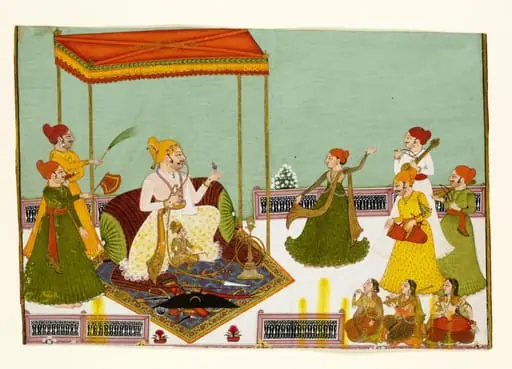
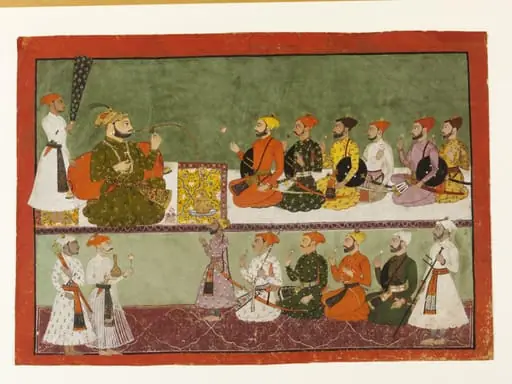
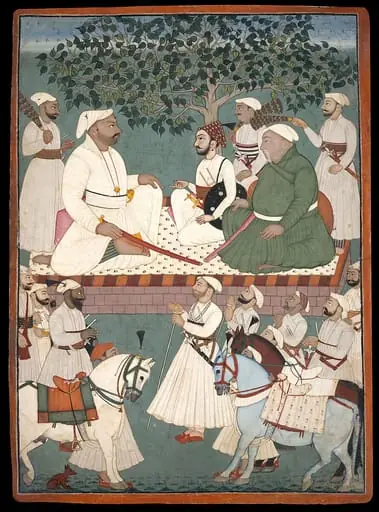
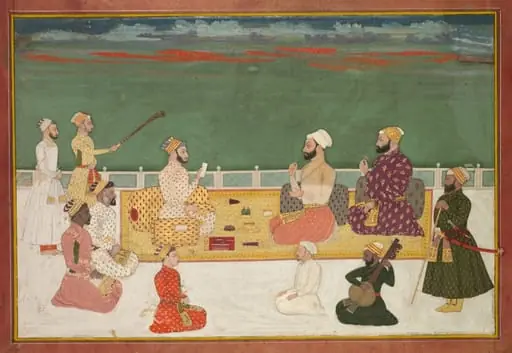
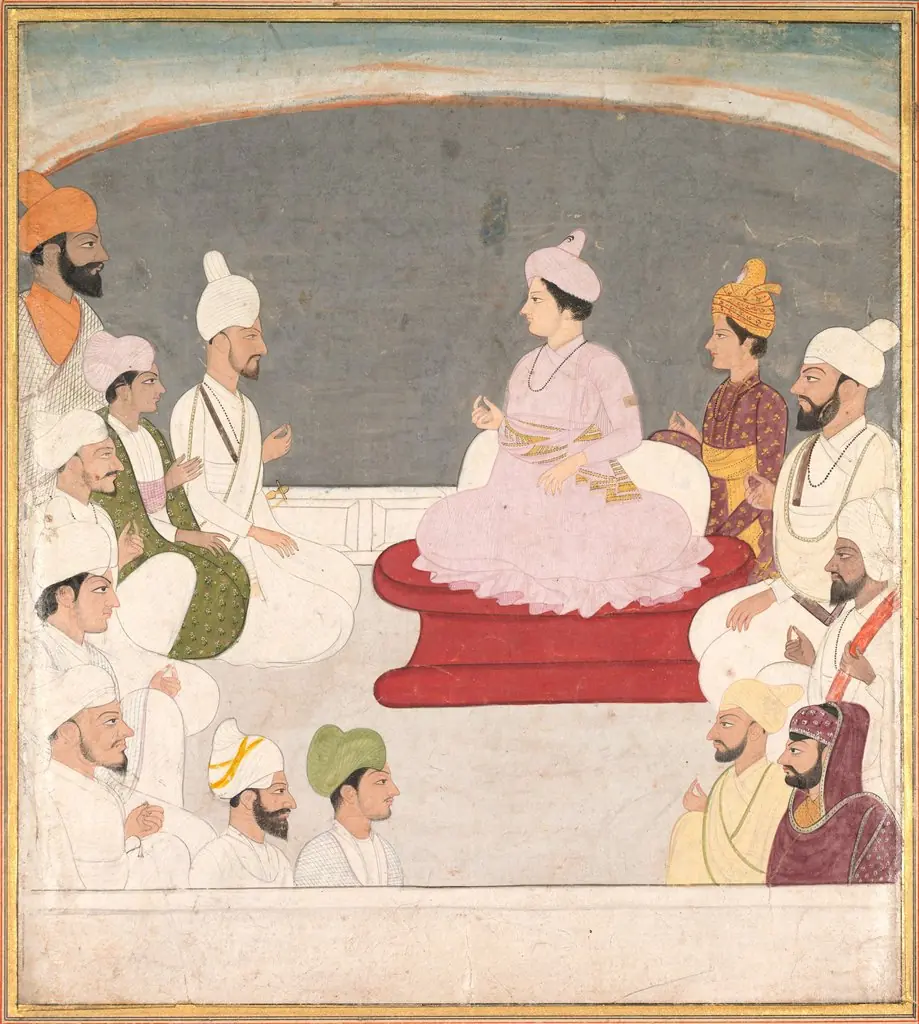
Raja Sansar Chand of Kangra and courtiers is an unspecified painting by the Pahari Painting artist Unknown. It dates from 1783 and is held in the collection of the Cleveland Museum of Art. The painting portrays Sansar Chand, ruler of the western Himalayan state of Kangra, seated on an elevated red platform.
- Accession no.
- 1986.63
- Credit line
- Gift of Clara Taplin Rankin
About this work
The artist didn’t sign it, but the careful details, like the ruler’s youthful face, show it was meant to celebrate the kingdom’s new independence.
You see a young ruler in a pink turban sitting on a red platform, surrounded by courtiers. His face is smooth, no beard yet, and his curly hair peeks out from under the cloth.
This painting marks the moment Kangra broke free from Mughal rule in 1783. The artist didn’t sign it, but the careful details, like the ruler’s youthful face, show it was meant to celebrate the kingdom’s new independence.
To see more art from this time and place, look up Pahari kingdoms.
Overview
The painting portrays Sansar Chand, ruler of the western Himalayan state of Kangra, seated on an elevated red platform. Dressed in a pink turban, the young monarch appears beardless, his curly hair visible beneath the headgear. Courtiers flank him, emphasizing his status and the ceremonial nature of the scene.
Subject & Meaning
Sansar Chand, who governed Kangra from 1775 until his death in 1823, is depicted at roughly eighteen years of age. The composition likely commemorates the year 1783, when Mughal authority over Kangra was formally relinquished, marking the emergence of the kingdom’s independent rule.
Technique & Style
Executed in the Pahari painting tradition, the work employs vivid coloration, most notably the red dais and pink turban, to draw focus to the central figure. Fine brushwork renders the texture of the ruler’s hair and the intricate details of the surrounding court, reflecting the meticulous realism characteristic of late‑18th‑century hill‑state art.
History & Provenance
The artist’s identity remains unknown, as the canvas bears no signature. The painting has been associated with the period of Kangra’s political transition and has been preserved as a visual record of the early phase of Sansar Chand’s reign.
Context
Situated within the broader milieu of Pahari kingdoms, the portrait exemplifies the region’s courtly culture during a time of shifting power dynamics. The depiction of a youthful, unshaven ruler underscores the nascent stage of Kangra’s autonomy following the decline of Mughal influence in the Himalayas.
Artist & collection