Artwork
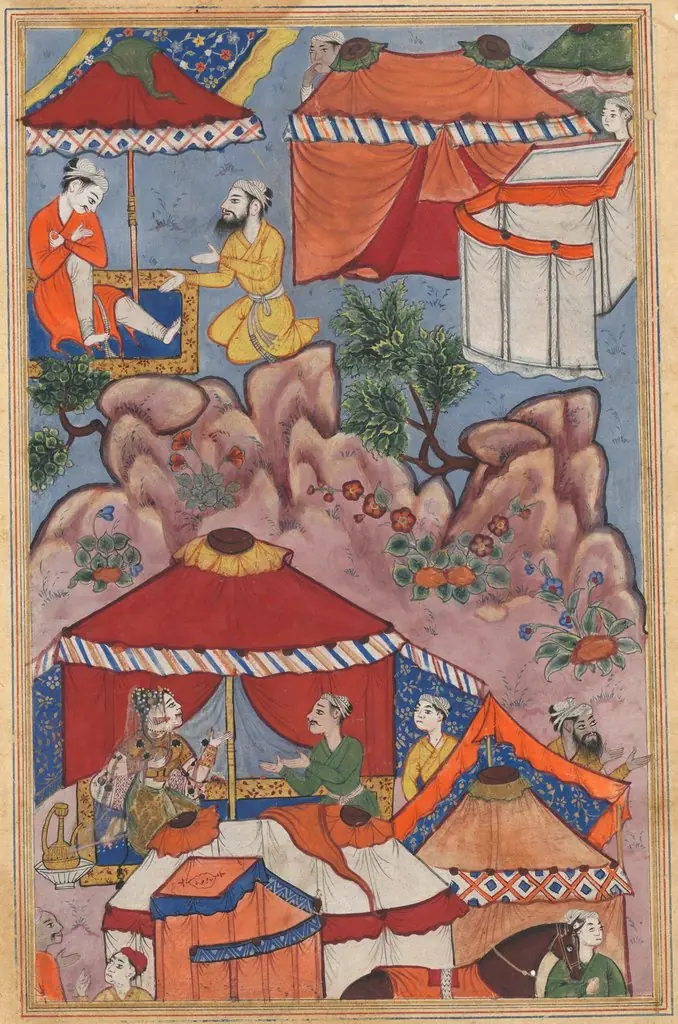
A woman asks her lover to leave her house, brandishing his sword and feigning rage in order to deceive her husband who has just arrived, from a Tuti-nama (Tales of a Parrot): Eighth Night
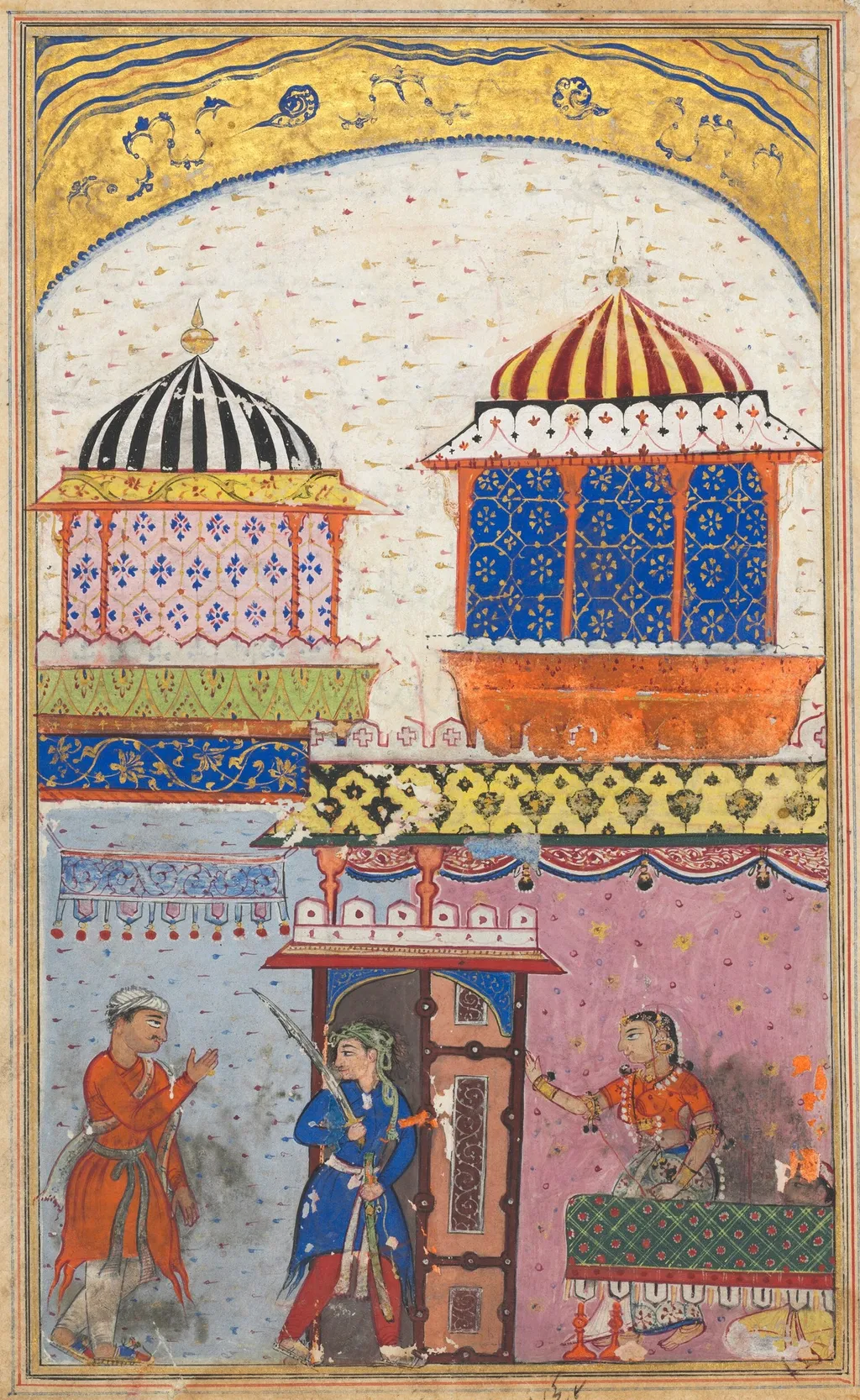
A woman asks her lover to leave her house, brandishing his sword and feigning rage in order to deceive her husband who has just arrived, from a Tuti-nama (Tales of a Parrot): Eighth Night is an unspecified painting. It dates from 1560 and is held in the collection of the Cleveland Museum of Art. The work depicts a dramatic domestic scene drawn from the eighth night of the Tuti‑nama (Tales of a Parrot).
About this work
Subject & Meaning
To create a convincing ruse, she brandishes the man's sword and feigns anger, pretending to be a woman defending her honor against an intruder.
The painting illustrates a dramatic scene from the Eighth Night of the Tuti-nama (Tales of a Parrot), a Persian manuscript of moral fables. It depicts a wife who, upon her husband's sudden arrival, urgently asks her lover to depart. To create a convincing ruse, she brandishes the man's sword and feigns anger, pretending to be a woman defending her honor against an intruder.
This visual narrative captures a moment of high tension and deception, where the woman's performance is designed to mislead her husband regarding the true nature of the visitor. The image serves as an illustration of the story's broader themes of wit and survival within the context of Mughal-era manuscript painting.
History & Provenance
The miniature originates from a Mughal manuscript produced around 1560, as indicated by its inception date and classification as a painting from that period. It was created in the Mughal Empire and later entered the collection of the Cleveland Museum of Art, where it remains housed today.
The painting is held in the Cleveland Museum of Art, where it forms part of the permanent collection. It is accessioned under the number 1962.279.58.a, identifying it as a folio from the Tuti-nama (Tales of a Parrot) manuscript.
The work has been exhibited as part of the museum’s Islamic art holdings, though specific exhibition histories beyond its inclusion in the Cleveland Museum of Art’s galleries are not documented in the available sources.
Overview
The work depicts a dramatic domestic scene drawn from the eighth night of the Tuti‑nama (Tales of a Parrot). Three male figures dominate the composition, each rendered in vivid, contrasting hues: a red‑clad man gesturing outside, a blue‑clad figure brandishing a sword near a doorway, and an orange‑dressed man seated within a richly patterned screen. The background includes two striped tents and a sky dotted with floating specks, adding a decorative backdrop to the narrative.
Technique & Style
Executed in bright, saturated pigments, the artist employs bold color blocks to differentiate the characters and emphasize their emotional states. Linear outlines define the figures and architectural elements, while the patterned screen and tent fabrics display intricate decorative motifs. The floating dots in the sky suggest a stylized, perhaps symbolic, atmosphere rather than realistic perspective, aligning the work with illustrative traditions of Persian narrative painting.
Context
The composition derives from the Tuti‑nama, a collection of Persian stories traditionally illustrated for courtly audiences. Such narrative paintings were used to convey moral lessons and entertain, often featuring dramatic episodes from love and intrigue. The work reflects the broader cultural practice of visual storytelling in medieval Islamic art, where vivid coloration and detailed ornamentation reinforced the textual source.
Artist & collection

- A woman asks her lover to leave her house, brandishing his sword and feigning rage in order to deceive her husband who has just arrived, from a Tuti-nama (Tales of a Parrot): Eighth Night
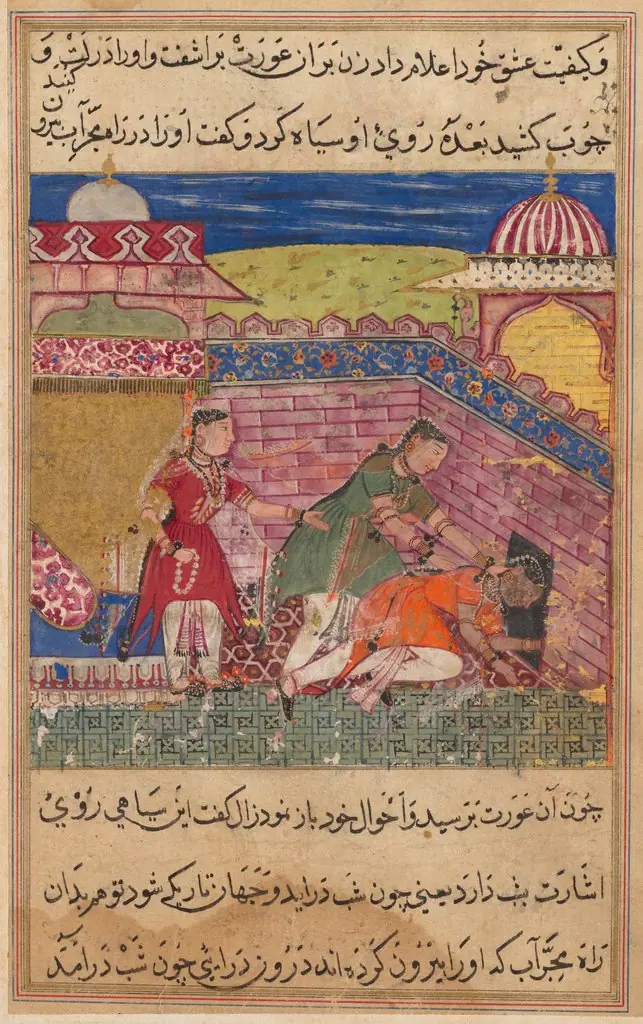 The deceitful wife ejects the procuress after blackening her face, from a Tuti-nama (Tales of a Parrot): Eighth Night
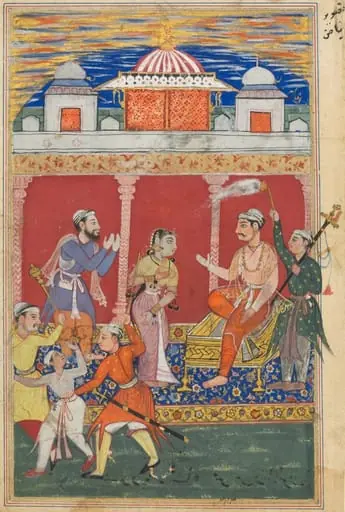 The prince’s ordeal continues, he is ordered away to be executed for the fifth time, from a Tuti-nama (Tales of a Parrot): Eighth Night
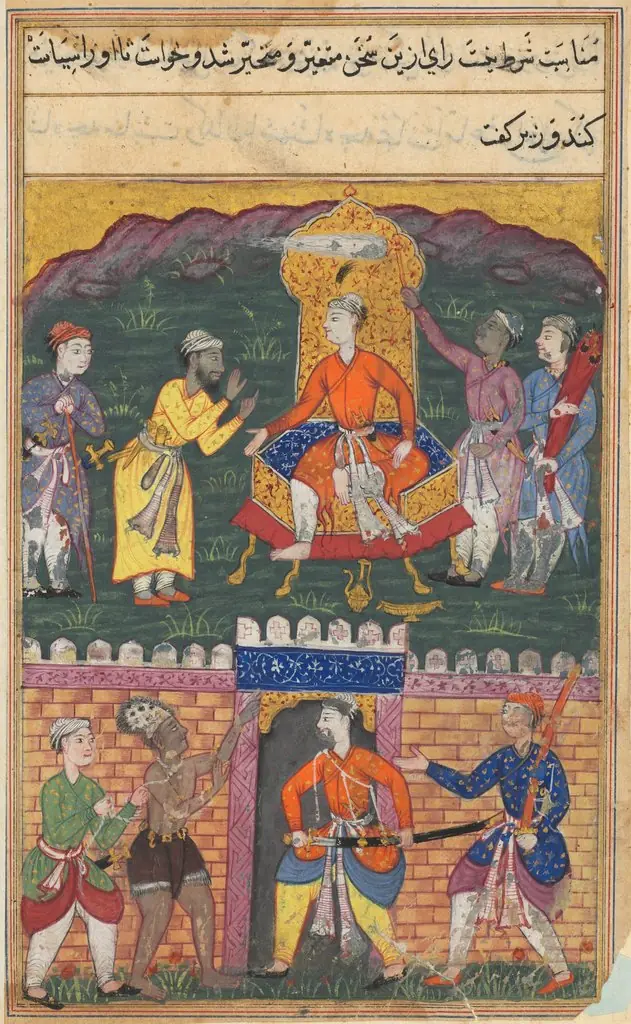 The vizier dissuades the king of Bahilistan from executing the dervish who asks for his daughter’s hand in marriage, from a Tuti-nama (Tales of a Parrot): Seventh Night
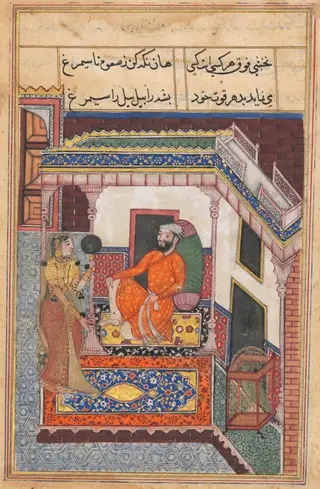 The parrot laughs on hearing the Raja of Ujjain’s wife admire her beauty in a mirror, from a Tuti-nama (Tales of a Parrot: Forty-sixth Night
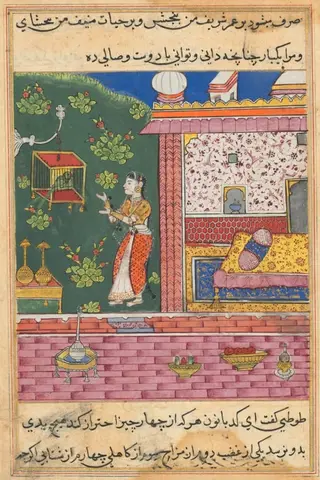 The Parrot Addresses Khujasta at the Beginning of the Thirtieth Night, from a Tuti-nama (Tales of a Parrot)
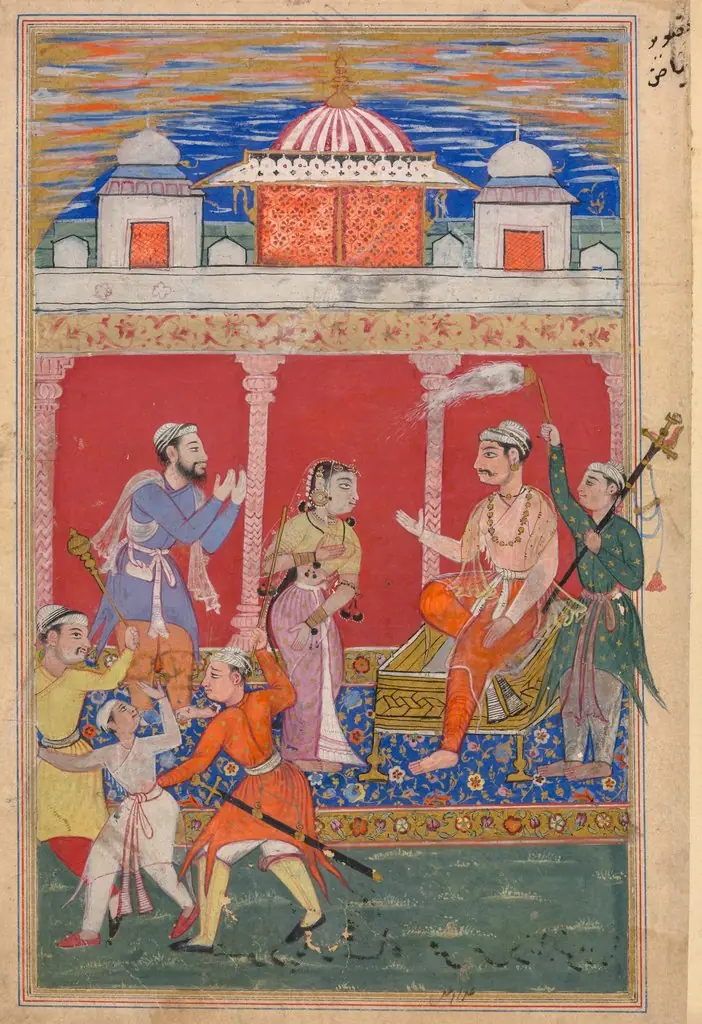 Page from Tales of a Parrot (Tuti-nama): text page
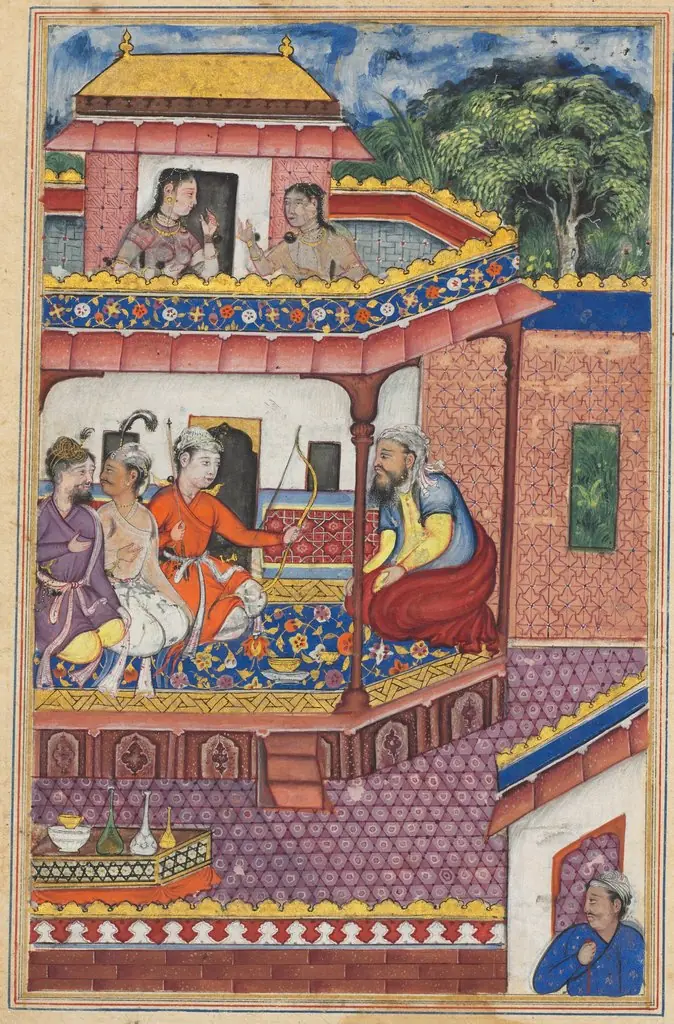 The three young men present themselves as suitors for the hand of Zuhra, the daughter of the merchant of Kabul, from a Tuti-nama (Tales of a Parrot): Thirty-fourth Night
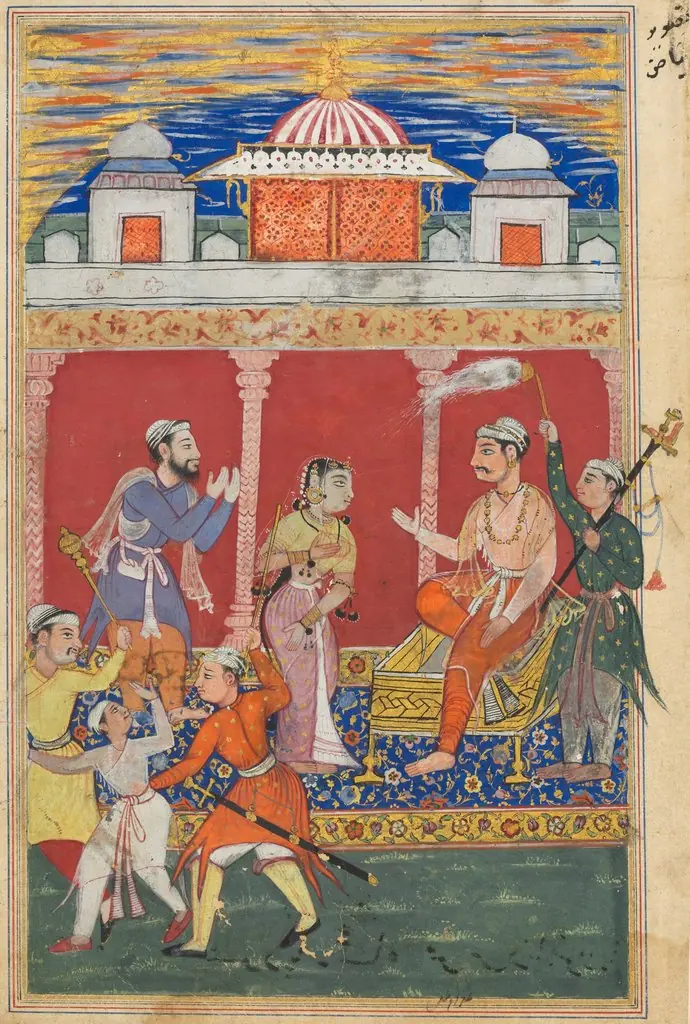 The prince’s ordeal continues, he is ordered away to be executed for the fifth time, from a Tuti-nama (Tales of a Parrot): Eighth Night
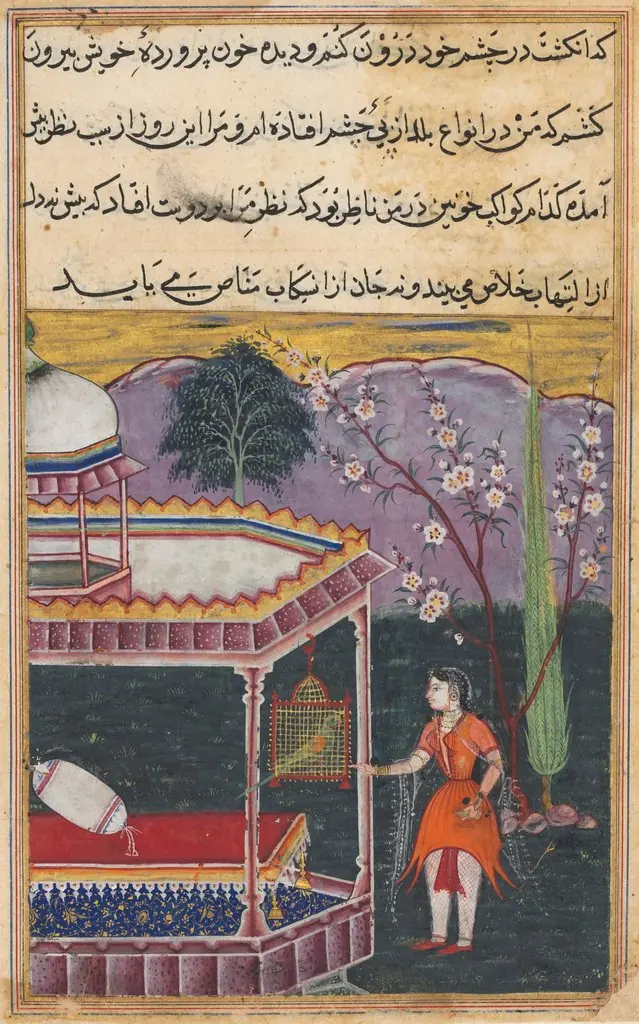 The Parrot Addresses Khujasta at the Beginning of the Eighth Night, from a Tuti-nama (Tales of a Parrot)
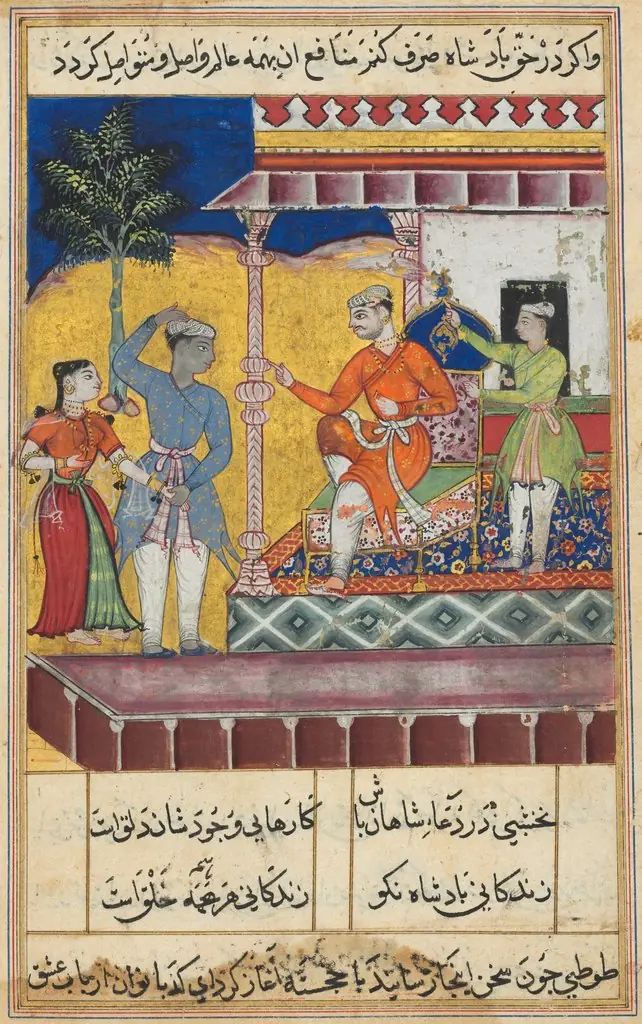 The rejuvenated old man and the daughter of the king of the jinns take leave of the King of Kings, from a Tuti-nama (Tales of a Parrot): Seventh Night
 Bashir confides his love for Habbaza to an Arab friend, and sends him to her with a message, from a Tuti-nama (Tales of a Parrot): Twenty-fourth Night