Artwork
The Parrot Addresses Khujasta at the Beginning of the Eighth Night, from a Tuti-nama (Tales of a Parrot)
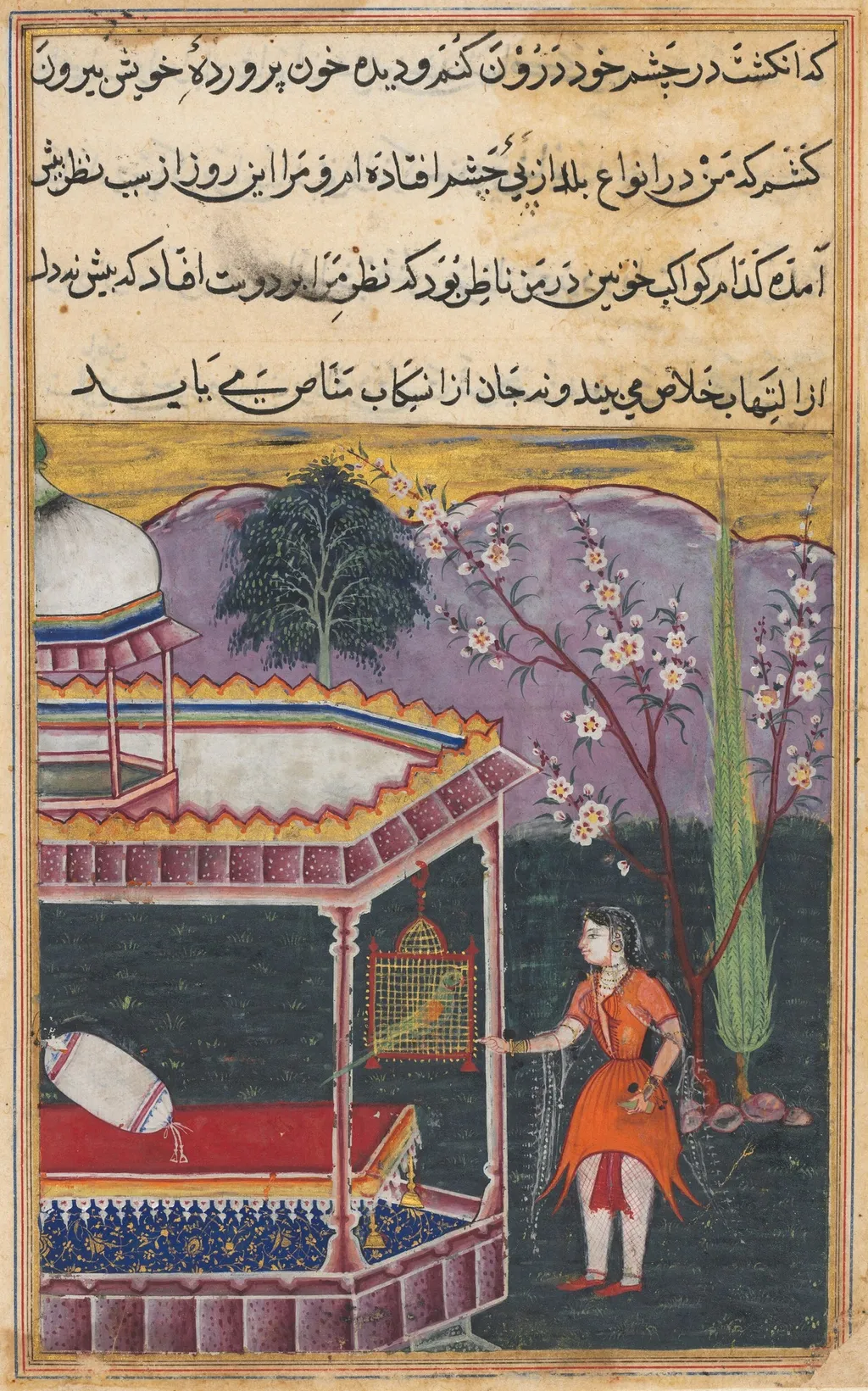
The Parrot Addresses Khujasta at the Beginning of the Eighth Night, from a Tuti-nama (Tales of a Parrot) is an unspecified painting. It dates from 1560 and is held in the collection of the Cleveland Museum of Art.
About this work
Subject & Meaning
The painting shows a parrot speaking to the heroine Khujasta as night begins, marking the eighth night of the story. The bird serves as a messenger and narrator in the Tuti-nama, symbolizing communication and the transmission of wisdom. Through this interaction the work reflects themes of longing, guidance, and the cyclical nature of time within the frame narrative.
Technique & Style
The painting is executed in opaque watercolor and ink on paper, forming part of an illustrated Tuti-nama manuscript produced in Mughal India around 1560.
The painting is executed in opaque watercolor and ink on paper, forming part of an illustrated Tuti-nama manuscript produced in Mughal India around 1560. Its surface shows delicate washes of color applied with fine brushwork, characteristic of early Mughal manuscript painting, which fused Persian conventions with indigenous Indian idioms. The composition features a parrot perched before the figure of Khujasta, rendered with the flattened perspective and ornamental patterning typical of the period. The paper support is preserved under controlled environmental conditions to mitigate pigment fading and brittleness.
History & Provenance
The work was created around 1560 as part of an illustrated Tuti-nama manuscript, produced in early Mughal India. It is held by the Cleveland Museum of Art, where it is catalogued under accession number 1962.279.51.b, having entered the museum's collection in 1962. The painting is attributed to an unknown artist working in the early Mughal idiom, which blended Persian models with Indian visual traditions. No exhibition history is documented in the available sources.
Context
The painting The Parrot Addresses Khujasta at the Beginning of the Eighth Night, from a Tuti-nama (Tales of a Parrot), dated to 1560, is part of the Cleveland Museum of Art's collection. It depicts a moment from the frame story in which a parrot addresses Khujasta as the eighth night begins, reflecting the didactic and moral themes of the Tuti-nama tradition. Scholarship situates the work within the corpus of early Mughal painting under the patronage of the emperor Akbar, emphasizing its role in illustrating literary texts and the synthesis of Persian and Indian styles in the imperial workshop.
The artist remains anonymous, yet the piece contributes to understanding the transmission of narrative painting in South Asia.
Legacy
The work is renowned for its vivid narrative composition and subtle use of colour that shaped later Indian miniature painting conventions, influencing artists who adapted its storytelling techniques across Persianate courts. It has been featured in major exhibitions of Mughal art, including a 1995 Cleveland Museum of Art retrospective that highlighted its role in shaping the visual language of the Tuti-nama tradition.
Overview
The work depicts a narrative scene from a Persian illustrated manuscript, showing a woman in vivid red standing before a pavilion with a red roof edged in blue. Inside the pavilion a man reclines on a bed draped with a white sheet, while a parrot perches on a nearby branch surrounded by white blossoms. The composition combines interior and exterior spaces, suggesting a moment from a literary episode.
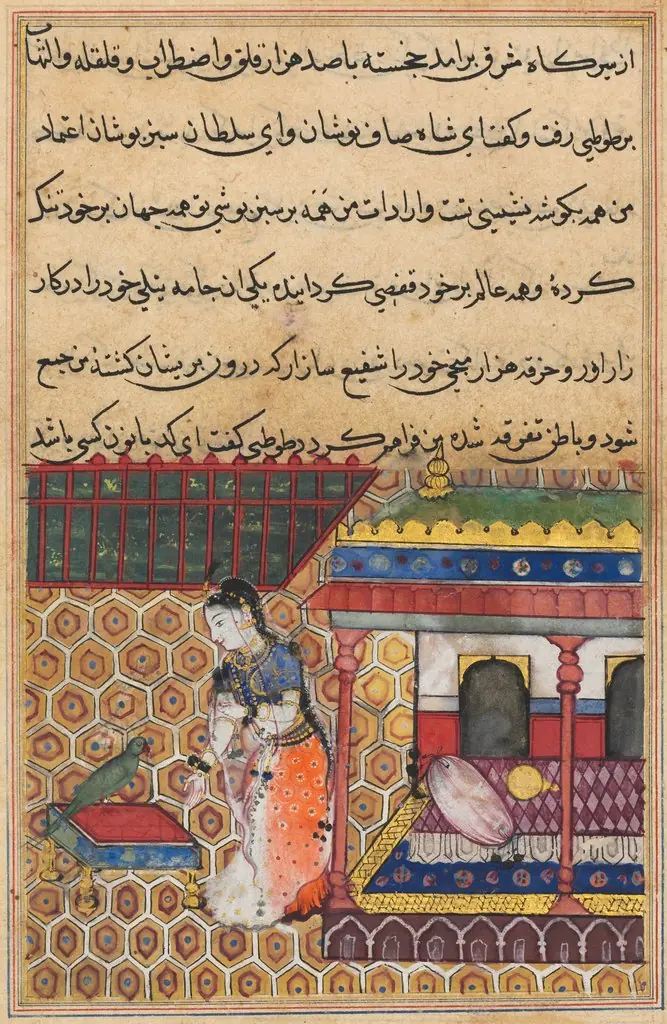
Artist & collection

- The parrot addresses Khujasta at the beginning of the thirty-eighth night, from a Tuti-nama (Tales of a Parrot)
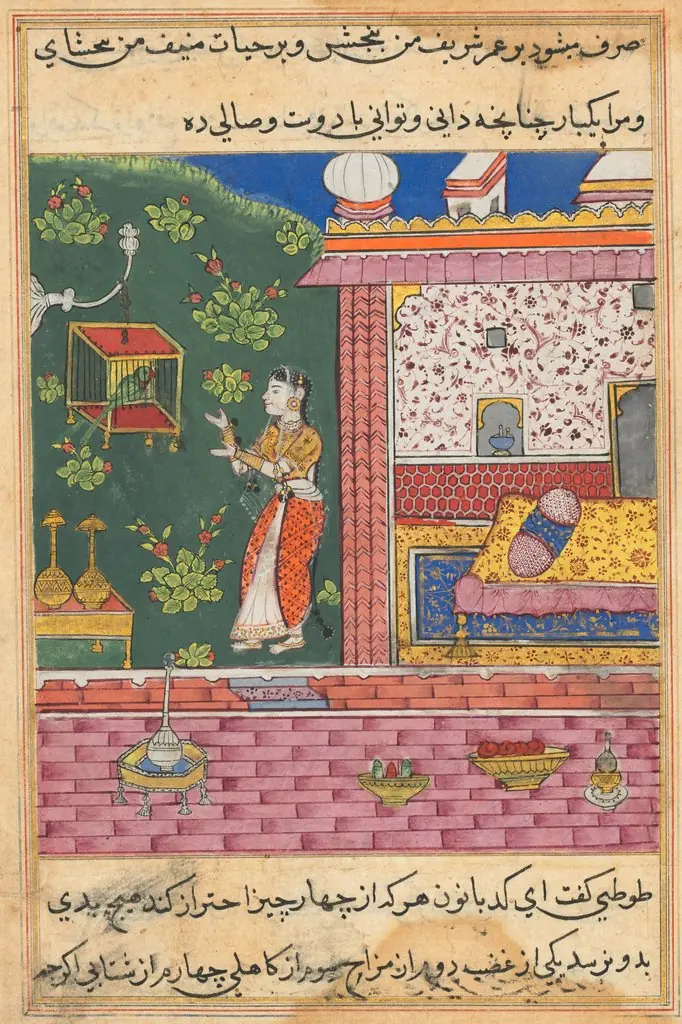 The Parrot Addresses Khujasta at the Beginning of the Thirtieth Night, from a Tuti-nama (Tales of a Parrot)
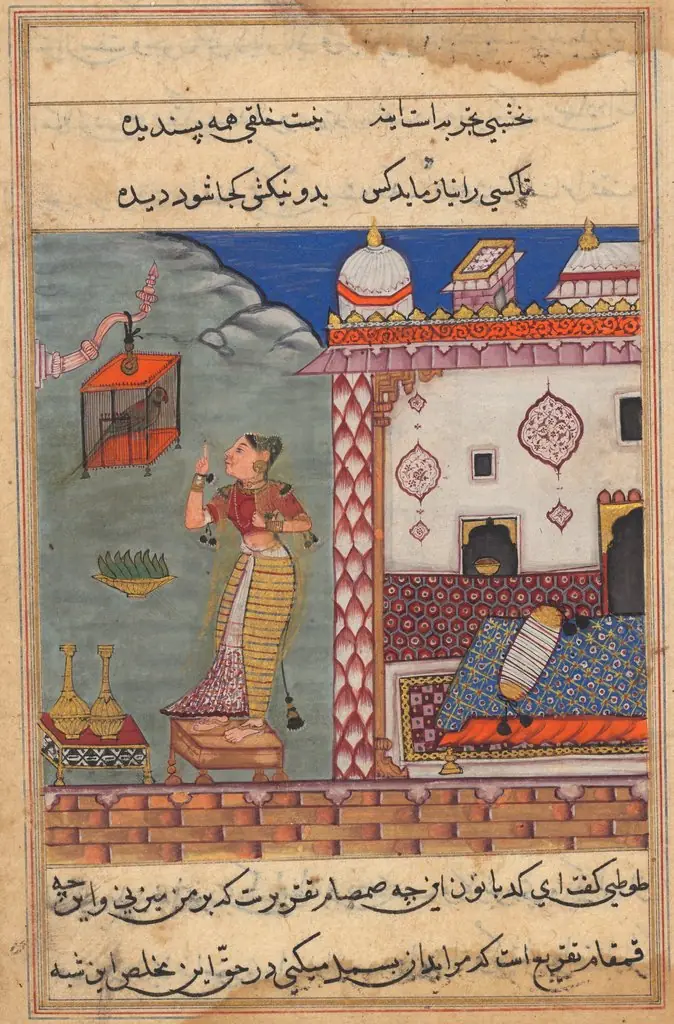 The Parrot Addresses Khujasta at the Beginning of the Twenty-seventh Night, form a Tuti-nama (Tales of a Parrot)
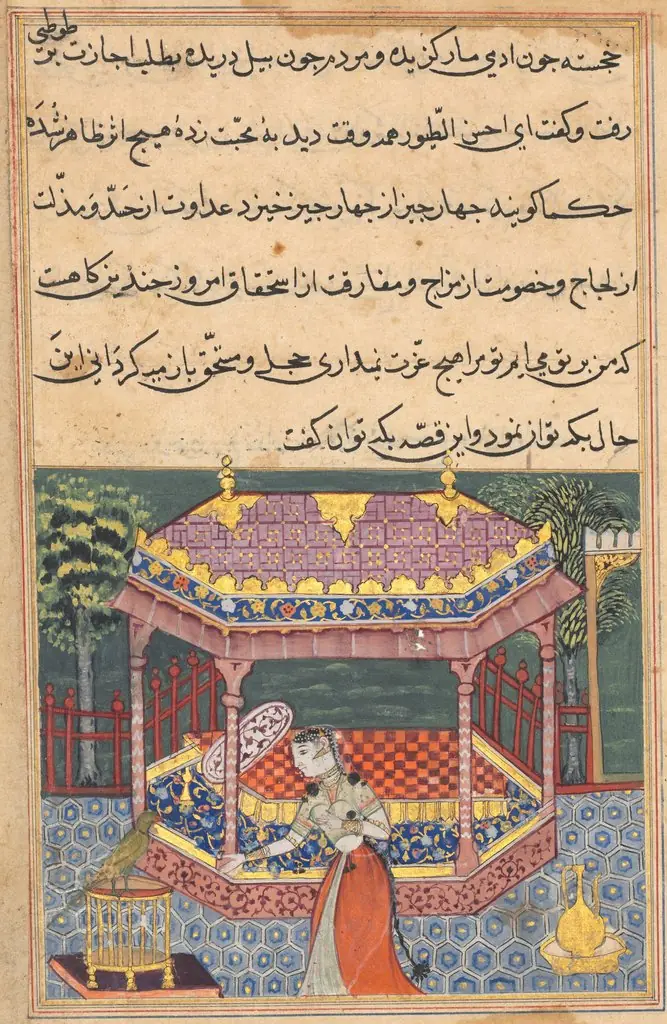 The parrot addresses Khujasta at the beginning of the thirty-seventh night, from a Tuti-nama (Tales of a Parrot)
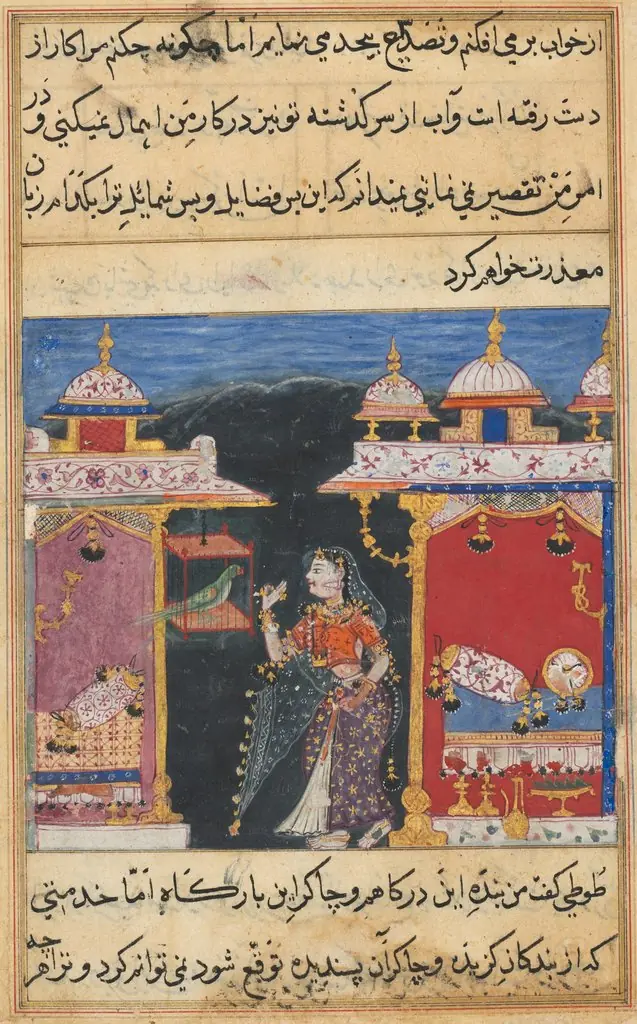 The Parrot Addresses Khujasta at the Beginning of the Seventh Night, from a Tuti-nama (Tales of a Parrot)
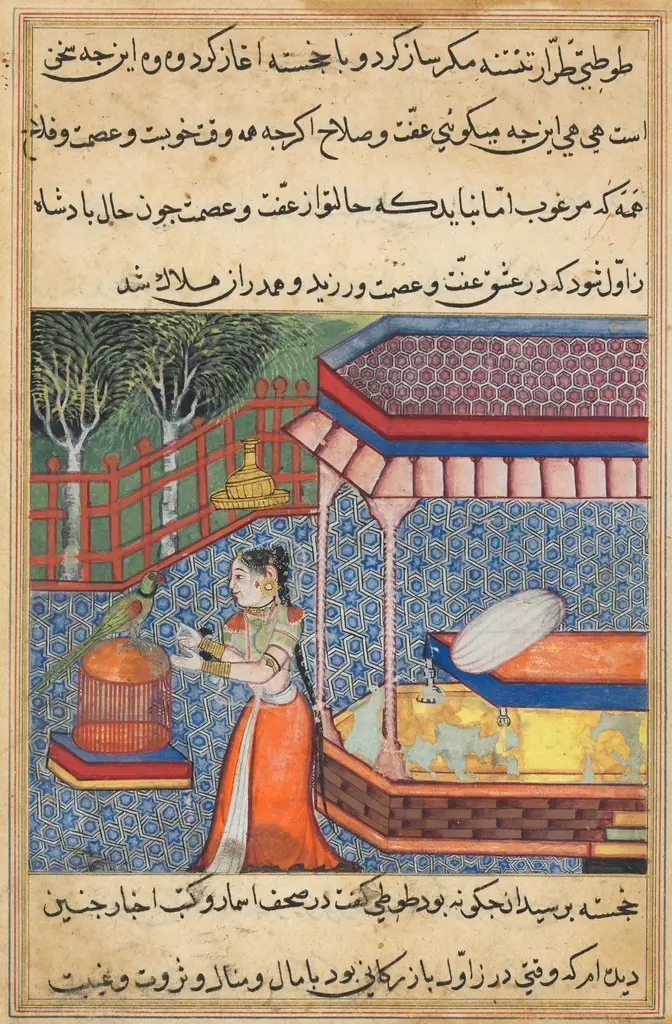 The parrot addresses Khujasta at the beginning of the thirty-sixth night, from a Tuti-nama (Tales of a Parrot)
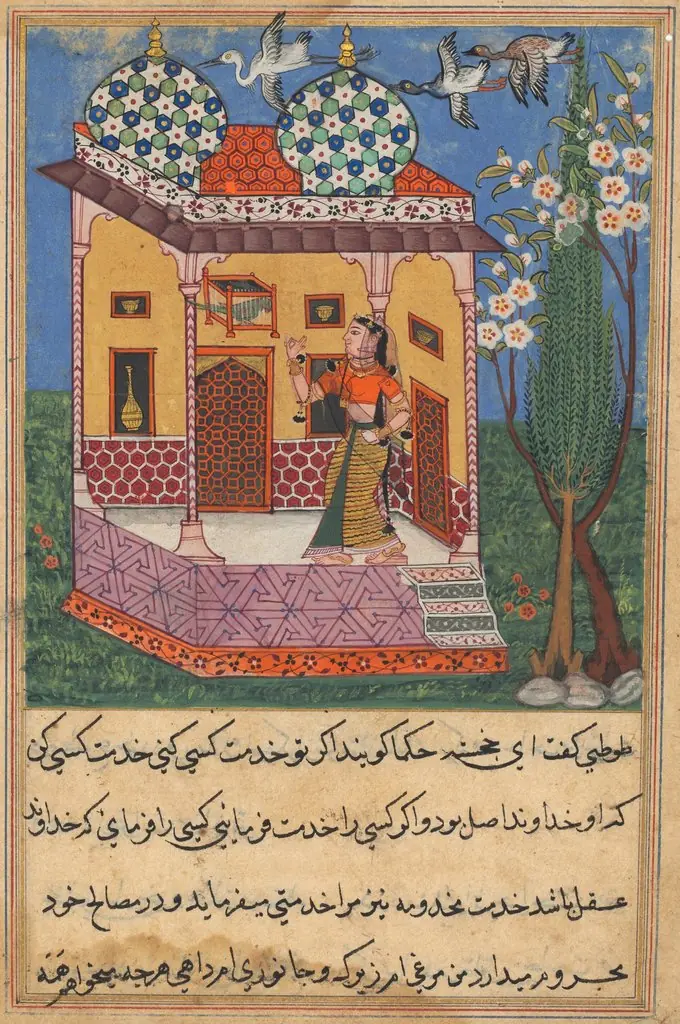 The Parrot Addresses Khujasta at the Beginning of the Twenty-sixth Night, from a Tuti-nama (Tales of a Parrot)
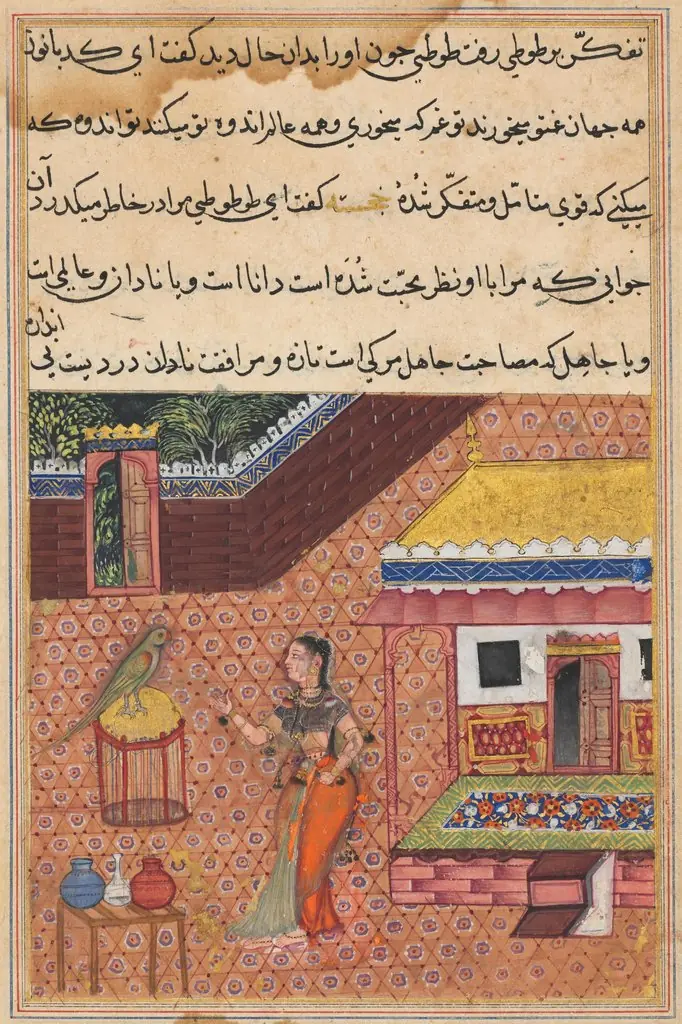 The parrot addresses Khujasta at the beginning of the thirty-fourth night, from a Tuti-nama (Tales of a Parrot)
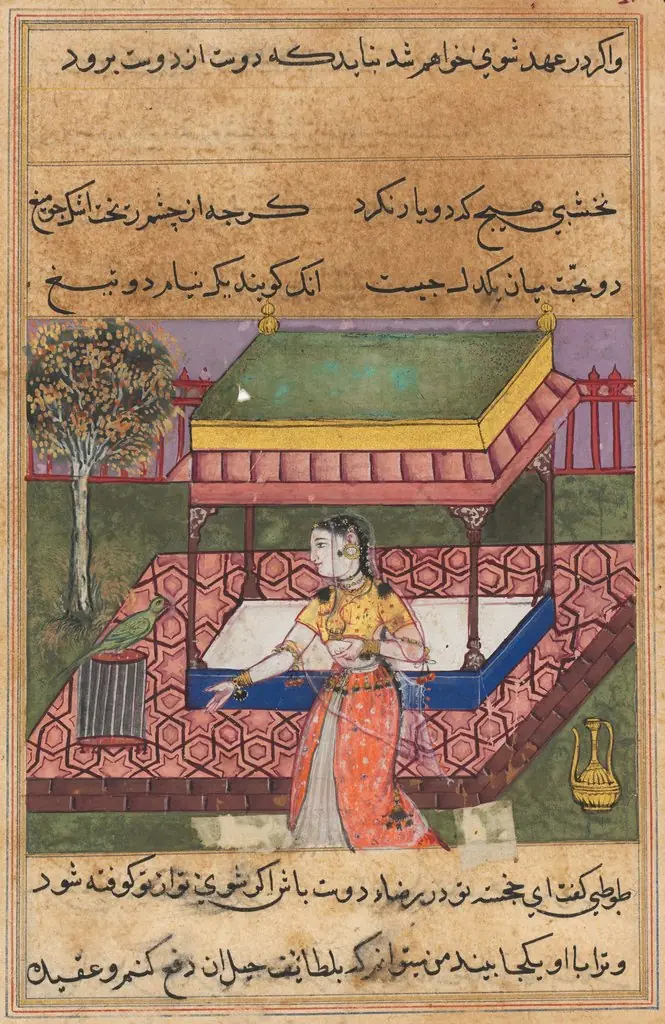 The parrot addresses Khujasta at the beginning of the fortieth night, from a Tuti-nama (Tales of a Parrot)
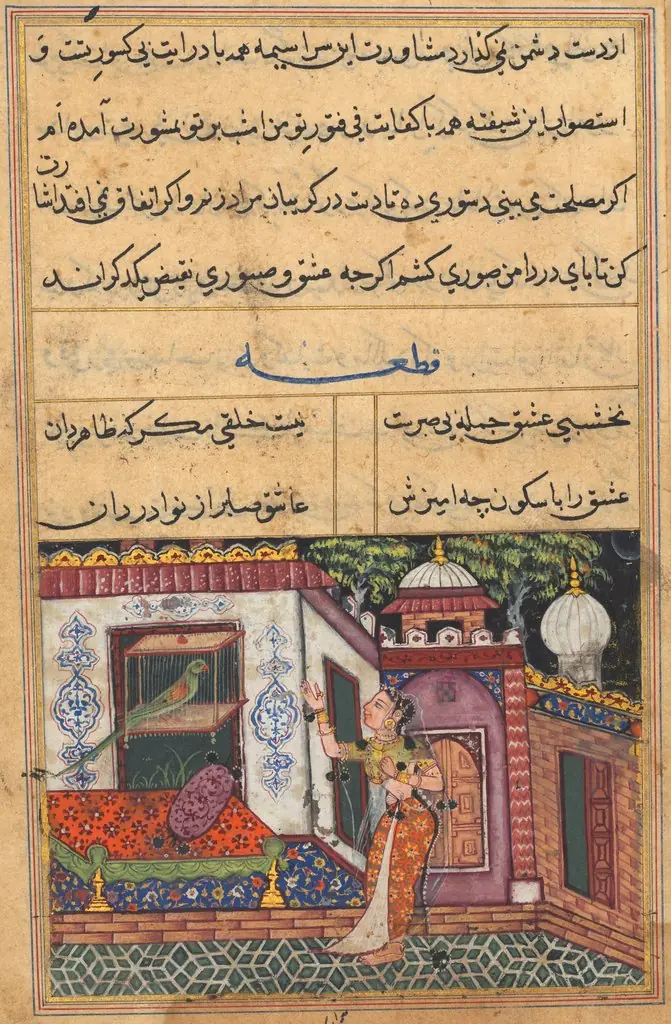 The Parrot Addresses Khujasta at the Beginning of the Eleventh Night, from a Tuti-nama (Tales of a Parrot)
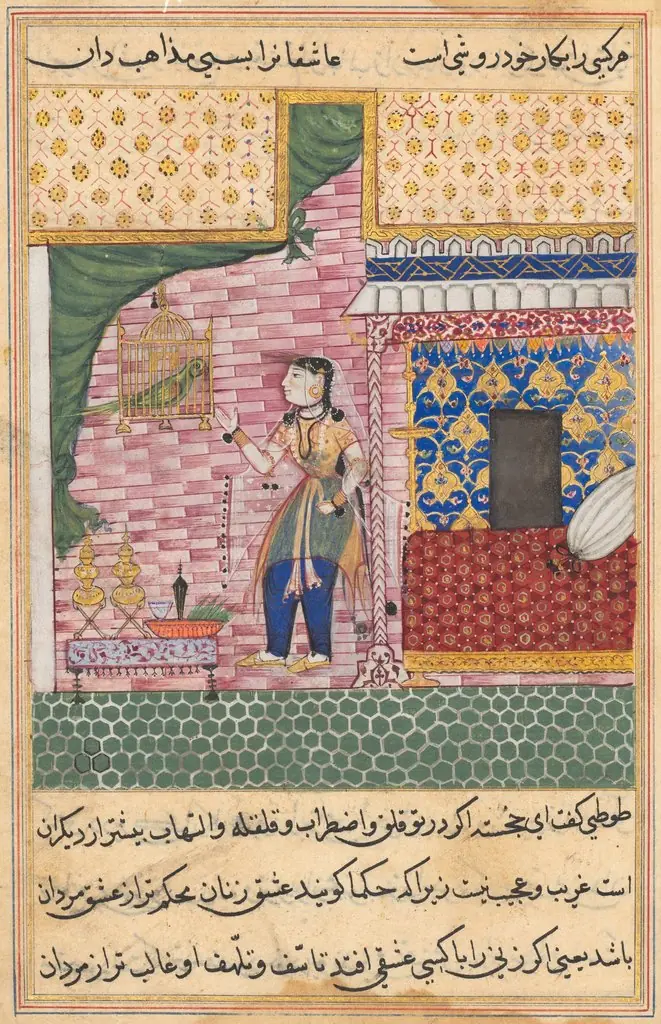 The Parrot Addresses Khujasta at the Beginning of the Seventeenth Night, from a Tuti-nama (Tales of a Parrot)
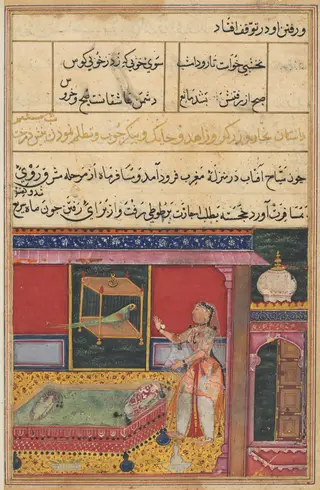 The Parrot Addresses Khujasta at the Beginning of the Sixth Night, from a Tuti-nama (Tales of a Parrot)
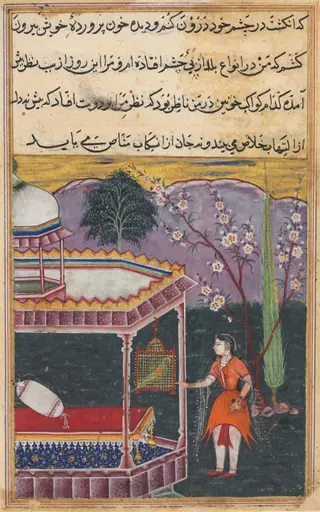 The Parrot Addresses Khujasta at the Beginning of the Eighth Night, from a Tuti-nama (Tales of a Parrot)
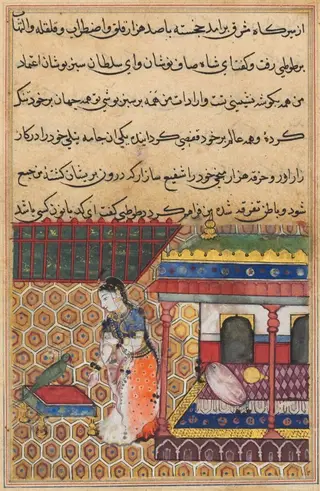 The parrot addresses Khujasta at the beginning of the thirty-eighth night, from a Tuti-nama (Tales of a Parrot)
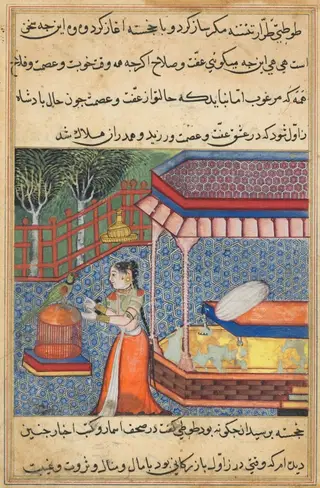 The parrot addresses Khujasta at the beginning of the thirty-sixth night, from a Tuti-nama (Tales of a Parrot)