Artwork
The three young men present themselves as suitors for the hand of Zuhra, the daughter of the merchant of Kabul, from a Tuti-nama (Tales of a Parrot): Thirty-fourth Night
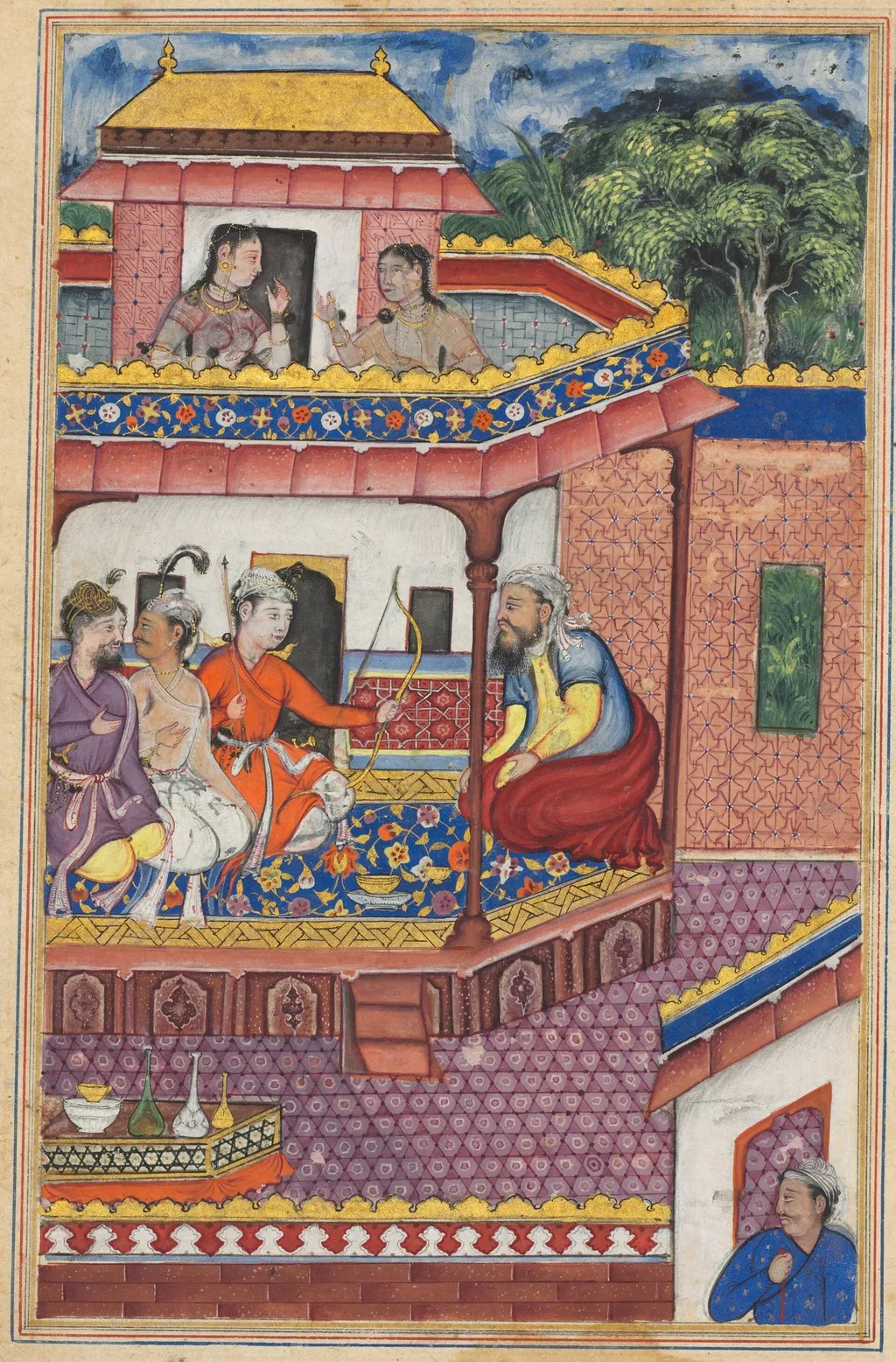
The three young men present themselves as suitors for the hand of Zuhra, the daughter of the merchant of Kabul, from a Tuti-nama (Tales of a Parrot): Thirty-fourth Night is an unspecified painting. It dates from 1560 and is held in the collection of the Cleveland Museum of Art.
About this work
Subject & Meaning
The work depicts the thirty‑fourth night of the Tuti‑nama, in which three young men present themselves as suitors for Zuhra, the daughter of a Kabul merchant. As a Mughal‑era painting, it visualizes this narrative episode from the Persian‑Indian story collection, highlighting the theme of courtship and the pursuit of marital alliance.
History & Provenance
The painting is held in the collection of the Cleveland Museum of Art, where it is catalogued under accession number 1962.
The painting depicting the three suitors for Zuhra's hand originates from the Mughal Empire and was created in 1560. It entered the collection of the Cleveland Museum of Art, where it remains on view. The work is catalogued under accession number 1962.279.225.a and is attributed to an unknown artist, reflecting its status as a Mughal miniature from the 16th century.
The painting is held in the collection of the Cleveland Museum of Art, where it is catalogued under accession number 1962.279.225.a. It was created in 1560 in the Mughal Empire and has been part of the museum’s collection since its acquisition. The work has not been listed in major traveling exhibitions according to the available documentation.
Overview
The work depicts a narrative episode from the Persian illustrated manuscript tradition, illustrating the thirty‑fourth night of the Tuti‑nama, a collection of romantic tales. In the lower register three elegantly dressed youths kneel before a balcony where a young woman, Zuhra, watches them, suggesting a courtship scene set within an opulently tiled interior.
Technique & Style
Rendered in vivid pigments, the painting features intricate patterning on the floor, alternating blue and yellow motifs, and richly embroidered robes that display a range of bright hues. Architectural elements such as the balcony with its red‑yellow tiled roof are delineated with fine linear brushwork, reflecting the detailed illustrative style typical of Persian miniatures.
Context
Set within the broader tradition of illustrated literary works, the scene exemplifies how Persian art combined narrative storytelling with decorative elegance. The setting, a merchant’s household in Kabul, situates the tale within a commercial, culturally diverse milieu, reflecting the exchange of artistic motifs across the region.
Artist & collection

- The three young men present themselves as suitors for the hand of Zuhra, the daughter of the merchant of Kabul, from a Tuti-nama (Tales of a Parrot): Thirty-fourth Night
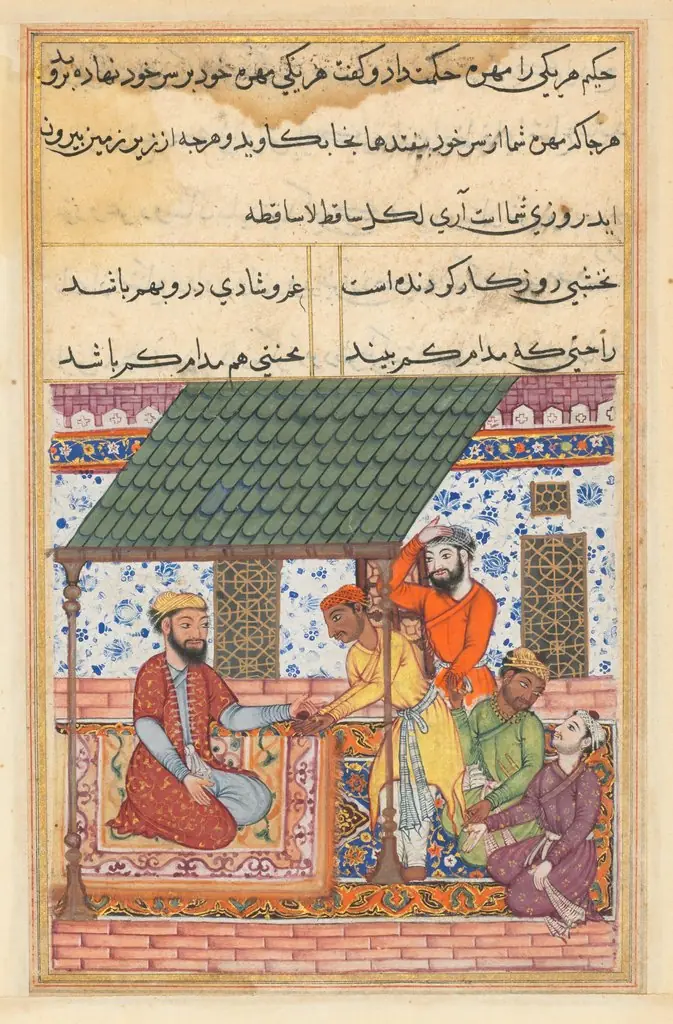 The four destitute friends go to a wise man who gives each one of them a magic shell to be placed on top of the turban, from a Tuti-nama (Tales of a Parrot): Forty-seventh Night
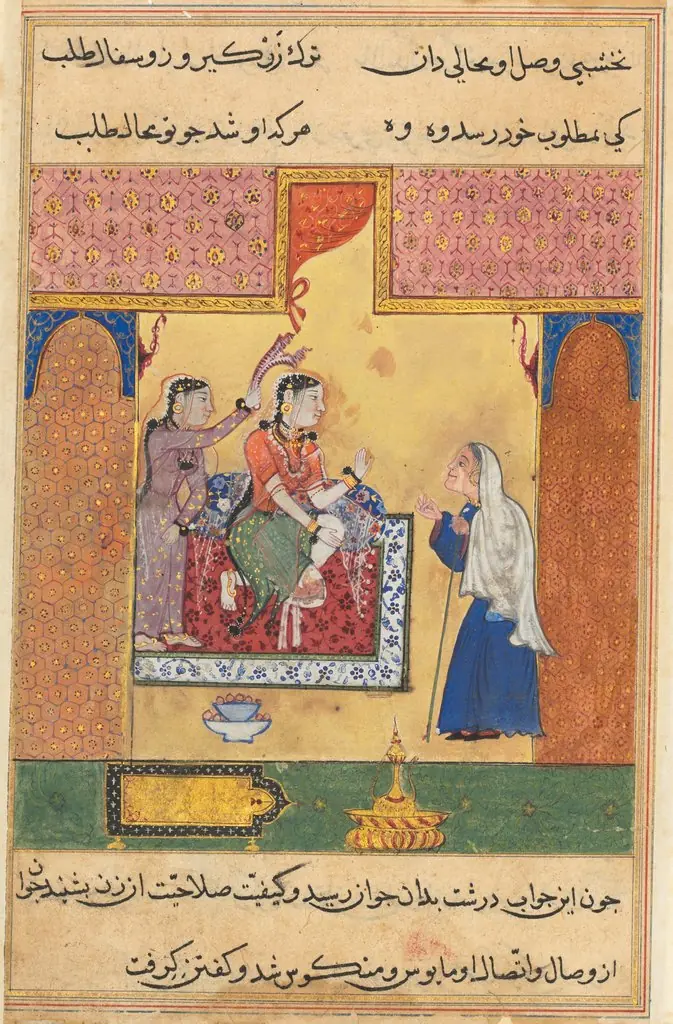 The old procuress conveys the young man’s message of love to Mansur’s wife, from a Tuti-nama (Tales of a Parrot: Seventeenth Night
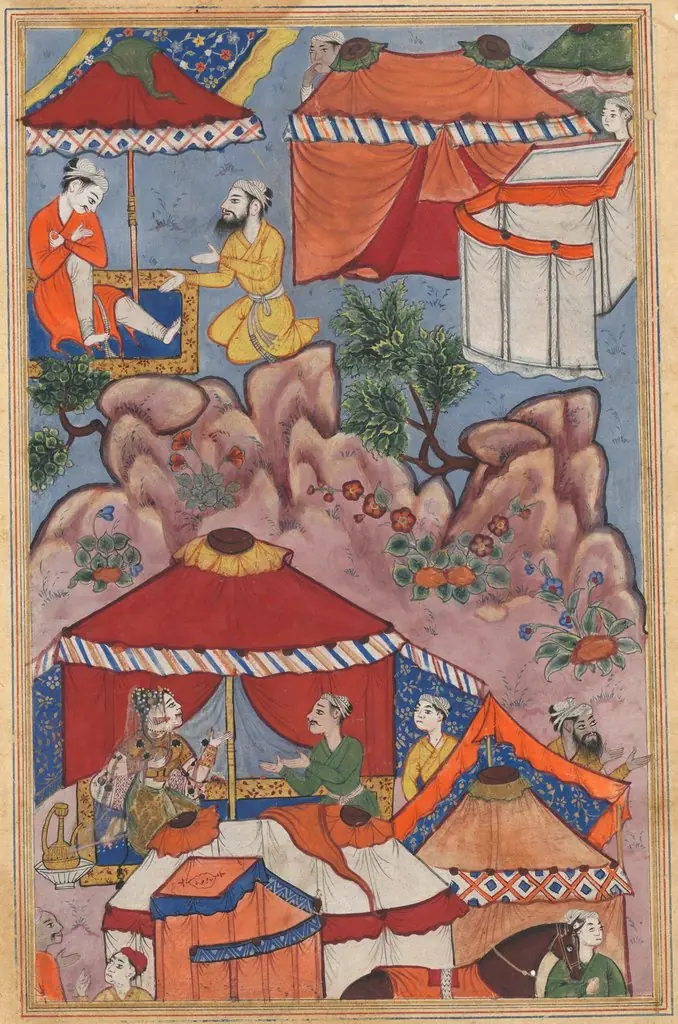 Bashir confides his love for Habbaza to an Arab friend, and sends him to her with a message, from a Tuti-nama (Tales of a Parrot): Twenty-fourth Night
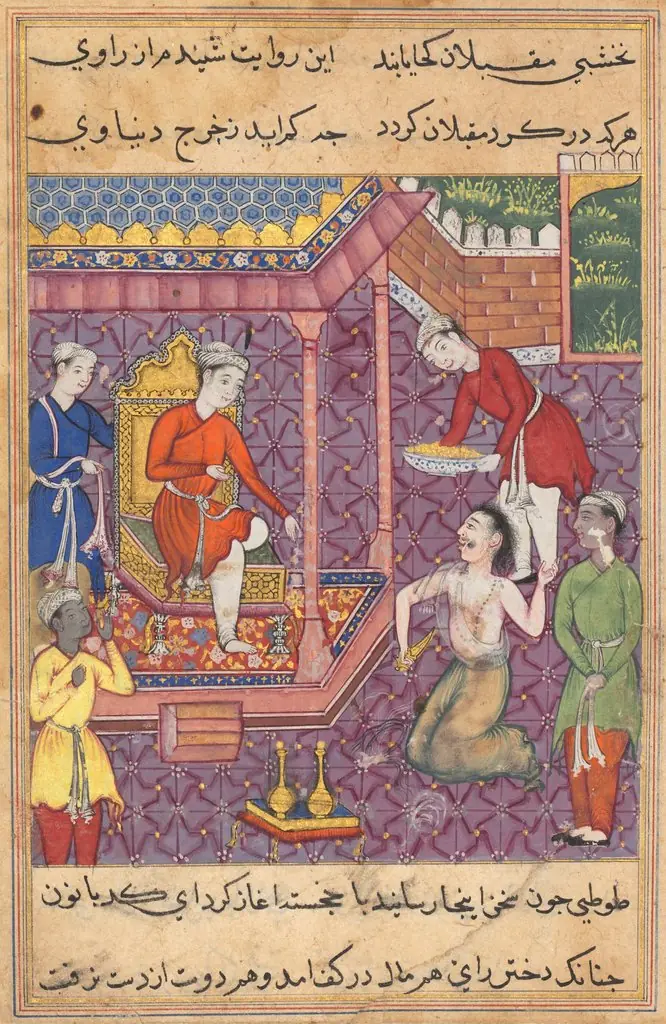 The magician disguised as a Brahman returns to claim his “daughter-in-law,” from a Tuti-nama (Tales of a Parrot): Thirty-fifth Night
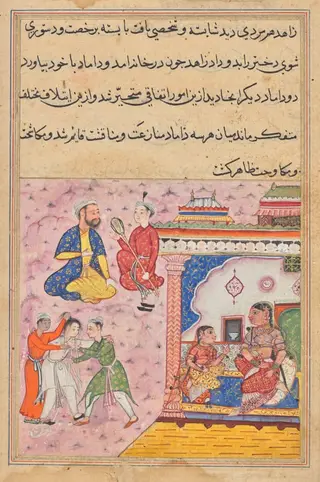 Three suitors fight amongst themselves for the hand of the devotee’s daughter, from a Tuti-nama (Tales of a Parrot): Twentieth Night
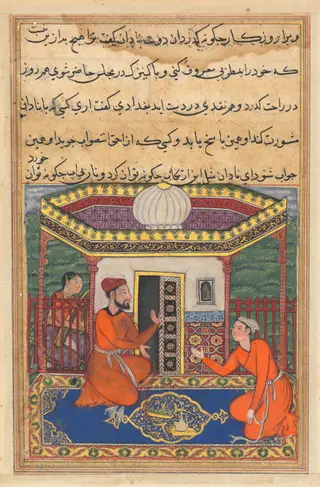 The young man of Baghdad solicits advice from a friend as his slave girl, who is adept at music, awaits, from a Tuti-nama (Tales of a Parrot): Forty-eighth Night
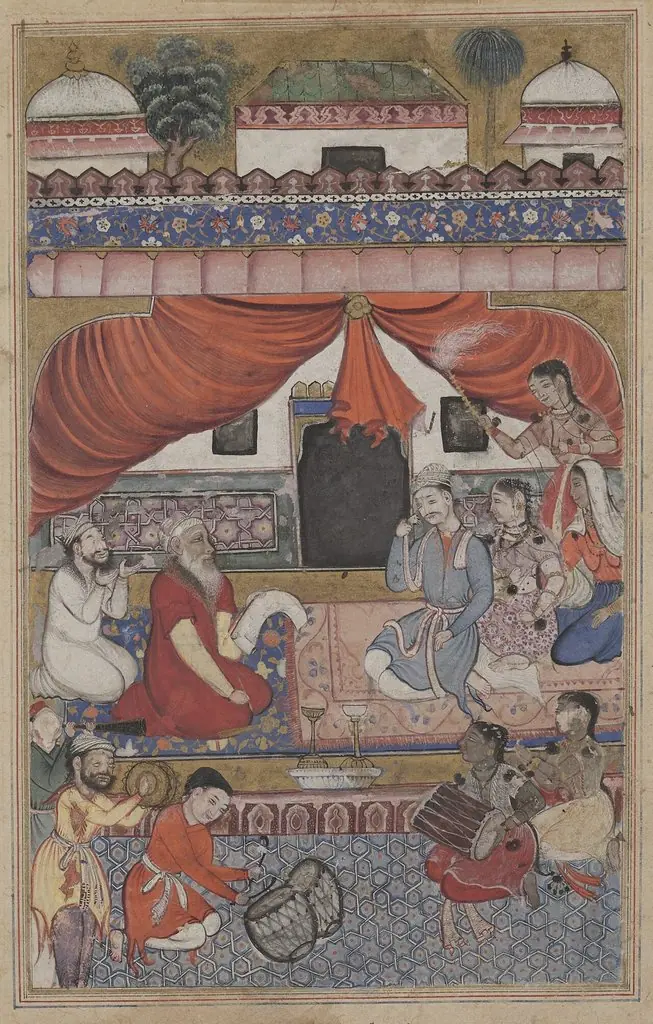 Preparation for the marriage of Mahmuda to the Young Vizier, from a Tuti-nama (Tales of a Parrot): Thirty-third Night
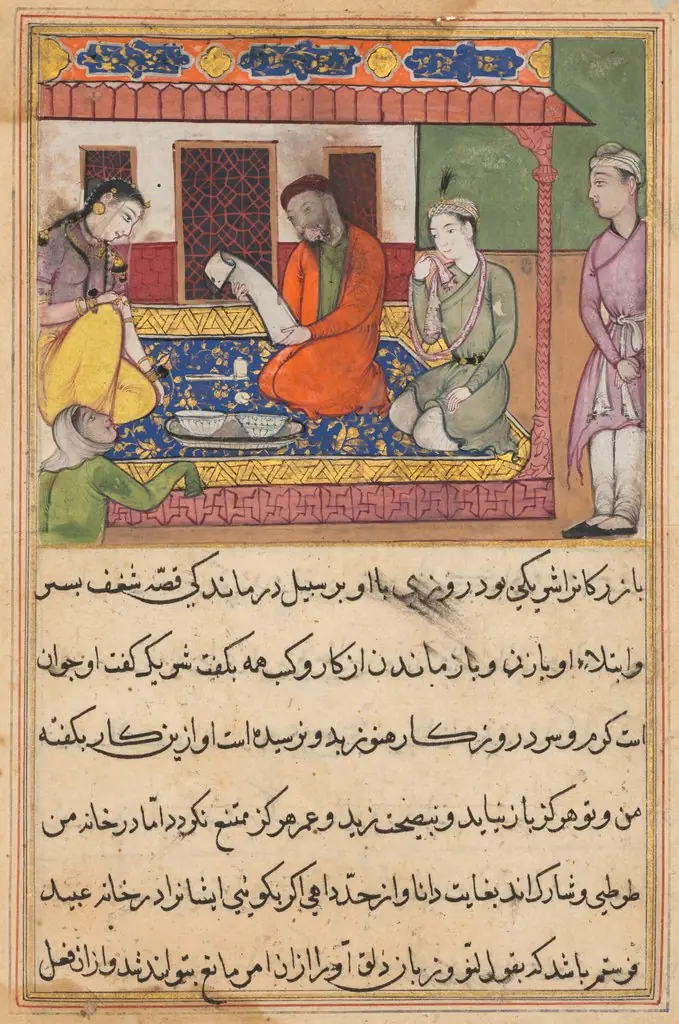 The marriage of ‘Ubaid, son of a merchant of Tirmiz, from a Tuti-nama (Tales of a Parrot): Forty-second Night
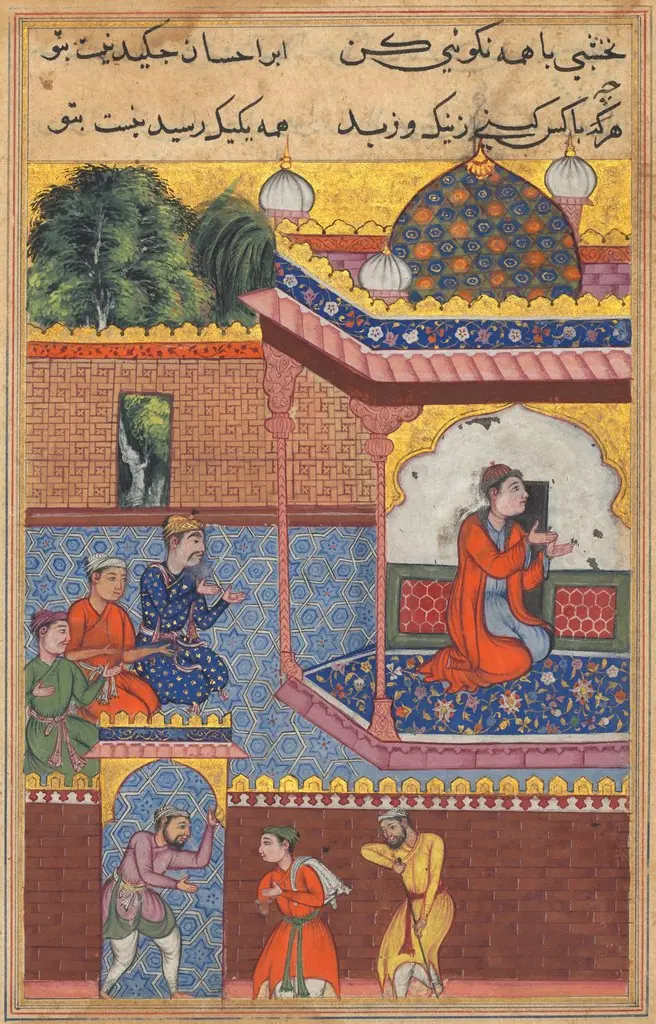 Kaiwan, Latif, and Sharif arrive at a house of worship, where they seek help from Khurshid who has become a mystical healer, from a Tuti-Nama (Tales of a Parrot): Thirty-second Night
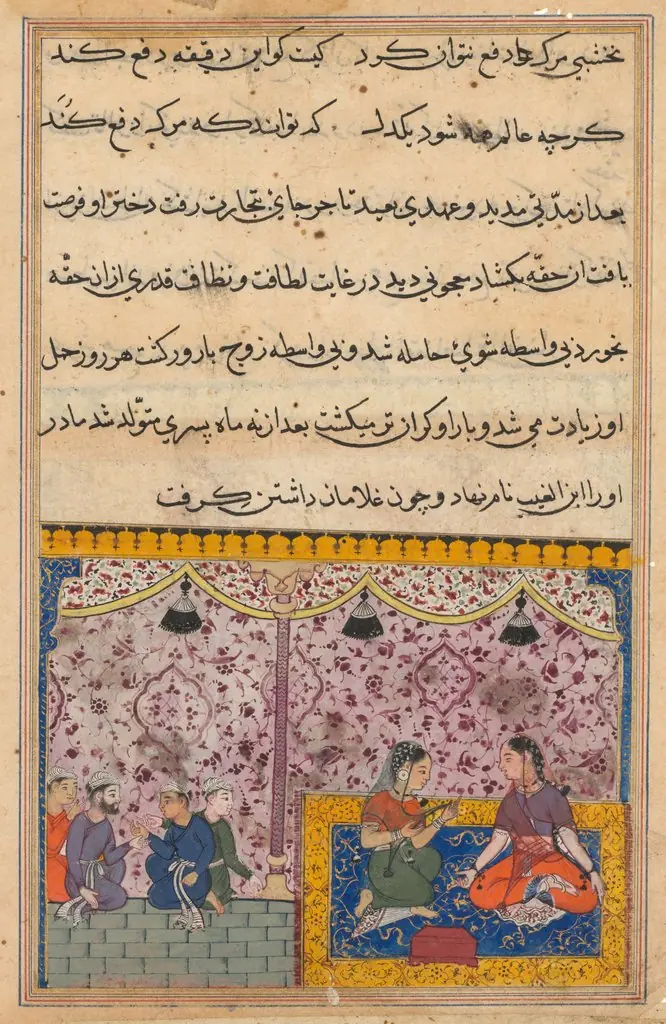 The merchant’s daughter gives birth to a son as a result of eating out of the box. The clever child recognizes the false gems from true, from a Tuti-nama (Tales of a Parrot): Twenty-third Night
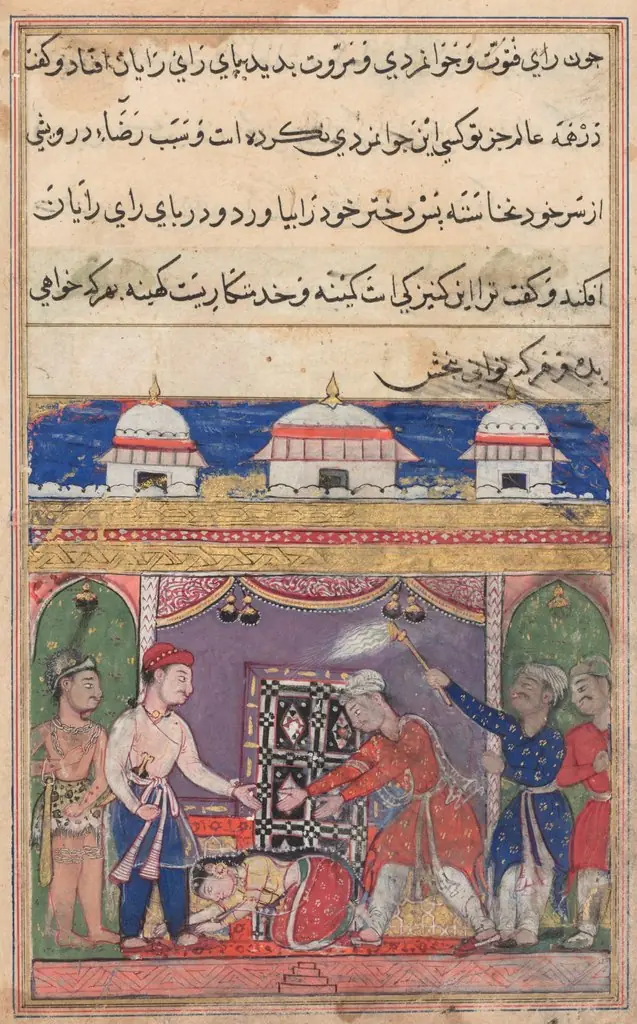 The king of Bahilistan offers his daughter to the King of Kings, from a Tuti-nama (Tales of a Parrot): Seventh Night
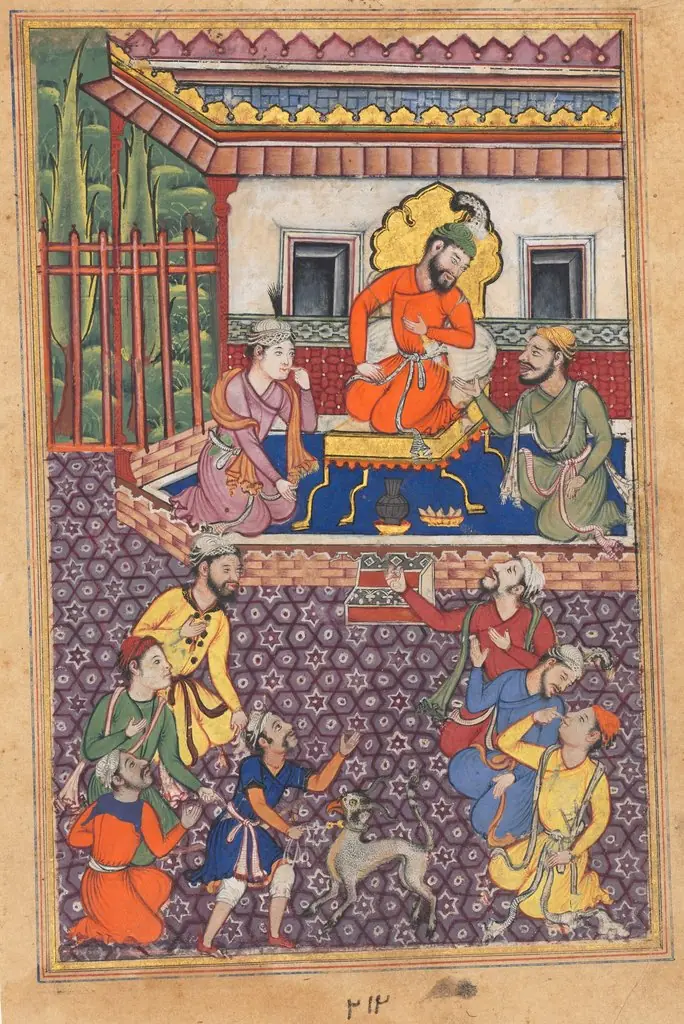 The court of the Raja of Ujjain, from a Tuti-nama (Tales of a Parrot): Forty-sixth Night
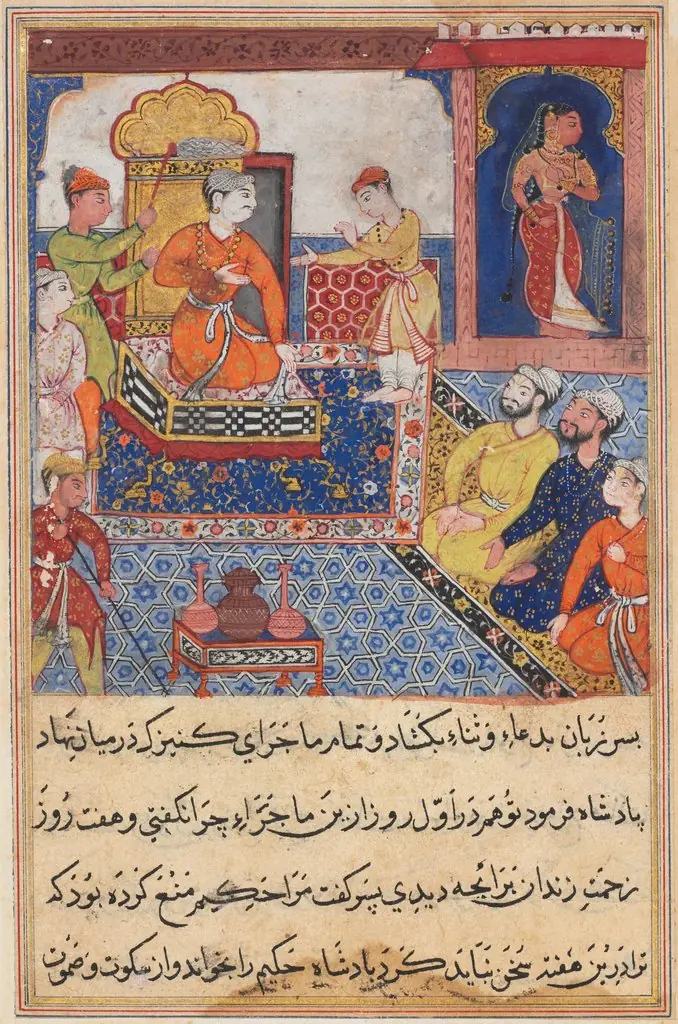 The young prince recounts his experiences to his father, the king, from a Tuti-nama (Tales of a Parrot): Eighth Night
 Page from Tales of a Parrot (Tuti-nama): text page
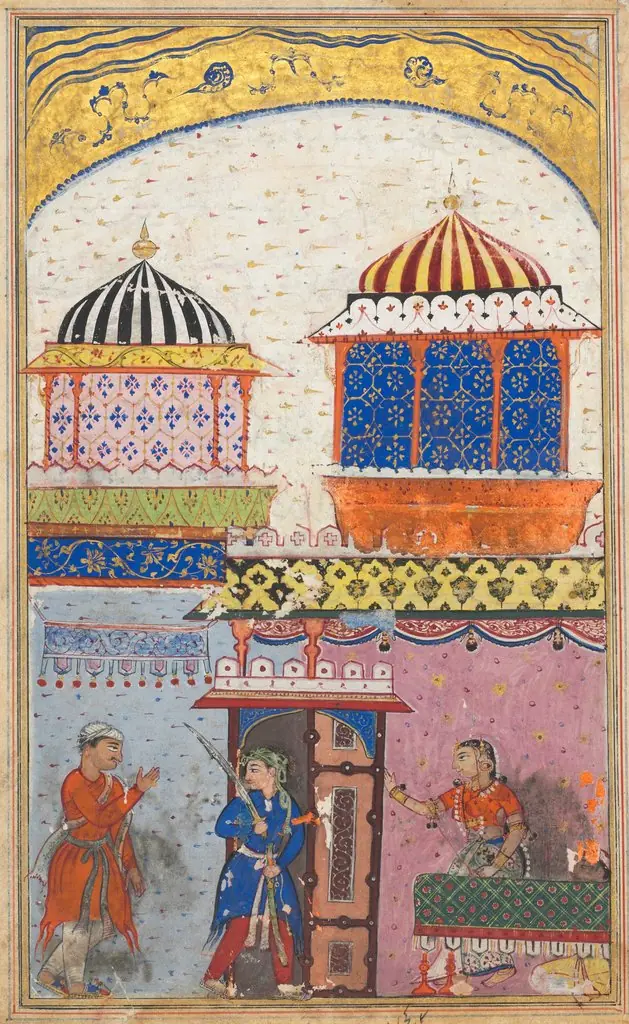 A woman asks her lover to leave her house, brandishing his sword and feigning rage in order to deceive her husband who has just arrived, from a Tuti-nama (Tales of a Parrot): Eighth Night
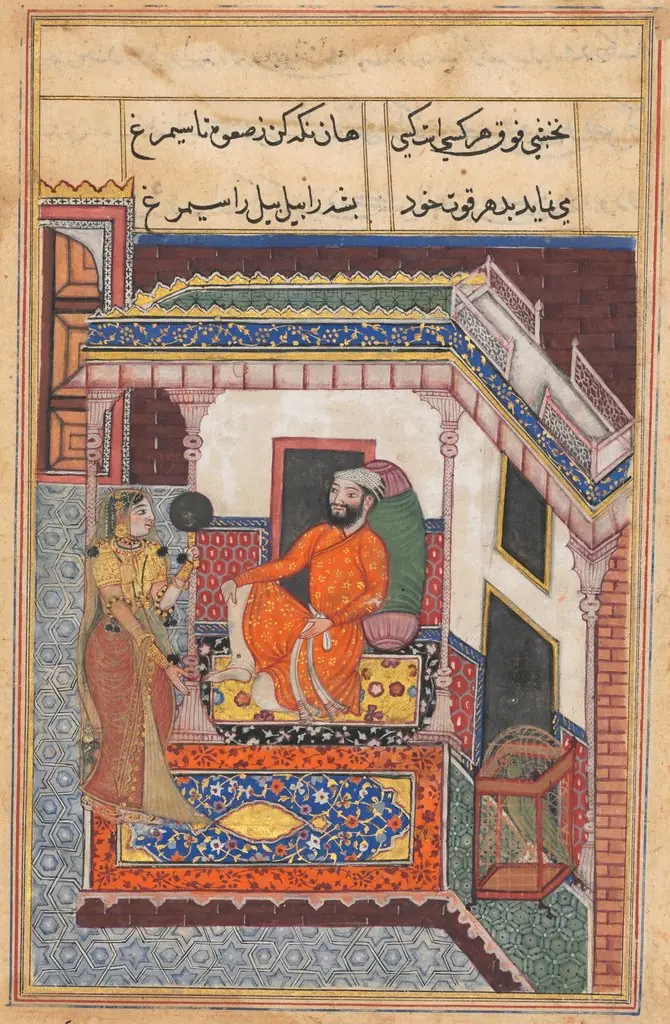 The parrot laughs on hearing the Raja of Ujjain’s wife admire her beauty in a mirror, from a Tuti-nama (Tales of a Parrot: Forty-sixth Night
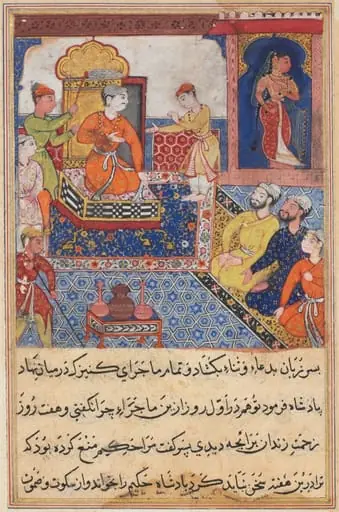 The young prince recounts his experiences to his father, the king, from a Tuti-nama (Tales of a Parrot): Eighth Night
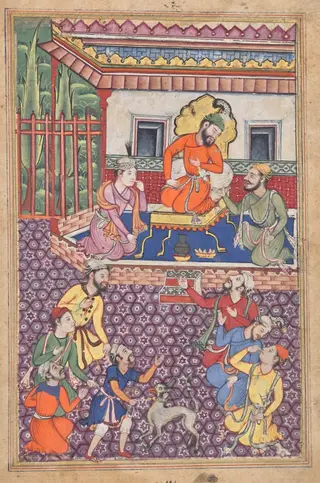 The court of the Raja of Ujjain, from a Tuti-nama (Tales of a Parrot): Forty-sixth Night
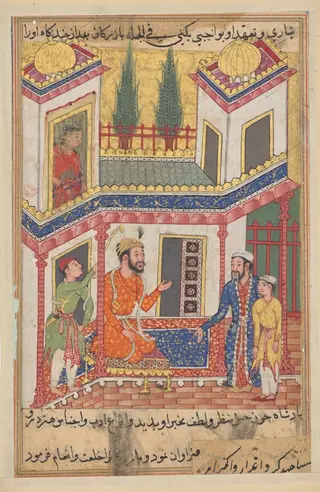 The merchant returns bringing a young slave who is really the son of the princess of Rum, now married to the king, from a Tuti-nama (Tales of a Parrot): Fiftieth Night
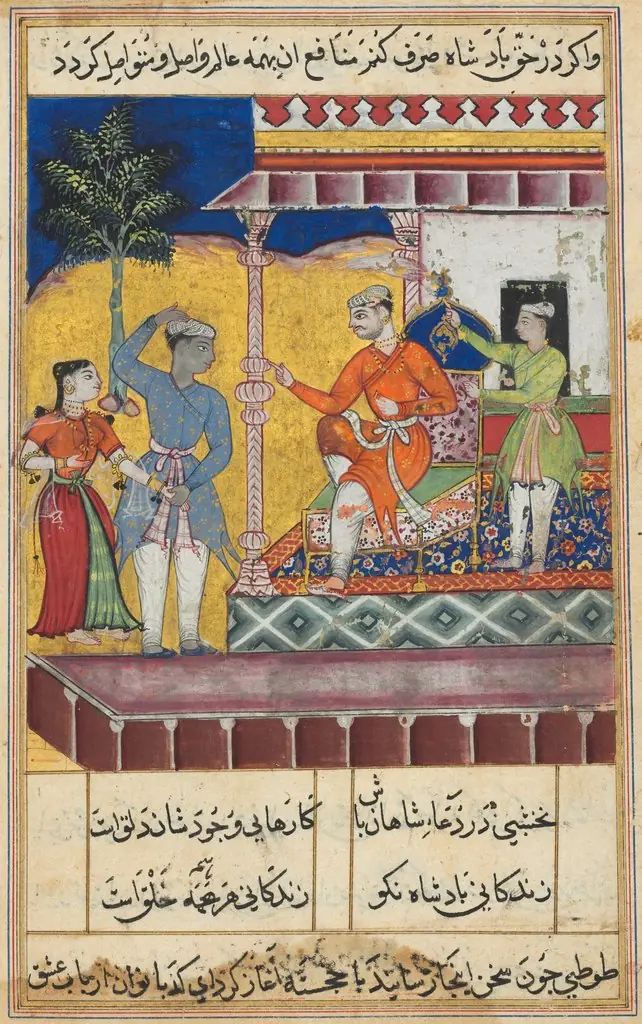 The rejuvenated old man and the daughter of the king of the jinns take leave of the King of Kings, from a Tuti-nama (Tales of a Parrot): Seventh Night