Artwork
Allegory on the Turkish Wars
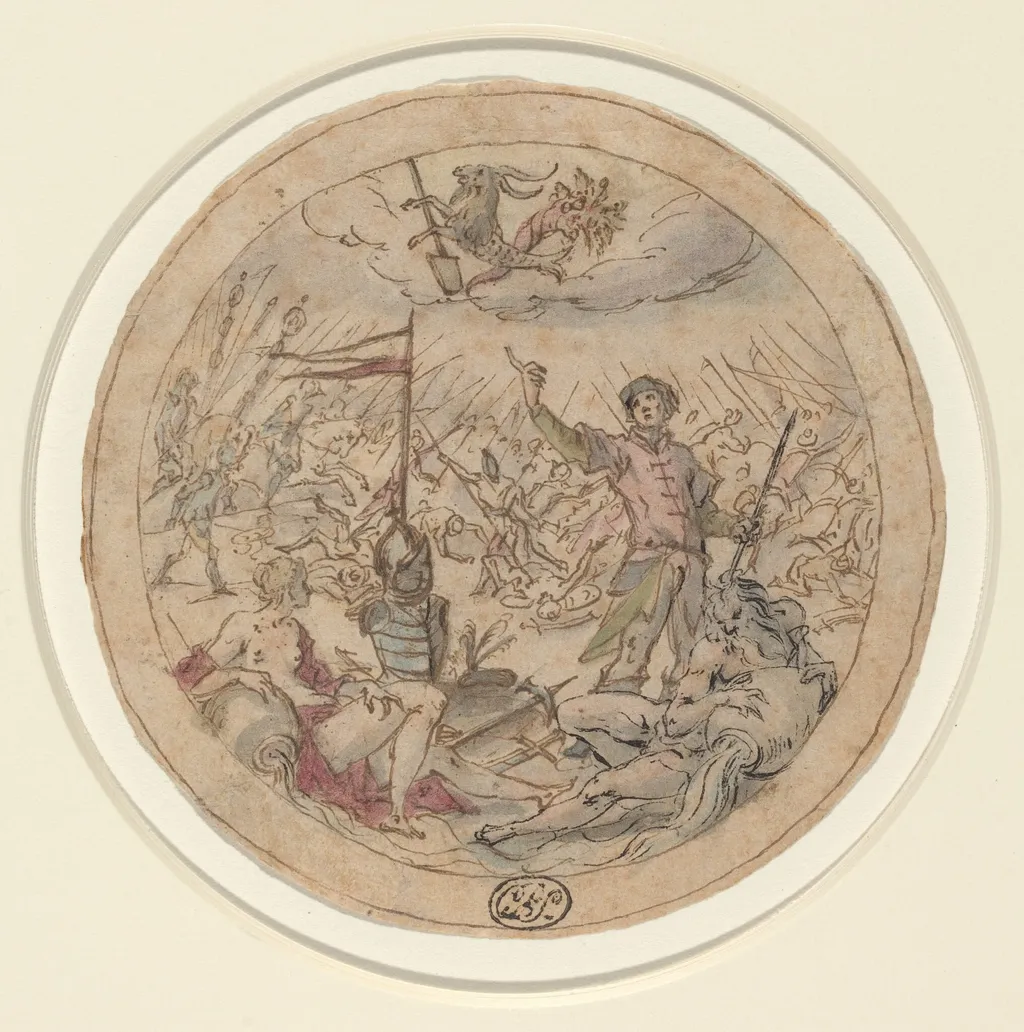
Allegory on the Turkish Wars is an ink drawing by the Baroque artist Hans von Aachen. It dates from 1600 and is held in the collection of the National Gallery of Art.
- Inscription
- Inscribed:upper left verso: 91 V.M.[?]; lower right verso in red: 9[87?]; lower right verso: FS
About this work
Overview
Allegory on the Turkish Wars, a circular drawing created around 1600 by Hans von Aachen, combines pen and ink with watercolor over graphite on laid paper, exemplifying Northern Mannerist techniques.
Subject & Meaning
The drawing depicts a chaotic battle scene, blending human figures, animals, and symbolic elements (e.g., a central spear-wielding man, a woman emerging from ruins, a dragon-like creature). This allegory reflects late 16th- to early 17th-century Europe’s fascination with political and military themes, potentially alluding to the Turkish Wars.
Technique & Style
Von Aachen employed sharp ink lines and muted watercolor to convey urgency and drama, characteristic of Northern Mannerism. The interplay of detailed figures and expressive, turbulent backgrounds underscores the style’s emphasis on emotional intensity.
History & Provenance
Created under the patronage of Emperor Rudolf II, who favored von Aachen’s mythological and allegorical works, the drawing is part of the artist’s prolific output in these genres.
Context
This work aligns with the broader artistic and political climate of its time, where allegorical and military subjects resonated with European audiences concerned with the Ottoman Empire’s expansion.
Own this work as a print
Artist & collection
Artist
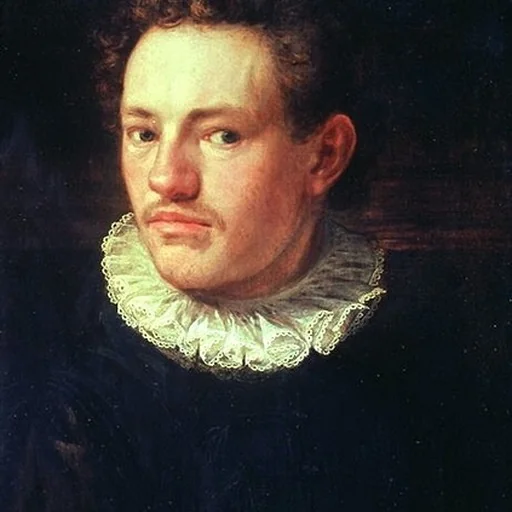
Hans von Aachen (1552 – 4 March 1615) was a German painter who was one of the leading representatives of Northern Mannerism.

 Capricci di varie battaglie
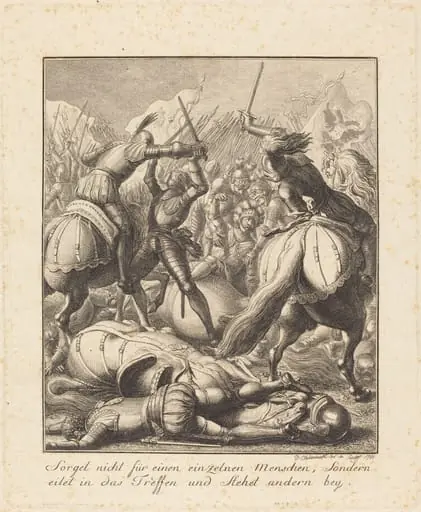 Rudolph of Hapsburg
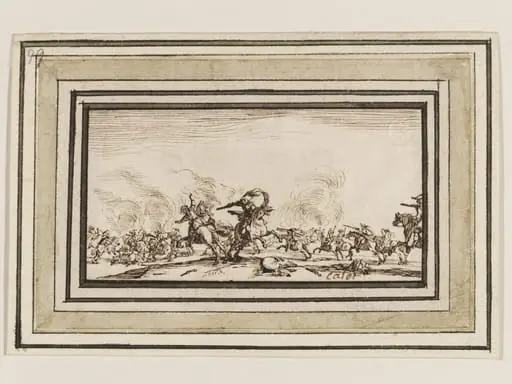 Le Combat au Pistolet
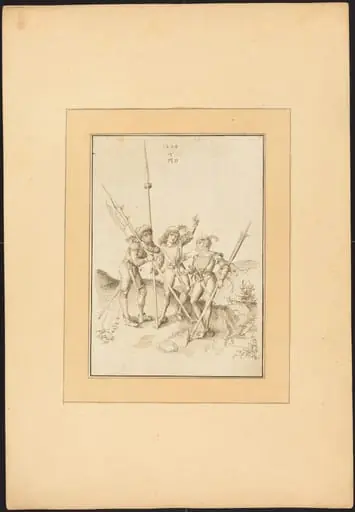 Three Lansquenets
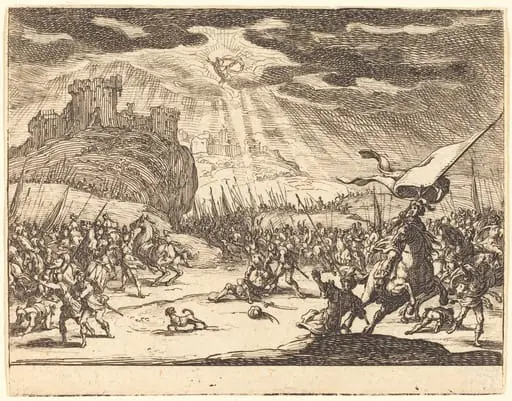 Conversion of Paul
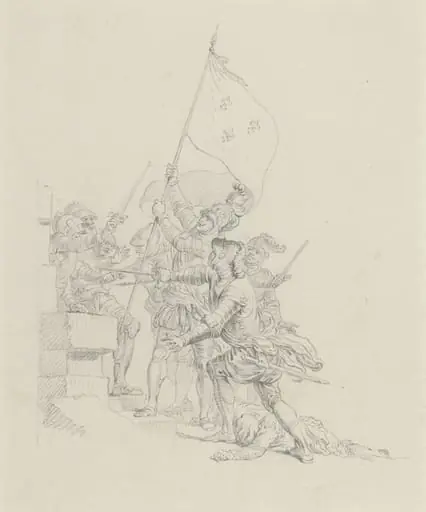 Il monte: il a déjà de ses mains triomphantes...
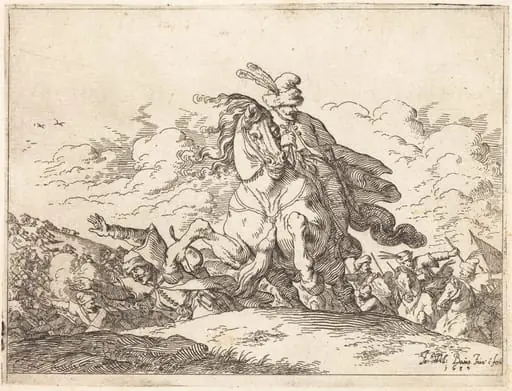 Capricci di varie battaglie
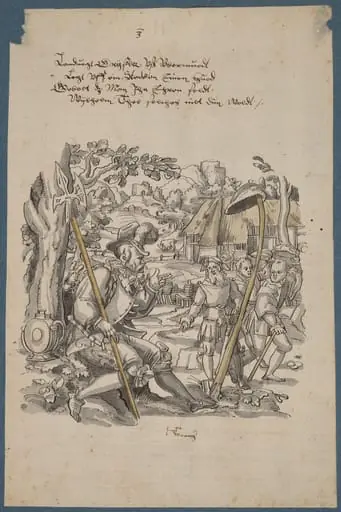 William Tell Refusing to Honor Governor Gessler's Hat
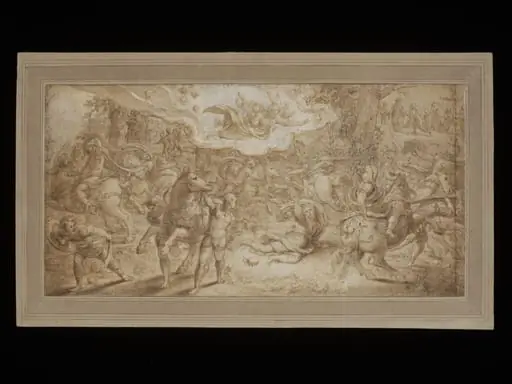 The Conversion of Saint Paul
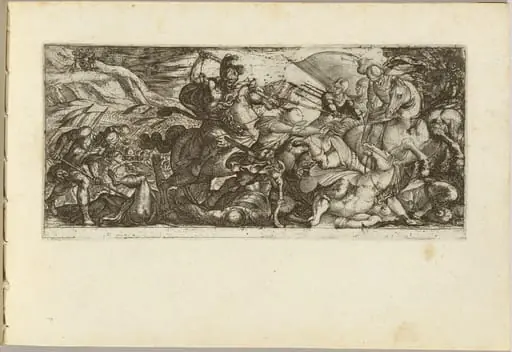 Cavalry Attack with Soldiers Fleeing
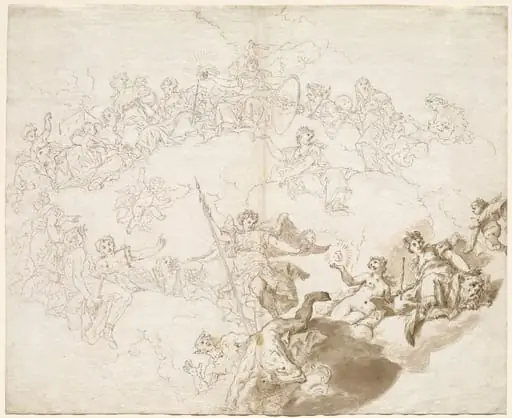 The Triumph of Virtue and Divine Wisdom
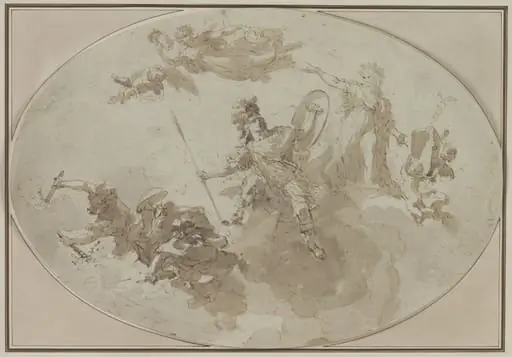
- Ceiling Study: Allegory of Peace and War