Artwork
The Caldron Scrubber
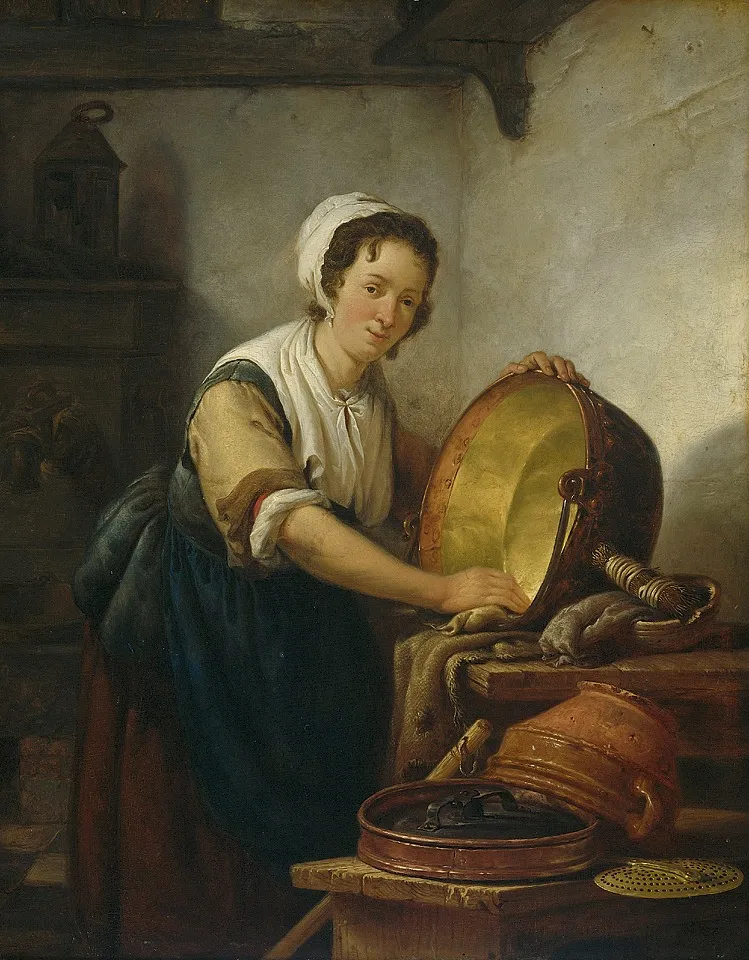
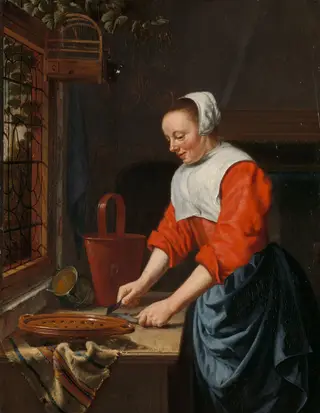
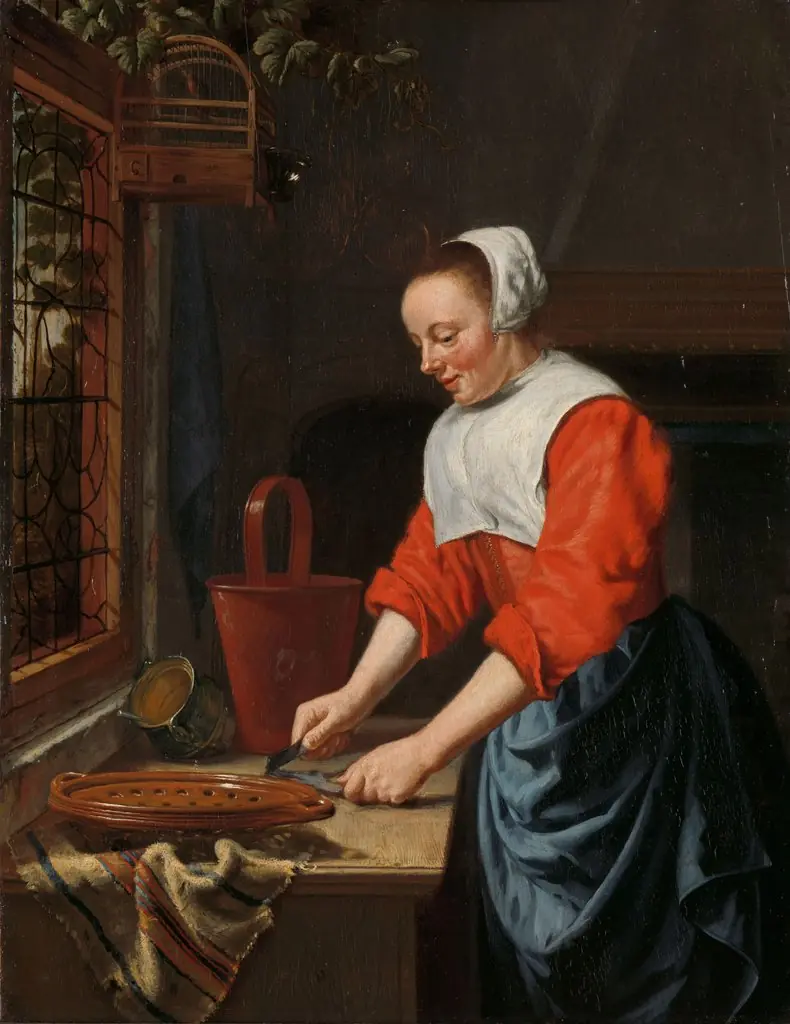
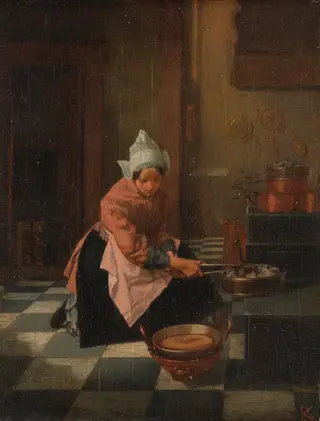
The Caldron Scrubber is an oil painting by the Rococo painting artist Abraham van Strij. It dates from 1809 and is held in the collection of the Rijksmuseum.
About this work
Subject & Meaning
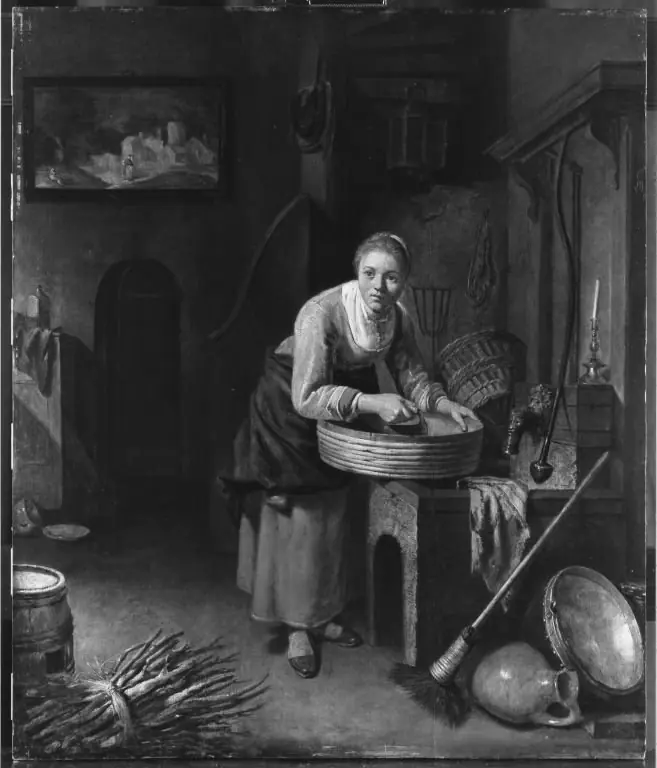
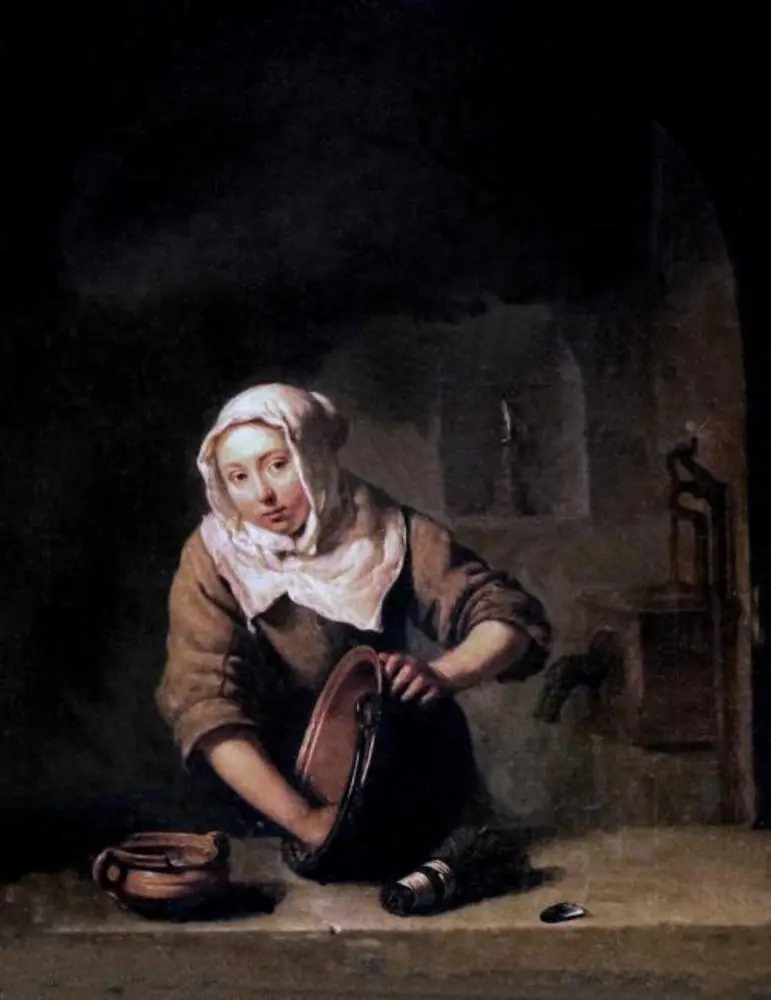
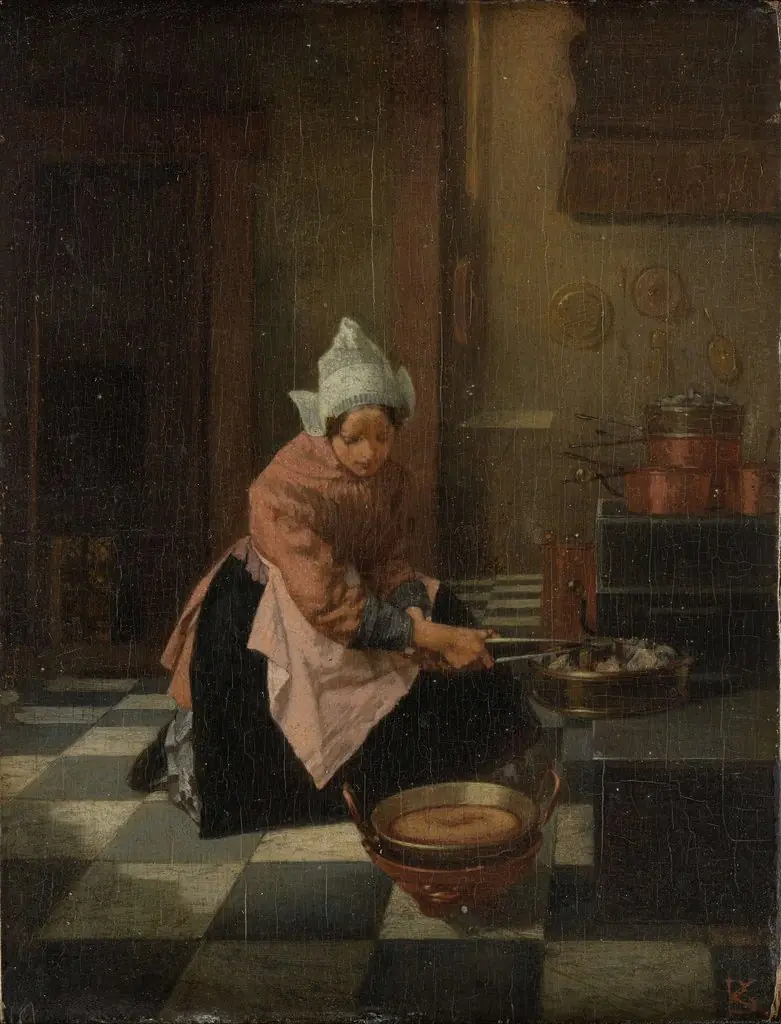
The painting depicts a woman scouring a stock pot, a domestic chore rendered as genre art. The subject is a humble kitchen laborer, the "caldron scrubber" of the title, engaged in the repetitive task of cleaning cookware. The work represents everyday working-class life in the early 19th century, elevating a mundane moment to the subject of fine art through the genre scene tradition.
Technique & Style
The work is part of the Rijksmuseum’s collection and is cataloged under the title The Caldron Scrubber, reflecting its thematic focus on domestic choreography.
Abraham van Strij painted The Caldron Scrubber in 1809 using oil paint on a wooden panel. The work depicts a woman engaged in the act of scrubbing a large pot, rendered with meticulous attention to domestic activity. Its composition and handling of light reflect the genre scene tradition, emphasizing narrative detail within an intimate interior setting.
The painting measures 34 cm in height and 27 cm in width, aligning with the physical dimensions recorded for the work at the Rijksmuseum.
The surface is executed on a wooden support typical of early 19th-century Dutch domestic interiors, with fine brushwork defining textures such as steam and fabric. Stylistically, the piece combines realism in figure portrayal with a restrained palette, focusing on the quiet intensity of labor. These formal qualities underscore the artist’s interest in everyday tasks as subjects worthy of visual attention.
The work is part of the Rijksmuseum’s collection and is cataloged under the title The Caldron Scrubber, reflecting its thematic focus on domestic choreography.
Overview
Abraham van Strij’s 1809 oil painting, titled The Caldron Scrubber, presents a domestic interior in which a woman is engaged in cleaning a large copper pot. The work is part of the Rijksmuseum’s collection and exemplifies a genre scene that focuses on everyday labor rather than mythic or historical narrative.
History & Provenance
Created in the early nineteenth century, The Caldron Scrubber entered the Rijksmuseum’s holdings as part of its effort to document Dutch genre painting. The museum’s records trace the work’s acquisition to the mid‑20th century, where it has remained on display as an example of van Strij’s later output.
Context
The painting reflects a period in Dutch art when genre scenes depicting domestic interiors were popular, serving both moral and decorative purposes. Van Strij, working in the shadow of the Dutch Golden Age, continued this tradition, focusing on realistic detail and the quiet dignity of ordinary subjects.
Artist & collection