Artwork
Beggars at a Doorway
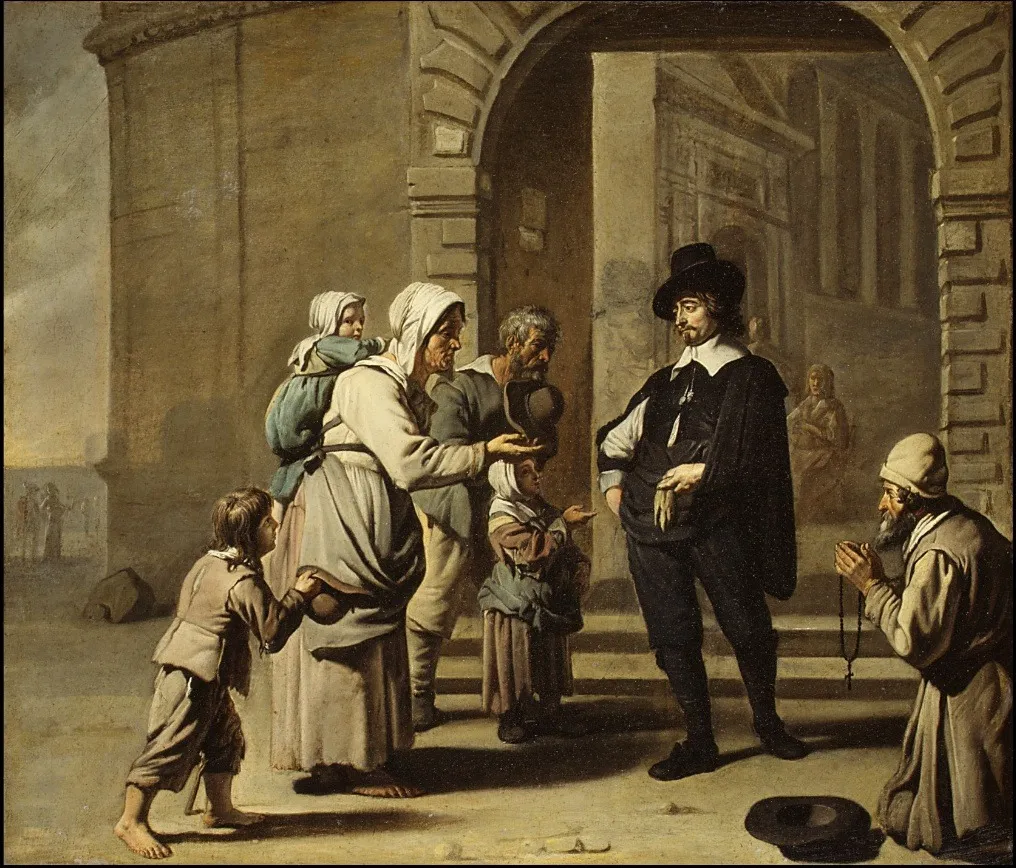
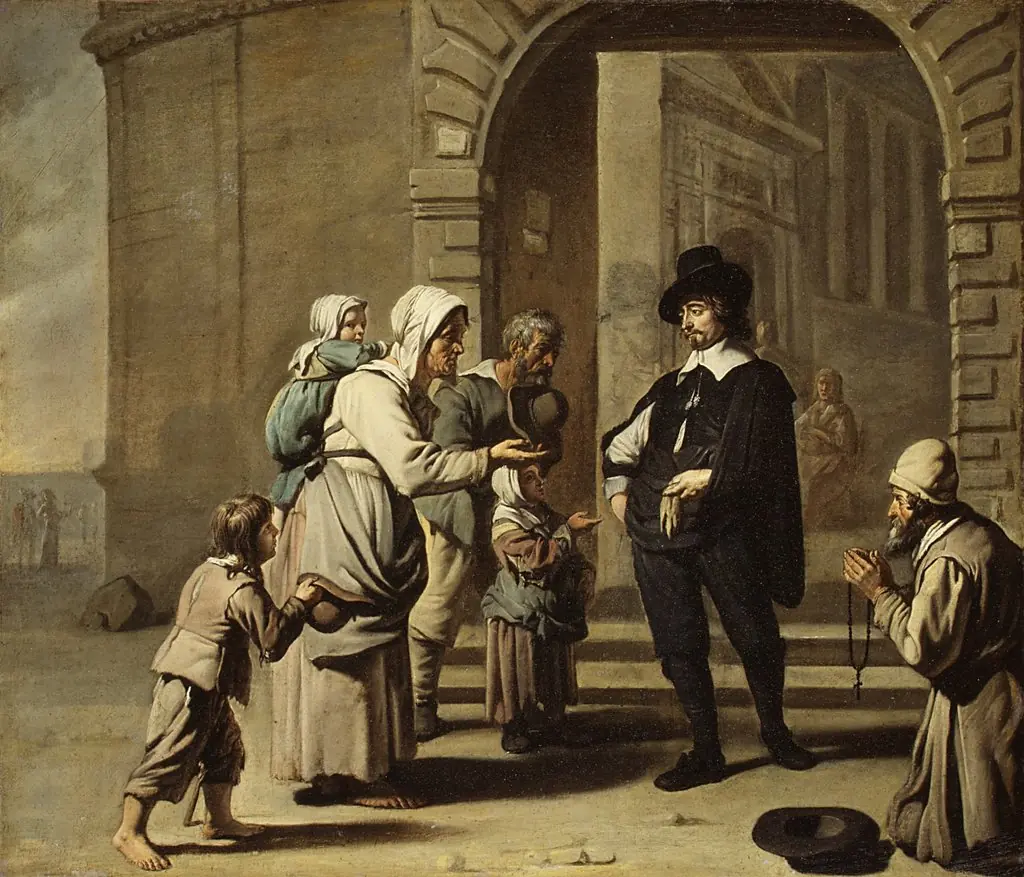
Beggars at a Doorway is an oil painting by the Dutch Golden Age artist Abraham Willemsens. It dates from 1650 and is held in the collection of the Metropolitan Museum of Art.
About this work
Technique & Style
Abraham Willemsens executed Beggars at a Doorway in 1650 using oil paint on a canvas support. The work is classified as a painting, adhering to the standard material practices of the artist's era. While the specific handling techniques and current physical condition are not detailed in the available records, the piece remains a documented example of mid-seventeenth-century oil painting on canvas.
History & Provenance
No specific details regarding the original commission or intermediate ownership history prior to its museum acquisition are provided in the available records.
Abraham Willemsens created the oil painting Beggars at a Doorway in 1650. Executed on canvas, the work dates to the mid-17th century. The piece is currently held in the collection of the Metropolitan Museum of Art, where it remains part of their permanent holdings.
No specific details regarding the original commission or intermediate ownership history prior to its museum acquisition are provided in the available records.
Overview
Created around 1650, Beggars at a Doorway is an oil painting by the Flemish artist Abraham Willemsens. The work portrays a small group of destitute figures gathered at an entrance, captured in a moment of quiet exchange. It is part of the collection of the Metropolitan Museum of Art in New York.
Subject & Meaning
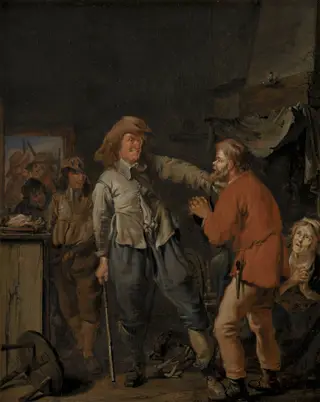
The composition shows five individuals: a man in a dark coat offering an object to a woman with a white headscarf, her child clinging to her skirt, a barefoot boy watching, and an older man in a turban kneeling with a hat. The scene suggests a fleeting interaction among strangers, emphasizing themes of poverty, charity, and human connection in everyday life.
Artist & collection
Artist
Abraham Willemsens or Abraham Willemsen (c. 1605-1610 - 1672), was a Flemish painter of history and genre paintings. His genre scenes were reminiscent of the style of the Le Nain brothers. He also produced copies after the works of Rubens.

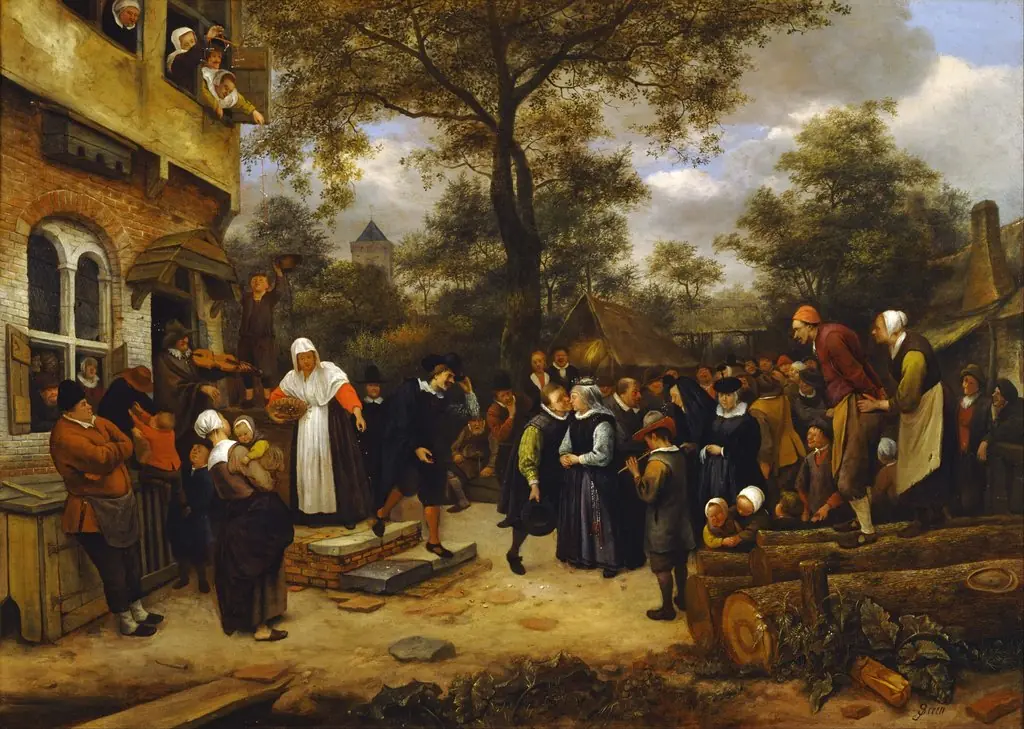 Village Wedding
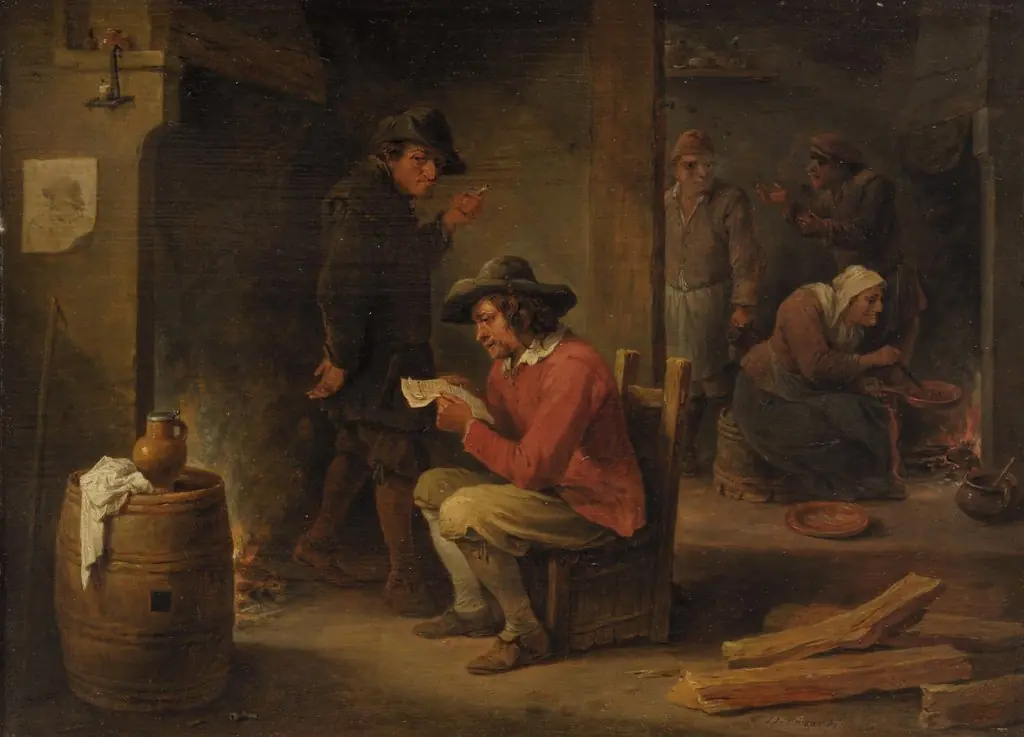 Farm interior with newspaper reader
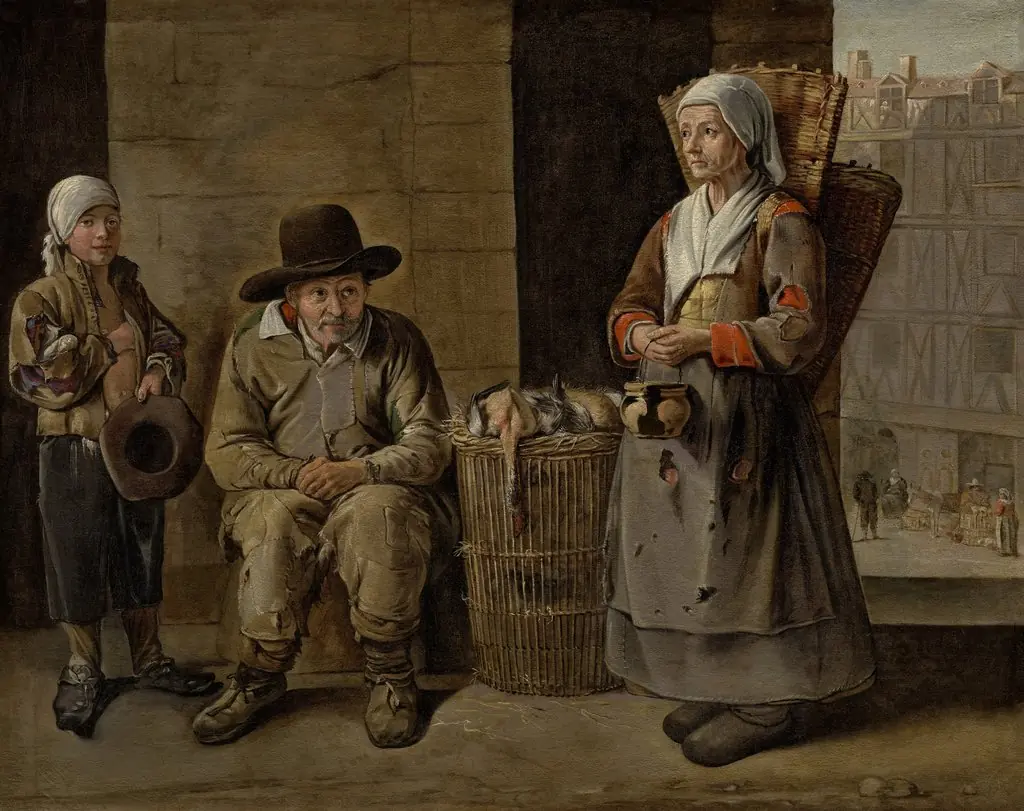 The Poultry Sellers
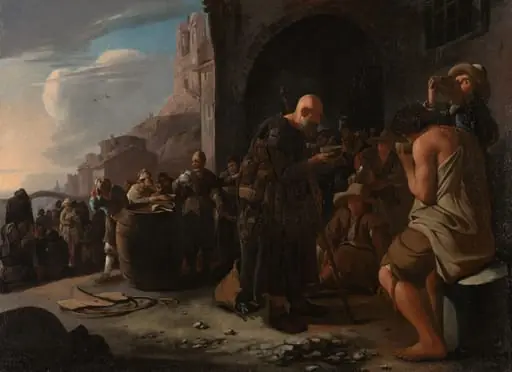 De dorstigen laven
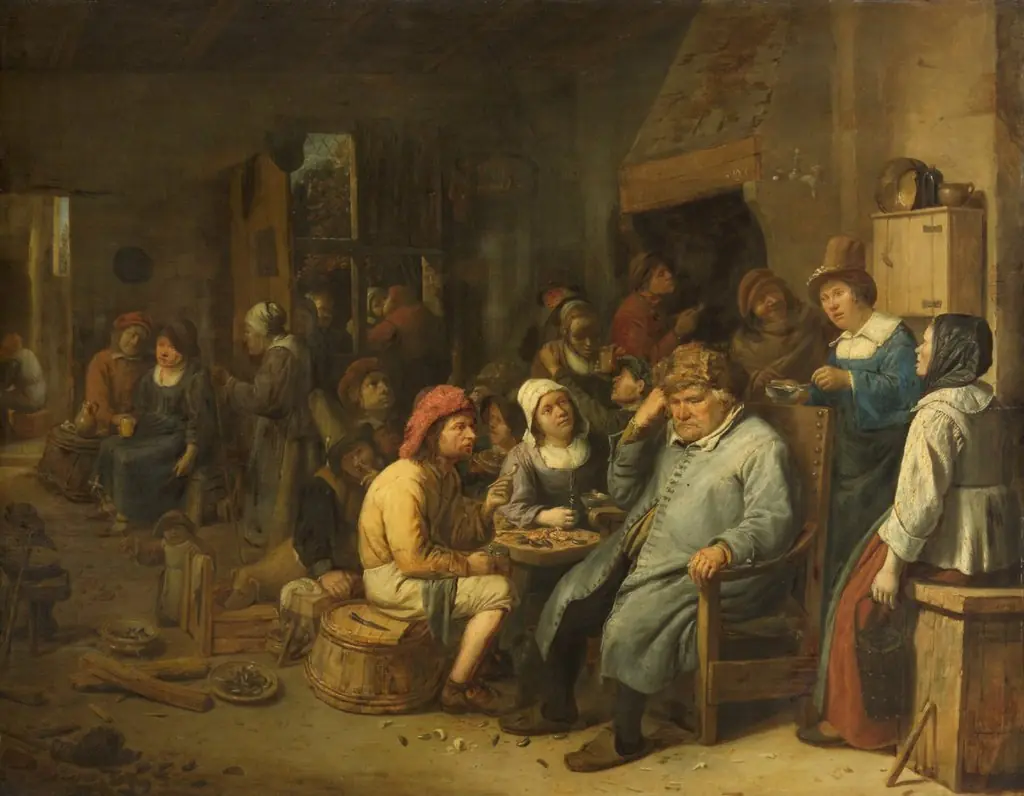 Farming in the Inn
 Distinguished Company in a Room
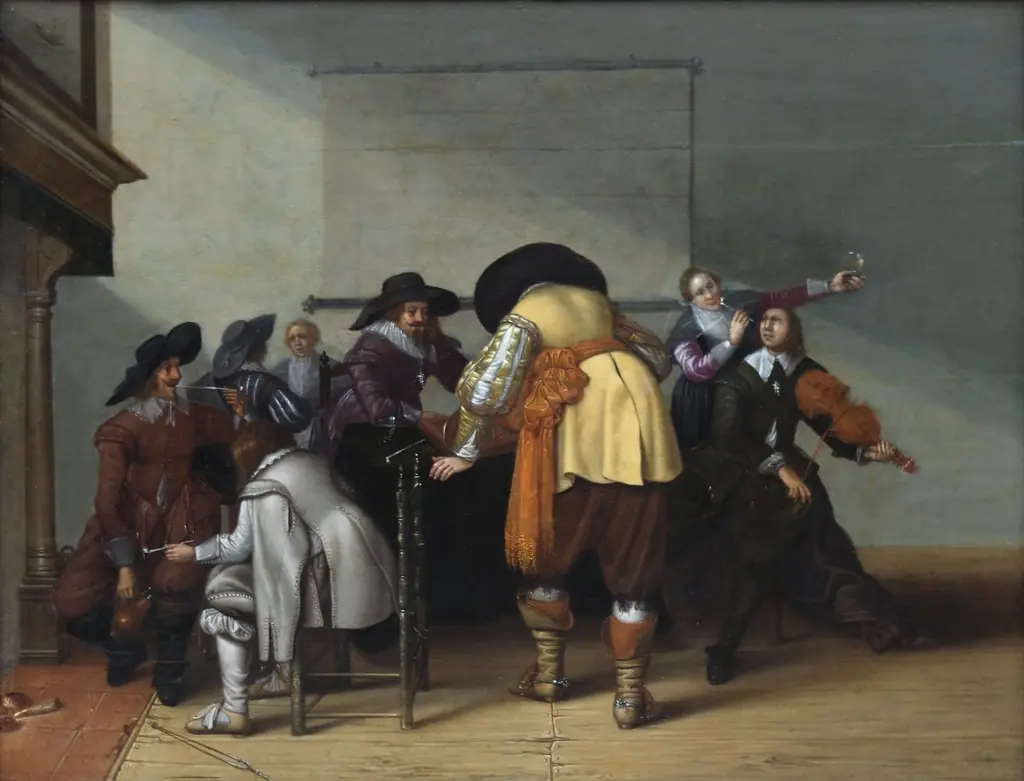 Merry Company
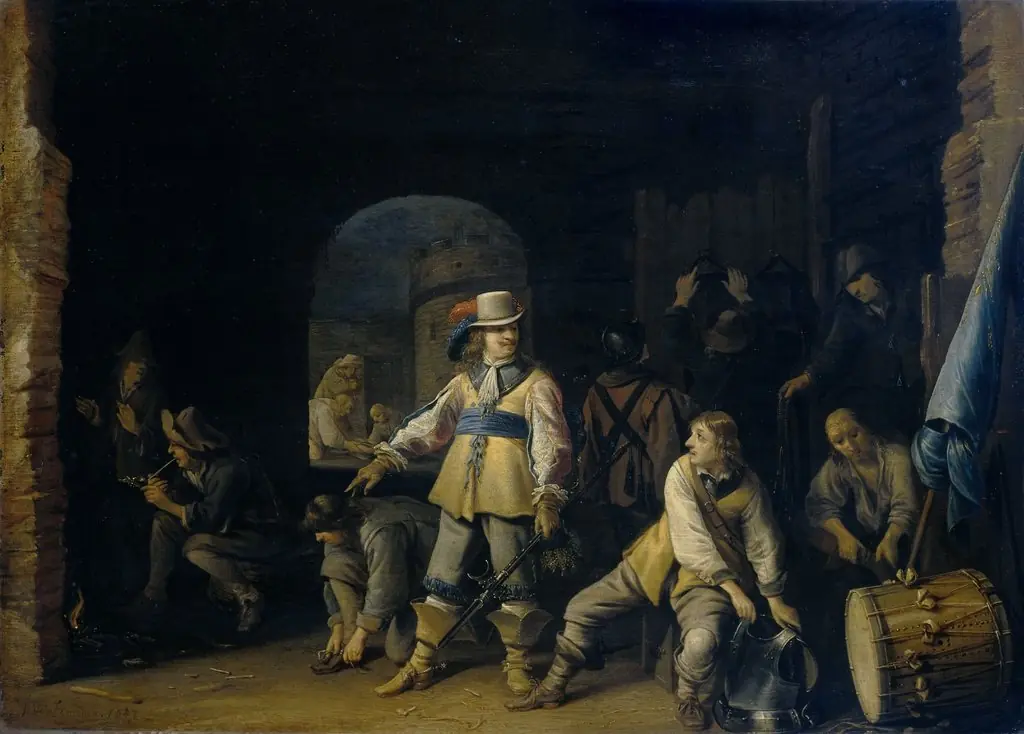 Soldiers in a guardroom
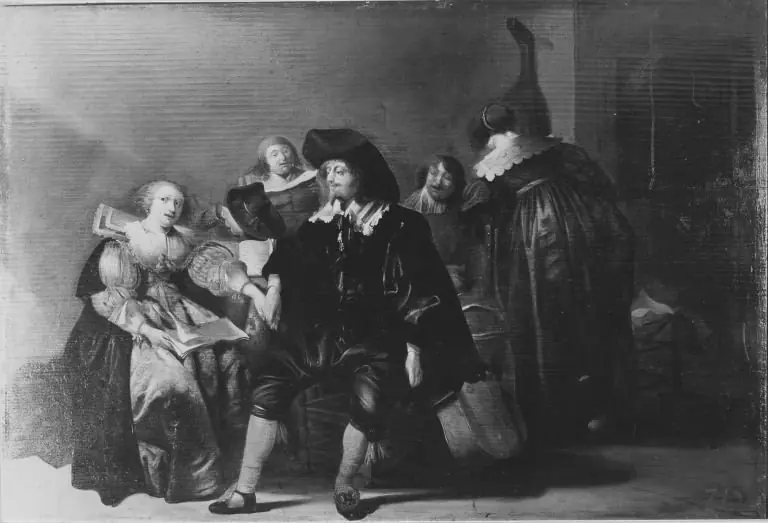 musical company
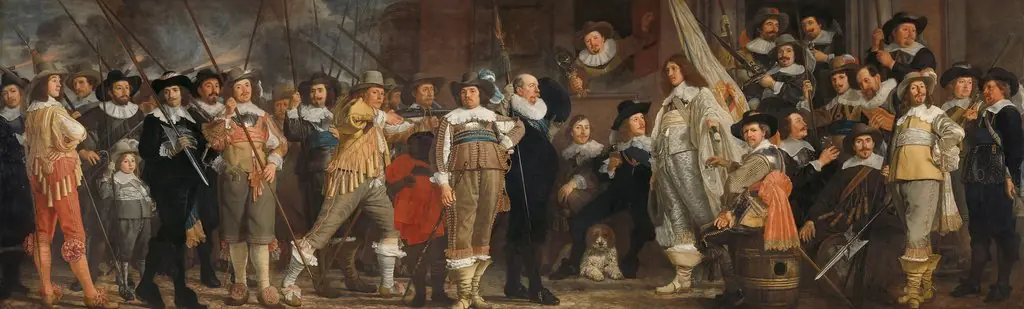 Militia Company of District VIII under the Command of Captain Roelof Bicker
 Soldiers Breaking into a Peasant's Cottage
- Beggars at a Doorway