Artwork
Madonna with the Siskin
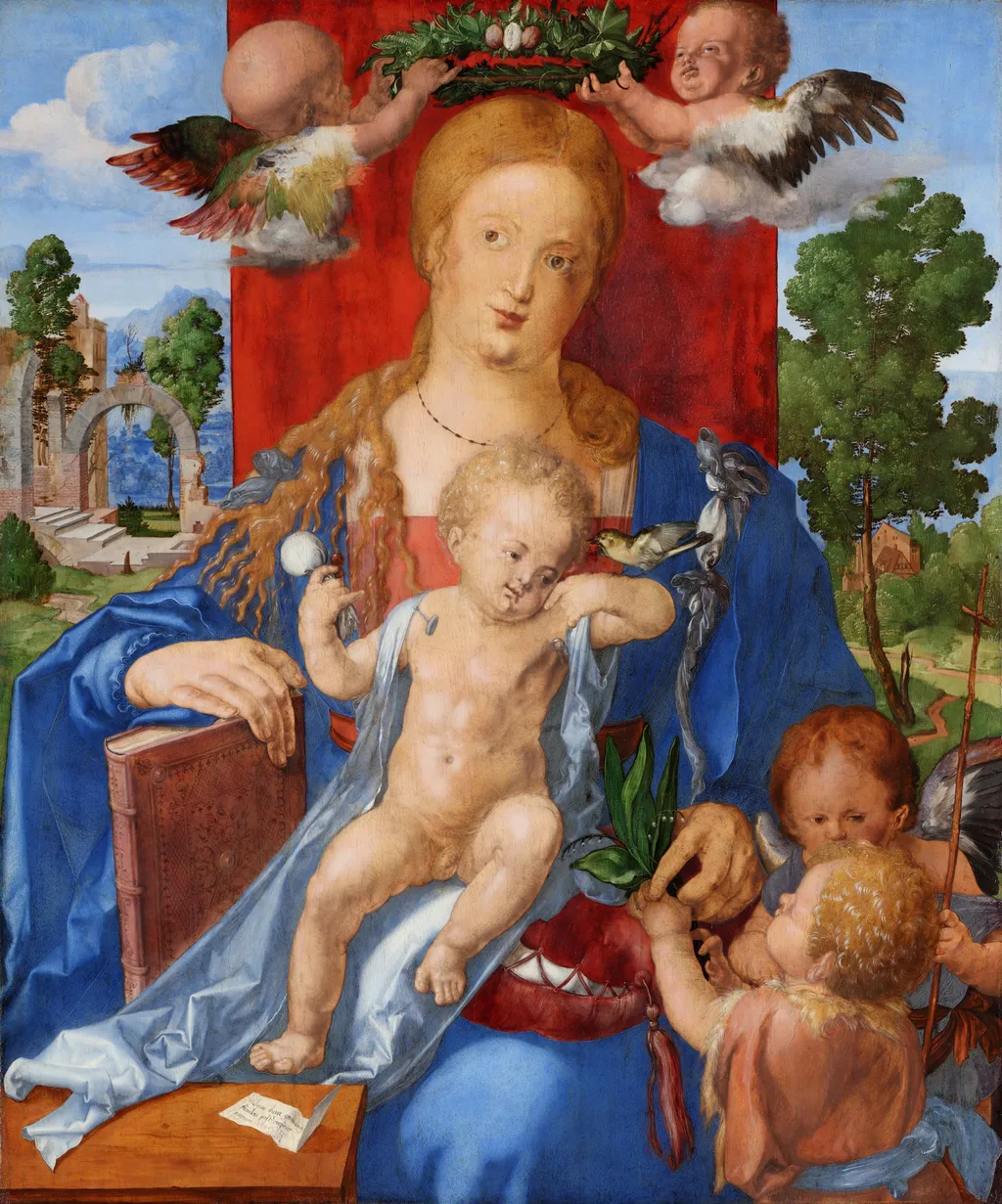
Madonna with the Siskin is an oil painting by the High Renaissance artist Albrecht Dürer. It dates from 1506 and is held in the collection of the Gemäldegalerie Berlin.
About this work
Technique & Style
Dürer applied thin layers of oil paint to achieve fine detail and subtle tonal transitions, a hallmark of the German Renaissance style.
The painting was executed in oil on a poplar panel in 1506, measuring approximately 91 cm in height and 77 cm in width. Dürer applied thin layers of oil paint to achieve fine detail and subtle tonal transitions, a hallmark of the German Renaissance style. The composition features a seated Virgin in a red drapery against a red curtain, with a blue mantle draped over her shoulders; she holds a closed book symbolizing prophecy, while the infant Christ rests on her lap on a crimson cushion, clutching a rattle and a small bird, the siskin, that alludes to the crown of thorns.
Two cherubim crown Mary with a wreath of vine leaves and roses, and a landscape behind includes a ruin representing the palace of King David and a tree symbolizing the New Covenant. The work also incorporates symbolic elements such as a lily bouquet offered by Saint John the Baptist and a monogrammed cartellino bearing Dürer’s signature and date.
History & Provenance
Albrecht Dürer created this oil painting on poplar panel in 1506 during his second stay in Venice. The work bears the artist's monogram and an inscription dating it to that year. Art historians identify it as the second work mentioned in a letter Dürer wrote to Willibald Pirckheimer on September 23, 1506, noting its stylistic continuity with the Feast of the Rose Garlands.
Dürer subsequently transported the panel to his hometown of Nuremberg, where it remained during the latter half of the sixteenth century and likely entered the collection of Emperor Rudolf II. Following this period, the painting's location became unknown until the 1860s, when it appeared in the holdings of the 9th Marquess of Lothian at Newbattle Abbey. The Gemäldegalerie in Berlin acquired the work from the Marquess between 1892 and 1893.
The painting is held in the Gemäldegalerie in Berlin, where it is listed under inventory number 2002.18. It entered the museum's collection in 1892–93 after being acquired from the ninth Marquess of Lothian, who had owned it at Newbattle Abbey from the mid-16th century onward. The work was created by Albrecht Dürer in 1506 during his second stay in Venice and was first documented in a letter to Willibald Pirckheimer dated 23 September 1506.
It was likely part of the collection of Emperor Rudolf II before passing into private hands. The museum's catalogue and contemporary scholarship, including entries by Anja‑Franzisca Eichler (1999) and Erwin Panofsky (1977), confirm its provenance and acquisition history.
Context
The painting is regarded as a masterful synthesis of form and theological symbolism within the German Renaissance, exemplifying Dürer's ability to embed complex narrative meaning in a devotional image. Art historical scholarship situates it as a key work from his Venetian period, directly linked to the Rosary devotion and stylistically connected to both Flemish traditions and contemporary Venetian painting, particularly in its use of compositional framing and symbolic flora. The iconography, featuring the siskin (lucherino) as a prefiguration of the Passion, the closed book referencing Old Testament prophecy, and the inclusion of John the Baptist with lilies, demonstrates Dürer's sophisticated visual theology, while its provenance from Rudolf II's collection and later acquisition by Berlin's Gemäldegalerie underscores its enduring significance in museum collections.
Overview
Albrecht Dürer’s Madonna with the Siskin is an oil painting on panel completed in 1506. The work measures roughly 50 × 35 cm and is part of the collection of the Gemäldegalerie in Berlin. It belongs to the period of Dürer’s early mature output, when he was integrating Italian Renaissance ideas into his Northern artistic language.
Subject & Meaning
The composition shows a seated woman in a blue robe cradling a naked infant, who reaches toward a small finch perched on her arm. Above them hover three cherubic figures: one winged, one holding a scroll, and a third peering from the side. The bird, a siskine, functions as a symbolic element often associated with the soul or the Holy Spirit in devotional imagery.
Own this work as a print
Artist & collection
Artist
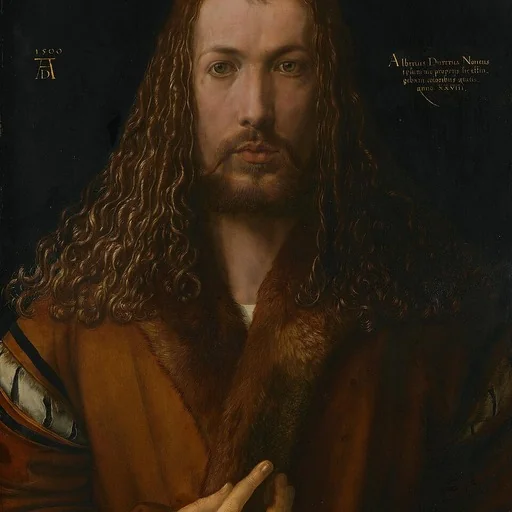
Albrecht Dürer spent his life in Nuremberg, a busy German city where artists traded prints like currency.

![Madonna and Child [obverse], by Albrecht Dürer](https://artifactworldgallery.com/img/albrecht-durer--madonna-and-child-obverse--d7b8ebf05d22ebe5-w320.webp)
![Lot and His Daughters [reverse], by Albrecht Dürer](https://artifactworldgallery.com/img/albrecht-durer--lot-and-his-daughters-reverse--b4ebf9b282faa17a-w320.webp)
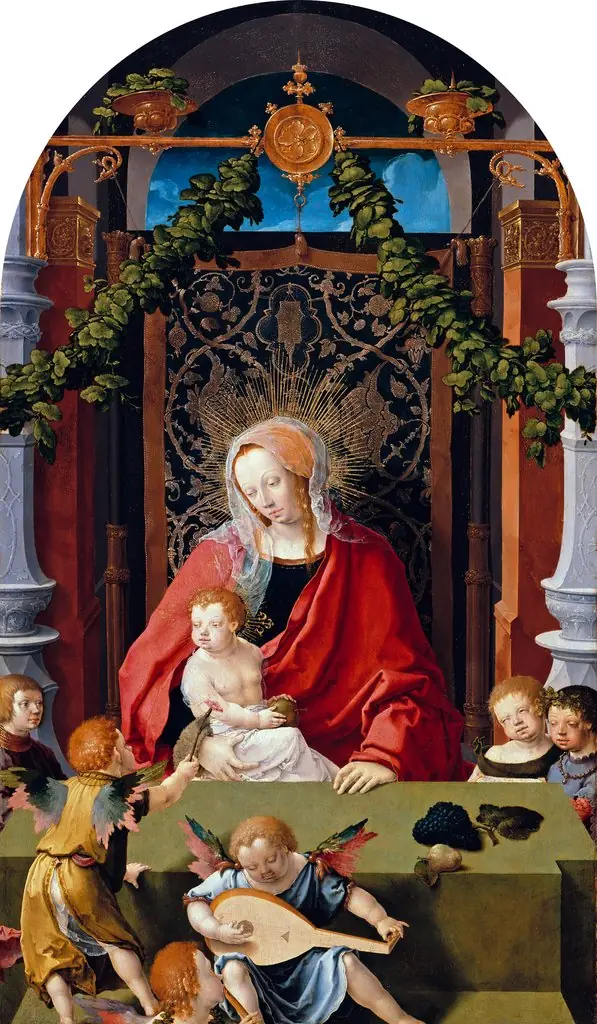 Virgin and Child with Angels
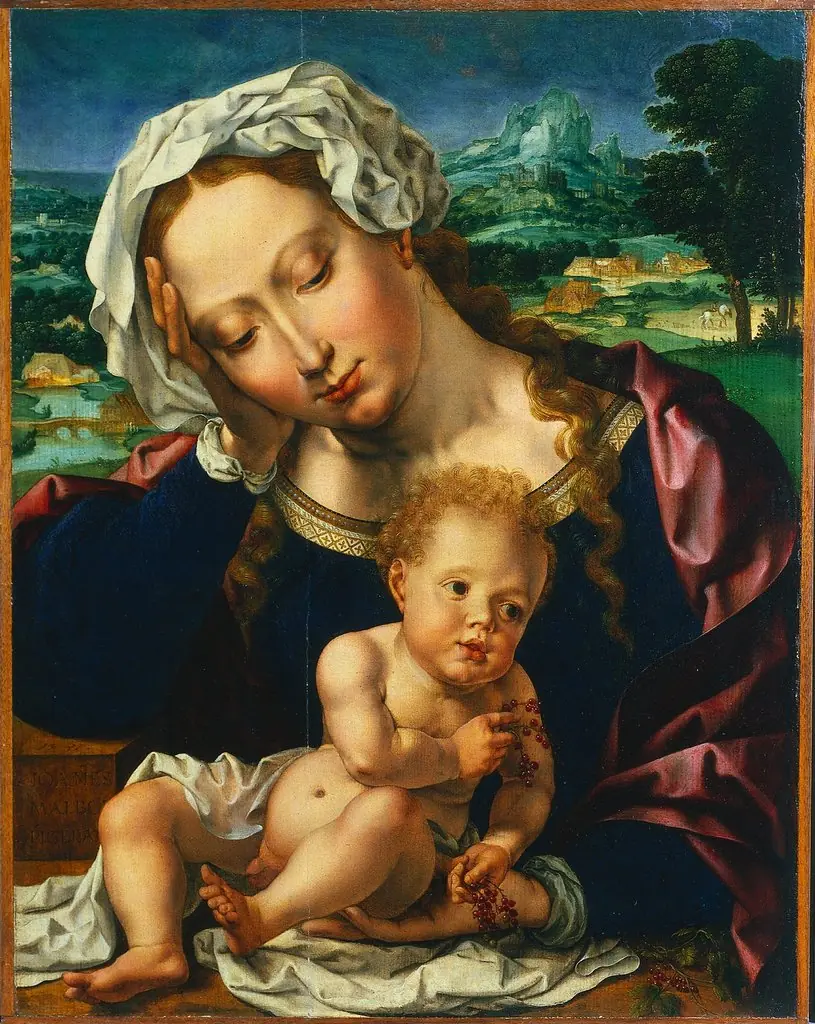 Virgin and Child in a Landscape
 The Rest on the Flight into Egypt
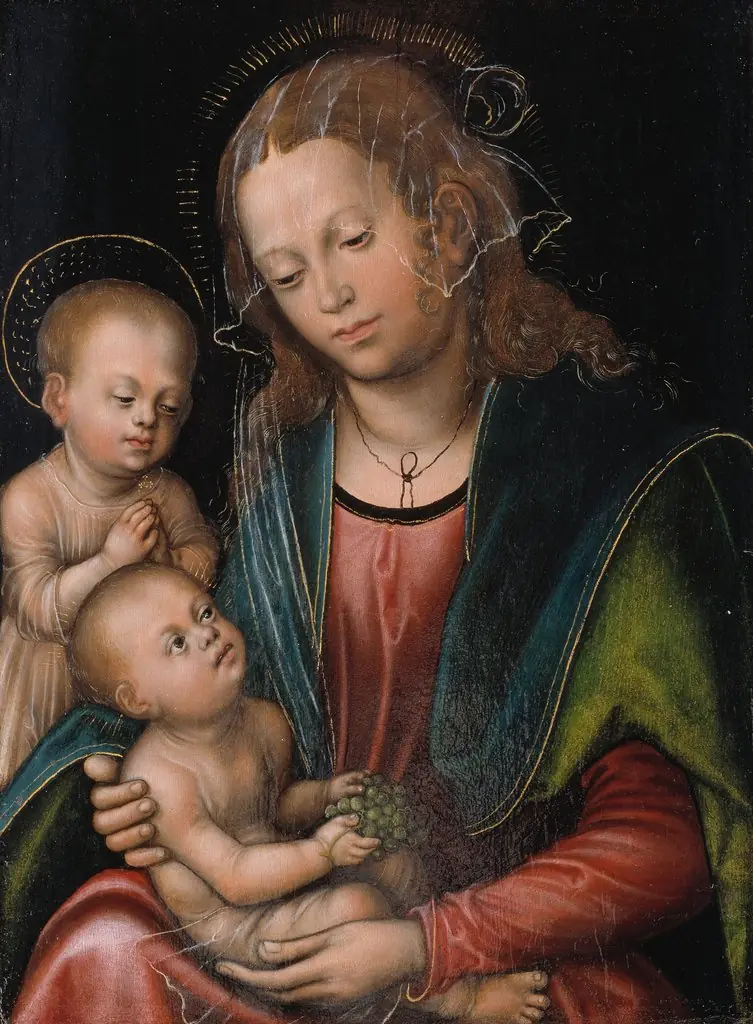 Virgin and Child Adored by the Infant St John
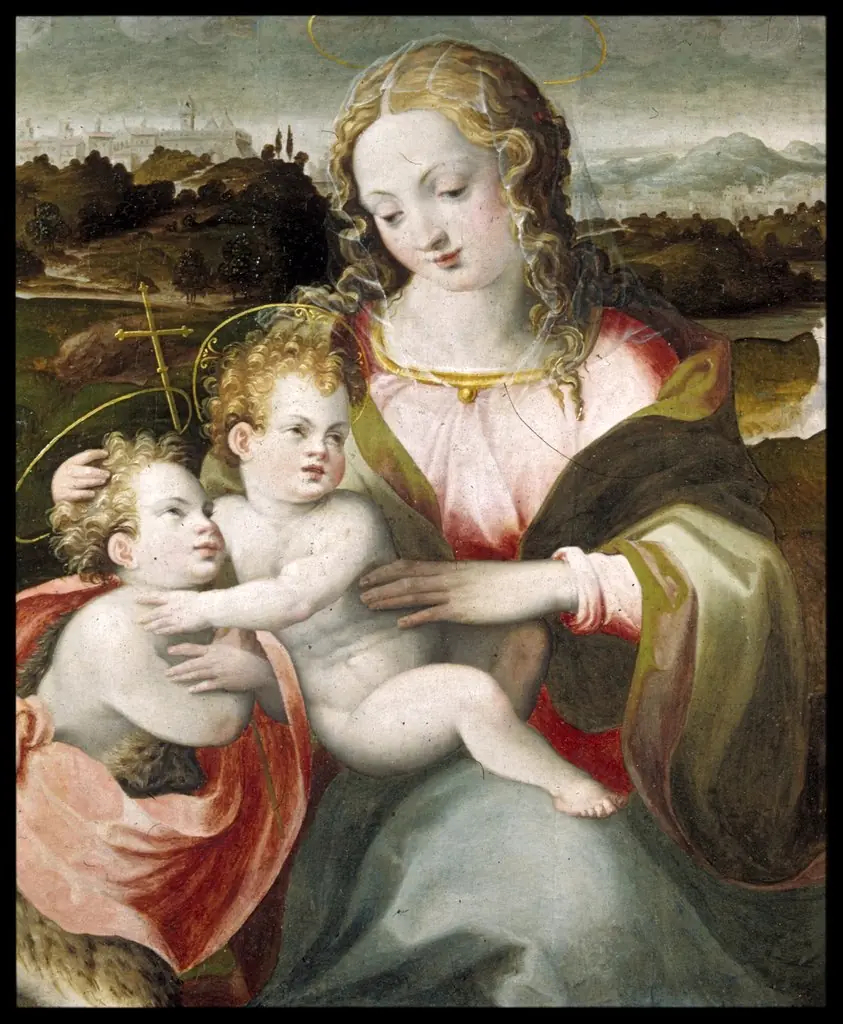 Madonna and Child with the Young Saint John the Baptist
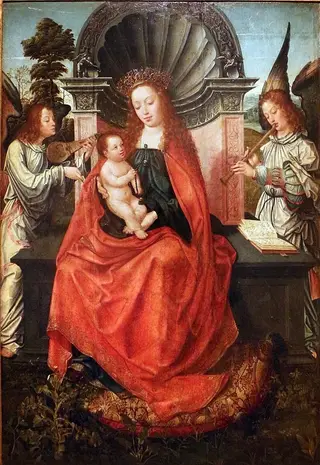 A Virgem Maria e o Menino Jesus com Anjos
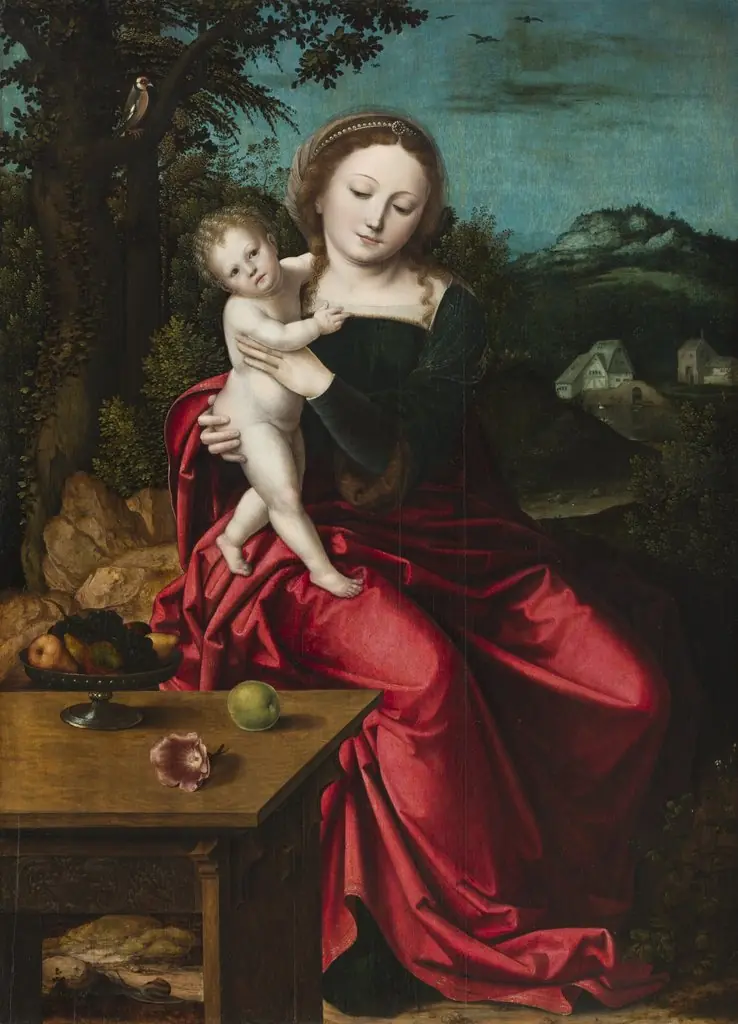 Madonna and Child
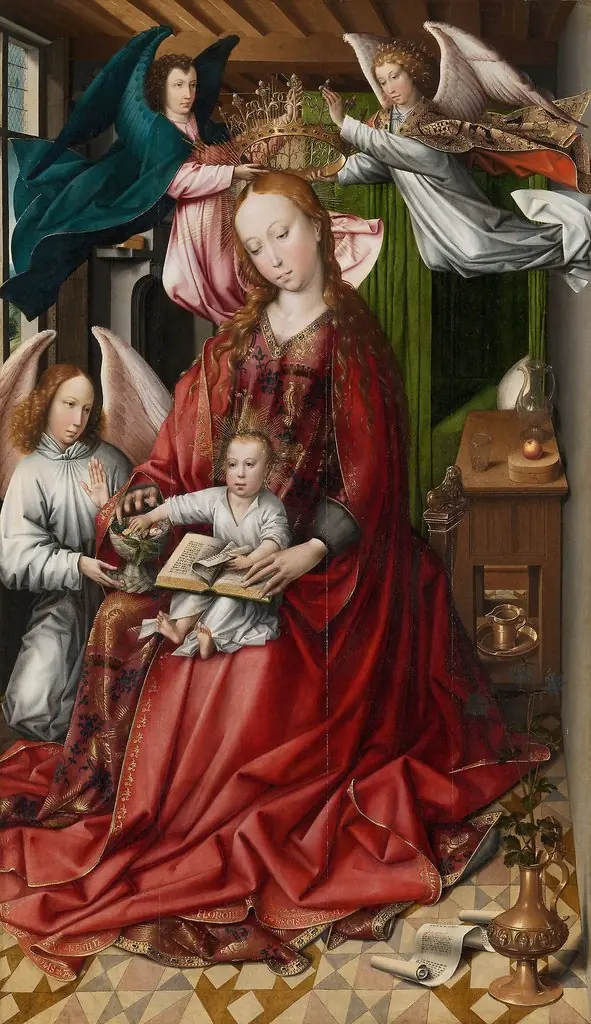 Virgin and Child Crowned by Angels
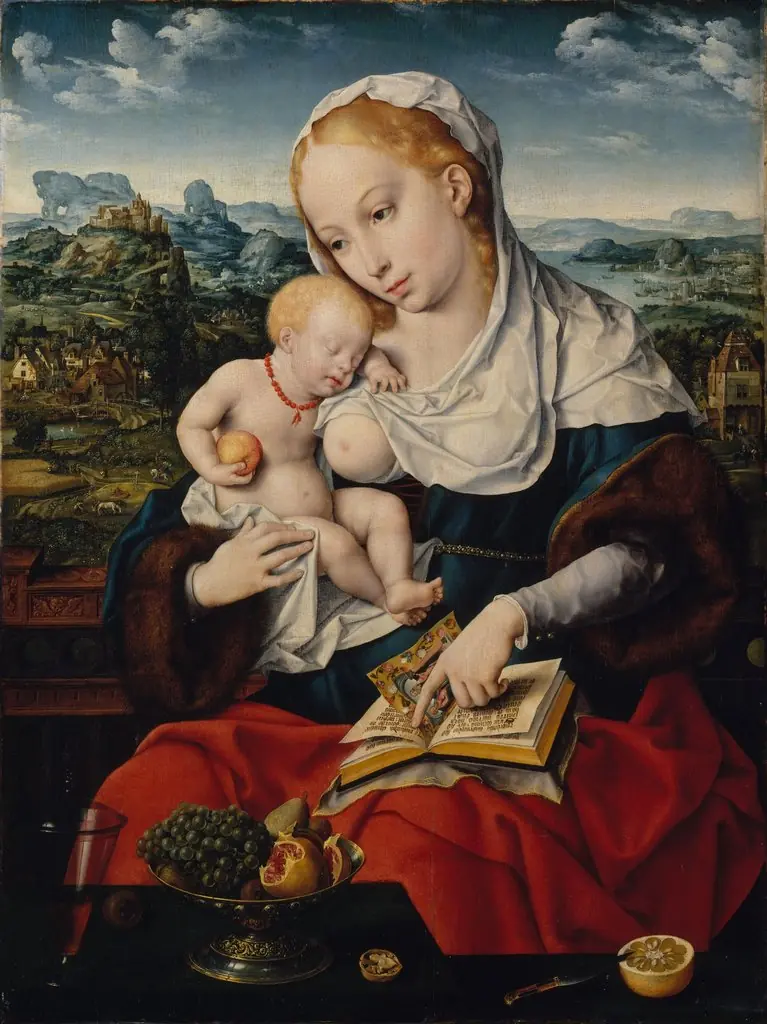 Virgin and Child
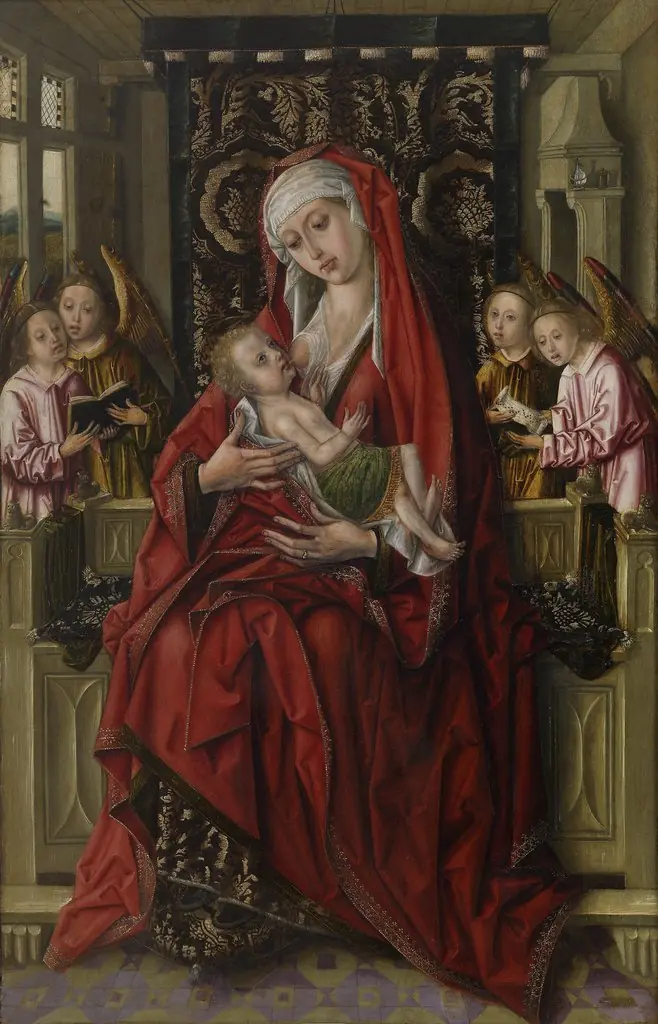 The Virgin Nursing the Child
- Madonna with Angels