Artwork
Paysage avec charbonniers
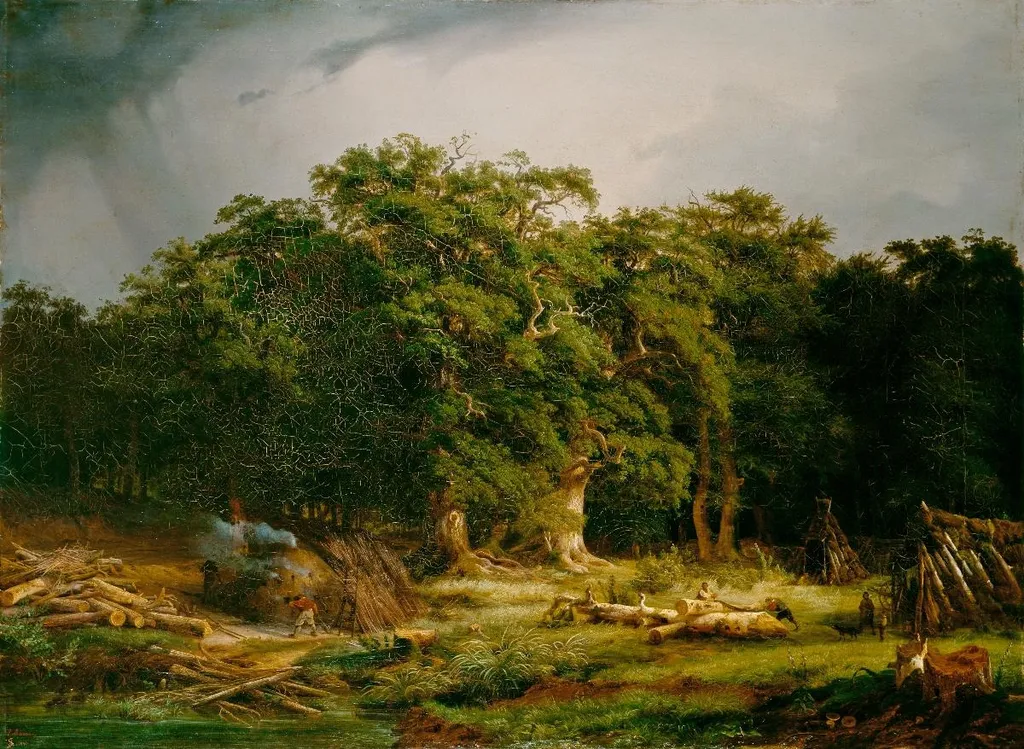
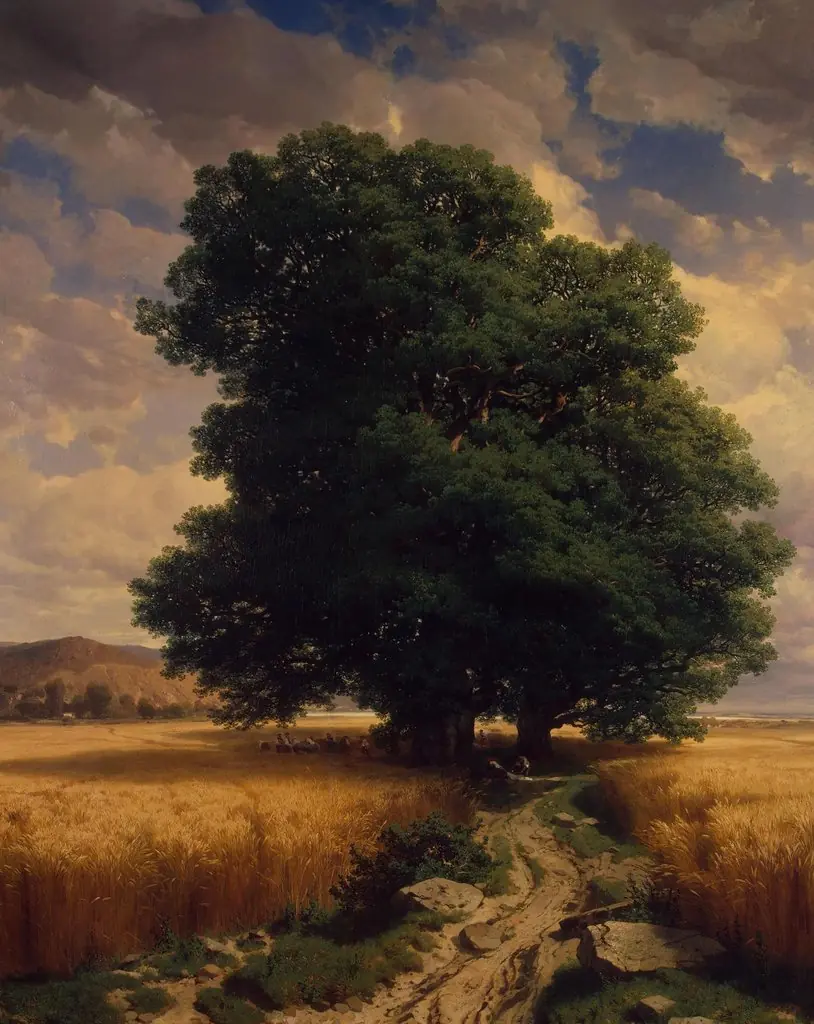
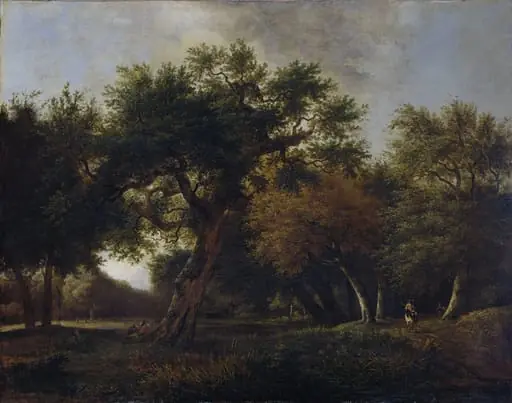
Paysage avec charbonniers is an oil painting by the Barbizon school artist Alexandre Calame. It dates from 1840 and is held in the collection of the Kunsthaus Zürich.
About this work
Overview
This work reflects Calame's shift from earlier, more dramatic alpine vistas to intimate, atmospheric forest scenes that evoke a sense of sublime tranquility.
Alexandre Calame's 'Paysage avec charbonniers' (Landscape with Charcoal Burners), executed in 1840, exemplifies the artist's mature Romantic style and his pivotal role in defining the Swiss landscape tradition. The composition centers on a monumental tree that anchors the vertical axis, its branches reaching toward a dynamic, cloud-filled sky. Calame renders the forest with meticulous attention to botanical detail, capturing the texture of the bark and the density of the surrounding undergrowth.
In the foreground, scattered logs and the presence of a solitary figure walking leftward introduce a human element that emphasizes the scale and wildness of nature rather than dominating it. This work reflects Calame's shift from earlier, more dramatic alpine vistas to intimate, atmospheric forest scenes that evoke a sense of sublime tranquility. Painted during a period when the artist was gaining international acclaim, the piece demonstrates his mastery of light and his ability to imbue specific Swiss locales with universal emotional resonance.
The oil medium allows for the rich layering of greens and earth tones, creating a cohesive and immersive environment that invites contemplation of the natural world.
Subject & Meaning
At the painting’s centre, a massive trunk is encircled by verdant foliage, while scattered logs lie in the foreground. A lone figure walks away to the left, suggesting human activity within the natural setting and hinting at the quiet labor of charcoal gathering.
Technique & Style
Calame employs a luminous palette typical of his Alpine vistas, layering oil to achieve depth and texture. Visible brushwork conveys the rustle of leaves and the subtle shifts of light, while careful chiaroscuro models the tree and undergrowth, enhancing the scene’s three‑dimensionality.
History & Provenance
Since its completion, the painting has remained in Switzerland, eventually entering the holdings of the Kunsthaus Zürich, where it is displayed among other 19th‑century Swiss landscapes.
Context
The work reflects Calame’s broader interest in depicting the Swiss countryside, a subject that resonated with Romantic ideals of nature’s grandeur and the modest lives of its inhabitants during the early 19th century.
Artist & collection

- Efterårsmorgen i Jægersborg Dyrehave
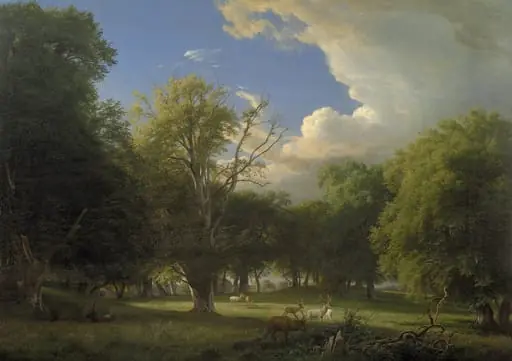 Summer Afternoon with a Passing Shower. The Deer Park in Jægersborg North of Copenhagen
 Forest Scene in the Catskills
 Peisaj de pădure cu râu
 Waldlandschaft
 Pond in the Woods
 View in the Woods
 Pool in the Forest
 Deciduous forest
 Forest Stream with Vista
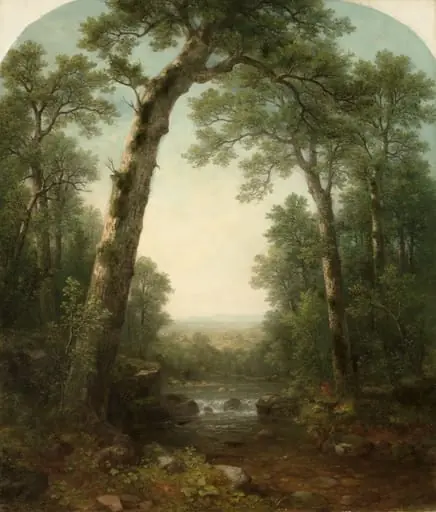 Forest Stream with Vista
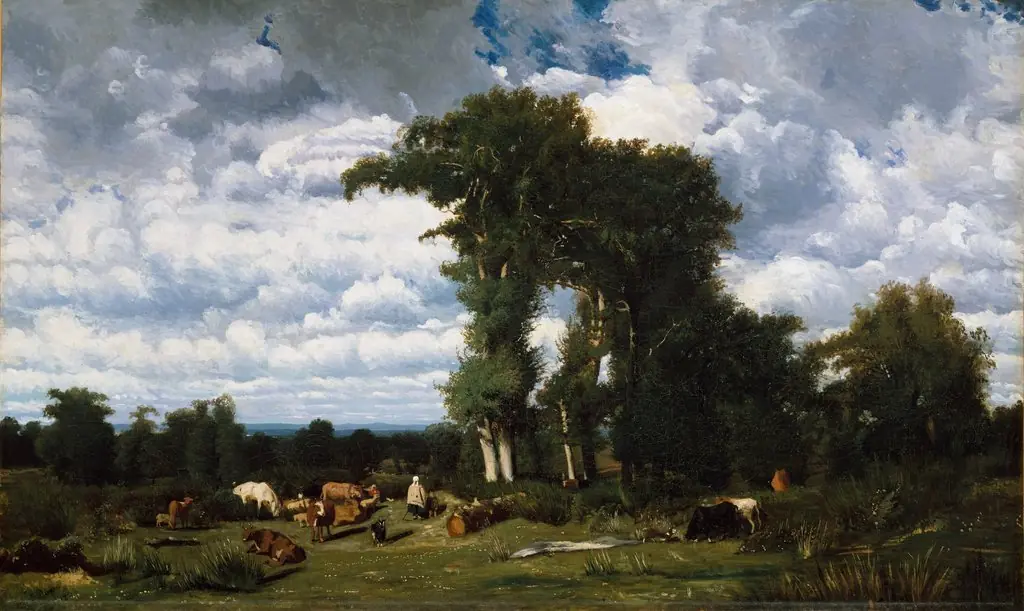 Landscape with Cattle at Limousin