Artwork
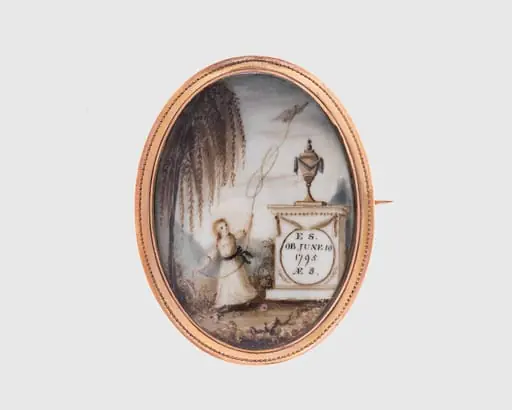
Memorial Miniature
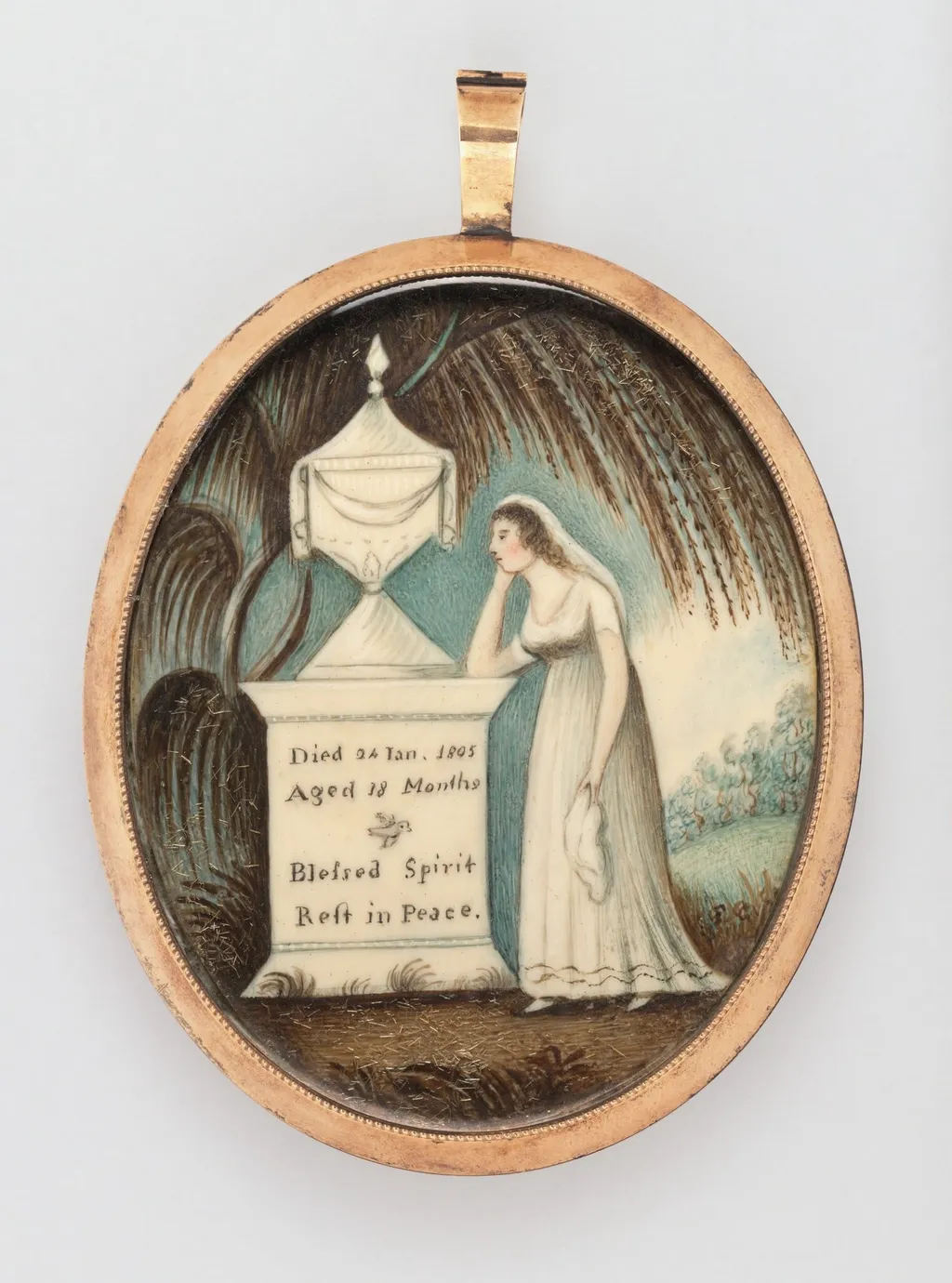
Memorial Miniature is a watercolor drawing by the Romanticist artist American 19th Century. It dates from 1801 and is held in the collection of the National Gallery of Art.
- Inscription
- Inscribed:lower left in watercolor: Died 24 Jan. 1805 / Aged 18 Months / Blessed Spirit / Rest in Peace.
About this work
Overview
The work titled “Memorial Miniature” is a small-scale watercolor drawing executed on ivory. Created in the early nineteenth century, it depicts a solitary figure standing beside a tombstone topped with an urn, all set within a grove of drooping willows. The composition conveys a quiet, mournful atmosphere through its restrained palette and intimate scale.
Subject & Meaning
At the center of the image, a grieving individual gazes solemnly at the stone, which bears an inscription that reinforces the theme of loss. The surrounding willows, traditionally symbols of mourning, amplify the sense of bereavement, while the urn atop the tombstone alludes to the containment of ashes, underscoring remembrance of the departed.
Technique & Style
The artist employed watercolor pigments on a prepared ivory surface, a medium prized for its smooth translucency. Notably, a strand of human hair is incorporated into the paint layer, a customary practice in memorial miniatures that personalizes the portrait and serves as a tangible relic of the deceased. The delicate brushwork and muted tones enhance the work’s contemplative mood.
History & Provenance
The miniature originates from the early 1800s, a period when personalized memorials were often commissioned for private devotion. It entered the collection of the National Gallery of Art in Washington, D.C., where it is displayed as part of the museum’s holdings of 19th‑century portrait miniatures.
Artist & collection

Artist
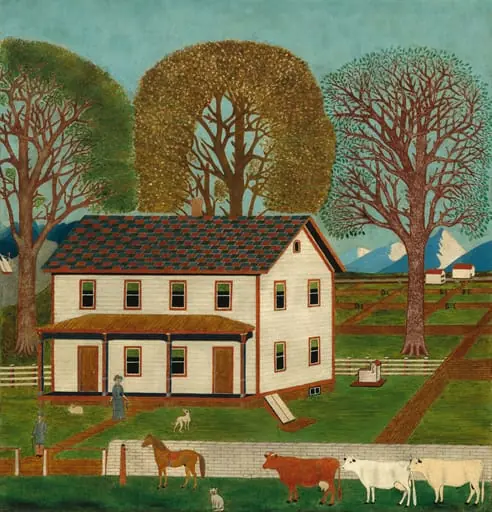
Scenes of everyday American life in the 1800s. Farmhouse in Mahantango Valley is a quiet, sunlit view of rural Pennsylvania; Boy and Girl shows two children standing close, faces turned outward. A small woodcut, The…