Artwork
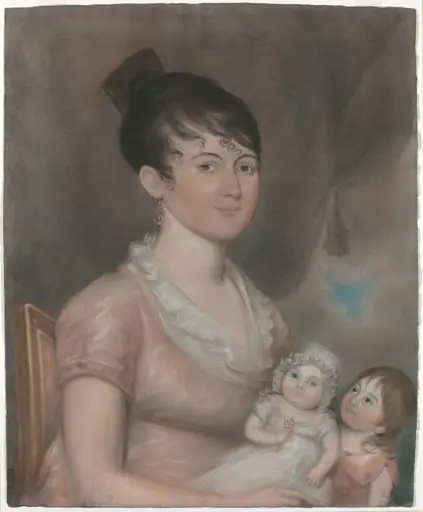
The Proud Mother
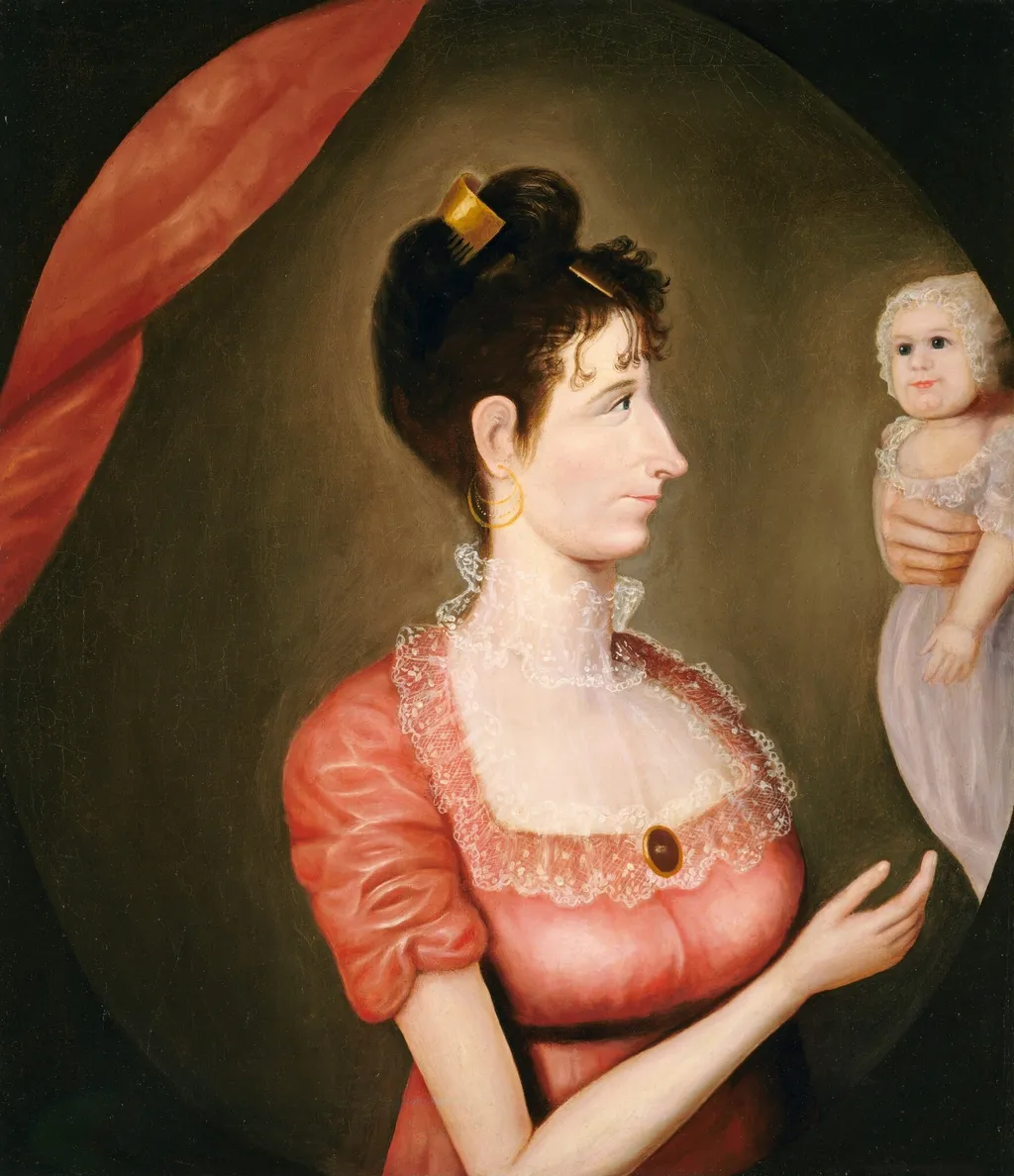
The Proud Mother is an oil painting by the Romanticist artist American 19th Century. It dates from 1810 and is held in the collection of the National Gallery of Art.
About this work
Overview
It entered the museum's collection in 1971 as a gift from Edgar William and Bernice Chrysler Garbisch, notable collectors of American folk art.
The Proud Mother is an American portrait painted circa 1810 by an unidentified artist of the American 19th century. Executed in oil on canvas, the work measures 76.3 by 66.5 centimeters and is distinguished by its circular tondo format. The painting is classified within the American naive tradition and is currently held by the National Gallery of Art in Washington, D.C., under accession number 1971.83.18. It entered the museum's collection in 1971 as a gift from Edgar William and Bernice Chrysler Garbisch, notable collectors of American folk art. The work has since become a frequently exhibited example of early American naive painting, celebrated for its intimate and stylized depiction of maternal affection.
Technique & Style
The artist employed a warm palette centered on pinks, reds, and golds set against deep brown tones. Light falls evenly across the figures, resulting in soft modeling with minimal shadow. The brushwork is smooth and blended, particularly in the rendering of flesh and fabric, though tighter, more precise detail appears in the lace elements. The overall surface shows fine craquelure throughout. By placing the figures frontally within a circular frame, the composition achieves a concentrated, intimate focus. The stylized handling of the forms and the even lighting are characteristic of the American naive painting tradition.
History & Provenance
The early history of The Proud Mother is largely obscure, though it is recorded as originating from New York. The first documented owner is Mary Ellen Williams, who was possibly a dealer in Cazenovia, New York, though curatorial notes by William Campbell indicate there is little further evidence connecting her to a New York dealership at the time. Campbell also noted that Williams owned a copy of the National Gallery painting. In 1962, Williams sold the work to Edgar William and Bernice Chrysler Garbisch, who subsequently donated it to the National Gallery of Art in 1971. The painting has an extensive exhibition history, beginning with the traveling exhibition American Naive Painting of the 18th and 19th Centuries at the Grand Palais in Paris in 1968. It was later featured in numerous National Lending Service exhibitions across the United States throughout the 1990s, with venues including the Art Museum of South Texas, the Telfair Academy of Arts and Sciences, the Heckscher Museum, and the Florence Griswold Museum, among others.
Context
The Proud Mother is situated within the broader scope of early American naive portraiture, a category extensively collected and popularized by Edgar William and Bernice Chrysler Garbisch. The painting has been the subject of scholarly attention, notably appearing in Deborah Chotner's 1992 systematic catalogue of American Naive Paintings at the National Gallery of Art. It was also reproduced in Elisabeth Donaghy Garrett's 1990 publication At Home: The American Family 1750-1870, which contextualizes such imagery within the domestic sphere and family life of the period. The work's frequent inclusion in exhibitions specifically dedicated to American naive painting underscores its role as a representative example of the genre's stylized approach to domestic and familial themes.
Legacy
As part of the Garbisch Collection at the National Gallery of Art, The Proud Mother has maintained a prominent public presence through extensive traveling exhibitions. Its inclusion in the National Gallery's lending service programs during the 1990s brought the painting to diverse regional venues across the United States, from the Boise Art Museum in Idaho to the Harn Museum of Art in Florida. This widespread circulation has helped establish the work as a canonical example of American folk portraiture. Its ongoing availability for digital reproduction and scholarly reference continues to secure its place in the visual record of early nineteenth-century American domestic art.
Artist & collection

Artist
Scenes of everyday American life in the 1800s. Farmhouse in Mahantango Valley is a quiet, sunlit view of rural Pennsylvania; Boy and Girl shows two children standing close, faces turned outward. A small woodcut, The…

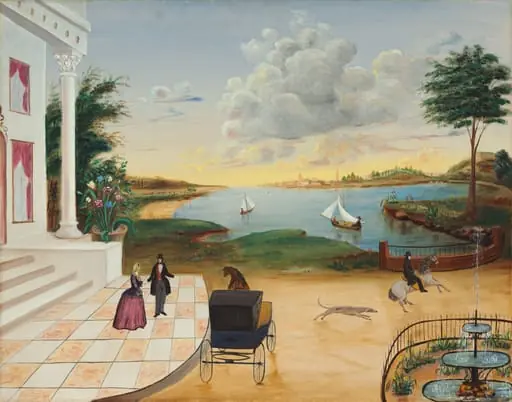
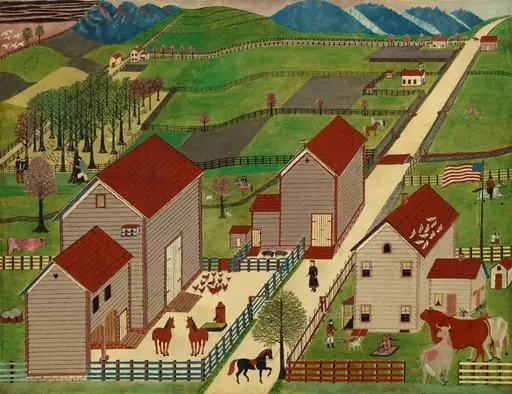
- Sophia Burpee Conant
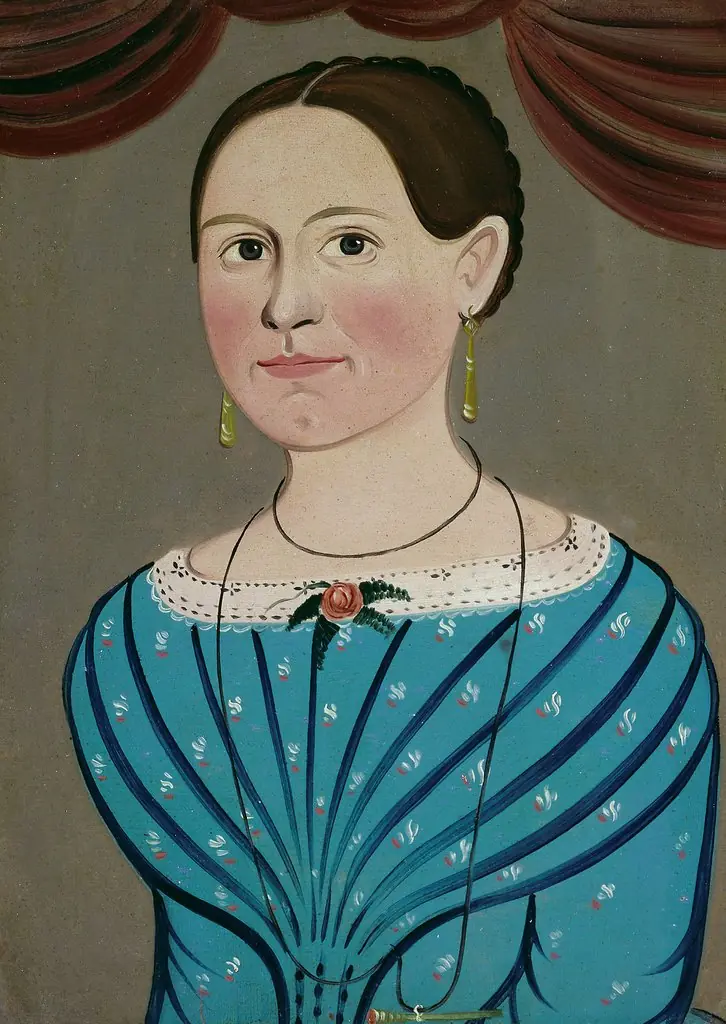 Woman in a Blue Dress
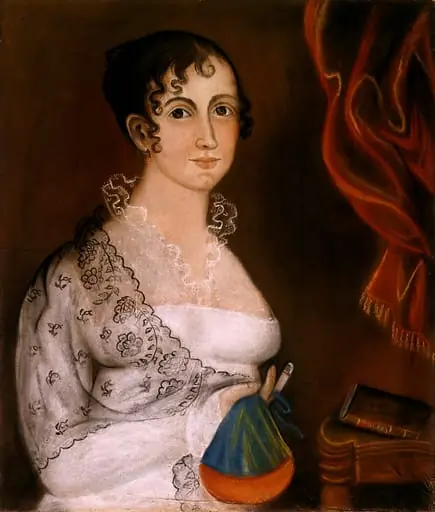 Lady with Red and Blue Sewing Bag
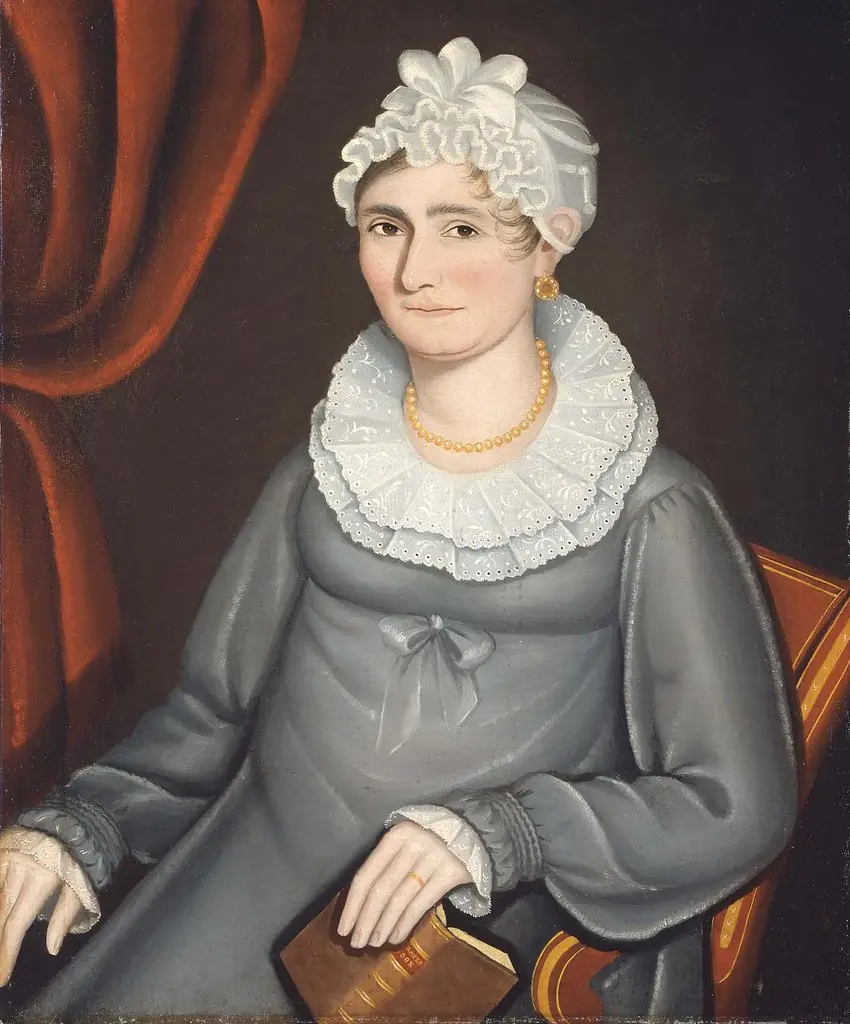 Jane Daney Smith
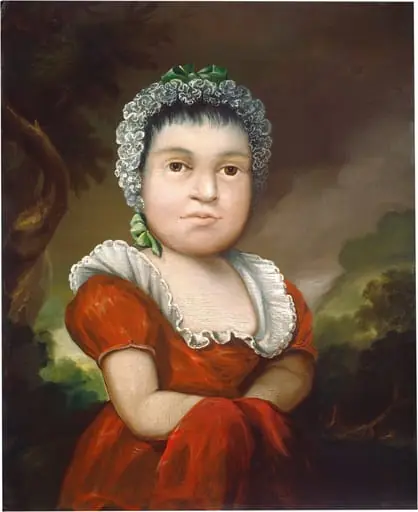 Portrait of a Child
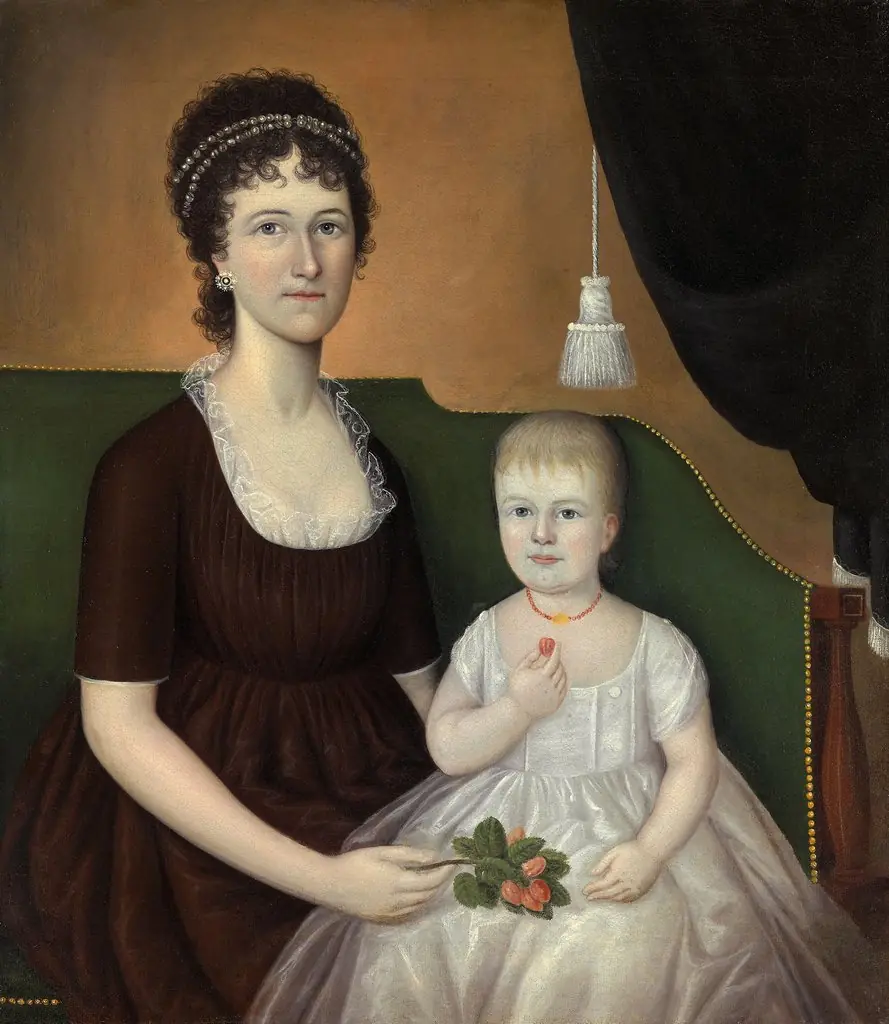 Mrs. Andrew Bedford Bankson and Son, Gunning Bedford Bankson
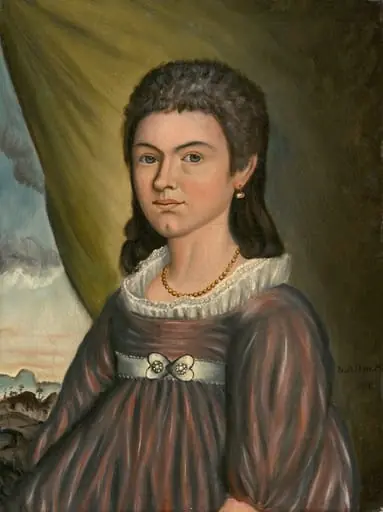 Lucia Leonard
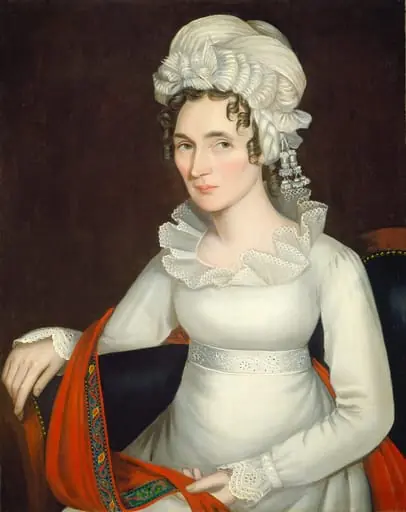 Lady in White
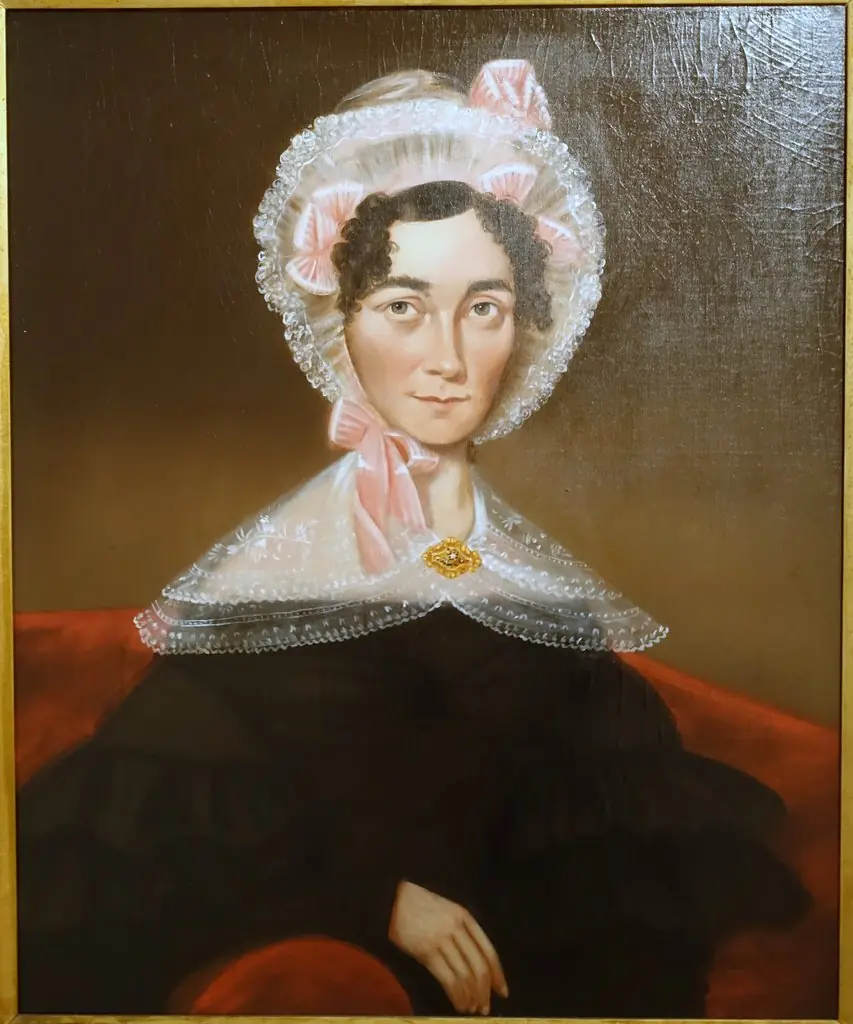 Portrait of Nancy Blood Story
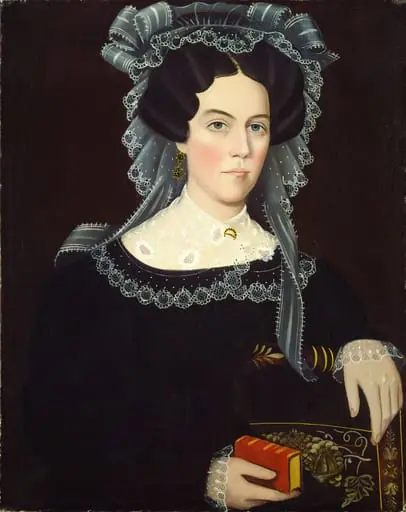 Catherine A. May
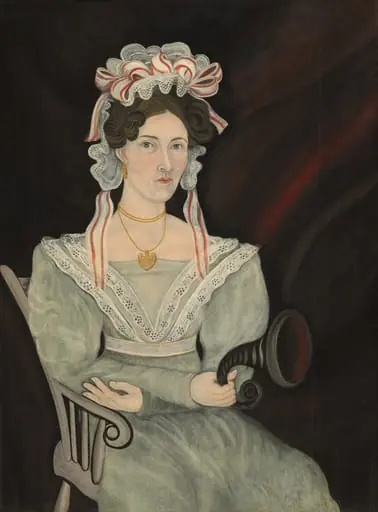 Possibly Mrs. William Sheldon
 Anna Margaret Blake and Her Two Children