Artwork
Washington at Valley Forge
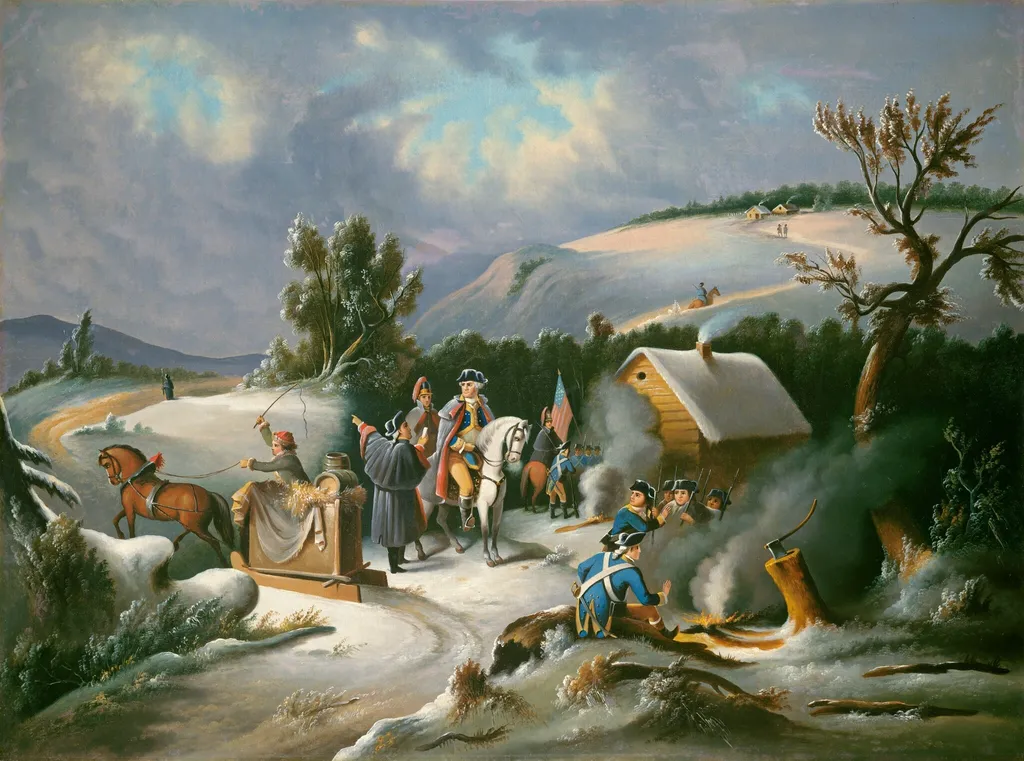
Washington at Valley Forge is an oil painting. It dates from 1850 and is held in the collection of the National Gallery of Art.
About this work
Technique & Style
The medium consists of oil paint applied to canvas, following the traditional techniques of the period.
Created in 1850, Washington at Valley Forge is an oil painting on canvas measuring 75.9 cm in height and 101.5 cm in width. It is a history painting by an unidentified American artist of the nineteenth century, depicting George Washington during the Continental Army's 1777–78 winter encampment at Valley Forge. The medium consists of oil paint applied to canvas, following the traditional techniques of the period.
History & Provenance
Painted in 1850 by an unidentified American artist of the nineteenth century, this oil on canvas originated within the Swazy family of New Hope, New Jersey, and later belonged to Mrs. Frank Bien of Morristown, New Jersey. In 1954 Bien sold it to the collectors Edgar William and Bernice Chrysler Garbisch, who donated it to the National Gallery of Art in Washington, D.C., in 1971, where it remains in the permanent collection. The available sources do not record an accession number or an exhibition history for the work.
Context
Washington at Valley Forge, an 1850 oil on canvas by an unidentified American painter, exemplifies the history-painting genre that dominated mid-century American art. Its heroic Revolutionary War subject reflects contemporary efforts to mythologize the founding era. The work measures 75.9 cm in height and 101.5 cm in width.
Legacy
As a mid-nineteenth-century American history painting, Washington at Valley Forge reflects the period's interest in commemorating Revolutionary War subjects. Its documented passage from the Swazy family through the Garbisch collection to the National Gallery of Art, where it was gifted in 1971, illustrates twentieth-century collecting practices that helped preserve works of American historical painting.
Overview
This oil on canvas painting, titled Washington at Valley Forge, depicts General George Washington in a moment of quiet contemplation. He is shown kneeling in the snow beneath a stark, bare tree, his hands clasped. The scene emphasizes a personal, rather than overtly heroic, aspect of the historical figure, presenting a private moment of reflection amidst the harsh winter conditions.
Subject & Meaning
The artwork portrays General Washington in a vulnerable posture, kneeling with clasped hands, which suggests prayer or deep thought rather than military action. His uniform recedes into the dark background, drawing attention to his pale, illuminated face. This compositional choice underscores the intimate and introspective nature of the scene, diverging from more conventional heroic portrayals of the revolutionary leader.
Artist & collection

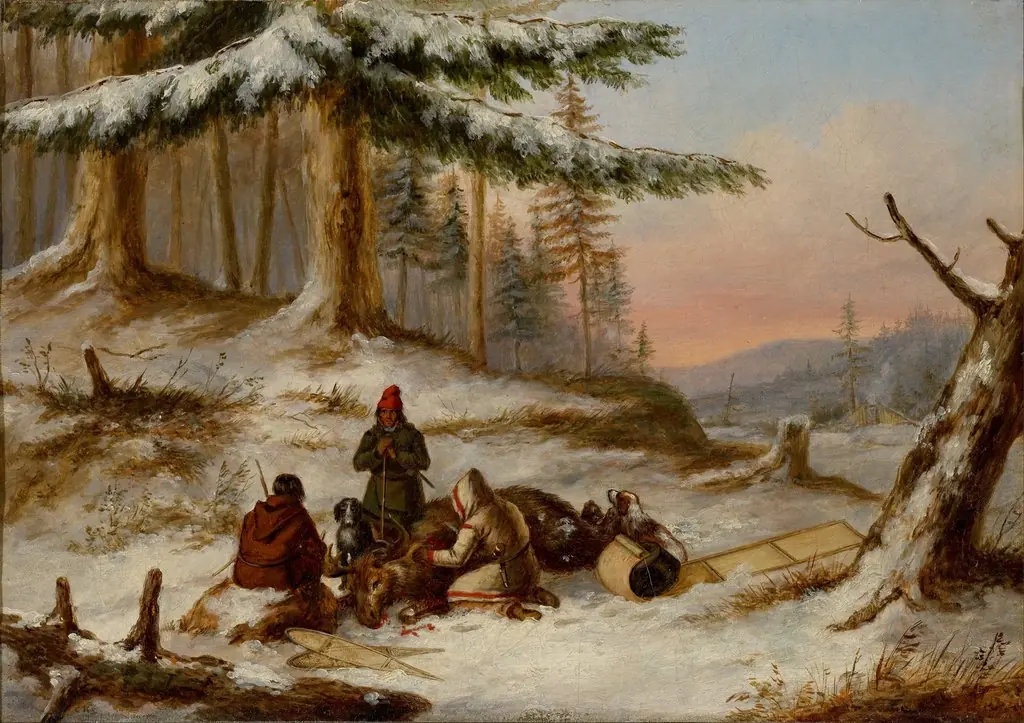
- Moose Hunters
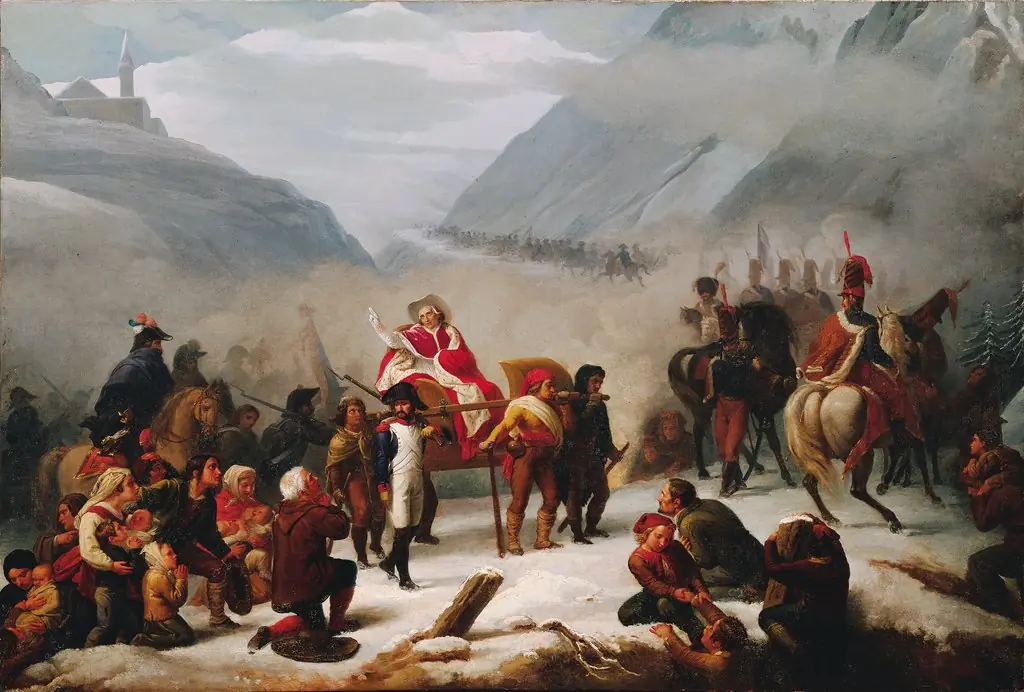 Pope Pius VII Crosses the Alps
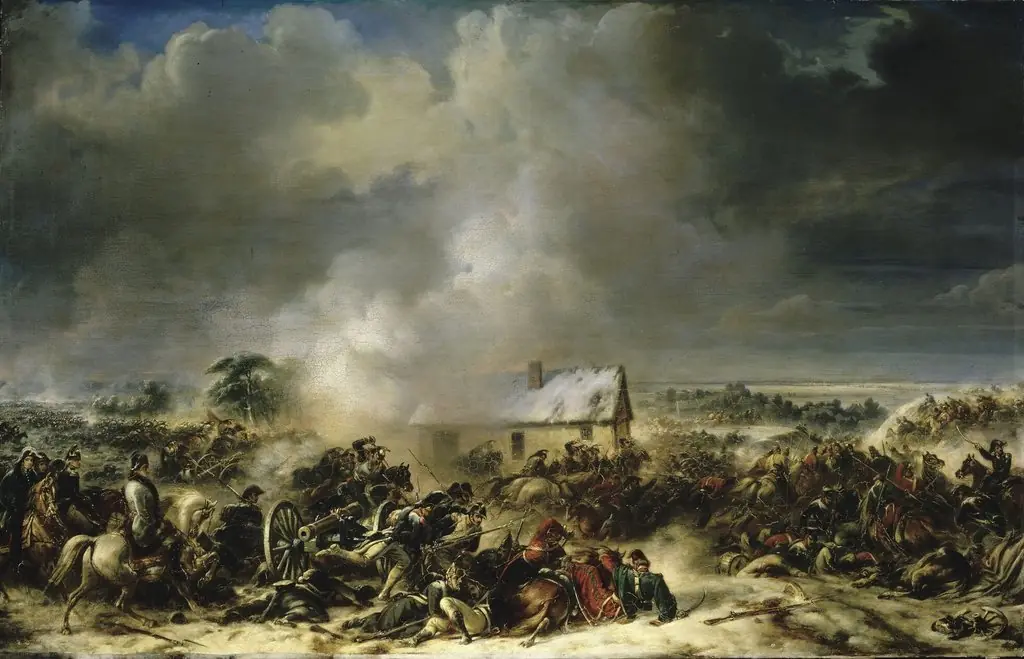 Battle of Hoff, February 6, 1807
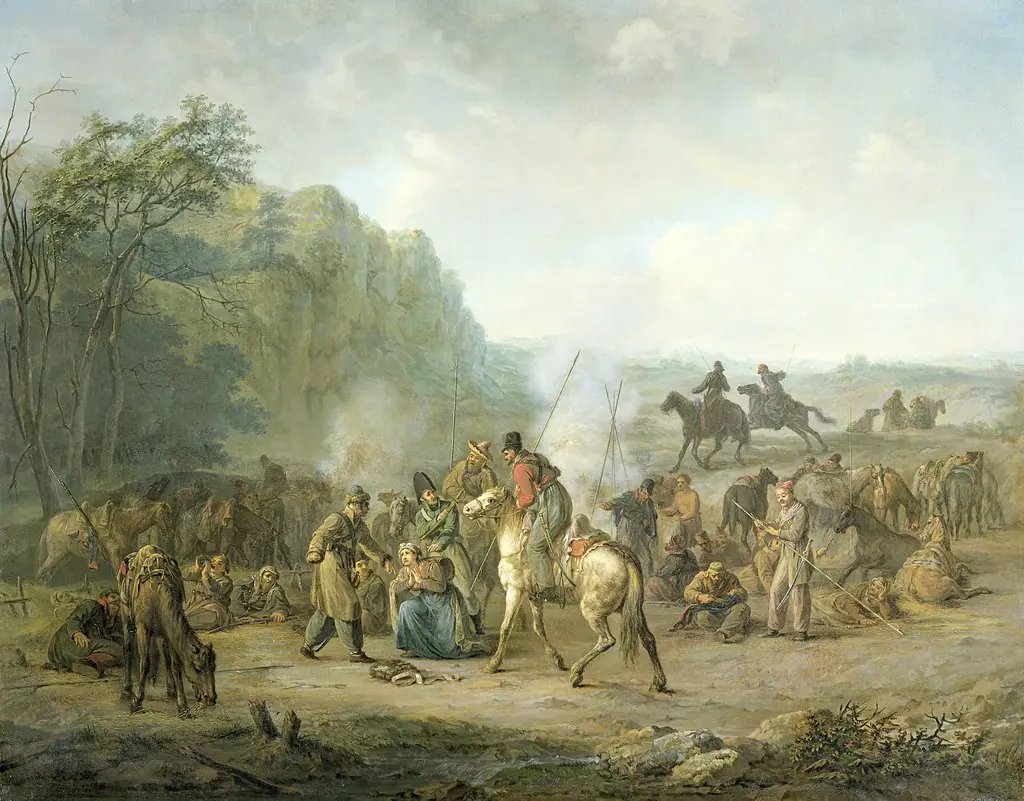 Cossack Camp, 1813
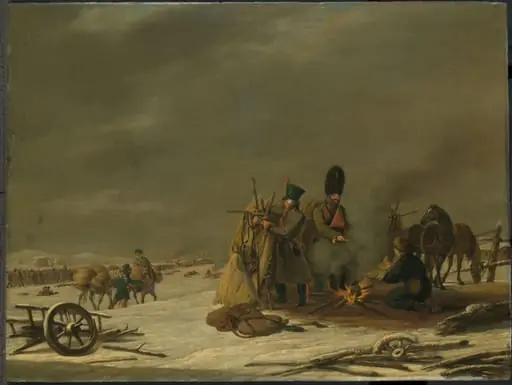 Bivouac at Molodechno, 3-4 December 1812: an episode from Napoleon's Retreat from Russia
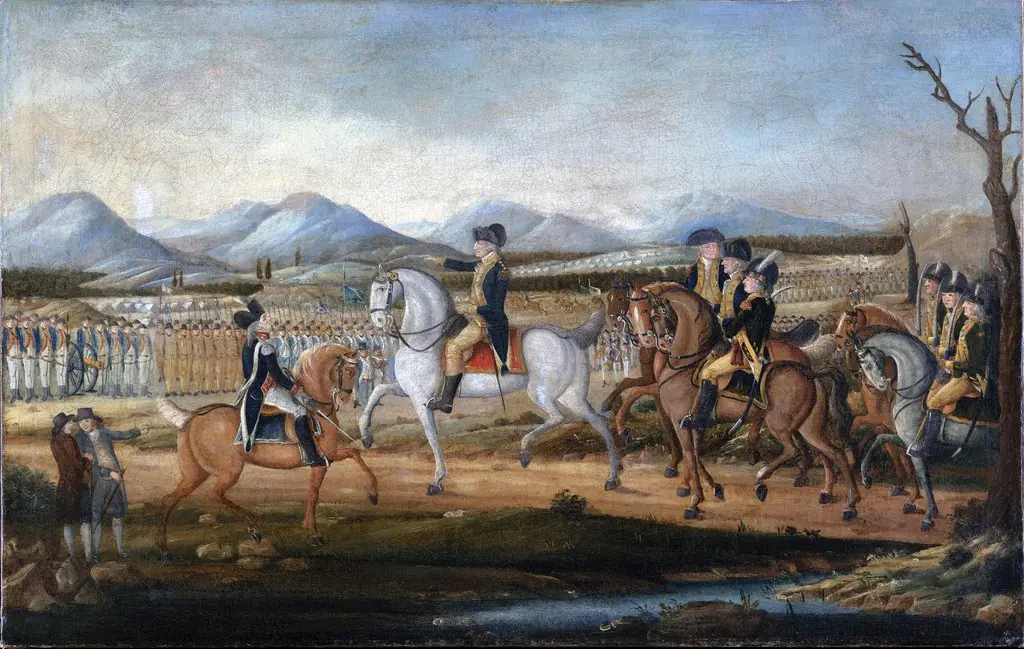 The Whiskey Rebellion
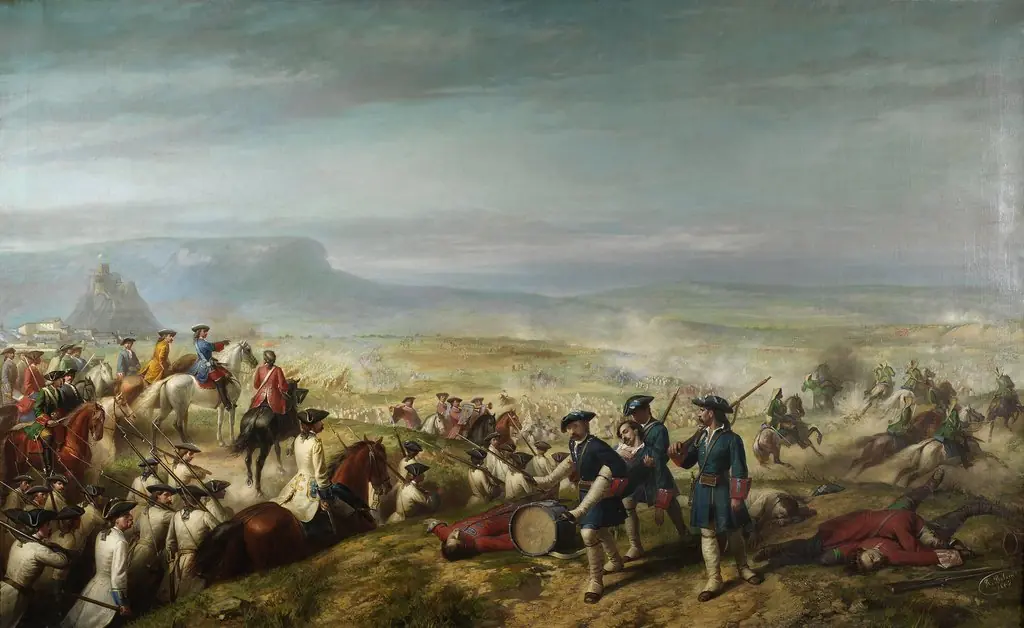 La Batalla de Almansa
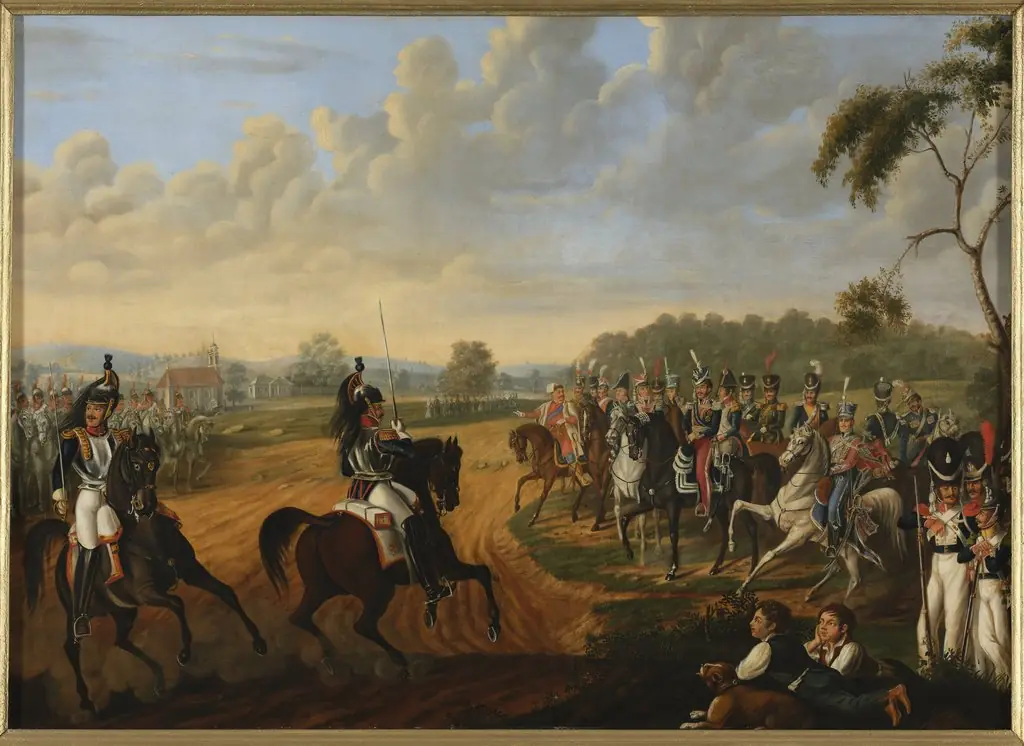 Inspection of the 14th Regiment of Cuirassiers of the Duchy of Warsaw
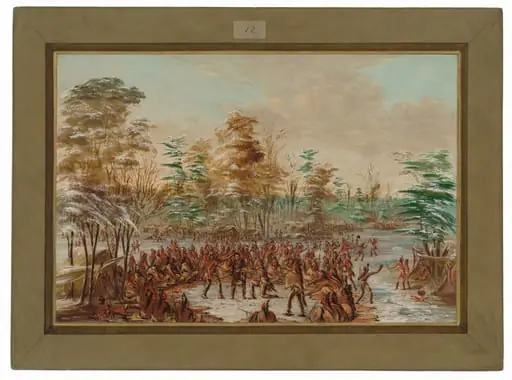 De Tonty Suing for Peace in the Iroquois Village. January 2, 1680
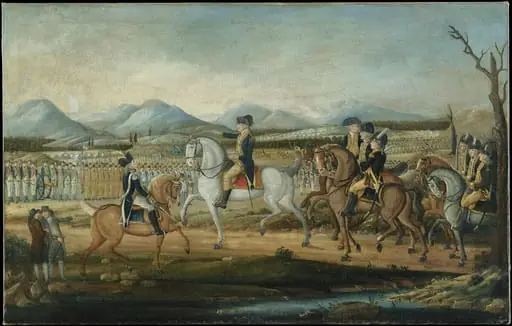 Washington Reviewing the Western Army at Fort Cumberland, Maryland
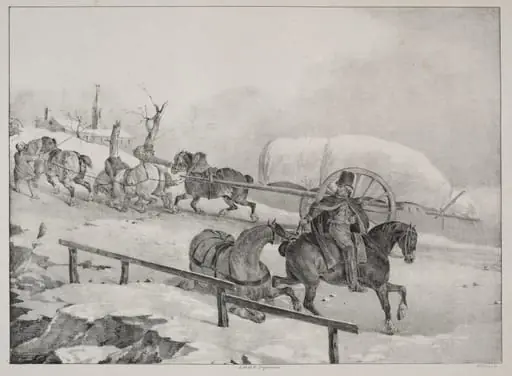 Wagoner Climbing a Hill
 Washington's Triumphal Entry into New York