Artwork
De Tonty Suing for Peace in the Iroquois Village. January 2, 1680
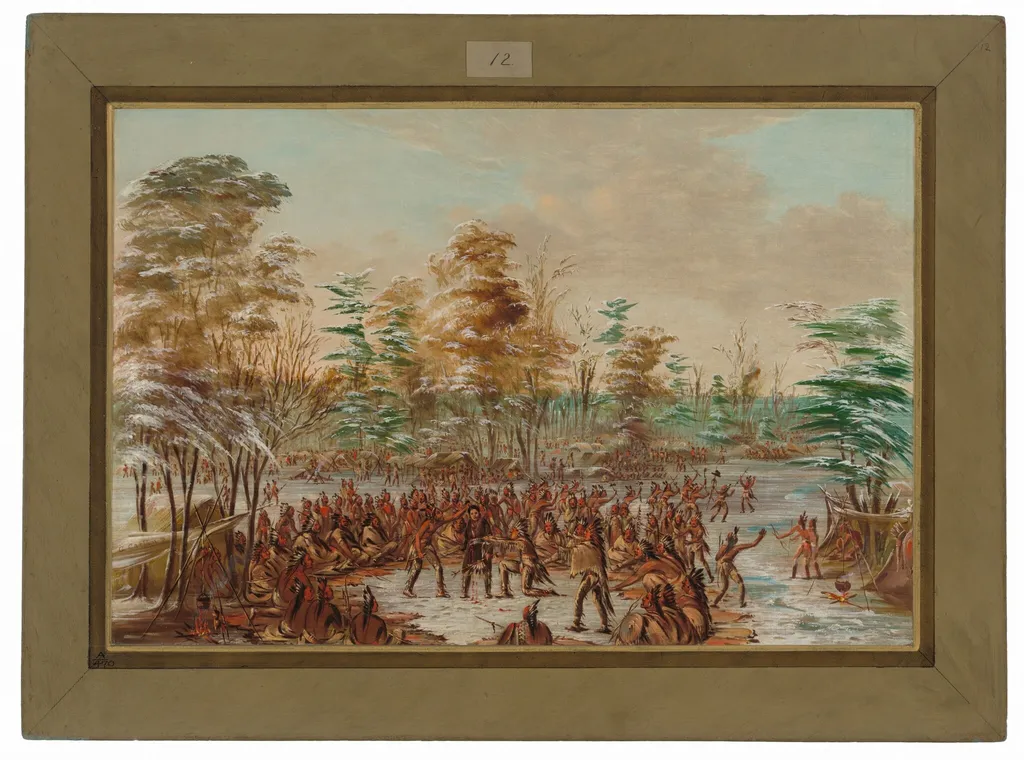
De Tonty Suing for Peace in the Iroquois Village. January 2, 1680 is an oil painting by the Romanticist artist George Catlin. It dates from 1848 and is held in the collection of the National Gallery of Art.
- Inscription
- Inscribed:lower left: G. Catlin p.
About this work
George Catlin painted a rough scene in 1848. A man in a long coat kneels before a group of Native men in a village. Snow covers the ground and a tree stands behind them.
Catlin spent years with Native tribes. He wanted to show their lives and conflicts fairly. This painting records a real peace talk from 1680.
Check out more by Catlin, George.
Technique & Style
The work is an oil painting executed on card that is mounted on paperboard, a support typical of Catlin's mid-19th‑century practice.
The work is an oil painting executed on card that is mounted on paperboard, a support typical of Catlin's mid-19th‑century practice. Its dimensions measure roughly 37.8 cm in height by 56.4 cm in width. The brushwork and composition display a historicizing style that blends realistic figure rendering with a romanticized depiction of the Iroquois setting, emphasizing narrative clarity and a muted palette.
History & Provenance
George Catlin created the oil painting De Tonty Suing for Peace in the Iroquois Village in 1848. The work was originally owned by the artist before passing by descent to his daughters, Clara Gregory Catlin, Louise Catlin Kinney, and Elizabeth Wing Catlin. In 1912, the American Museum of Natural History purchased the piece from Elizabeth Wing Catlin.
The museum later sold the painting in 1959 through Kennedy Galleries in New York to Paul Mellon of Upperville, Virginia. Mellon subsequently gifted the work to the National Gallery of Art in Washington, D.C., in 1965, where it remains part of the collection. Its accession number is not specified in the available sources.
Legacy
The painting was acquired by the National Gallery of Art in 1965, ensuring its preservation and public access. Its acquisition by a major U.S. museum helped cement Catlin's reputation as a chronicler of North American Indigenous subjects, influencing later scholars and artists interested in early American frontier narratives. The work is frequently cited in studies of 19th‑century historical painting and the evolving portrayal of Native peoples in Western art.
Overview
George Catlin’s oil painting, titled De Tonty Suing for Peace in the Iroquois Village, was completed in 1848. Executed on card affixed to paperboard, the work measures a modest size and portrays a winter tableau in which a European figure kneels before a group of Iroquois men within a village setting.
Subject & Meaning
The scene references a diplomatic encounter dated January 2, 1680, when a French envoy, identified as De Tonty, sought to negotiate peace with the Iroquois. The composition emphasizes the act of supplication, highlighting the power dynamics and the ritualized nature of cross‑cultural diplomacy in the colonial era.
Context
Created in the mid‑nineteenth century, the painting emerges at a time when American interest in the “vanishing Indian” was intensifying. Catlin’s legal background and his extensive travels among indigenous groups informed his attempt to present a balanced visual record of Native‑European encounters.
Own this work as a print
Artist & collection

Artist
George Catlin ( KAT-lin; July 26, 1796 – December 23, 1872) was an American lawyer, painter, author, and traveler, who specialized in portraits of Native Americans in the American frontier.

 Bulls Fighting
 Expedition Encamped on a Texas Prairie. April 1686
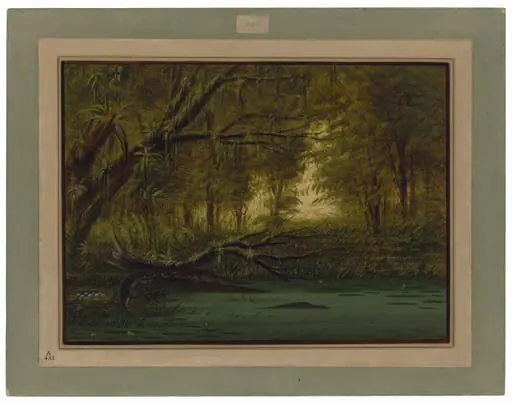 An Alligator's Nest
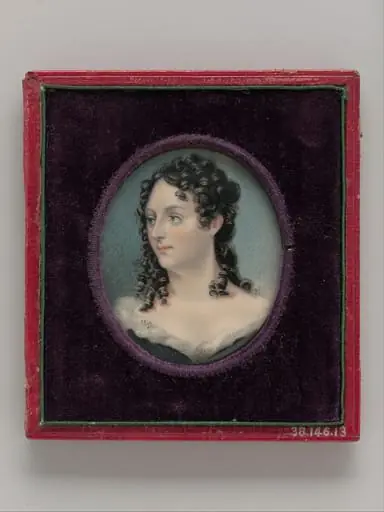 Mrs. George Catlin (Clara Bartlet Gregory)
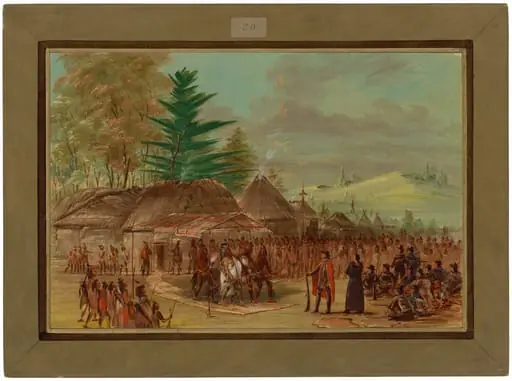 Chief of the Taensa Indians Receiving La Salle. March 20, 1682
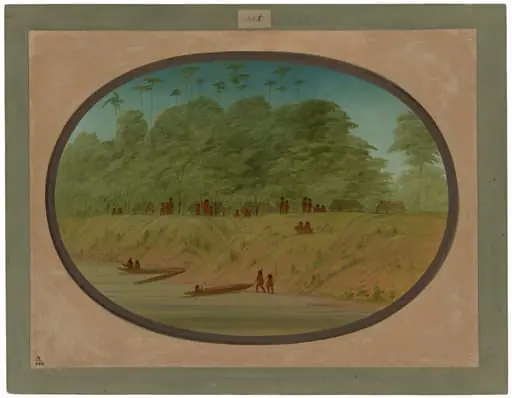 A Small Village - Payaguas Indians
 Omaha Chief, His Wife, and a Warrior
 Father Hennepin Leaving the Mississippi to Join La Salle. May 8, 1680
 La Salle Driving the First Bolt for the Griffin. January 26, 1679
 La Salle Crossing Lake Michigan on the Ice. December 8, 1681
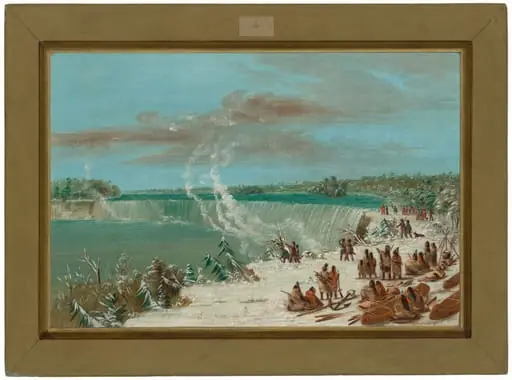 Portage Around the Falls of Niagara at Table Rock
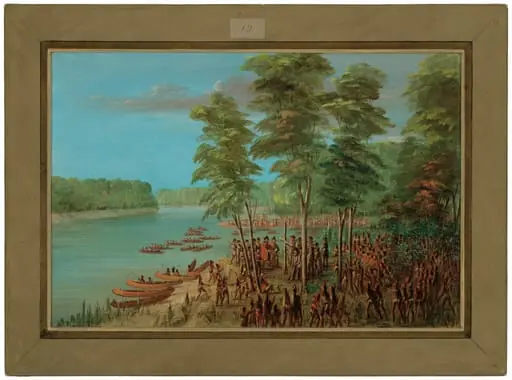 La Salle Taking Possession of the Land at the Mouth of the Arkansas. March 10, 1682
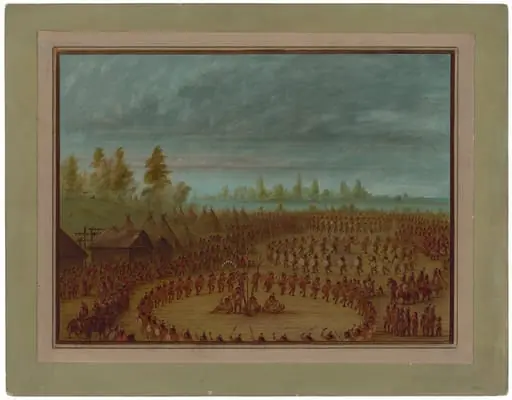 War Dance of the Apachees
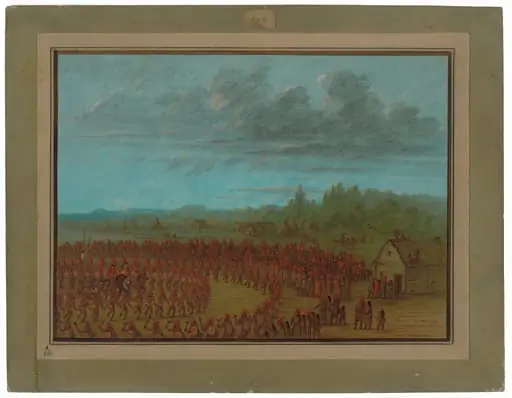 War Dance of the Saukies