Artwork
Madonna and sleeping child
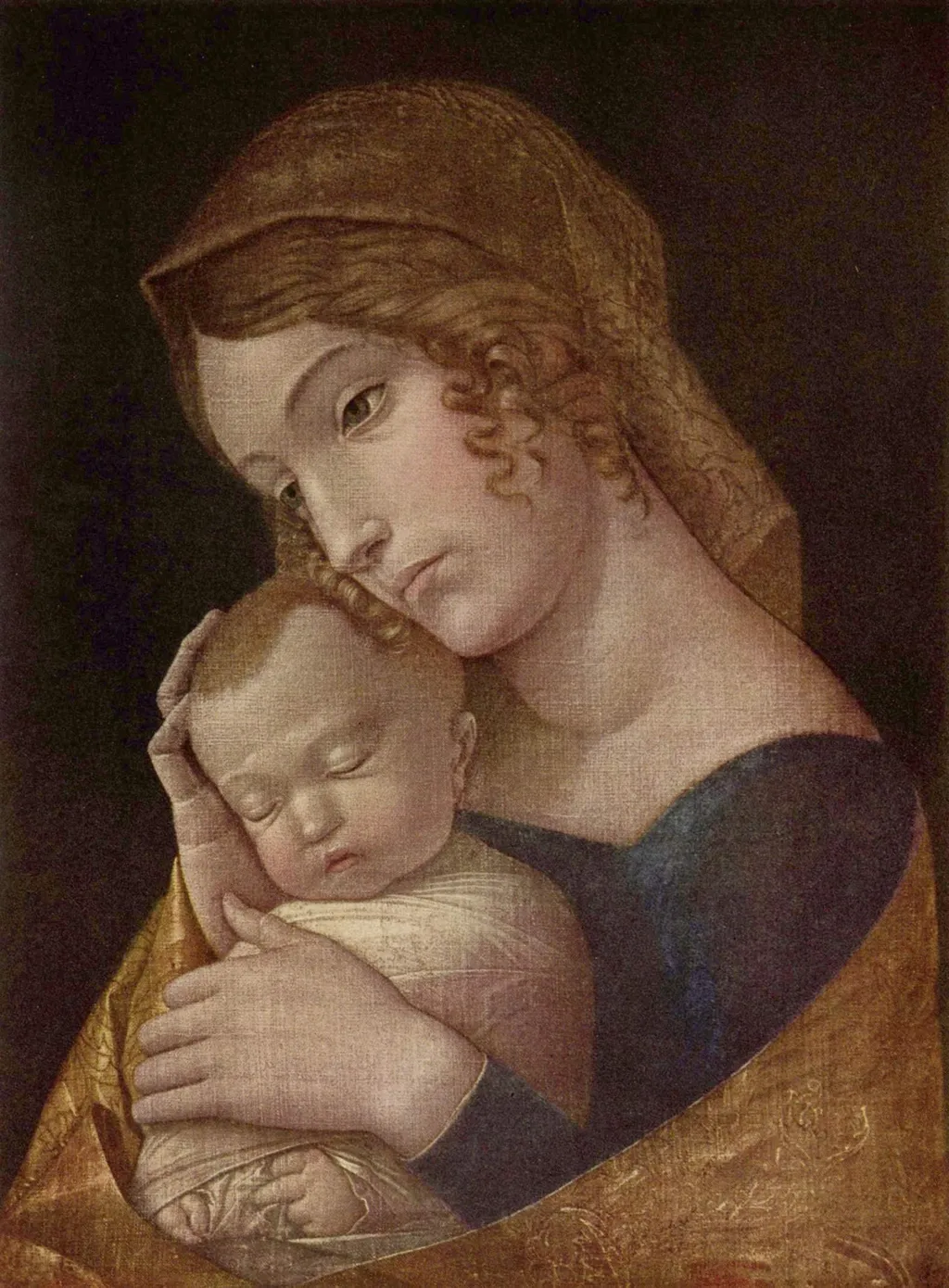
Madonna and sleeping child is a tempera painting by the Early Renaissance artist Andrea Mantegna. It dates from 1457 and is held in the collection of the Gemäldegalerie Berlin. Created circa 1465‑1470, this small tempera on canvas measures roughly 43 by 32 centimeters.
About this work
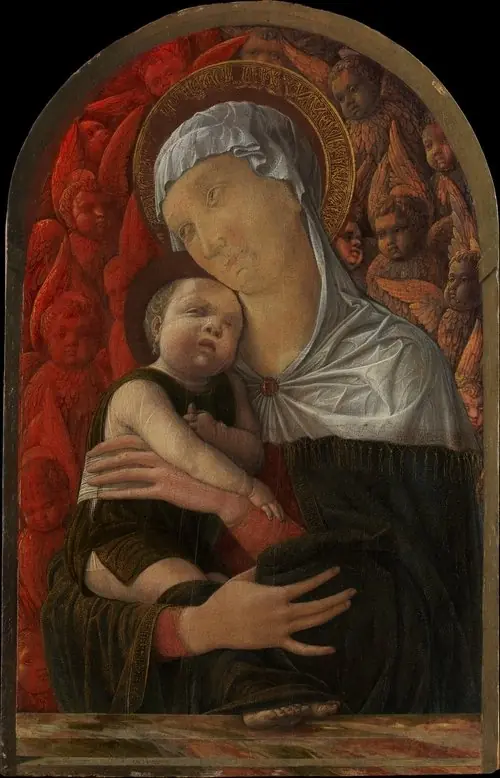
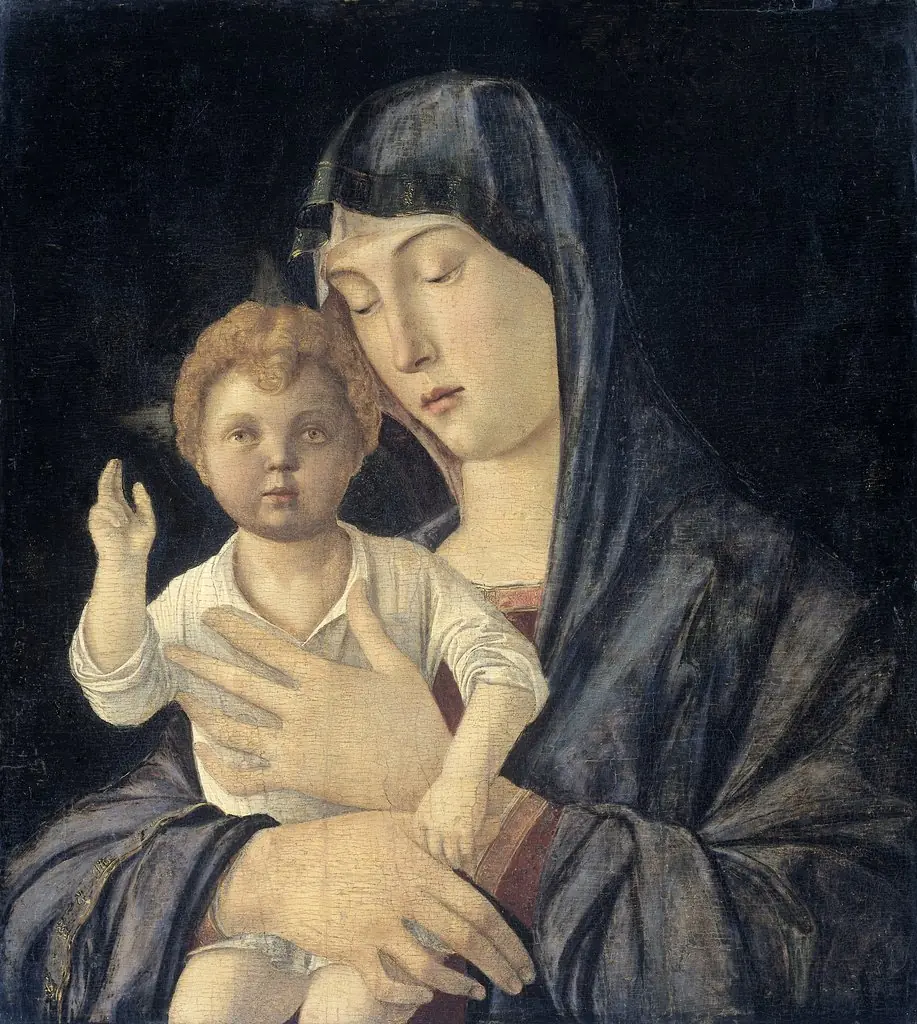
This small tempera painting shows Mary holding a sleeping child. It’s a quiet moment, Mary’s face calm and gentle. The child looks peaceful in her arms.
Painted around 1465 to 1470, it’s one of many Madonnas Mantegna made. Most were small, meant for private devotion. This one is about 43 by 32 centimeters.
Look up the technique used here next: tempera.
Subject & Meaning
Mary holds her sleeping son gently against herself, with their faces touching, a motif drawn from Donatello, and her hand softly supporting the child's head.
The painting depicts the Virgin Mary cradling the sleeping Christ Child, a half-length Madonna-and-Child composition set against a dark background. Intended for private devotion, the work deliberately omits haloes and other conventional divine attributes, presenting the figures in an unusually human and intimate register.
Mary holds her sleeping son gently against herself, with their faces touching, a motif drawn from Donatello, and her hand softly supporting the child's head. The tender embrace conveys both affection and a foreshadowing sorrow over the child's future fate. A copper-gold brocade mantle envelops both figures protectively, while the child is tightly swaddled with only his hands free.
Mantegna's restrained palette and incisive lighting, especially on Mary's hand and the luminous curls of her hair, reinforce the quiet emotional intensity of the scene.
Technique & Style
Executed in glue-tempera on canvas, this vertical panel measures approximately 43 by 32 centimeters. The composition features a bust-length Virgin Mary holding the sleeping Christ Child against a stark black background, deliberately omitting traditional haloes to foster an intimate atmosphere suited for private devotion. Mantegna envelops the figures in a copper-yellow brocade mantle, creating a protective, circular rhythm that connects the mother's neck to her hand supporting the child's head.
This tender pose, where the faces touch, reflects the artistic influence of Donatello. The painting is characterized by a restrained color palette and incisive lighting that highlights specific details, such as the bright curls of the hair and the distinct grooves of the Virgin's right hand. However, the work has suffered significant damage over time, resulting in a loss of the original color intensity and complicating scholarly efforts to establish a precise date of creation.
History & Provenance
The dating of Andrea Mantegna's Madonna and sleeping child remains uncertain. Sources place it variously around 1455–1460, 1457, or 1465–1470, with scholarly disagreement persisting. The small-scale tempera painting was intended for private devotion.
The work resurfaced in 1872 when Wilhelm von Bode and Julius Meyer encountered it in the collection of Count Trissino in Vicenza, though no purchase resulted. It subsequently passed to Count Della Ponte in Piacenza. The Jewish collector and entrepreneur James Simon acquired it through dealers for 2,600 pounds, giving it pride of place in his Berlin residence.
In 1904, Simon donated the painting to the newly established Kaiser Friedrich Museum (later renamed the Bode-Museum), stipulating that his works be displayed together for at least 100 years in a dedicated cabinet resembling his own salon. After 1933, references to Jewish donors were expunged from Berlin museums, and Simon's cabinet was dismantled in 1939. Following wartime displacements, the painting entered the Gemäldegalerie in Dahlem and later Berlin. Simon's original cabinet was only reconstituted in 2019.
The painting is held by the Gemäldegalerie in Berlin, housed within the Bode Museum. It entered the Berlin museums in 1904 as part of a donation by the Berlin-based collector James Simon, who had acquired it through dealers for 2,600 pounds after it surfaced in 1872 in the collection of Count Trissino in Vicenza and subsequently passed through Count Della Ponte in Piacenza. Simon stipulated that the works from his gift be displayed together for at least one hundred years in a dedicated cabinet recreating his Berlin Herrenzimmer; this arrangement was dismantled in 1939 and the Simon cabinet was reassembled at the Bode Museum only in 2019.
The painting's documented exhibition history includes its inclusion in the 2006–2007 Padua show Mantegna e Padova, 1445–1460 and in the 2019 exhibition Mantegna and Bellini, Meister der Renaissance.
Context
Scholars note Mantegna's departure from conventional Madonna and Child imagery through the deliberate omission of haloes and religious symbols, creating an intimate, humanized portrayal suited to private devotion. The tender pose of Mary's face touching the sleeping child directly references Donatello's sculptural precedent, demonstrating Mantegna's engagement with Florentine artistic innovations. Art historians emphasize the compositional mastery in the circular rhythm linking Mary's neck to her hand supporting Christ's head, as well as the incisive lighting that highlights characteristic details like the clear grooves of Mary's right hand.
Dating remains contested among specialists: the majority favor an early period during Mantegna's Paduan activity, while others place it at the beginning or even end of his Mantuan tenure as court painter to the Gonzaga family. The painting's poor condition complicates definitive attribution. Its modern scholarly significance was secured when Wilhelm von Bode encountered it in 1872, leading to its acquisition by collector James Simon and subsequent 1904 donation to what became the Bode-Museum.
Overview
Created circa 1465‑1470, this small tempera on canvas measures roughly 43 by 32 centimeters. Andrea Mantegna painted the work for personal devotional use, and it now belongs to the collection of the Gemäldegalerie in Berlin.
Own this work as a print
Artist & collection
Artist
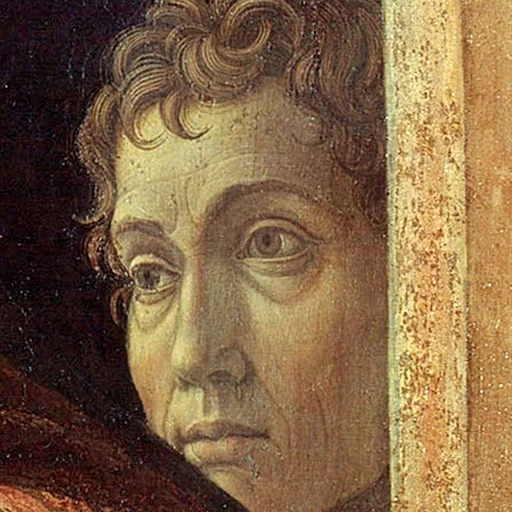
Andrea Mantegna (UK: US:; Italian:; c. 1431 – September 13, 1506) was an Italian Renaissance painter, a student of Roman archaeology, and the son-in-law of Jacopo Bellini. Like other artists of the time, Mantegna…