Artwork
Presentation at the Temple
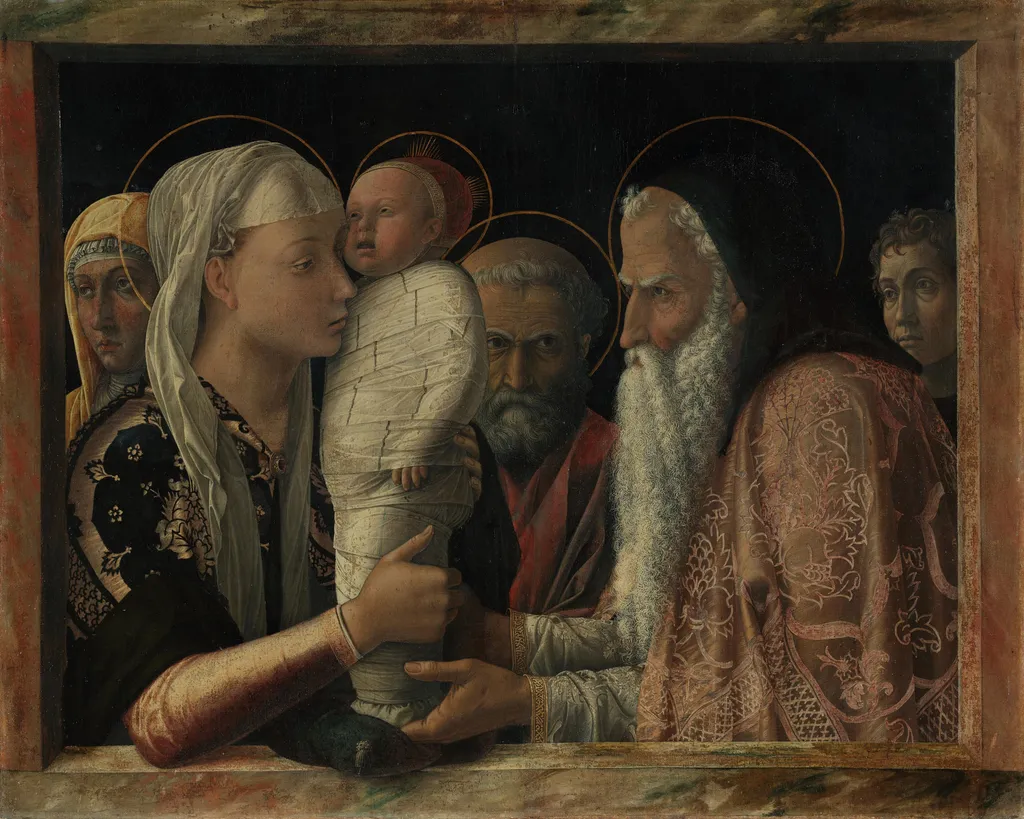
Presentation at the Temple is a tempera painting by the Early Renaissance artist Andrea Mantegna. It dates from 1400 and is held in the collection of the Gemäldegalerie Berlin.
About this work
Andrea Mantegna painted Presentation at the Temple in tempera. This work shows a quiet scene inside a temple. The artist worked in northern Italy during the early Renaissance.
The painting marks a big moment in art. It was made around 1455, which was a time of fresh ideas and new ways of showing space. You can see careful details in the faces and clothes.
Next, look up the artist Andrea Mantegna.
Subject & Meaning
The painting depicts the biblical scene of the Presentation of Jesus at the Temple in Jerusalem, showing Mary holding the infant Jesus, the priest Simeon recognizing him as the Messiah, and Joseph standing nearby, all presented within a painted marble frame that creates a trompe-l'oeil effect. The composition includes two peripheral figures identified as Mantegna himself and his wife Nicolosia Bellini, reflecting contemporary practices of embedding artist portraits in devotional works. The subject draws directly from the Gospel of Luke (2:21–39), where Mary and Joseph present Jesus at the temple forty days after birth, fulfilling the ritual of offering a sacrifice and introducing him to the priests Simeon and Anna.
This iconographic theme was common in 15th-century Italian art, exemplified earlier by Giotto, but Mantegna reinterprets it through a sculptural, almost architectural framing that dissolves the boundary between the viewer's space and the depicted space.
Technique & Style
The work is executed in tempera on canvas, an early example of Mantegna's use of the medium prior to his mature years in Mantua.
The work is executed in tempera on canvas, an early example of Mantegna's use of the medium prior to his mature years in Mantua. The support consists of a linen canvas nailed to a wooden stretcher from the front and subsequently concealed beneath a second, external frame, a construction technique documented in technical analysis. Infrared and X‑ray studies reveal that the original colors of the garments were once vivid, that the background was initially dark blue and later overpainted with black, and that halos were added subsequently.
Mantegna employed egg tempera, a fact confirmed by the detection of egg residues. The painting features a marble‑frame illusion that projects into the picture space, with the cushion on which the Child rests appearing to project outward, and the composition is organized as a shallow relief with limited spatial depth. Figures are half‑length, a format unusual for the period, and are rendered with a restrained palette of dark tones punctuated by white highlights on the veil, ribbons, and Simeon's beard.
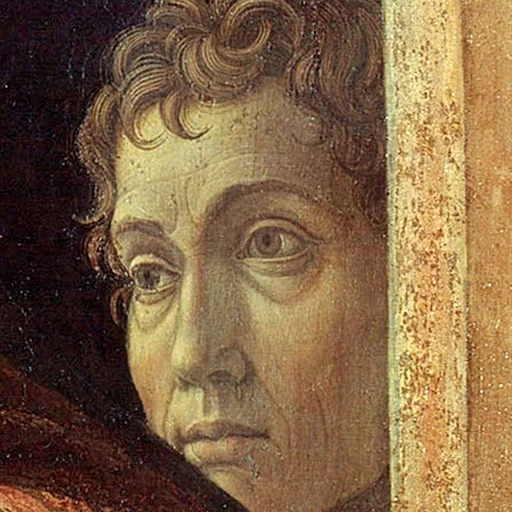
Aureolas mark the holy persons, while the two peripheral spectators lack them; one of these peripheral figures is identified as Mantegna's self‑portrait and the other as his wife Nicolosia Bellini. The scene depicts the biblical Presentation of Jesus at the Temple, showing Mary holding the Child, the elderly priest Simeon, Joseph, and two onlookers, all rendered with a sculptural solidity and a chromatic restraint that emphasizes linear clarity over atmospheric effect.
History & Provenance
The work was created in the mid-15th century, likely between 1453 and 1455, during Mantegna's youth in Padua, possibly commissioned privately for his family following his marriage to Nicolosia Bellini in 1453 or the birth of his first child shortly thereafter. It was painted on panel using tempera, with later additions such as halos and darkened backgrounds altering the original vibrant colors, including a formerly blue background now overpainted with black. Infrared and X-ray studies suggest the composition was initially more open and freely conceived, supporting the view that it was a personal, non-commissioned work rather than a formal altarpiece.
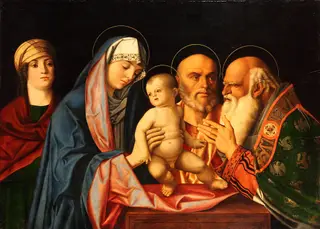
The painting depicts the biblical scene of the Presentation of Jesus at the Temple, based on Luke 2:21-39, showing Mary holding the Child, the priest Simeon recognizing him as the Messiah, and Joseph in the background, all rendered within an illusionistic marble frame that blurs the boundary between depicted and viewer space. Two figures at the edges, identified as Mantegna himself and his wife Nicolosia Bellini, are rendered without halos, distinguishing them from the sacred subjects. Giovanni Bellini, Mantegna's brother-in-law, created a near-identical version of the subject, likely using Mantegna's compositional design, indicating shared workshop practices and mutual artistic influence.
The work is housed in the Gemäldegalerie, Berlin, part of the Staatliche Museen zu Berlin collection, and has been studied for its technical innovation, including the use of gessoed panel, reinforced linen, and underdrawings revealing compositional changes.
The painting is held by the Gemäldegalerie in Berlin, where it is part of the Solly Collection and displayed in Room 38. It is exhibited as part of the Staatliche Museen zu Berlin at the Kulturforum.
Its recorded exhibition history includes the show "Mantegna and Bellini."
No accession number is specified in the available sources.
Context
The work is widely recognized as a pivotal early Renaissance painting that reinterprets the biblical Presentation of Jesus at the Temple with sculptural solidity and innovative framing. Contemporary scholarship, including analyses of its material history and technical execution, confirms its creation in tempera on canvas around 1455, reflecting Mantegna's experimental use of the medium during his Paduan period. The painting's composition, featuring a marble-framed space, self-portraiture in the periphery, and subtle iconographic details like Joseph's red garment, has been extensively studied as a bridge between Gothic tradition and humanist spatial experimentation.
Its influence is underscored by Giovanni Bellini's contemporary reinterpretation of the same subject, highlighting artistic dialogue within the Bellini-Mantegna circle. Technical investigations, such as those revealing underdrawings and pigment degradation, further illuminate its creation as a private devotional work, likely tied to Mantegna's marriage to Nicolosia Bellini circa 1453.
Legacy
The work's legacy stems from its compositional innovation and influence on Renaissance depictions of the Presentation of Christ in the Temple. Mantegna's use of a marble frame illusion and placement of figures within a shallow pictorial space established a precedent for spatial depth in religious painting. His version, created likely in Padua around 1453–1460, directly inspired Giovanni Bellini's contemporary rendition, documented in shared workshop practices.
The painting's attribution to Mantegna's self-portraiture and inclusion of his wife Nicolosia Bellini as a figure further cemented its personal and artistic significance. The work's technical execution in tempera on panel, with evidence of original vibrant pigments later obscured, and its survival with minimal alteration, underscore its status as an early example of canvas painting technique in the period. Its presence in the Gemäldegalerie Berlin since the Solly Collection has ensured ongoing scholarly attention, including 19th-century identification of Mantegna's self-portrait and 20th-century technical analyses confirming its Renaissance provenance.
Overview
Andrea Mantegna’s Presentation at the Temple is a tempera panel executed around 1455. The work measures roughly a modest size and is now part of the Gemäldegalerie collection in Berlin. It depicts a serene interior scene of the biblical episode in which the infant Christ is brought to the temple, rendered with the compositional clarity characteristic of early Renaissance painting.
Own this work as a print
Artist & collection
Artist
Andrea Mantegna (UK: US:; Italian:; c. 1431 – September 13, 1506) was an Italian Renaissance painter, a student of Roman archaeology, and the son-in-law of Jacopo Bellini. Like other artists of the time, Mantegna…

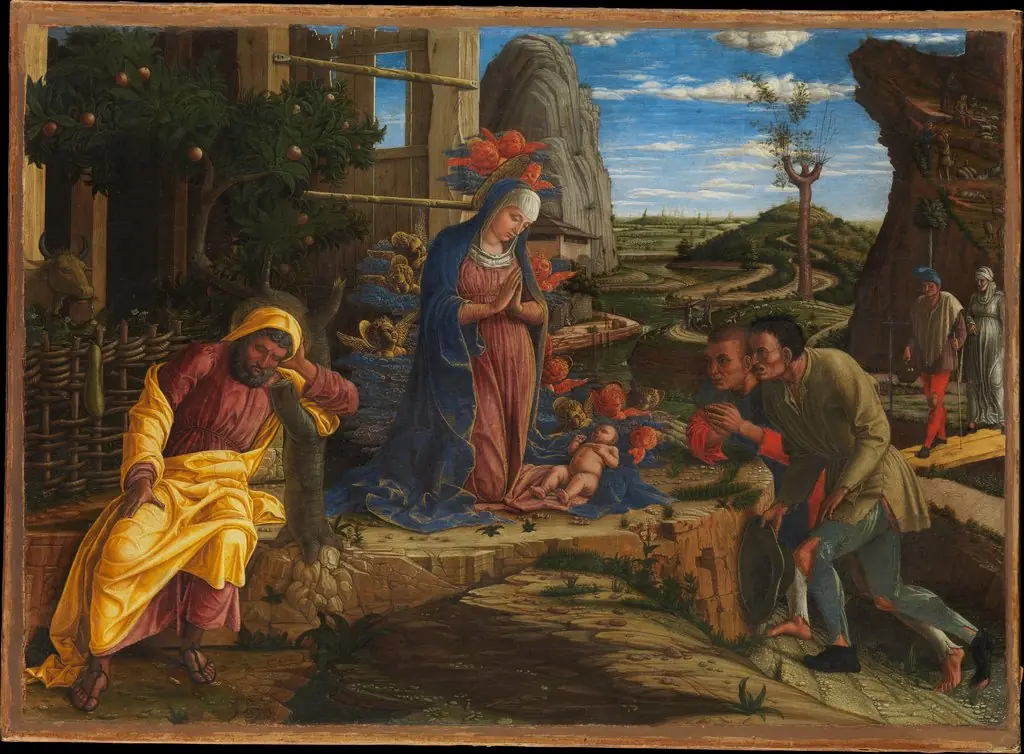
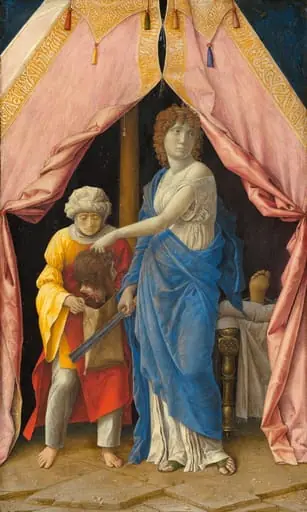
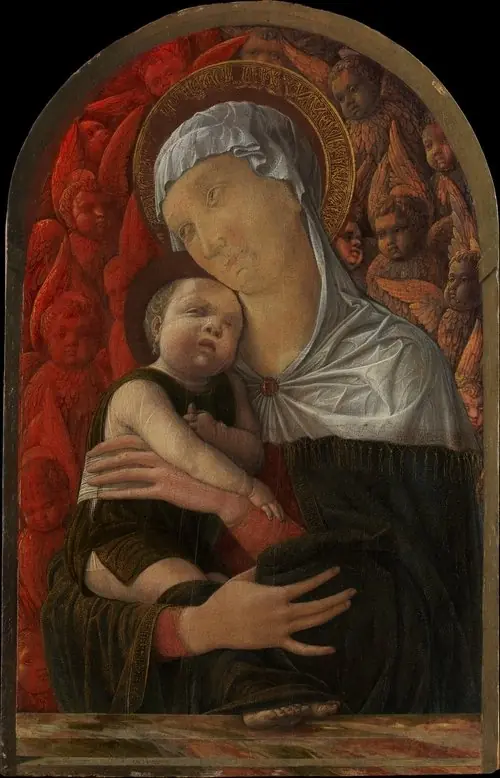
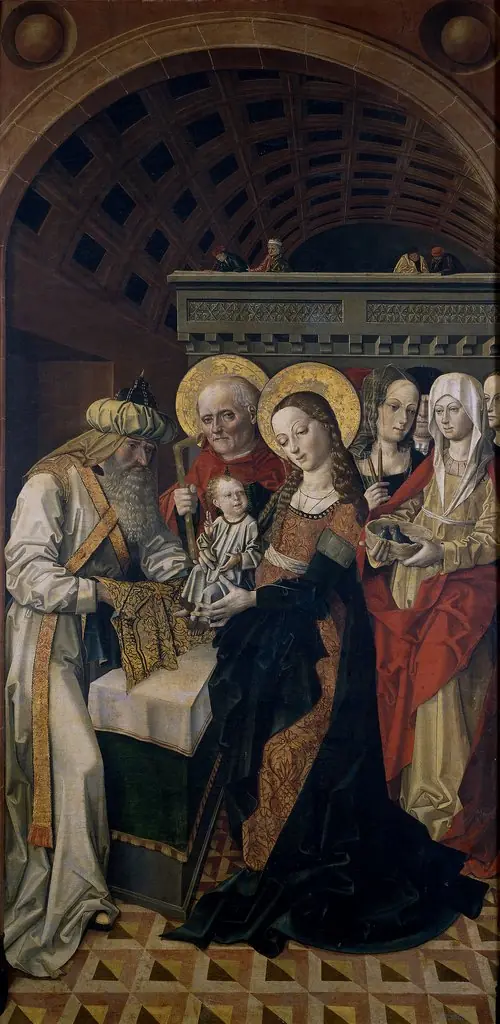 The Presentation of Jesus in the Temple
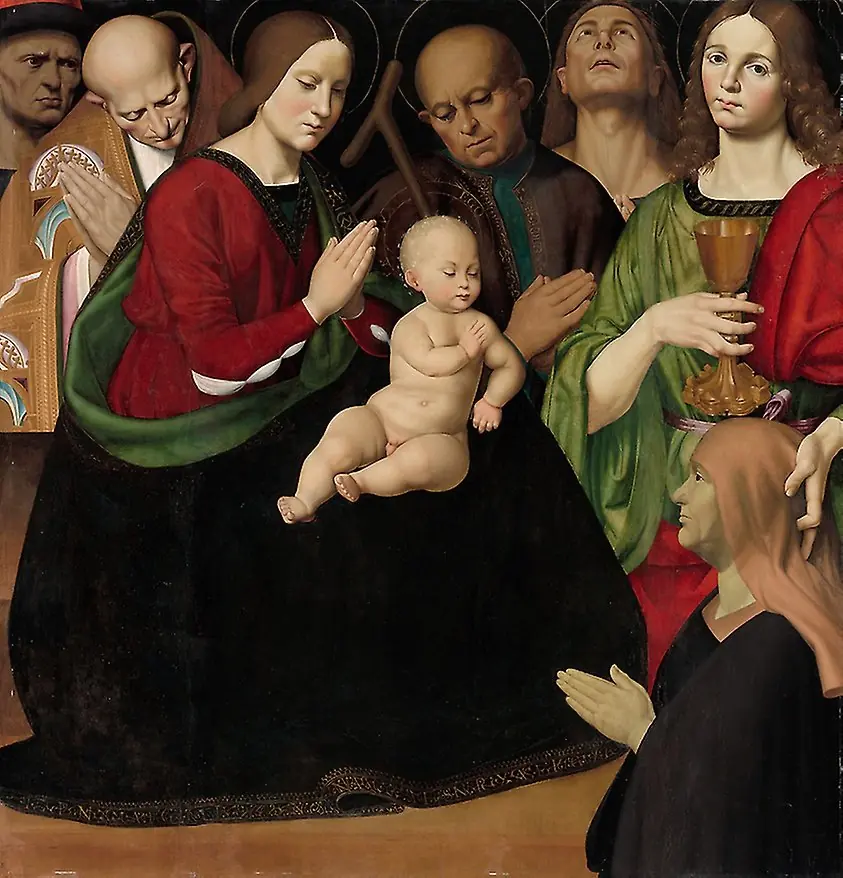 The Holy Family with Four Saints and a Female Donor
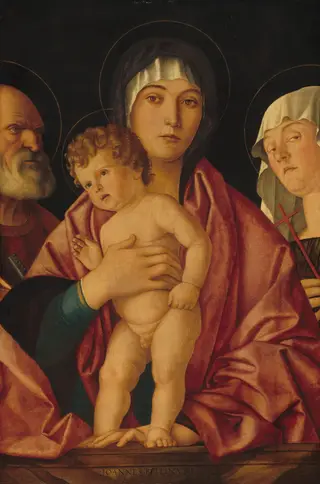 Madonna and Child with Saints
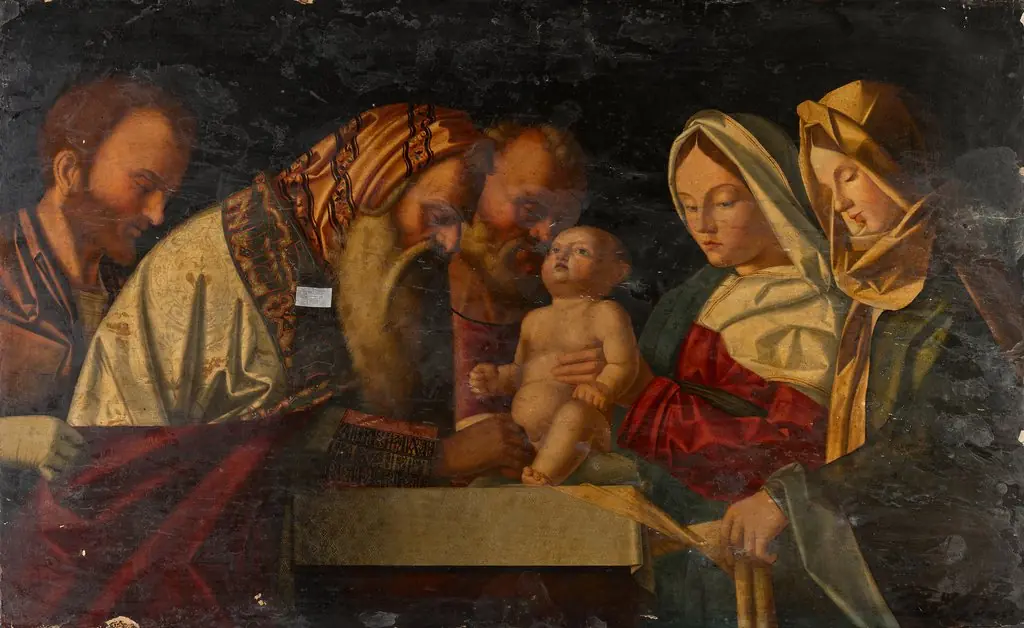 Circumcision of Christ
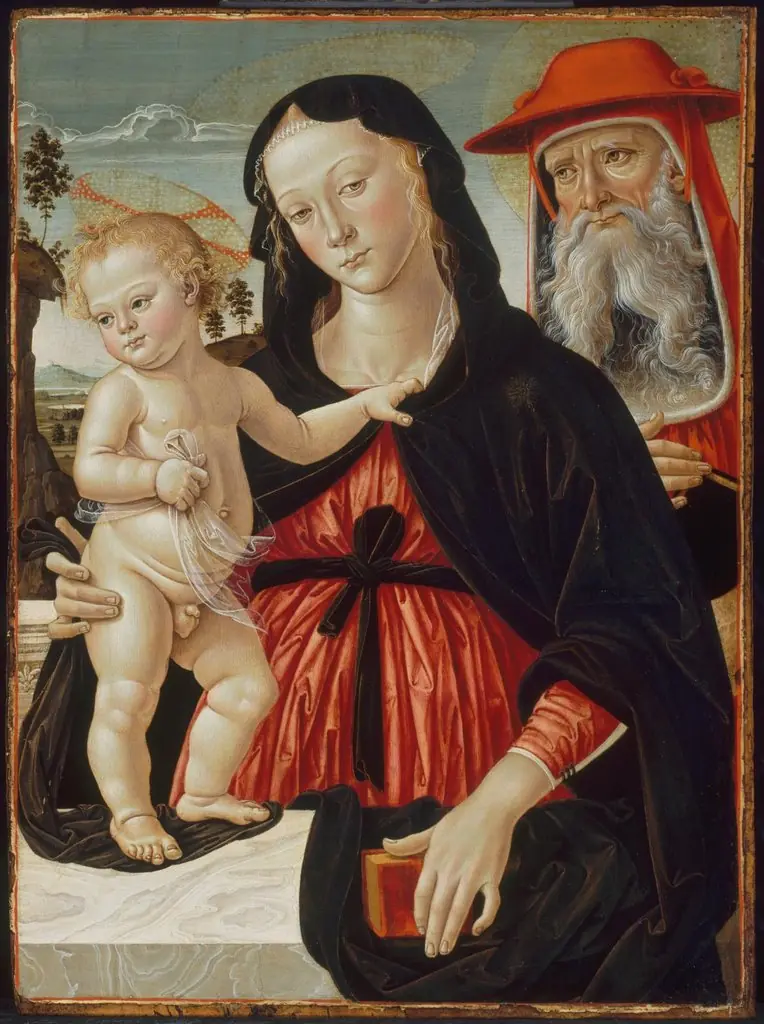 Virgin and Child with Saint Jerome
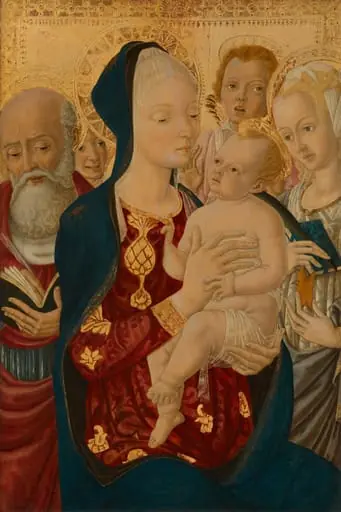 Madonna and Child with Saint Jerome, Saint Catherine of Alexandria, and Angels
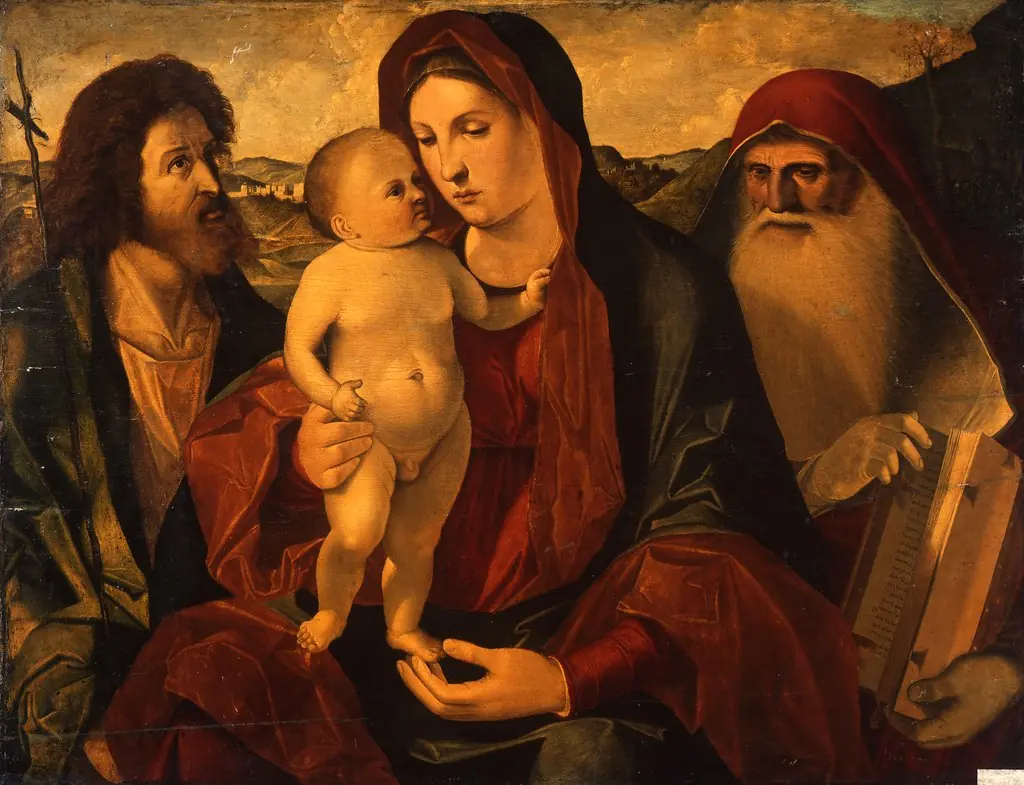 The Virgin and the Child with St. John the Baptist and St. Jerome
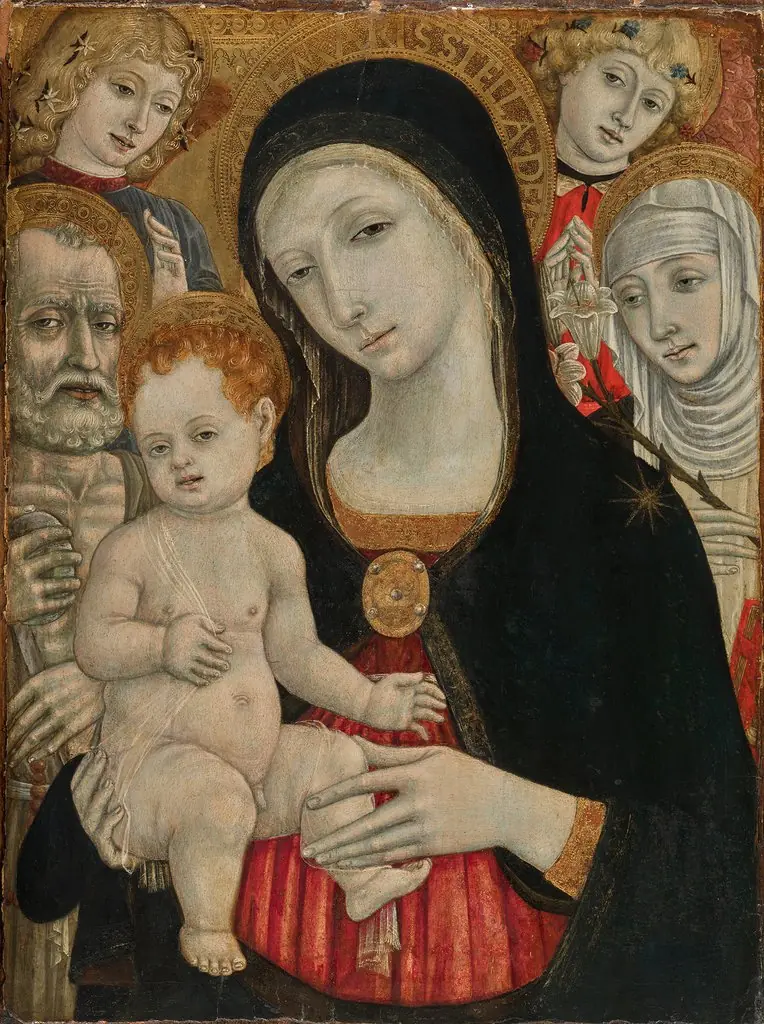 Mary with the Child, Saint Jerome, Catherine of Siena and two angels