Artwork
Virgin and Child
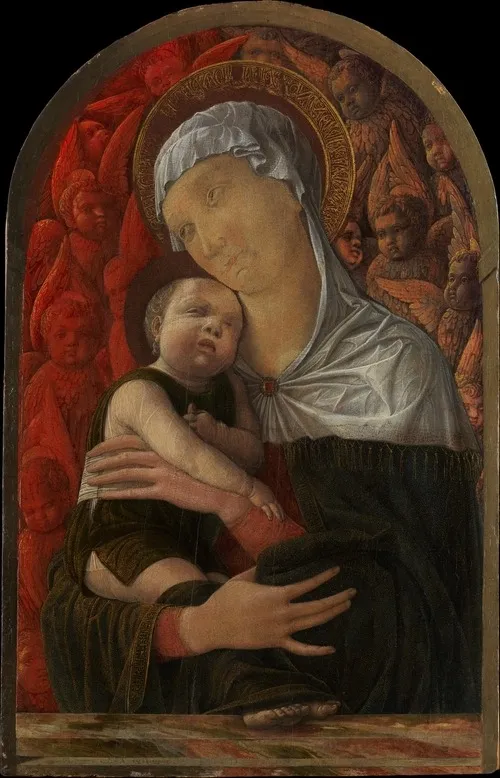
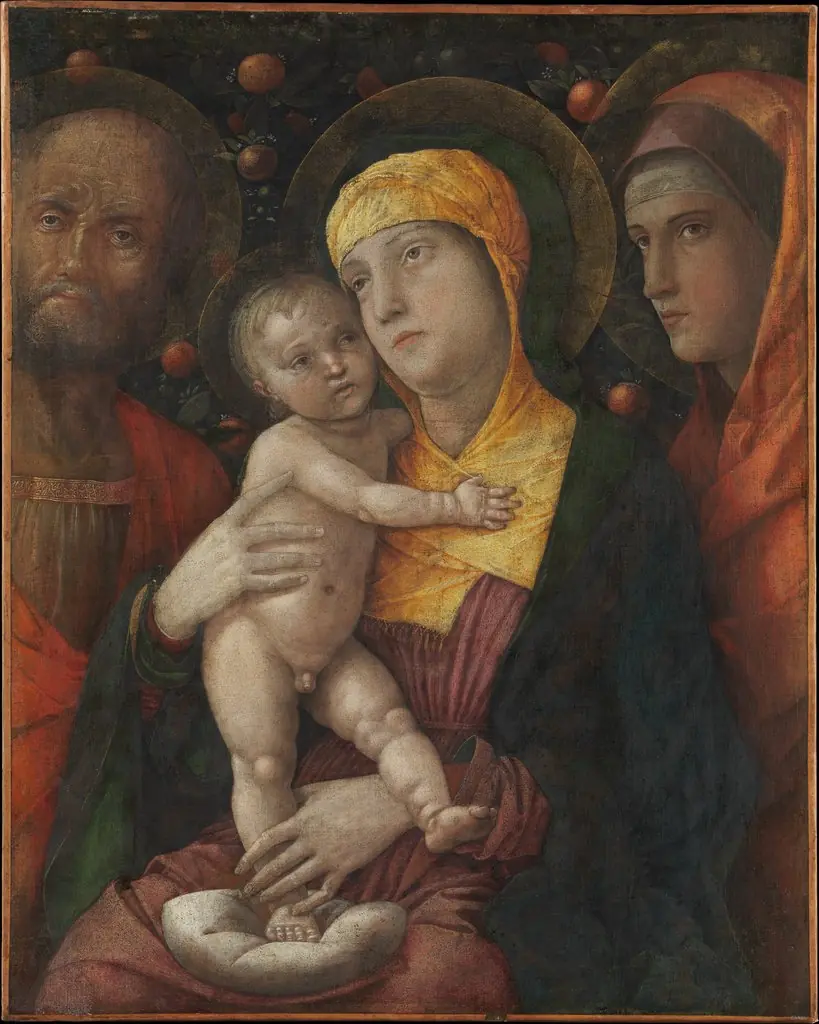
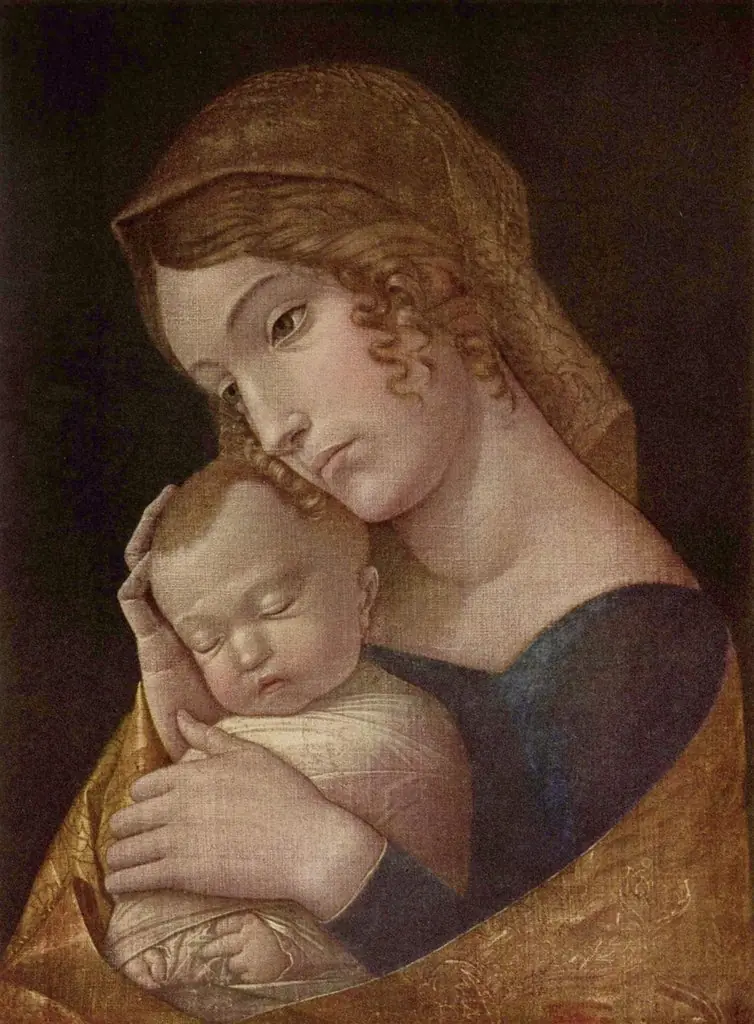
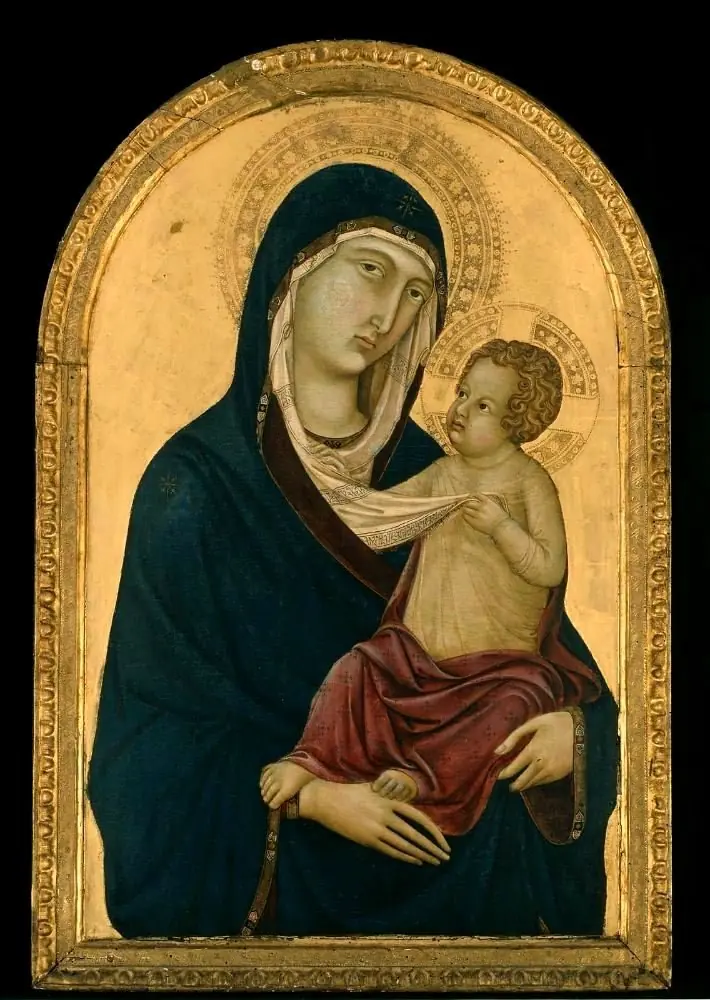
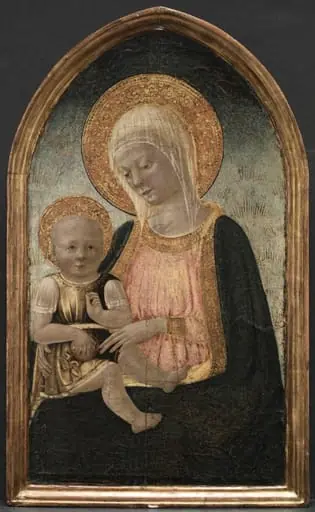
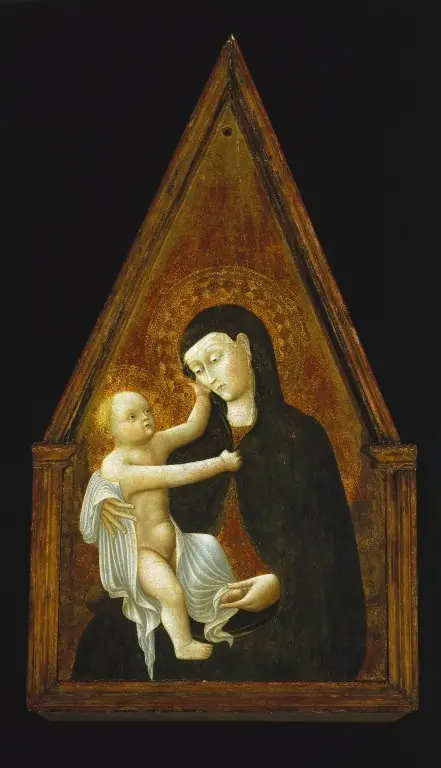
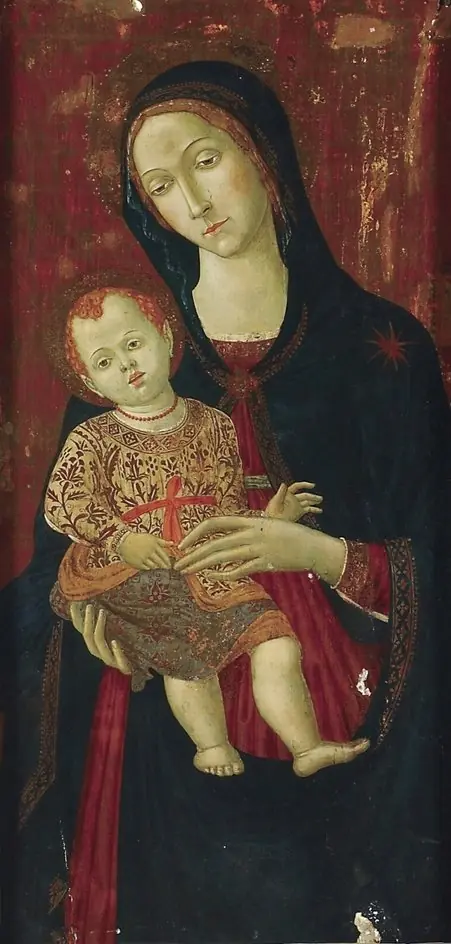
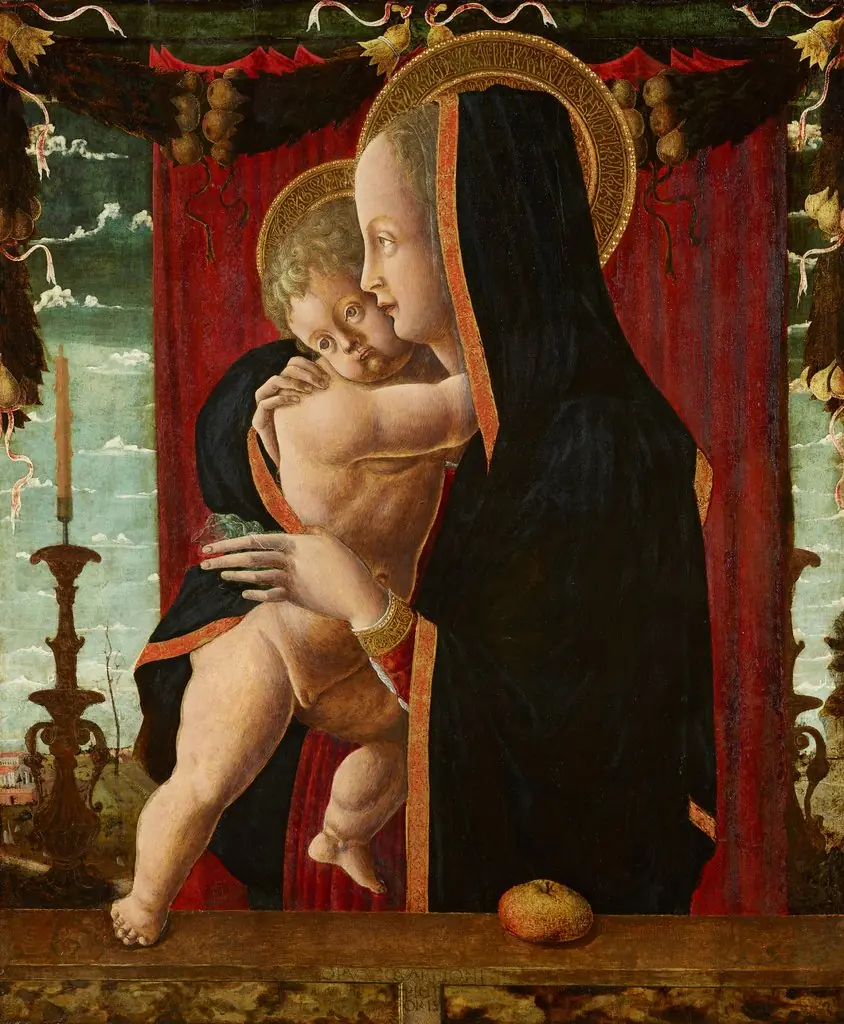
Virgin and Child is a tempera painting by Andrea Mantegna. It dates from 1460 and is held in the collection of the Metropolitan Museum of Art.
About this work
Andrea Mantegna painted this Virgin and Child in tempera around 1460. Its history is murky: nothing is known of it before 1891, and poor conservation has led some historians to question whether Mantegna painted it at all.
Subject & Meaning
The Butler Madonna depicts Mary holding the Christ Child, accompanied by blue cherubim and red seraphim that populate the background.
The Butler Madonna depicts Mary holding the Christ Child, accompanied by blue cherubim and red seraphim that populate the background. Mary wears a green mantle, red dress and a white veil, while the Child is shown in an unusual foreshortened pose, his feet on a marble slab and his head turned deeply into space, creating a three‑dimensional effect that projects toward the viewer. He presses his small face against hers, an intimate union derived from Byzantine and Donatello models, whereas Mary’s downcast, thoughtful gaze suggests her contemplation of the Child’s future suffering.
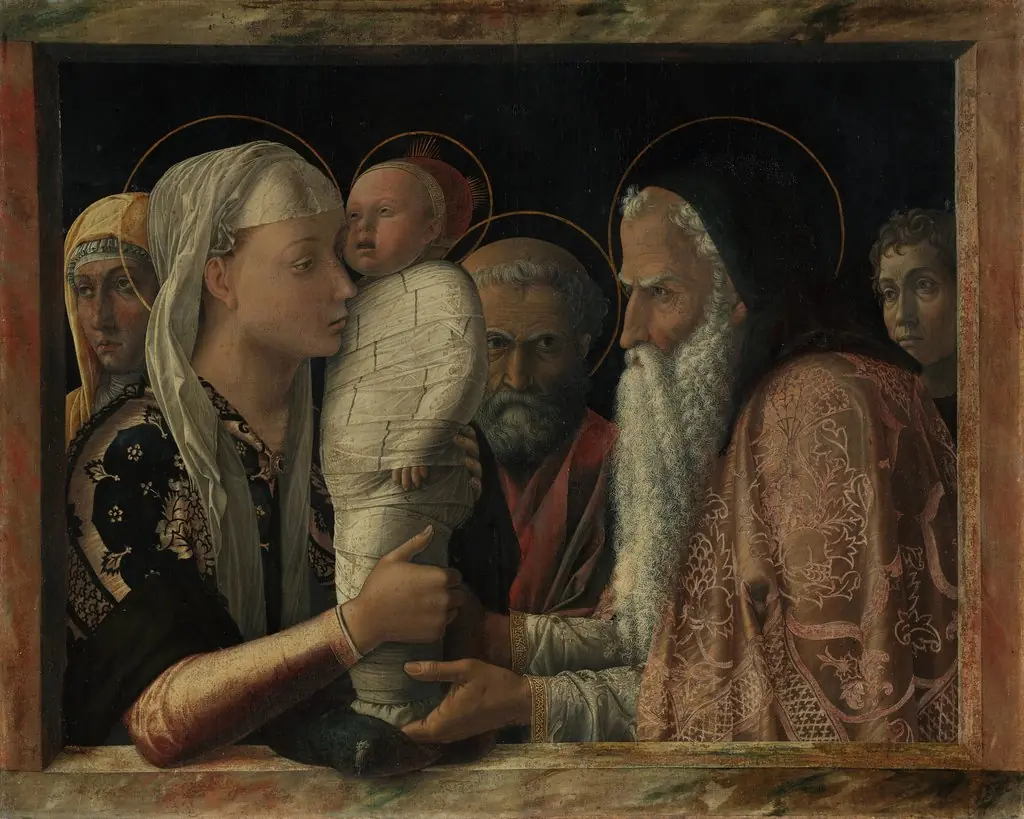
The fictive marble frame echoes Mantegna’s Presentation at the Temple, and the small panel was intended for private devotion.
Technique & Style
The work is executed in tempera on a wooden panel measuring 44.1 × 28.6 cm. It belongs to a series of small devotional Madonnas produced by Mantegna in the late 1460s, notable for a sculptural three‑dimensional effect achieved through a marble‑like foreground and a shallow, receding space. The composition features a green mantle, a red dress, and a white veil for the Virgin, while the Christ Child rests on a marble slab; cherubim are rendered in blue and seraphim in red, echoing Donatello’s influence. The surface shows extensive abrasion, especially on the Virgin’s face, due to aggressive earlier restorations, leading scholars to question its autograph status.
History & Provenance
Attributed to Andrea Mantegna and dated circa 1460, this tempera on panel was likely created for private devotion, potentially during the artist's Paduan period or following his Roman travels. The work's early ownership history remains undocumented prior to 1891, when it surfaced at a London art dealer. Charles Butler subsequently purchased the painting, which eventually entered the collection of the Metropolitan Museum of Art in New York in 1926 via the Michael Friedsam bequest.
The painting's conservation status is compromised by harsh historical restoration, particularly to the Virgin's face, leading some scholars to question its autograph status and suggest it may be the work of a follower executing a lost original. Despite these debates, it is generally grouped with other small-format Madonnas by the master.
The painting, known as the Butler Madonna, is held in the collection of the Metropolitan Museum of Art in New York. Its trajectory to the museum began when it appeared on the London art market in 1891, having no recorded provenance prior to that date. The work was acquired by Charles Butler, whose name it subsequently adopted.
In 1926, the panel entered the Metropolitan Museum's holdings, where it remains today. While specific inventory numbers are not detailed in the provided records, the work's presence in the museum is well-documented. The piece has faced scholarly debate regarding its attribution due to harsh historical restoration, particularly to the Virgin's face, leading some experts to suggest it may be the work of a follower rather than Mantegna himself, though it is generally dated to circa 1460.
Context
The Butler Madonna, a tempera on panel (44.1 × 28.6 cm) dated to around 1460, entered the Metropolitan Museum of Art in 1926. It is one of several small-format Madonnas Mantegna produced for private devotion, a group that includes the Berlin Sleeping Child and the Poldi Pezzoli Madonna. Art historians note the severe over‑restoration of Mary’s face, leading some to question autograph authorship and suggest a follower’s hand.
Stylistic analysis ties the work to Mantegna’s post‑Roman period or the end of his Paduan phase, citing the fictive marble frame and the blue cherubim/red seraphim that echo Donatello. Its placement in the artist’s corpus reflects both the devotional intimacy of the era and the ongoing scholarly debate over its provenance and attribution.
Legacy
The Virgin and Child, attributed to Andrea Mantegna and dated circa 1460, has exerted a persistent, if contested, influence on later representations of the Madonna and Child in private devotional contexts. Its small format and intimate composition, particularly the innovative spatial recession and the tender, familial interaction between figures, became a touchstone for subsequent Northern Italian Renaissance artists producing private devotional works. The painting’s problematic conservation history, including abrasion to the Virgin’s face, has not diminished its scholarly relevance; rather, it has prompted ongoing debate about authorship and the transmission of Mantegna’s workshop practices.
Its acquisition by the Metropolitan Museum of Art in 1926 secured its place in a major public collection, where it has been studied as part of Mantegna’s small-format devotional corpus, alongside works such as the Madonna with Sleeping Child (Berlin) and the Poldi Pezzoli Madonna.
Overview
This tempera on panel painting, known as Virgin and Child or sometimes The Butler Madonna, is attributed to Andrea Mantegna and dated to approximately 1460. Measuring 44.1 by 28.6 cm, the work depicts a traditional religious subject. Its current condition, marked by past restoration efforts, has led to scholarly debate regarding its precise authorship within Mantegna's circle.
Artist & collection
Artist
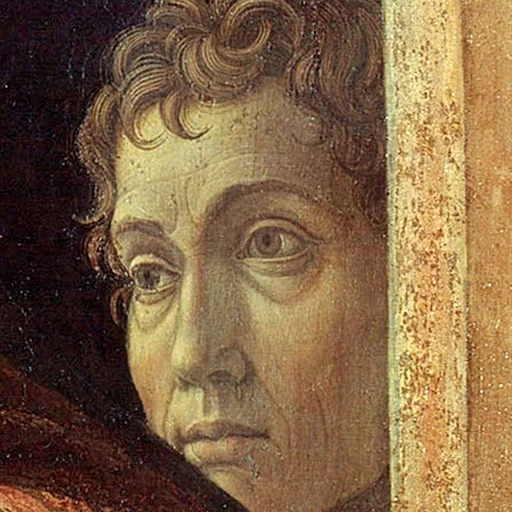
Andrea Mantegna (UK: US:; Italian:; c. 1431 – September 13, 1506) was an Italian Renaissance painter, a student of Roman archaeology, and the son-in-law of Jacopo Bellini. Like other artists of the time, Mantegna…