Artwork
The Infant Savior
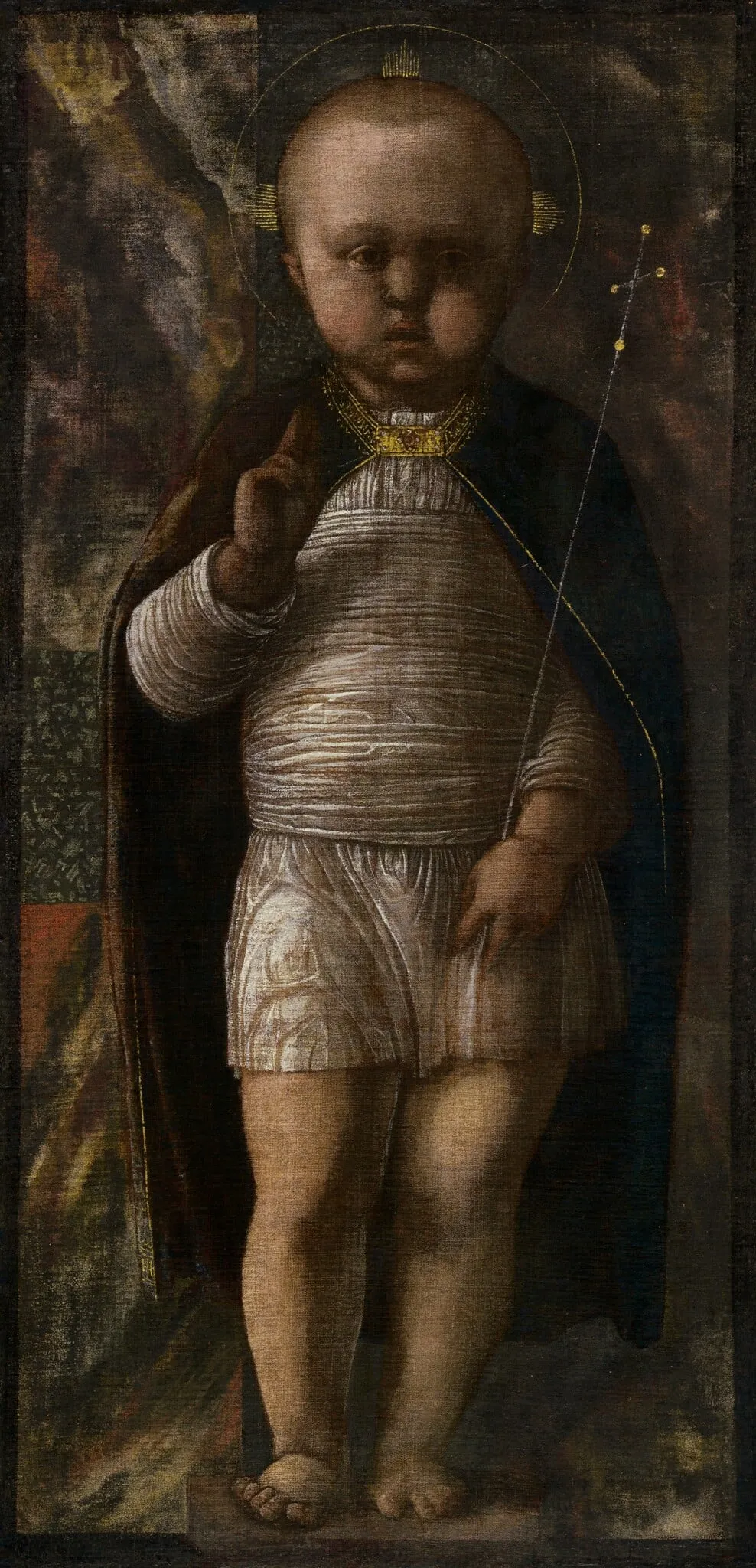
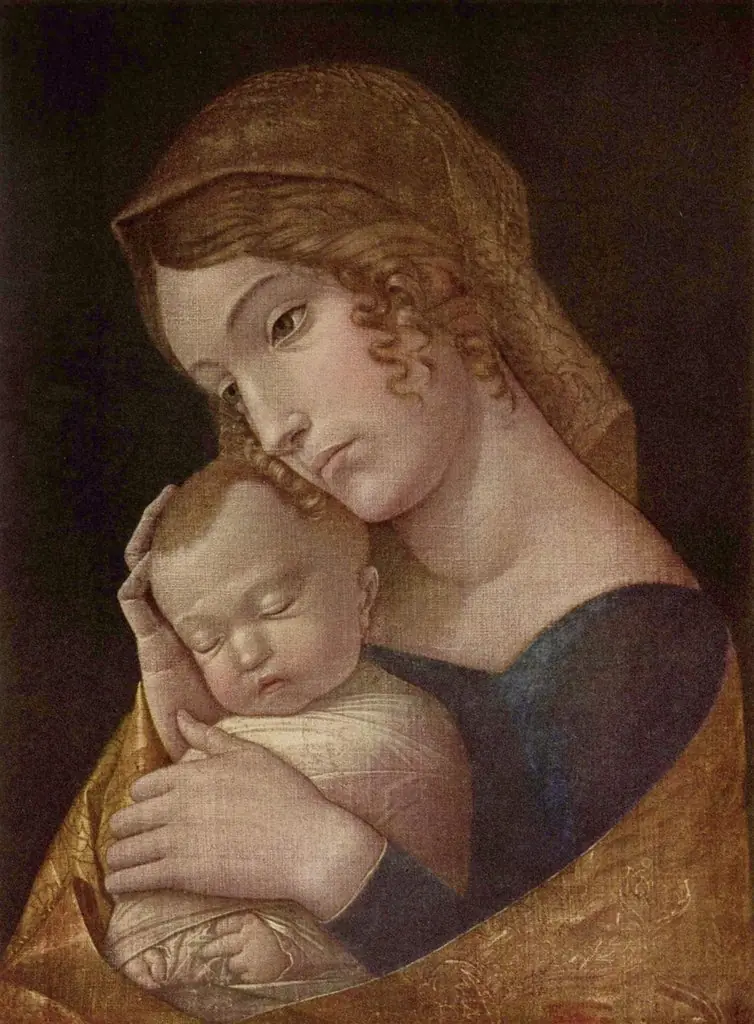
The Infant Savior is a tempera painting by the Early Renaissance artist Andrea Mantegna. It dates from 1460 and is held in the collection of the National Gallery of Art.
About this work
Subject & Meaning
Symbolic elements include the Child's richly embroidered garment and a staff bearing a cross, remnants of which remain visible despite surface damage.
The Infant Savior, painted by Andrea Mantegna in 1455, portrays the Christ Child in a blessing gesture, a standard attribute of the 'Christ Child Blessing' iconography. The work functions as a devotional image, likely intended for private worship or display above a doorway, reflecting contemporary devotion to the protective and benedictory role of Christ. Symbolic elements include the Child's richly embroidered garment and a staff bearing a cross, remnants of which remain visible despite surface damage.
The painting’s meaning centers on the representation of divine blessing and protection, aligning with its historical context in devotional spaces.
Technique & Style
Andrea Mantegna's The Infant Savior is executed in tempera on a panel support, measuring approximately 70.2 by 34.3 centimeters. Dating to the artist's early Paduan period between 1455 and 1460, the work exhibits formal qualities characteristic of his youth, though the panel is currently in a damaged state. The original brilliance of the pigments has significantly faded, yet specific details remain discernible, including the intricate crinkles of the Christ Child's garment and the reflections on the gilded elements of the robe and the cross-bearing staff.
The composition's narrow vertical format suggests it may have originally been intended for placement above a doorway or within a larger devotional complex. Despite the surface degradation, the handling of texture in the drapery and the use of gold leaf for highlights demonstrate the technical approach of the mid-15th century.
History & Provenance
The Infant Savior is currently held in the collection of the National Gallery of Art in Washington, D.C., having arrived as a gift from the Samuel H. Kress Foundation in 1952. Prior to this, the work resided at Doughty House in Richmond, Surrey, within the Cook family collection, where it was first recorded in 1901 under Sir Francis Cook. It passed through three generations of the Cook baronets before being sold in London during June or July 1947 to Count Alessandro Contini Bonacossi via agent Gualtiero Volterra.
In July 1948, the Count sold the painting to the Kress Foundation, which subsequently donated it to the national gallery. While the work has been part of major institutional collections since the early twentieth century, specific public exhibition records beyond its display within these private and public holdings are not detailed in the available documentation.
Context
The Infant Savior is attributed to Andrea Mantegna's youthful Paduan period and is dated to around 1455–1460, though Italian-language scholarship notes that this attribution is not unanimously accepted by all art historians. The work is recorded in Paul Kristeller's 1901 monograph on Mantegna, where it was listed in the collection of Sir Francis Cook at Doughty House. The painting's unusual subject has led scholars to suggest it was intended for private devotion or as part of a larger devotional ensemble, and the panel is now considered heavily damaged, having lost much of its original color brilliance, though details such as the dense folds of the Child's garment and the gilded accents on the robe and cross-staff remain legible. Bibliography includes Tatjana Pauli's monograph on Mantegna (Leonardo Arte, 2001).
Legacy
The painting entered the National Gallery of Art in 1952 after a 1947 sale to Contini Bonacossi and a 1948 acquisition by the Kress Foundation; its documented provenance through the Cook family illustrates a continuous collecting history that has been cited in art‑historical literature. Scholars have highlighted its role in the development of Mantegna’s early treatment of the Christ Child motif and its significance within the religious painting genre. The work is frequently referenced in studies of Mantegna’s Paduan period and in catalogues of the Kress Collection, underscoring its enduring scholarly reputation.
Overview
The Infant Savior is a tempera on panel painting created by Andrea Mantegna between 1455 and 1460, during his early career in Padua. This work depicts the Christ Child with a solemn expression, offering a blessing gesture to the viewer. Currently housed at the National Gallery of Art, the painting exemplifies Mantegna's developing style, characterized by a dramatic interplay of light and shadow that imbues the sacred subject with a sense of tangible presence.
Artist & collection
Artist
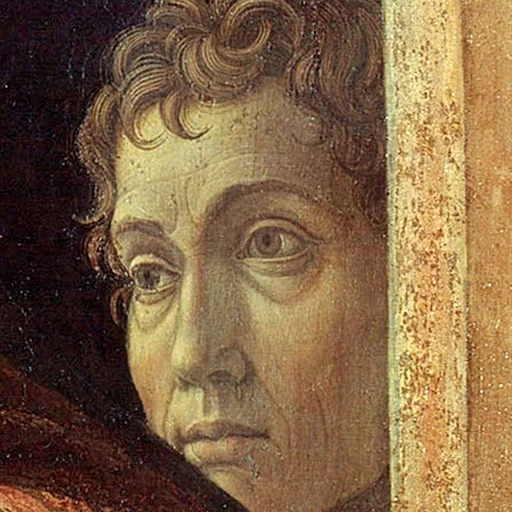
Andrea Mantegna (UK: US:; Italian:; c. 1431 – September 13, 1506) was an Italian Renaissance painter, a student of Roman archaeology, and the son-in-law of Jacopo Bellini. Like other artists of the time, Mantegna…