Artwork
Christ as the Suffering Redeemer
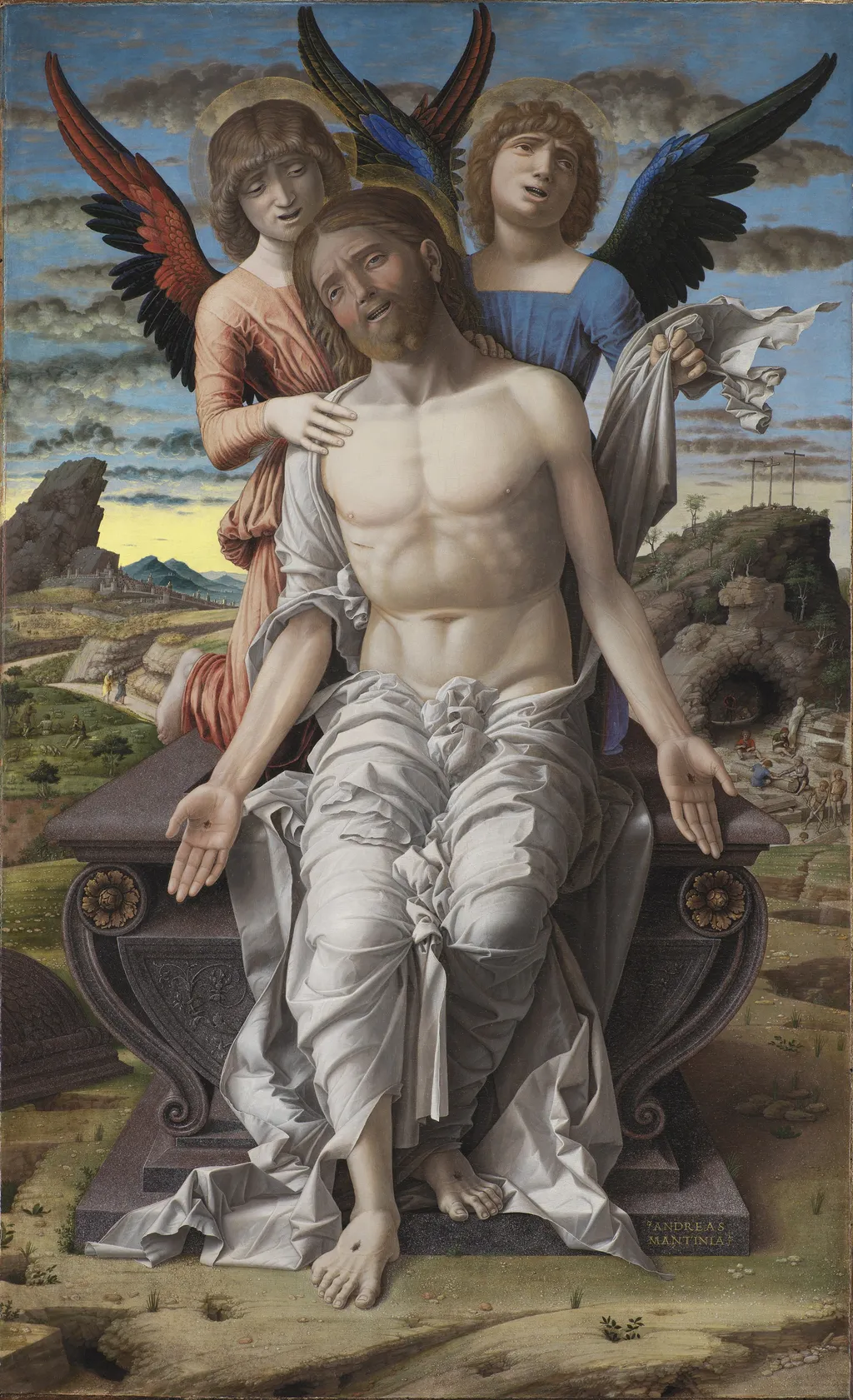
Christ as the Suffering Redeemer is a tempera painting by the Early Renaissance artist Andrea Mantegna. It dates from 1494 and is held in the collection of the Statens Museum for Kunst.
About this work
Subject & Meaning
Two women approach the tomb from Jerusalem, connecting the biblical narrative to the devotional foreground.
The work depicts the dead Christ seated on an ancient, finely sculpted sarcophagus, portrayed as the "Man of Sorrows" to display the five Holy Wounds on his hands, feet, and side. Supported by two kneeling angels, one a seraph and the other a cherub, the figure is wrapped in a metallic white drape, emphasizing his status as the Suffering Redeemer. This iconography, representing the moment between death and resurrection, does not appear in the Gospels but emerged in Christian art through Donatello before being adopted by Mantegna.
The composition integrates specific symbolism: the rising sun illuminating the background signifies the dawn of a new era and the redemption of original sin, while the distant landscape juxtaposes the empty crosses of Golgotha with a quarry where workers shape stone, linking the Passion to human labor and antiquity. Two women approach the tomb from Jerusalem, connecting the biblical narrative to the devotional foreground.
Technique & Style
Andrea Mantegna’s Christ as the Suffering Redeemer (1488) is executed in tempera on a wooden panel, measuring 83 × 51 cm (or 136 × 96.7 cm, per discrepancies in sources), with the support remaining in exceptionally well-preserved condition. The medium’s matte, luminous quality allows for meticulous detailing, evident in the metallic sheen of Christ’s drapery and the finely rendered textures of the sarcophagus’s sculpted volutes and rosettes. Mantegna’s handling is precise, with crisp contours defining anatomical features, such as the exposed wounds and musculature, while sfumato-like transitions soften the angels’ robes and the distant landscape.
Stylistically, the work exhibits a fusion of Renaissance naturalism and classical antiquity, seen in the sculptural treatment of the figures and the archaeological accuracy of the porphyry sarcophagus. The composition’s dramatic chiaroscuro, particularly in the interplay of light on Christ’s body and the internal illumination of the quarry grotto, underscores the emotional intensity of the scene.
History & Provenance
Created by Andrea Mantegna, the work is variously dated to c. 1488, 1489, or the broader period of 1488–1500. Stylistic analysis often links it to the artist's Roman residence (1488–1490) and the Madonna of the Quarry, though some scholars propose a later 1490s origin. Executed in tempera on wood, the painting entered the provenance of the Gonzaga family by 1627, appearing in their inventory.
It subsequently belonged to Cardinal Silvio Valenti Gonzaga until 1763. In May 1763, the Gonzaga collection was auctioned in Amsterdam, where art dealer Gerhard Morell acquired the piece on behalf of the Danish crown. It was purchased for King Frederick V to elevate the Danish royal collection, eventually becoming a foundational work for the Statens Museum for Kunst in Copenhagen.
The work is housed in the Statens Museum for Kunst, Copenhagen. Its provenance traces back to a 1627 Gonzaga family inventory and, by 1763, entered the Danish Royal collection after Cardinal Silvio Valenti Gonzaga’s holdings were sold and purchased by King Frederick IV. The painting has remained in the museum’s collection and is displayed in its permanent galleries.
The work was incorporated into the royal collection and later transferred to the State Museum, where it has been preserved and studied.
Context
Andrea Mantegna’s Christ as the Suffering Redeemer (c. 1488–1500) occupies a pivotal place in Renaissance art for its innovative treatment of the Man of Sorrows theme, a motif absent from scriptural narratives but popularized by earlier artists like Donatello. Scholars highlight its emotional intensity, achieved through dynamic composition and expressive figuration, marking a departure from the static solemnity of Mantegna’s earlier works, such as the Camera degli Sposi (Salmazo, 1997; Pauli, 2001; Camesasca, 2007). The painting’s integration of classical antiquity, evident in the ornate sarcophagus, and its meticulous landscape, blending devotional imagery with quotidian scenes, reflect Mantegna’s humanist engagement with antiquity and naturalism.
Its reception in art history underscores its influence on contemporaries like Giovanni Bellini and Antonello da Messina, who explored similar themes, cementing its role in the evolution of Renaissance religious iconography (Kleiner, 2008; Wikipedia FR, 2023).
Overview
Andrea Mantegna's "Christ as the Suffering Redeemer," painted on wood around 1488–1500, depicts a poignant moment of Christ's exhaustion. This Italian Renaissance work is currently housed at the Statens Museum for Kunst in Copenhagen, Denmark. The composition presents Christ in a state of profound weariness, supported by two angelic figures, set against a dramatic, foreboding landscape.
Own this work as a print
Artist & collection
Artist
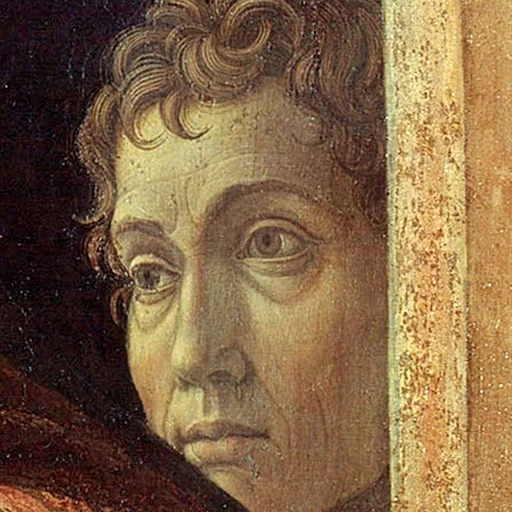
Andrea Mantegna (UK: US:; Italian:; c. 1431 – September 13, 1506) was an Italian Renaissance painter, a student of Roman archaeology, and the son-in-law of Jacopo Bellini. Like other artists of the time, Mantegna…

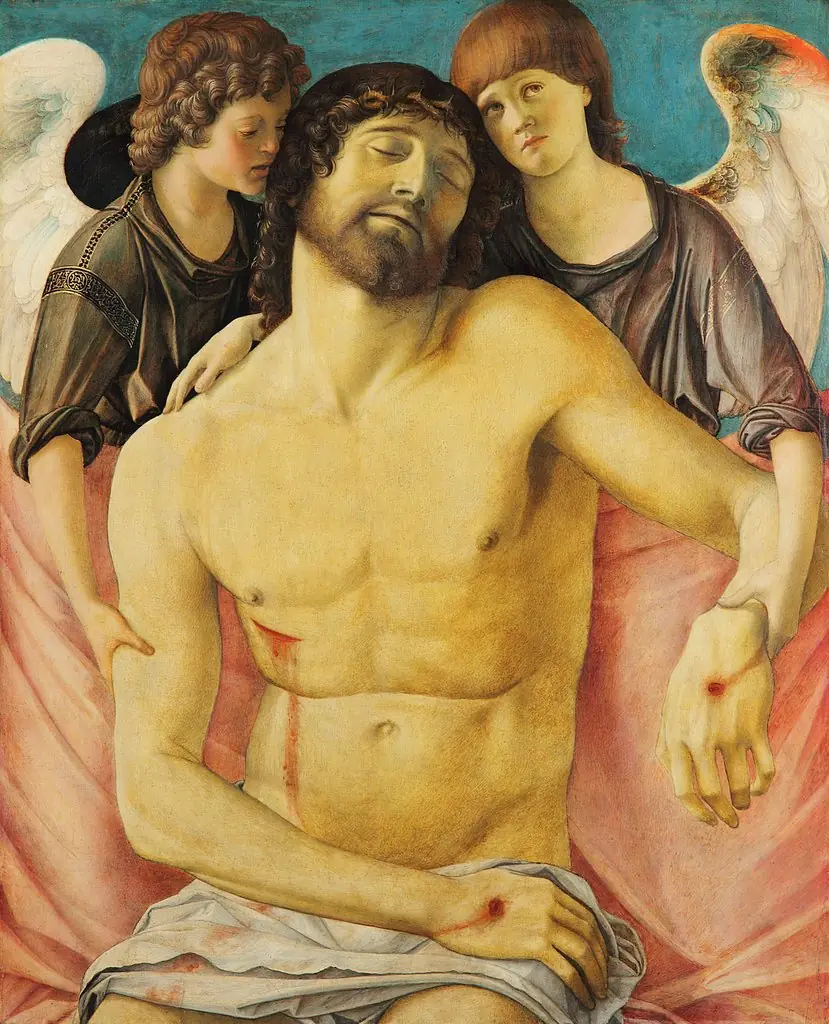 Dead Christ Supported by Two Angels
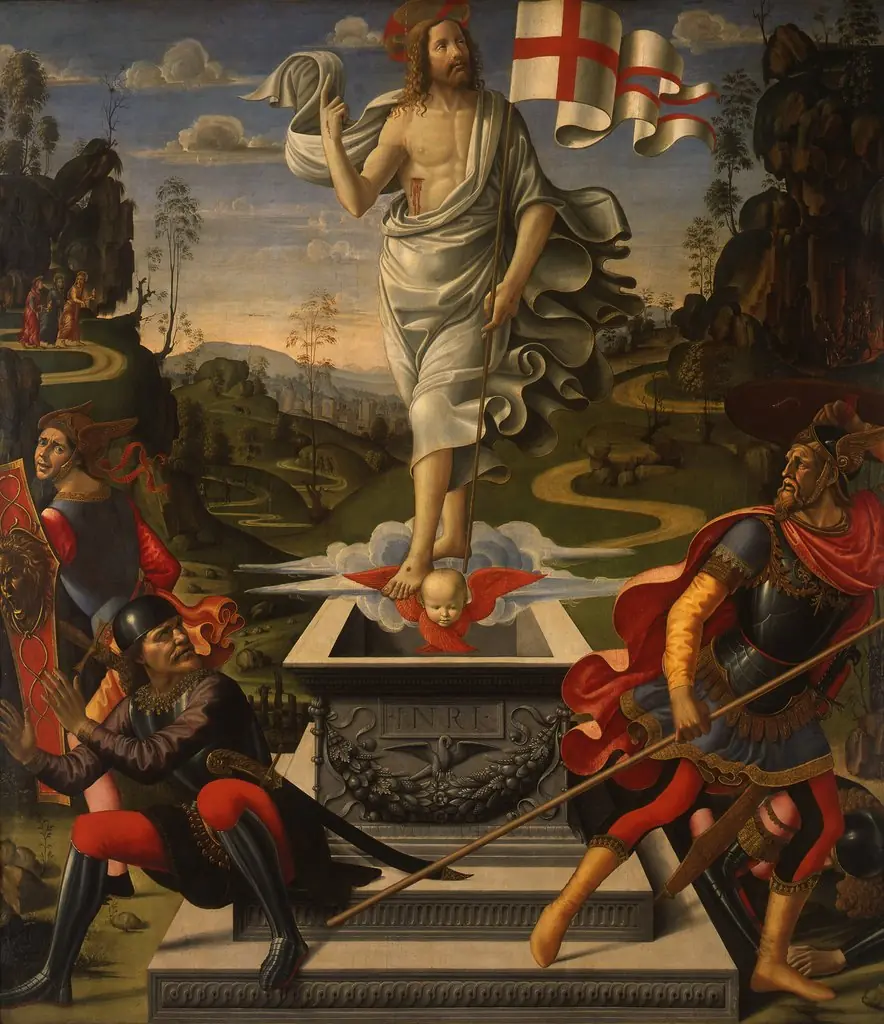 Resurrection of Christ
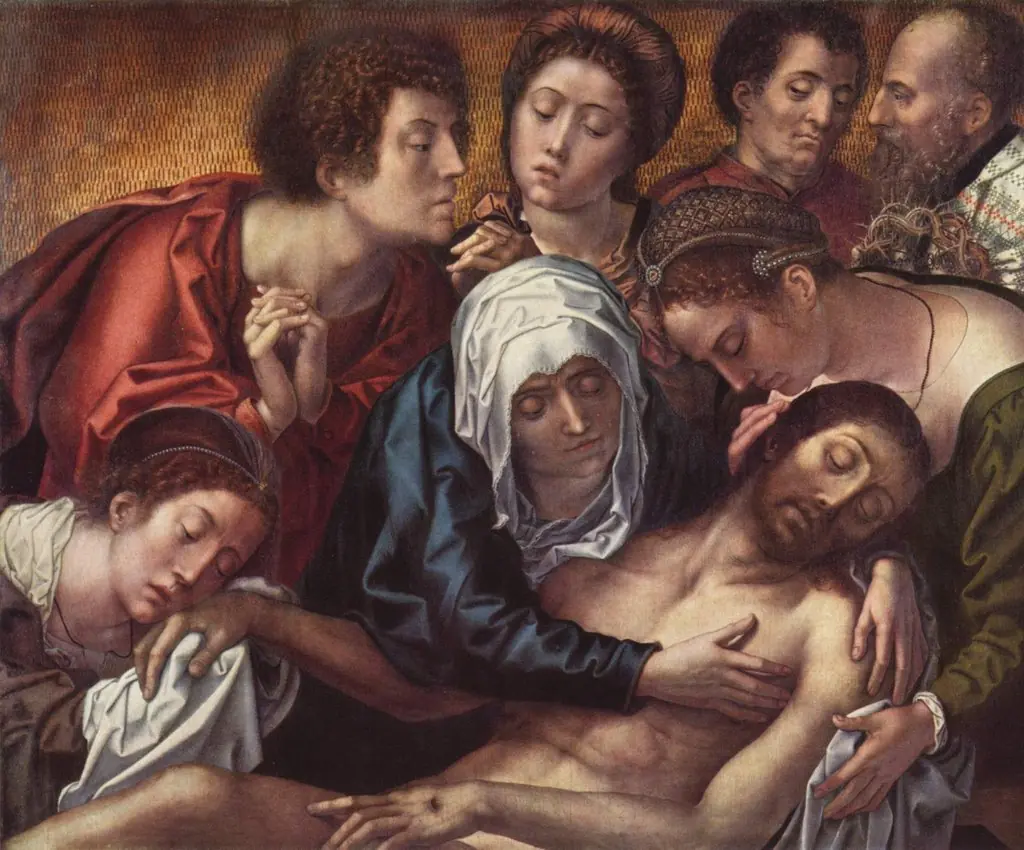 The Death of Christ
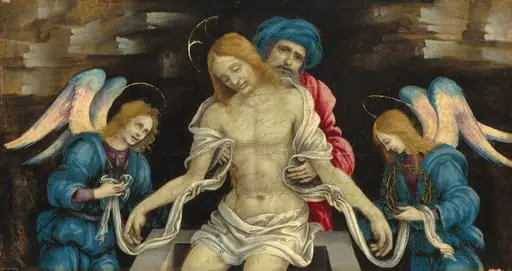 Pietà (The Dead Christ Mourned by Nicodemus and Two Angels)
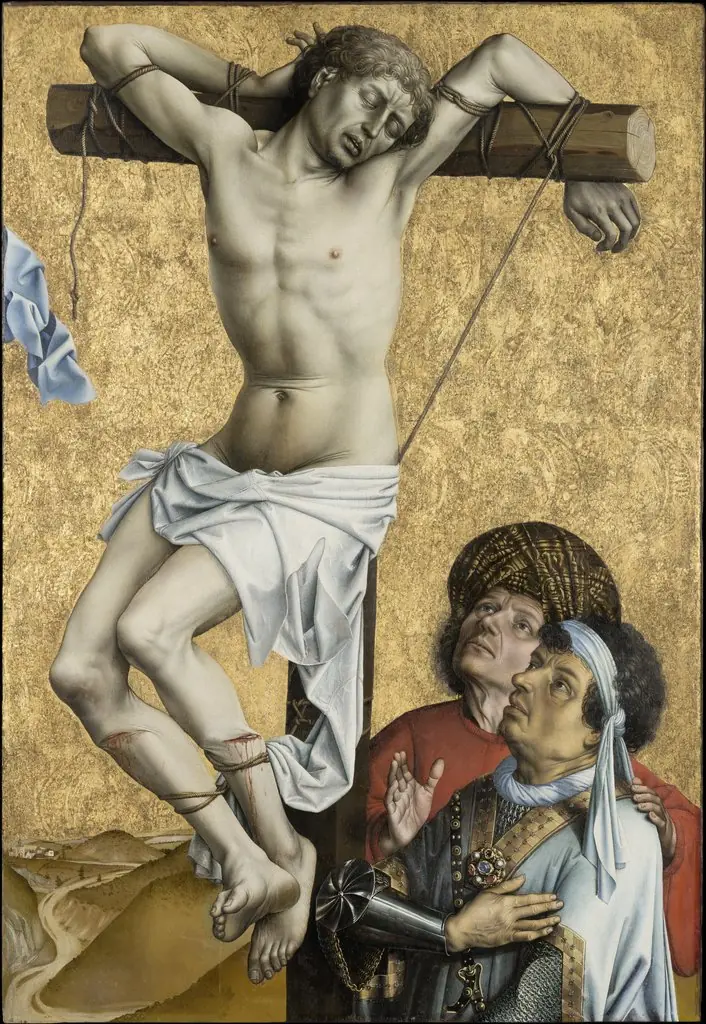 The Bad Thief to the Left of Christ
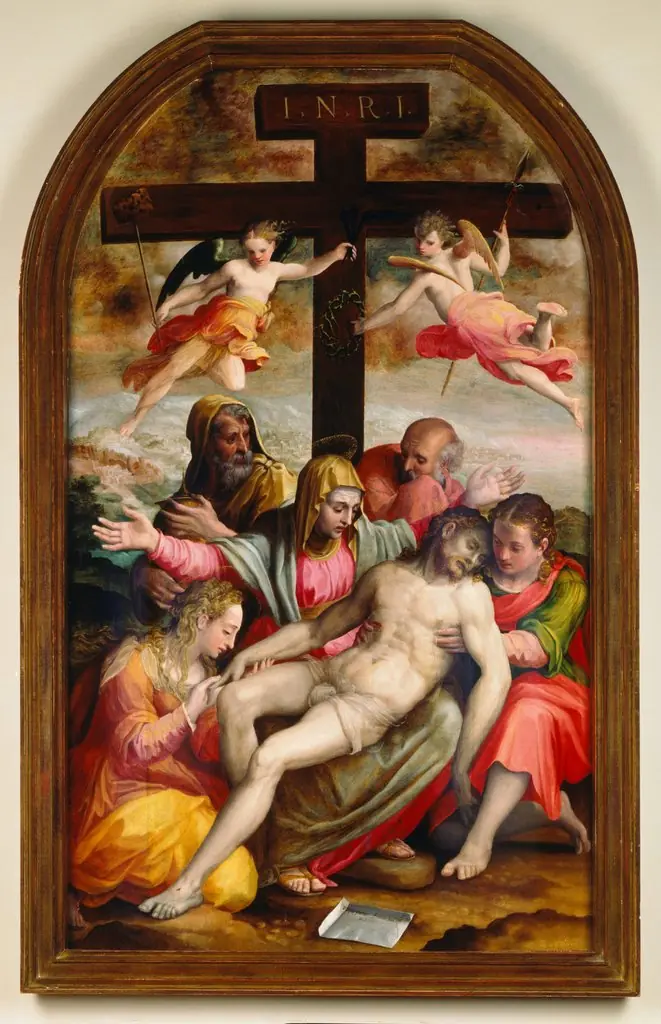 Deposition
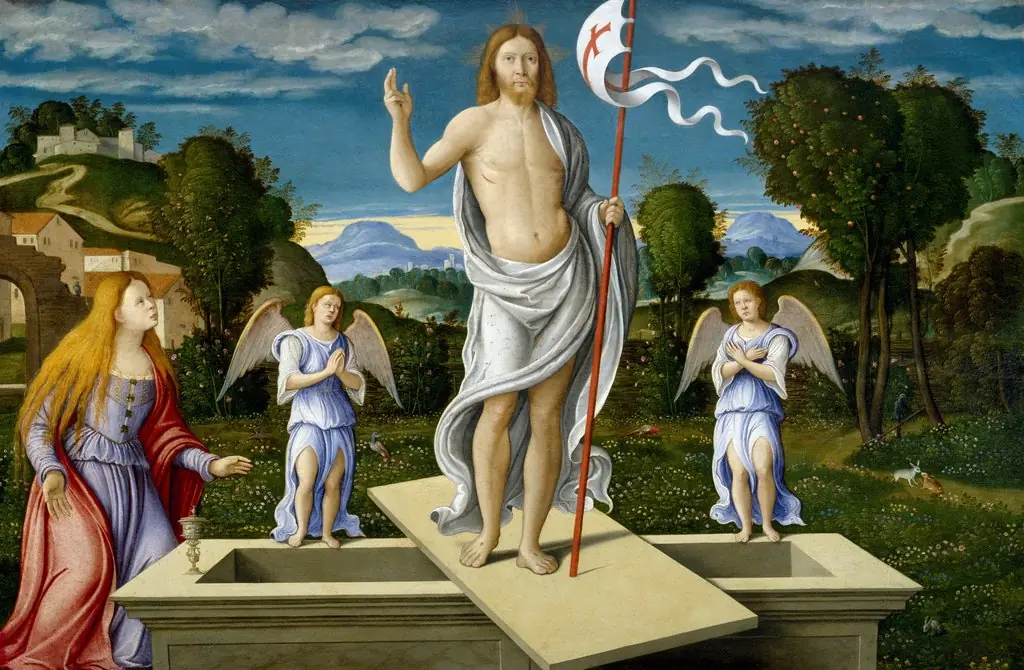 The Resurrection
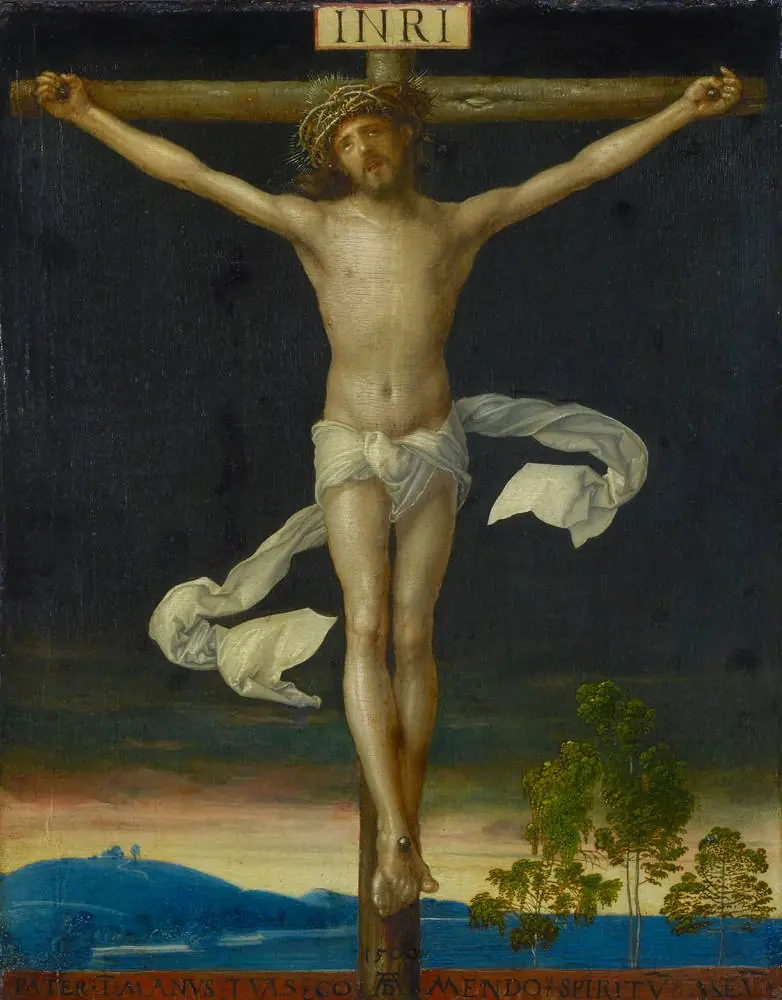 Crucifixion
![The Crucifixion with the Virgin, Saint John, Saint Jerome, and Saint Mary Magdalene [middle panel], by Pietro Perugino](https://artifactworldgallery.com/img/pietro-perugino--the-crucifixion-with-the-virgin-saint-john-saint-jerome-and--a9b4c312771e3f71-w320.webp) The Crucifixion with the Virgin, Saint John, Saint Jerome, and Saint Mary Magdalene [middle panel]
The Crucifixion with the Virgin, Saint John, Saint Jerome, and Saint Mary Magdalene [middle panel]