Artwork
Lehman Madonna
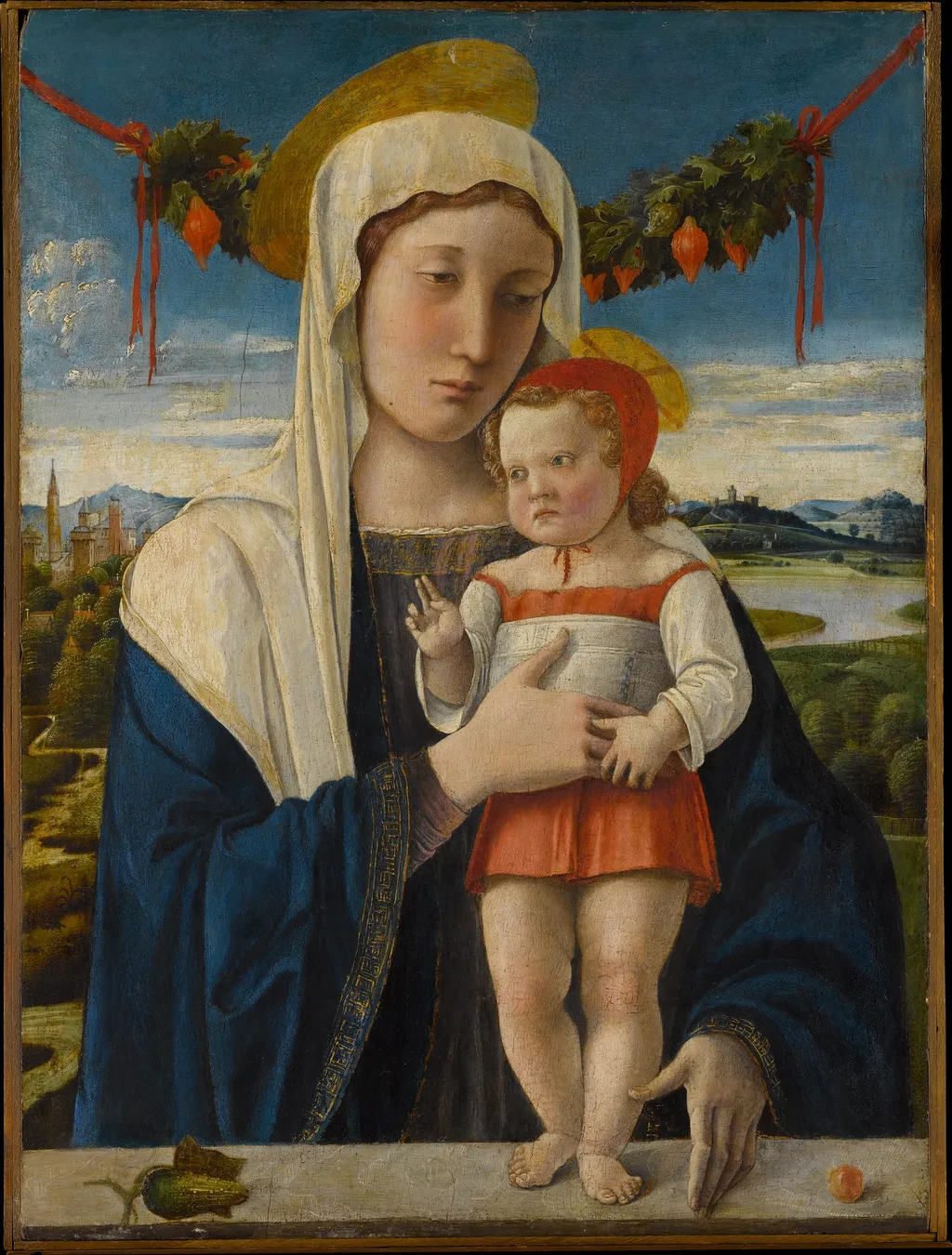
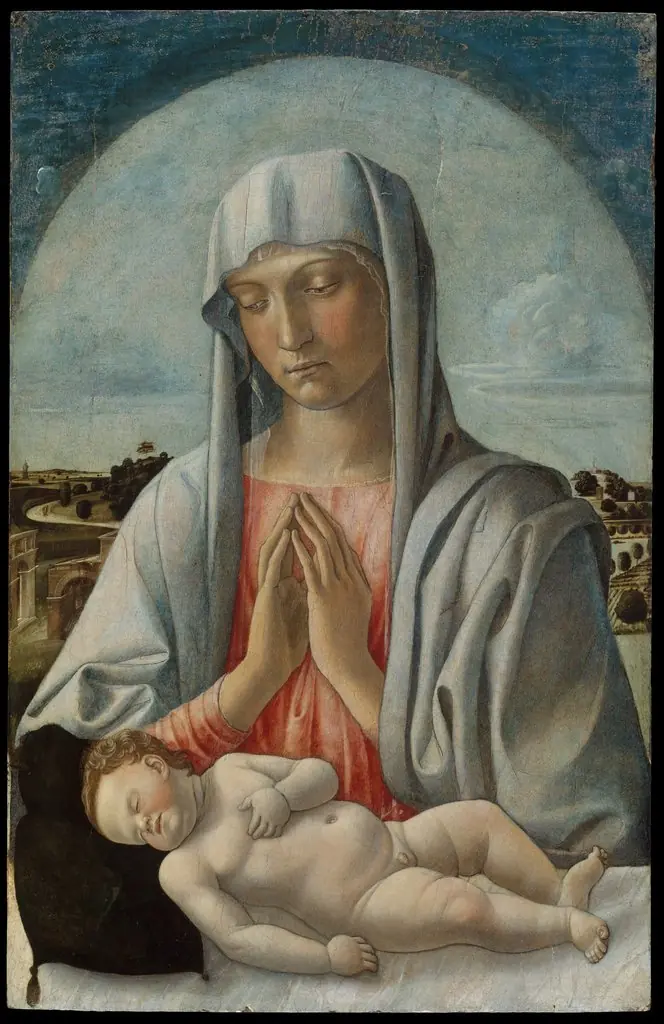
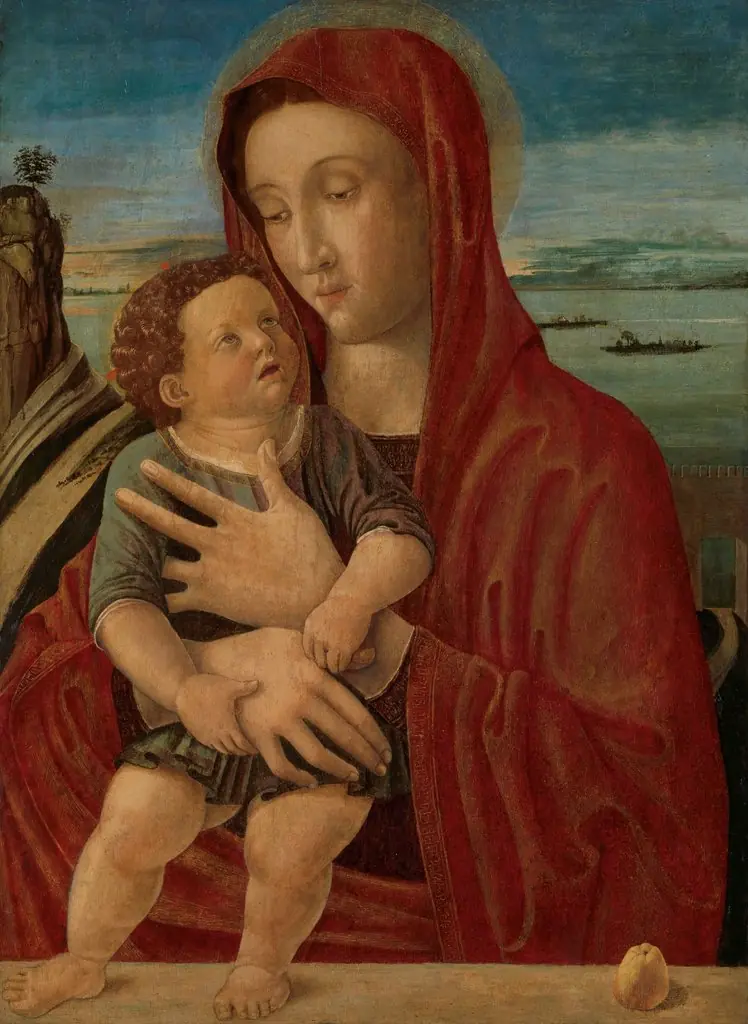
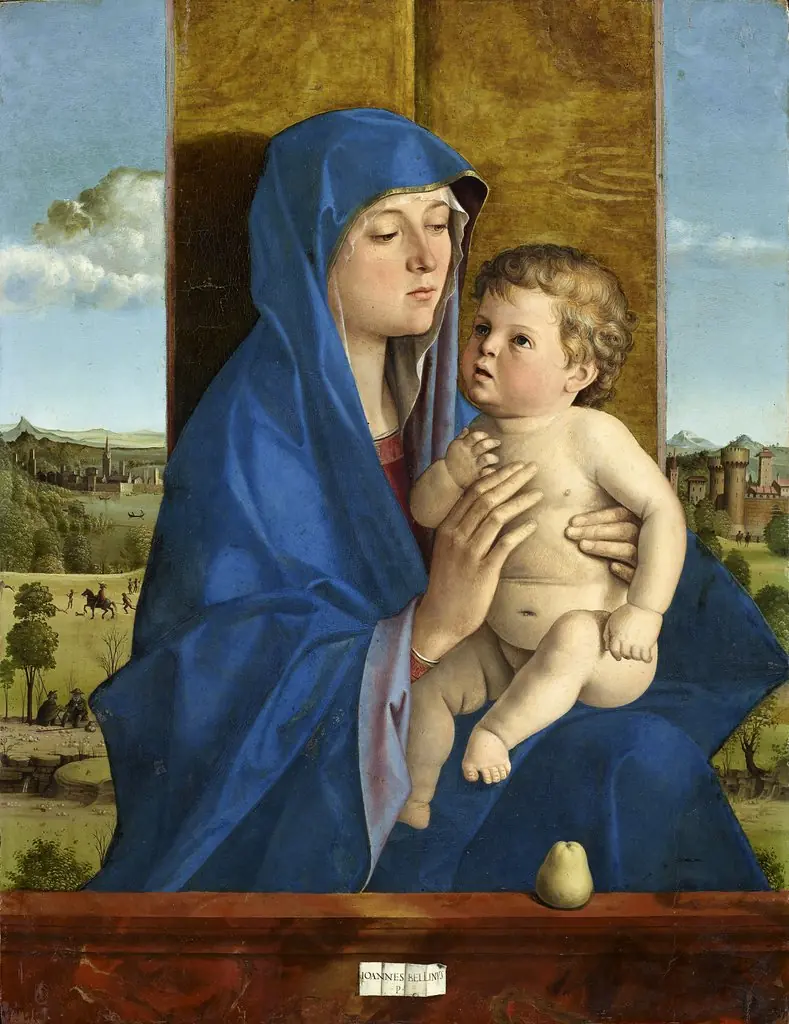
Lehman Madonna is an unspecified painting by the Early Renaissance artist Giovanni Bellini. It dates from 1470 and is held in the collection of the Metropolitan Museum of Art.
About this work
Giovanni Bellini painted the Madonna and Child in tempera on panel around 1470. The pairing of mother and child was a standard subject of the period, treated here with plain, direct devotion.
Subject & Meaning
The Lehman Madonna depicts the Virgin Mary holding the Christ Child in a devotional composition typical of quattrocento Italian religious painting.
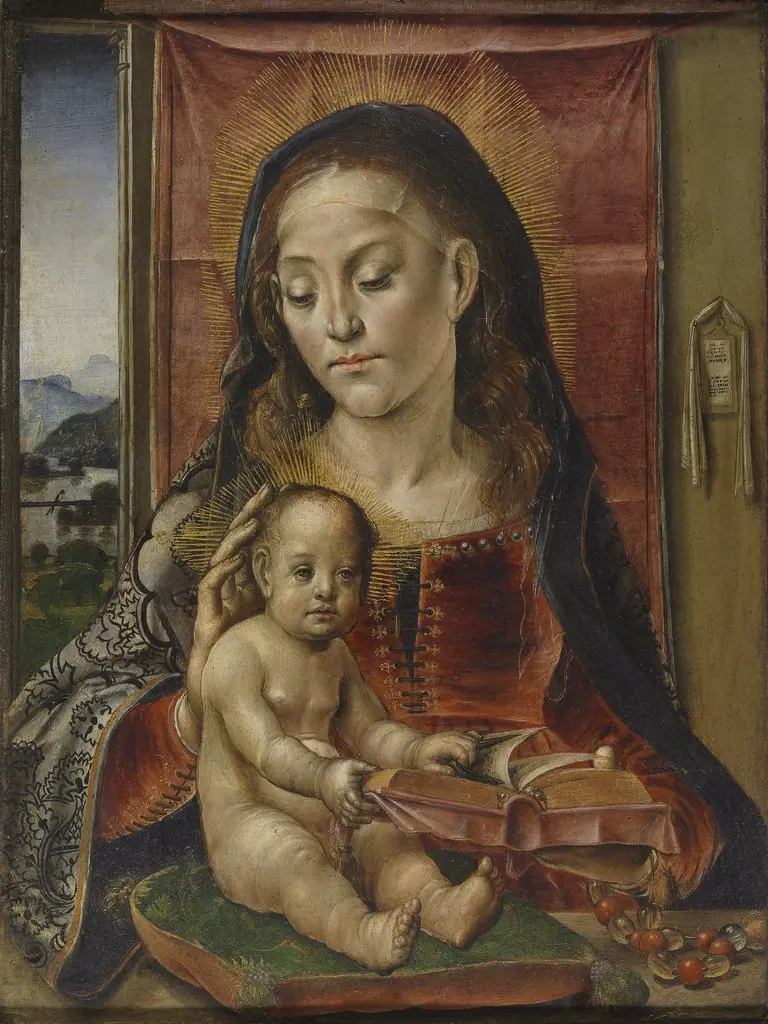
The Lehman Madonna depicts the Virgin Mary holding the Christ Child in a devotional composition typical of quattrocento Italian religious painting. Behind Mary’s head, a garland of orange-hued gourds functions as a symbolic field: the gourds signify the Resurrection, while the fruit on the right may be read as a cherry representing the Eucharist or as an apple recalling the Fall of Man in Eden. Levi d’Ancona identified the leftmost gourd as a balsam pear.
The painting’s iconography and stylistic traits reflect the influence of Bellini’s brother-in-law, Andrea Mantegna, evident in the sharply drawn contours and sculptural modeling. These elements together point to a program that interweaves salvation history, from the Fall to the Resurrection, within a Marian devotional image.
Technique & Style
The Lehman Madonna is executed in tempera on panel, a medium characteristic of fifteenth-century Venetian painting, and dates to circa 1470. Its composition centers on the Madonna and Child, framed by a garland of orange-hued gourds suspended behind the Virgin’s head; these motifs carry symbolic weight, with the gourds identified as Balsam Pear and linked to resurrection imagery, while the fruit at right may signify the Eucharist or the Fall of Man. The handling reveals Bellini’s early engagement with Andrea Mantegna’s Paduan stylistic influence, evident in the linear precision and sculptural modeling of the figures.
As of 2018, the painting remained in the collection of the Metropolitan Museum of Art but was not on view.
History & Provenance
Executed circa 1470, this tempera-on-panel work by Giovanni Bellini represents an early phase of the artist's career, notably reflecting the influence of his brother-in-law, Andrea Mantegna. The painting's documented modern history begins in 1911 at the Villa San Mauro in Rieti, Italy. By June 1916, the work had been acquired by the banker Philip Lehman.
Following Philip's ownership, the piece passed to his son, Robert Lehman. In 1975, Robert Lehman bequeathed the painting, along with his broader collection, to the Metropolitan Museum of Art in New York City, where it remains part of the permanent holdings. While the work entered the museum's collection in the mid-1970s, records indicate it was not on public view as of 2018.
The Lehman Madonna is currently held by the Metropolitan Museum of Art in New York City. The work entered the museum's collection in 1975 as part of the bequest from Robert Lehman, bearing the accession number 1975.1.81. Prior to this transfer, the painting was acquired by Philip Lehman in or before June 1916 after being recorded at Villa San Mauro in Rieti, Italy, in 1911.
Regarding its exhibition history, the work was included in the exhibition titled "Mantegna and Bellini." However, as of 2018, the painting is not on public view at the museum.
Context
Dating to approximately 1470, the Lehman Madonna is recognized by scholars as an early work by Giovanni Bellini that clearly demonstrates the artistic influence of his brother-in-law, the Paduan painter Andrea Mantegna. Art historical analysis of the composition highlights specific iconographic details, such as the orange gourds in the background garland which symbolize the Resurrection. Further scholarship by Levi d'Ancona has identified the specific gourd on the left as a Balsam Pear.
The fruit depicted to the right is interpreted as either a cherry, representing the Eucharist, or an apple, alluding to the Fall of Man. This painting is situated within Bellini's broader output of Madonna and Child subjects, marking a significant phase in his development where Mantegna's stylistic impact was predominant.
Overview
The Lehman Madonna is an early work by the Venetian painter Giovanni Bellini, created around 1470. This tempera-on-panel painting depicts the traditional Christian subject of the Virgin Mary holding the infant Jesus. It exemplifies Bellini's artistic development during a period when he was absorbing influences from other significant artists, laying groundwork for his mature style.
Own this work as a print
Artist & collection

Artist
Giovanni Bellini (Italian: ; Venetian: Zuane Belin; c. 1430 – 29 December 1516) was an Italian Renaissance painter, probably the best known of the Bellini family of Venetian painters. He was raised in the household of…