Artwork
Et vænge
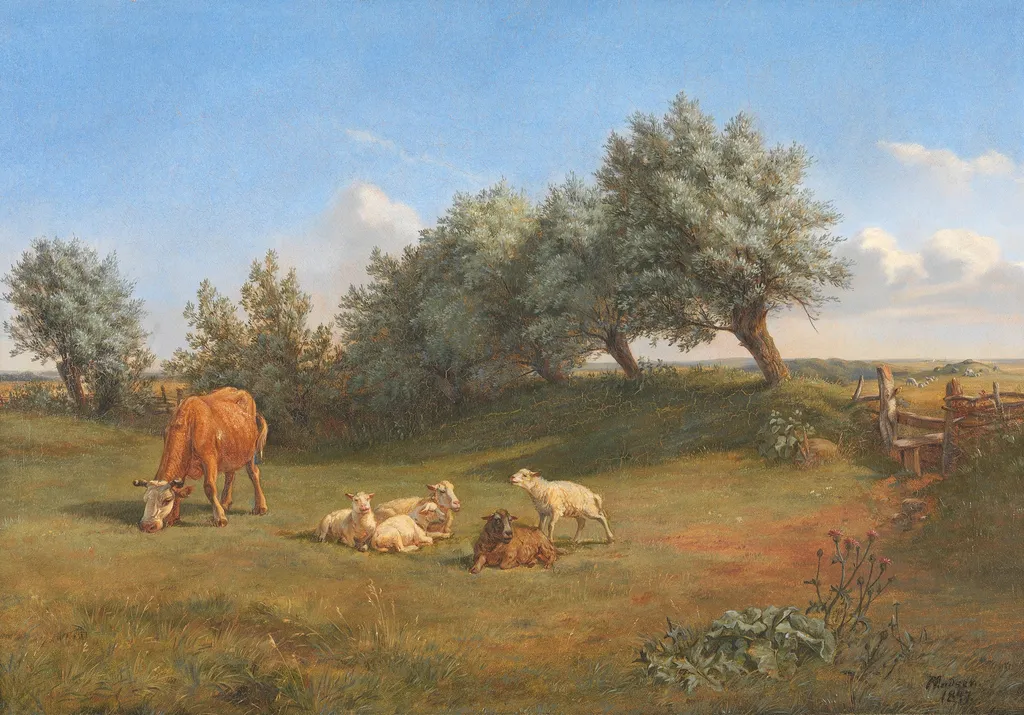
Et vænge is an oil painting by the Realist artist Andreas Peter Madsen. It dates from 1847 and is held in the collection of the Statens Museum for Kunst.
About this work
Subject & Meaning
The title, which references an enclosure or fenced pasture, underscores the pastoral Danish subject matter typical of mid-19th-century rural genre painting.
Et vænge is an 1847 oil painting by Andreas Peter Madsen depicting cattle gathered near a tree. Classified as animal art, the work centers on livestock in a natural setting, with the tree serving as a key compositional and symbolic element within the landscape. The title, which references an enclosure or fenced pasture, underscores the pastoral Danish subject matter typical of mid-19th-century rural genre painting.
Technique & Style
Executed in oil on canvas in 1847, the work employs a smooth, evenly applied paint layer typical of academic oil painting of the period.
The composition’s subdued palette and precise delineation of cattle and foliage align with mid-19th-century Danish animal painting, emphasizing naturalistic detail rather than visible brushwork.
Dimensions are 52 cm in width by 38 cm in height.
History & Provenance
The painting titled Et vænge was created by Andreas Peter Madsen in 1847. Executed in oil paint on canvas, the work measures 38 cm in height and 52 cm in width. The piece belongs to the animal art genre and depicts cattle and a tree. It is currently held in the collection of the Statens Museum for Kunst.
Et vænge is held in the collection of the Statens Museum for Kunst, where it is catalogued under the accession number that identifies it within the museum's holdings. The painting was first exhibited publicly in the museum's early 20th-century displays, marking its entry into the public record of Danish art. It has since been featured in several retrospective exhibitions focusing on Andreas Peter Madsen, reaffirming its significance in the artist's oeuvre.
Context
Et vænge (1847) by Danish painter Andreas Peter Madsen exemplifies 19th-century animal painting within the Danish Golden Age, reflecting contemporary interest in rural life and naturalistic representation. The work, housed in the Statens Museum for Kunst, demonstrates Madsen's focus on pastoral scenes and bovine subjects, aligning with broader European trends in animal genre painting while maintaining a distinct national character through its detailed observation of livestock and landscape. Its composition balances documentary precision with poetic atmosphere, characteristic of Madsen's approach to everyday rural subjects.
Scholarship emphasizes the painting's significance as both a technical study in oil medium and a cultural artifact documenting 19th-century Danish agrarian society. The work's classification as animal art underscores its role in a specialized genre that emerged in Northern Europe during the period, where artists like Madsen contributed to evolving attitudes toward nature and rural labor through meticulously rendered domestic scenes.
Overview
Et vænge is an oil on canvas painted in 1847 by the Danish artist Andreas Peter Madsen. The work presents a tranquil rural scene, with a cow grazing on the left, a small flock of sheep nearby, a dog lying among them, and a lamb standing close. Tall trees and a fence frame the composition beneath a clear sky.
Own this work as a print
Artist & collection

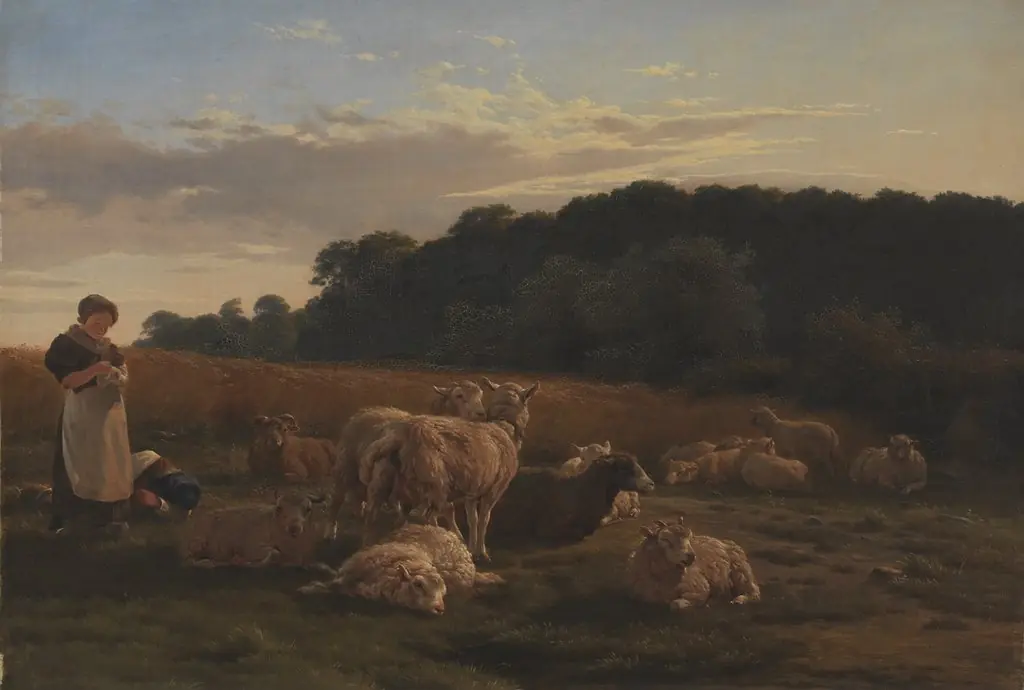
- En fåreflok. Motivet fra Faxingeskoven ved Nysø
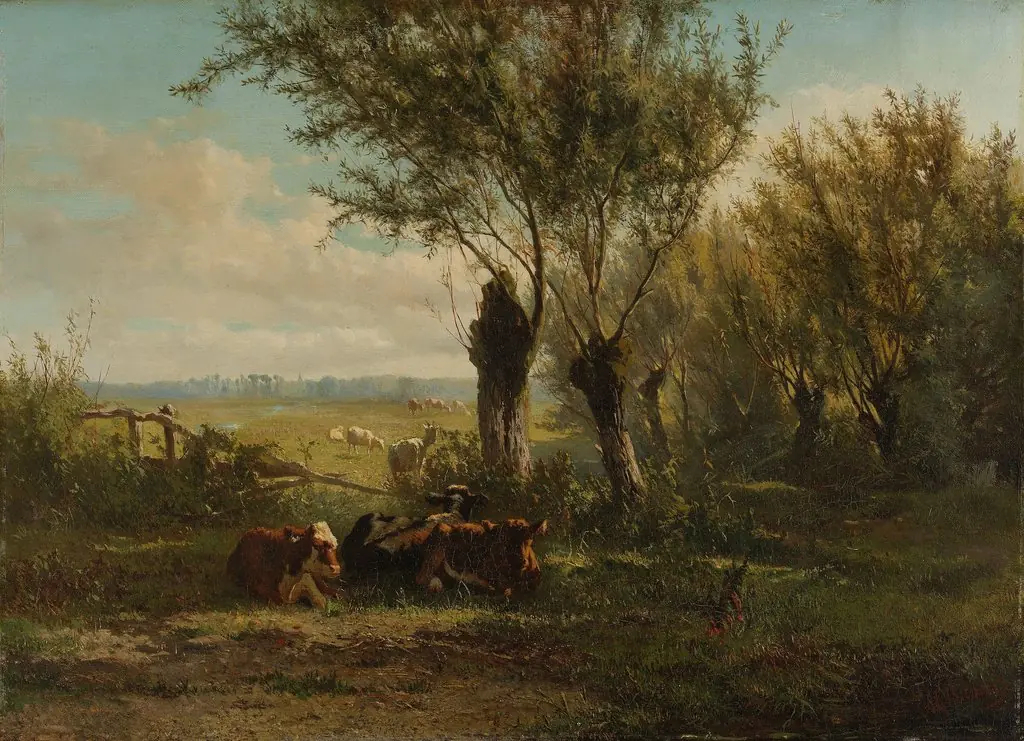 Meadow near Oosterbeek
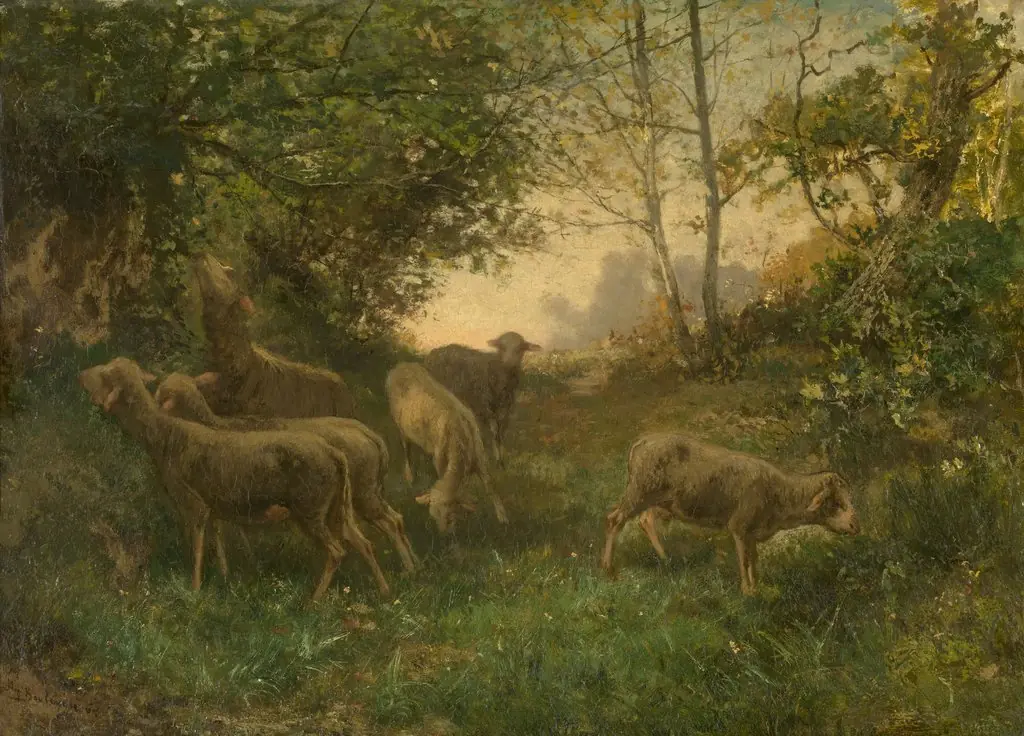 Sheep on the Fringe of the Wood
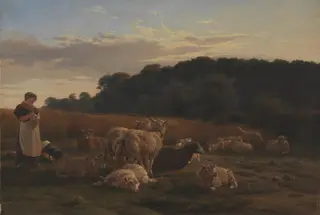 En fåreflok. Motivet fra Faxingeskoven ved Nysø
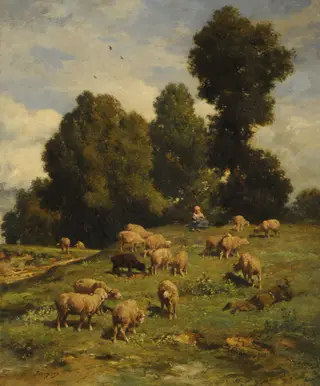 Sheep in pasture
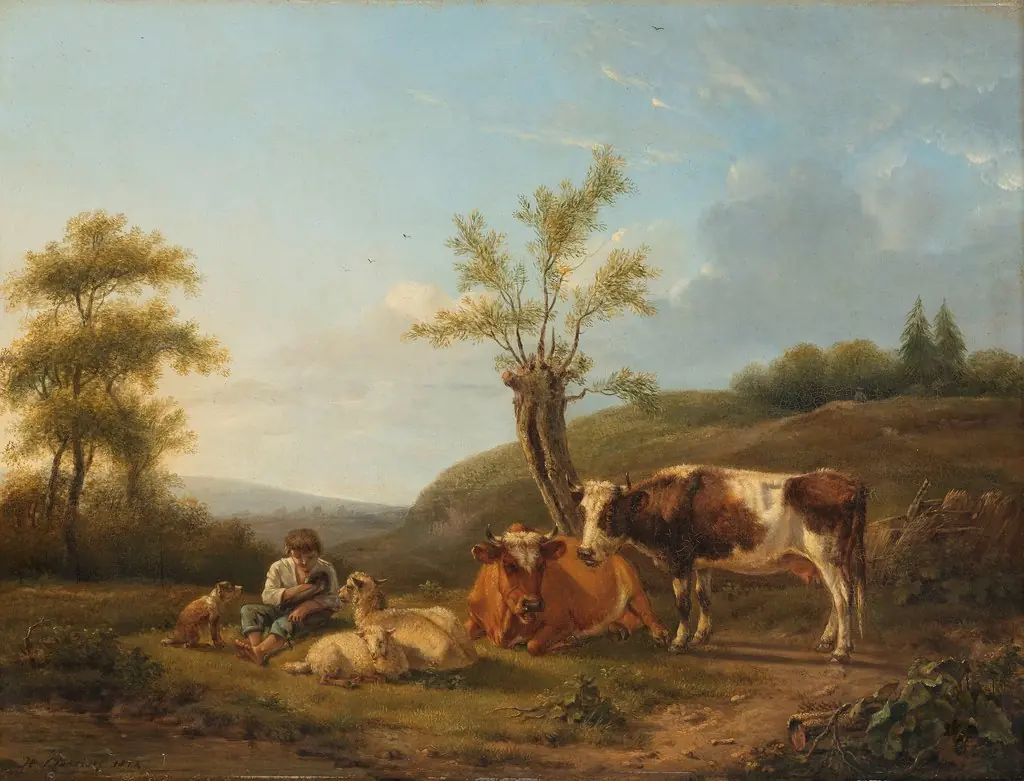 Landscape with Cattle near Darthuizen
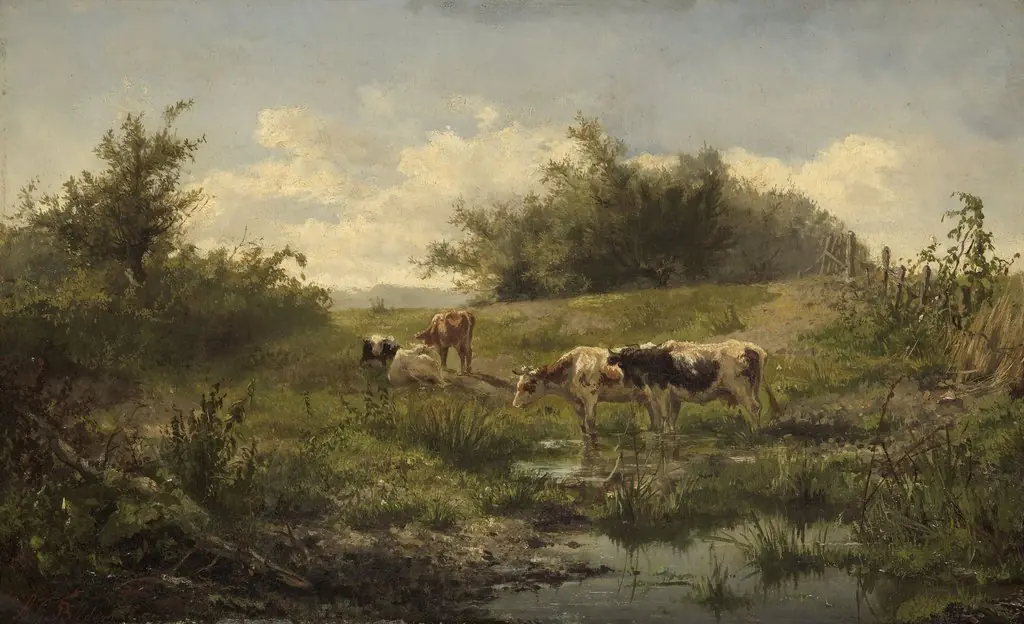 Cows at water's edge
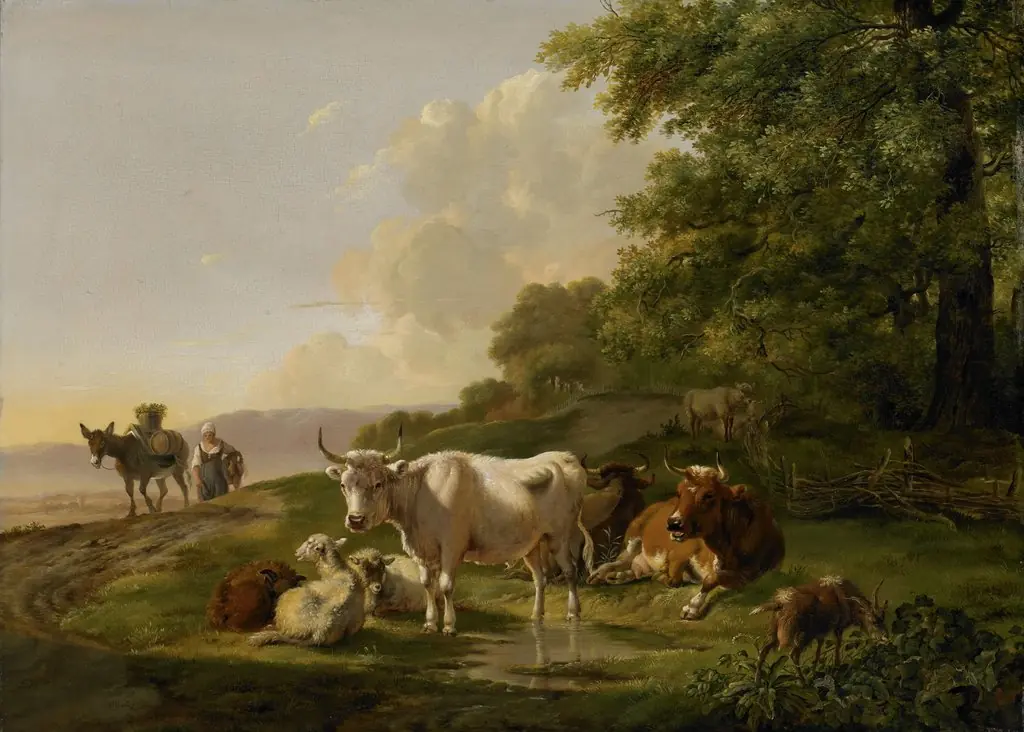 Landscape with Cattle
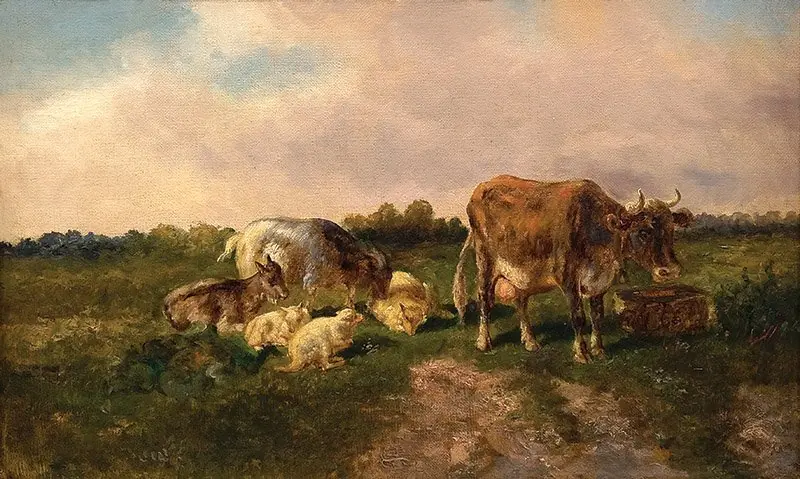 At Pasture
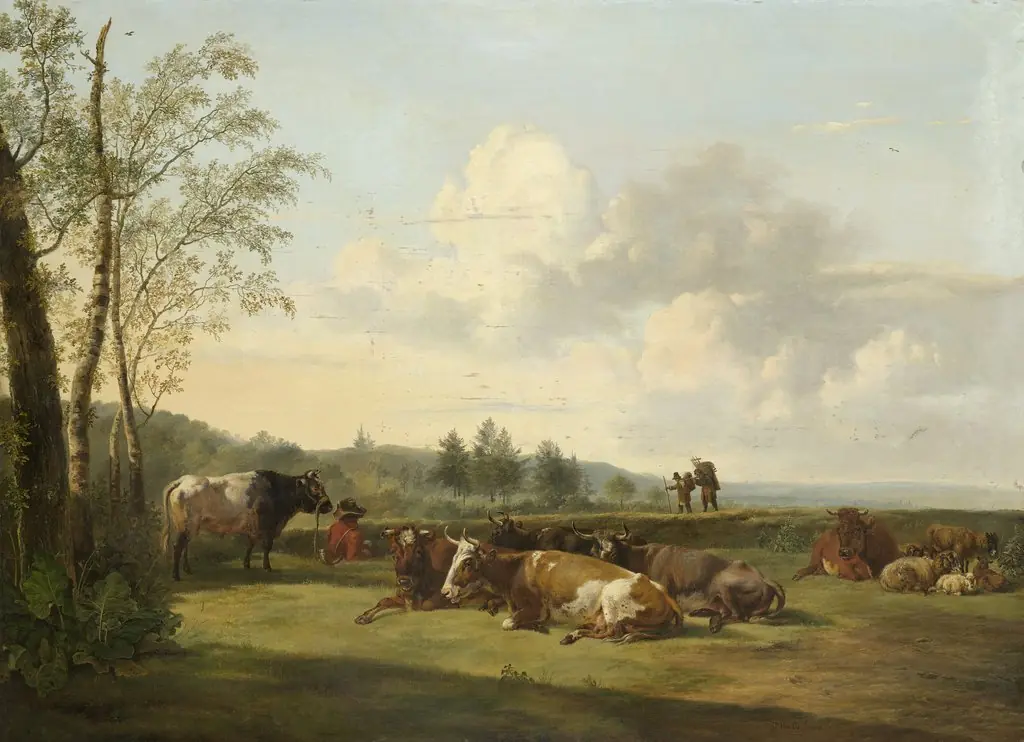 Landschap met vee
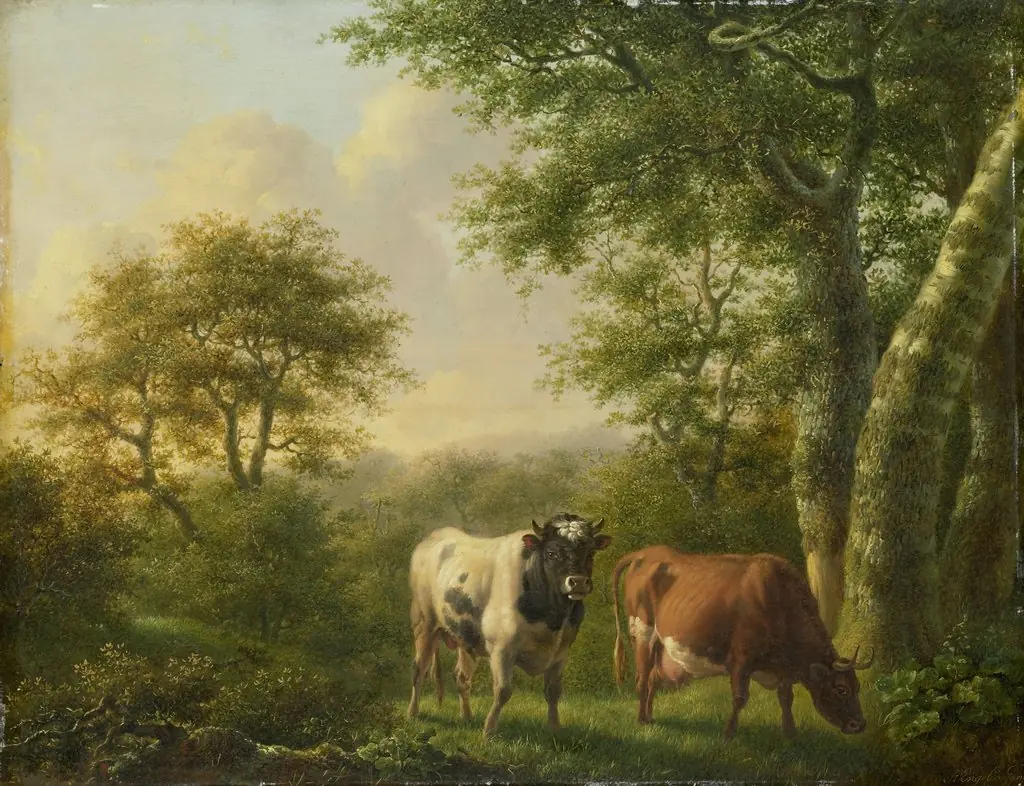 Landscape with Cows
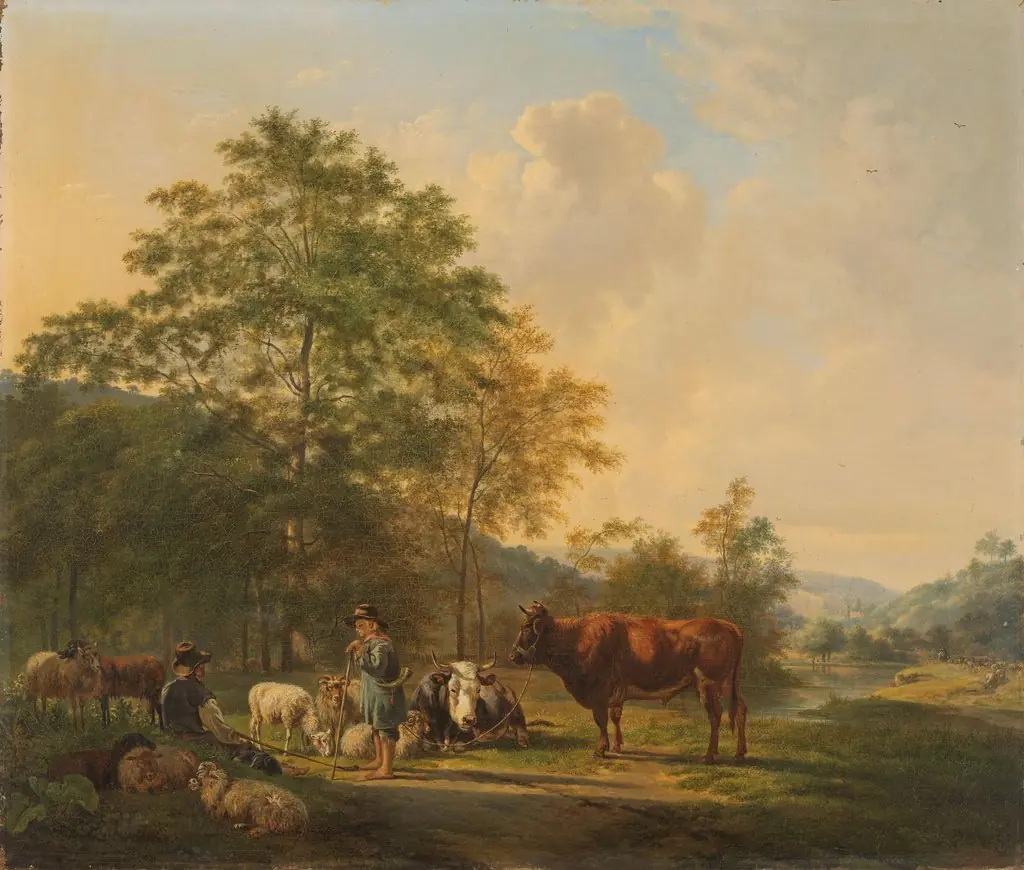 Hilly Landscape with Shepherd, Drover and Cattle