Artwork
The Healing of Palladia by Saint Cosmas and Saint Damian
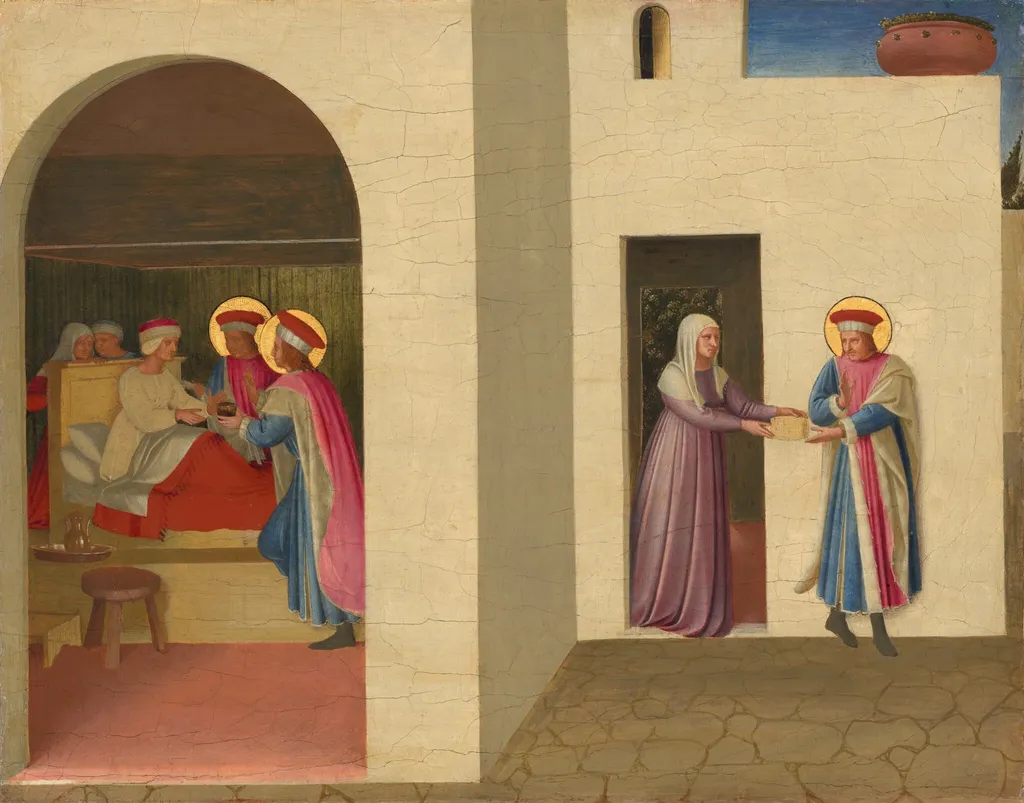
The Healing of Palladia by Saint Cosmas and Saint Damian is a tempera painting by the High Renaissance artist Fra Angelico. It dates from 1439 and is held in the collection of the National Gallery of Art.
About this work
To the right, against bright stucco walls, the healed Palladia presses a gift into Saint Damian's hands, payment the saints had vowed never to accept.
At a sickbed glimpsed through an archway, the twin physician-saints Cosmas and Damian lean over their patient Palladia. To the right, against bright stucco walls, the healed Palladia presses a gift into Saint Damian's hands, payment the saints had vowed never to accept. Fra Angelico painted this small tempera panel around 1438 for the high altar of San Marco in Florence, now at the National Gallery of Art.
Subject & Meaning
The panel narrates the legend of Saints Cosmas and Damian, physician brothers who healed without charge. It depicts two concurrent episodes: on the left, the saints administer a medicinal drink to an elderly relative of Palladia inside her home, with Palladia and another figure watching from behind the bed; on the right, Palladia offers the saints three eggs as a reward on her doorstep, which Damian accepts reluctantly while Cosmas refuses. Iconographic elements, the bed, pitcher, and stool, anchor the healing scene, while the divided composition emphasizes the moral conflict between charity and material recompense.
As part of the San Marco Altarpiece's predella, commissioned by the Medici for their patron saints, the work extols the anargyroi (selfless healers) ideal and underscores the virtue of gratuitous healing, a core Dominican value Fra Angelico promoted.
Technique & Style
The painting is executed in tempera on a poplar panel, measuring 36.5 × 46.5 cm. It demonstrates refined handling of chiaroscuro to model figures and unify space. The composition merges two narrative episodes, the healing in a meticulously detailed interior and the subsequent exchange at the threshold. Light is used coherently to articulate form and texture, notably the metallic reflections of the pitcher and basin.
The spatial construction is advanced for its period, employing a flat background plane to anchor the foreground. Compared to other predella panels, this work is more damaged.
History & Provenance
This panel originally formed part of the predella of the San Marco Altarpiece, commissioned by Cosimo de' Medici for the high altar of the church of San Marco, Florence, after the Medici redeemed the altar in 1438. The work was painted by Fra Angelico, likely begun around 1438 and completed by 1443. It remained on the high altar until about 1677, then moved to other locations within the convent, including the Spezieria.
After the Napoleonic suppressions, it entered private hands before being acquired by the comte de Pourtalès-Gorgier by 1841. Following his 1865 sale, it passed through several collections, including the Goncourt brothers, and was eventually purchased by Duveen Brothers in 1939, then the Samuel H. Kress Foundation in 1944, which donated it to the National Gallery of Art in 1952.
The painting is held by the National Gallery of Art in Washington, D.C., where it forms part of the Samuel H. Kress Collection (gift 1952). It originally served as the first panel from the left side of the predella of Fra Angelico's San Marco Altarpiece, formerly on the high altar of the church of San Marco in Florence.
Context
The Healing of Palladia is a predella panel from Fra Angelico's San Marco Altarpiece, commissioned by Cosimo de' Medici around 1438 and completed by 1443. The work reflects Angelico's central role in the Dominican convent's redecoration and his mastery of the early Italian Renaissance style. Scholars have noted its advanced spatial construction and unified lighting, which models volumes with chiaroscuro, as well as its 'vivace stile aneddotico' that effectively narrates the legend.
The panel is more damaged than other predella scenes, but its lively detail, such as the metallic reflection on the pitcher, is considered rare for the period. Vasari (1568) praised the predella, and the work has been discussed in monographs by Pope-Hennessy and Cornini, securing its place as a key example of early Renaissance narrative painting.
Overview
Fra Angelico's The Healing of Palladia by Saint Cosmas and Saint Damian is a small panel originally forming part of the predella for the high altar of the Dominican convent of San Marco in Florence. Commissioned around 1438–1440, this painting, executed in tempera and oil on poplar, illustrates a specific episode from the lives of the twin physician-saints. It served as a visual component of the liturgical readings for their feast day, contributing to the altarpiece's role as a spiritual teaching tool.
Own this work as a print
Artist & collection

Artist
Fra Giovanni da Fiesole (born Guido di Pietro; c. 1395 – 18 February 1455), known posthumously as Fra Angelico ( FRAH an-JEL-ik-oh, Italian: ), was an Italian Dominican friar and painter active during the early…

- Saint Anthony Distributing His Wealth to the Poor
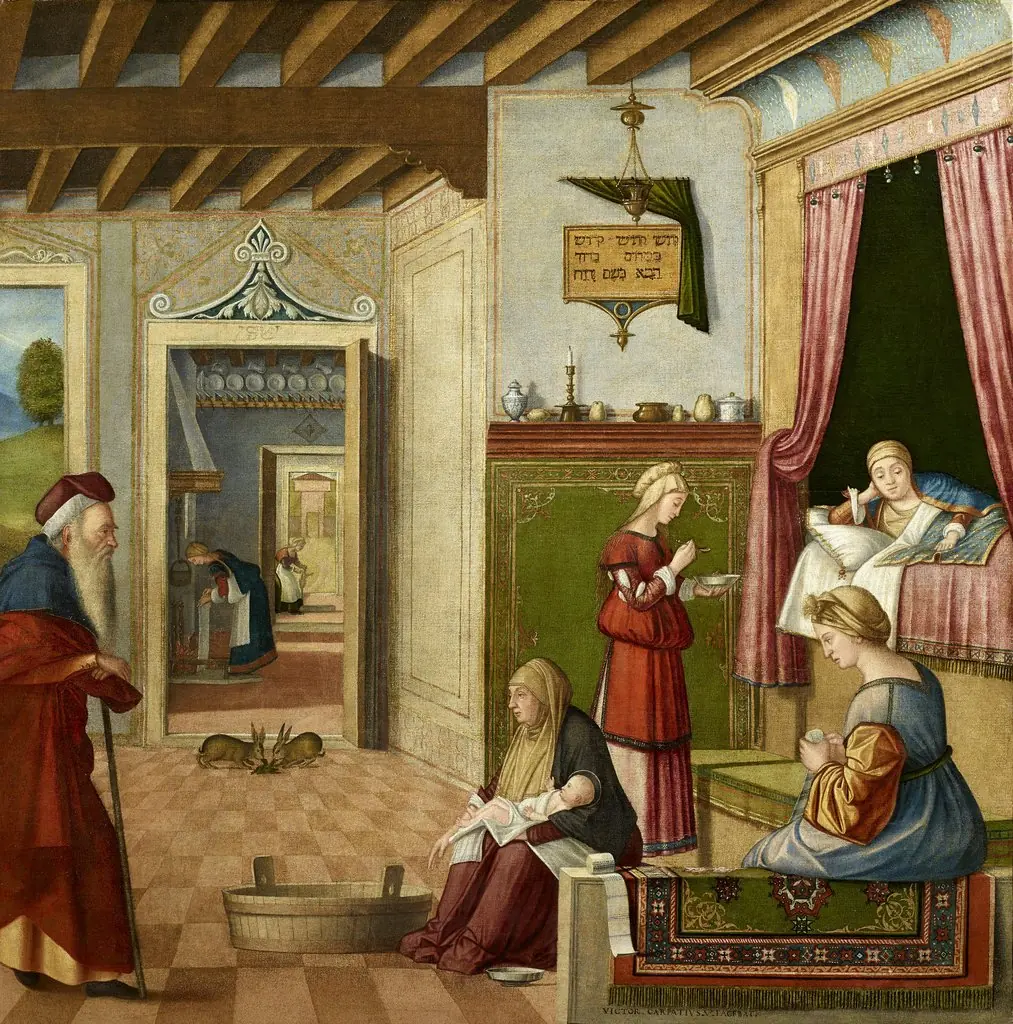 Birth of Virgin Mary
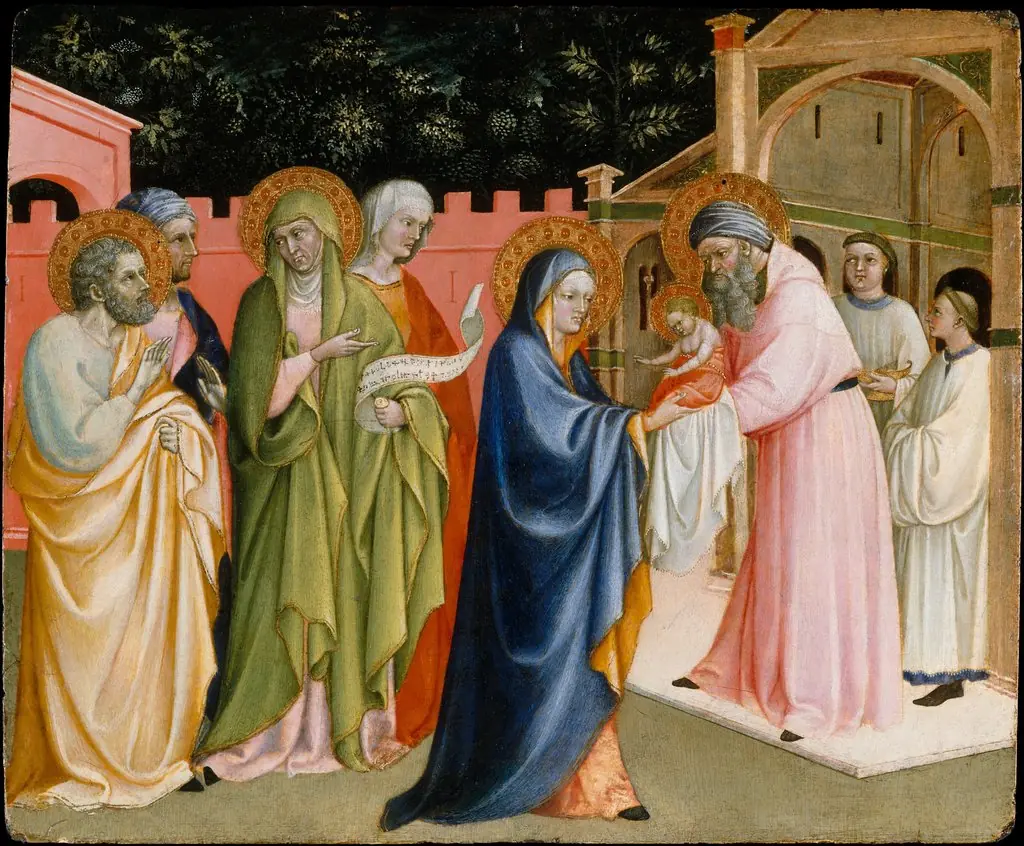 The Presentation in the Temple
 Saint Nicholas Providing Dowries
 Scenes from the Life of Saint John the Baptist
 The visitation
 Scenes from the Life of Saint John the Baptist
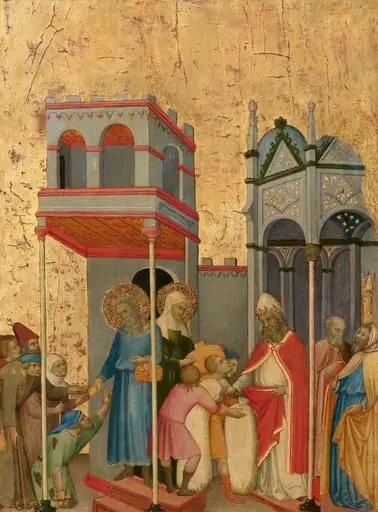 Joachim and Anna Giving Food to the Poor and Offerings to the Temple
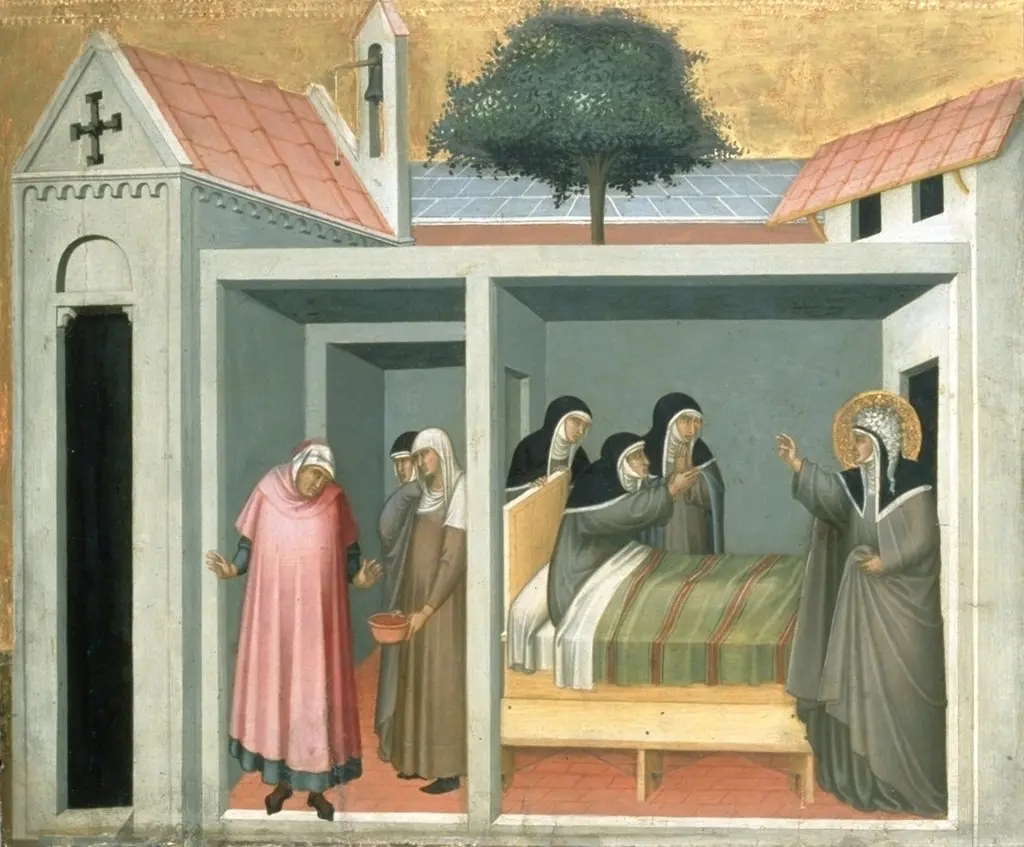 St. Humility heals a sick Nun
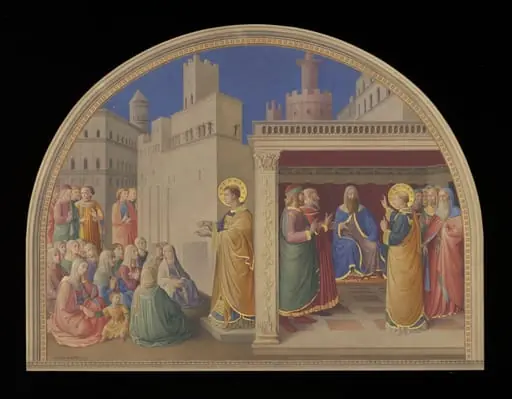 Copy after St Stephen preaching and St Stephen before the Council, Fra Angelico in the Niccoline Chapel (Vatican, Rome)
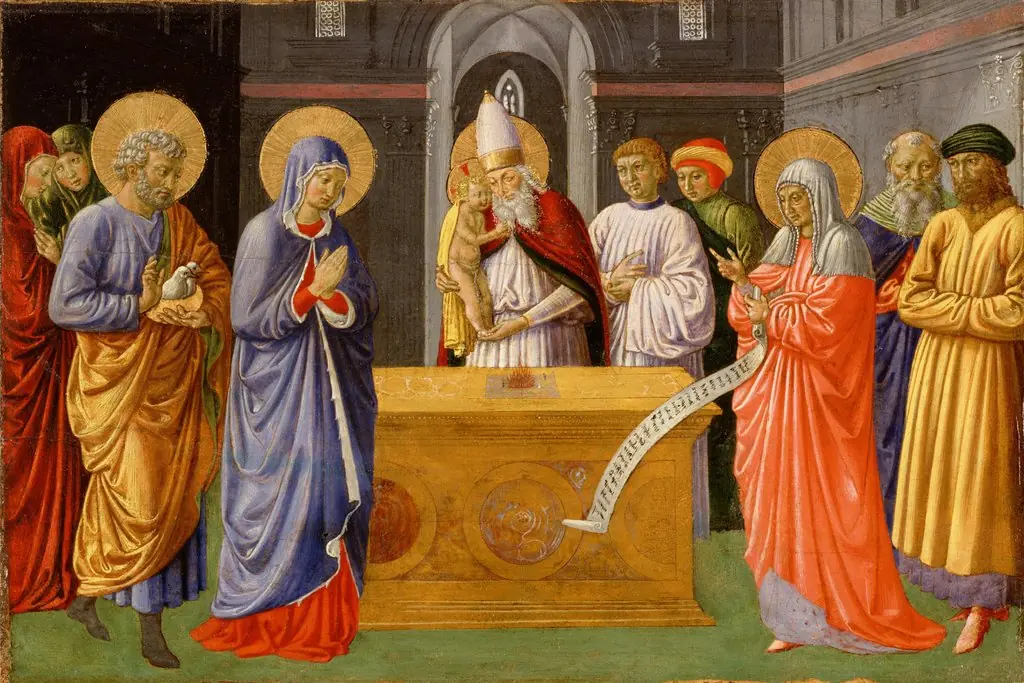 Purification of the Virgin
 Altar predella; Right panel: The parricide of St. Julian - The miracle of St. Nicholas of Bari