Artwork
Madonna and Child
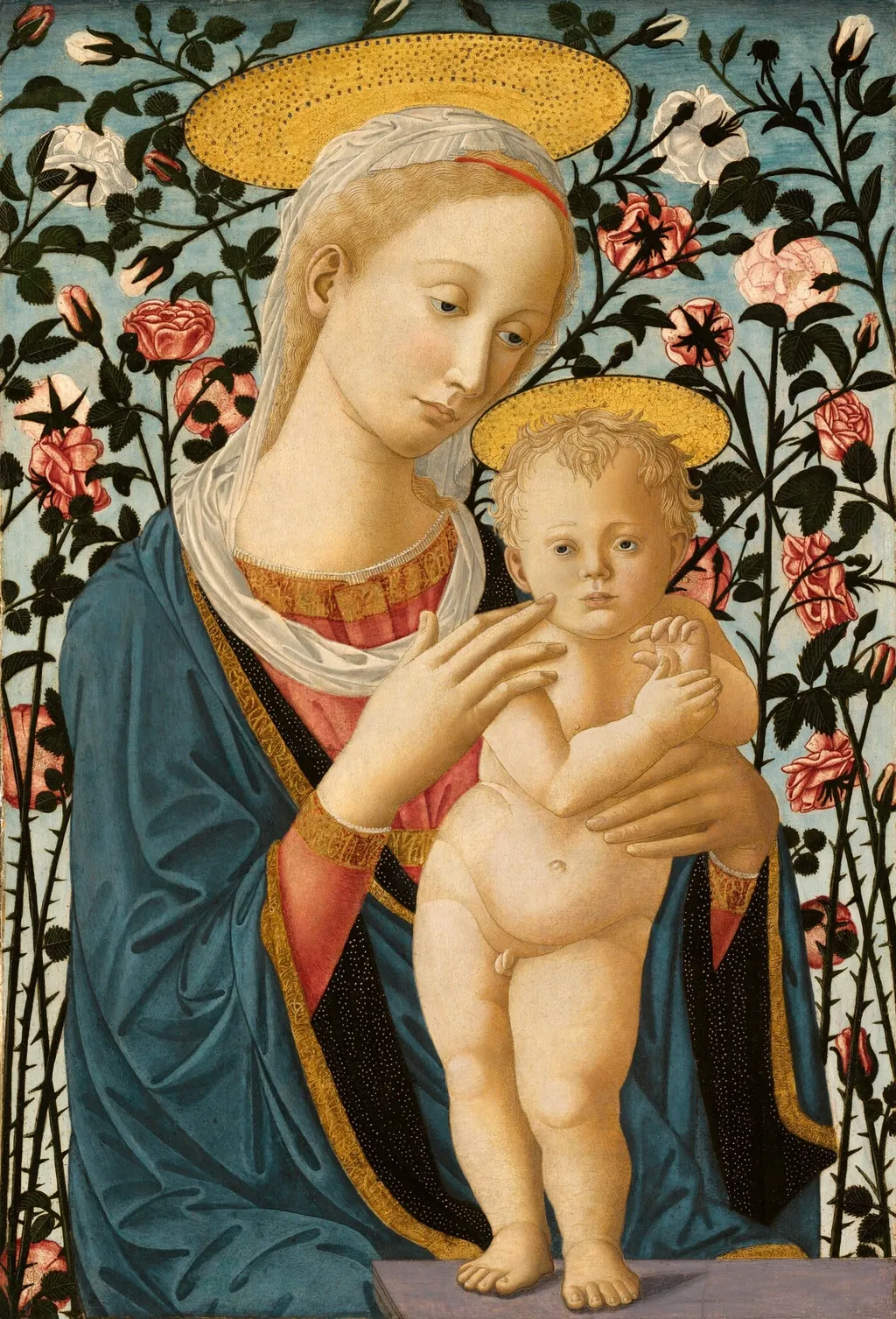
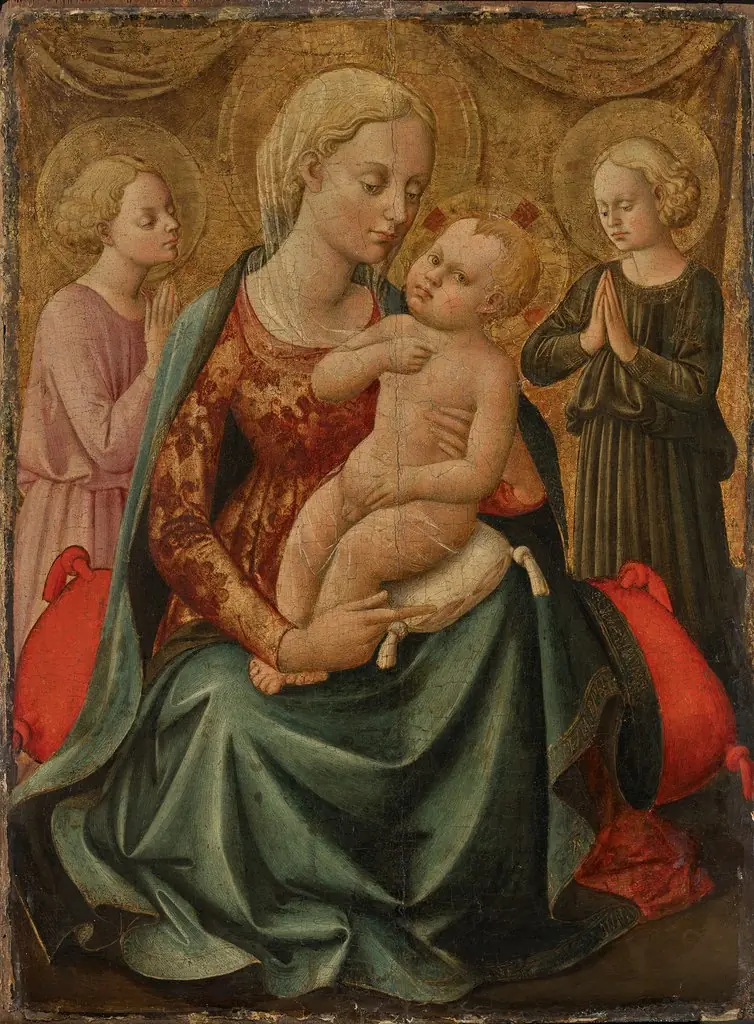
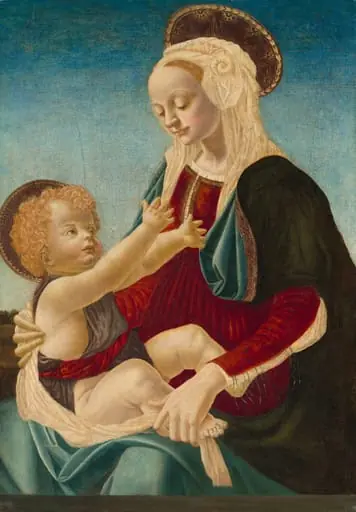
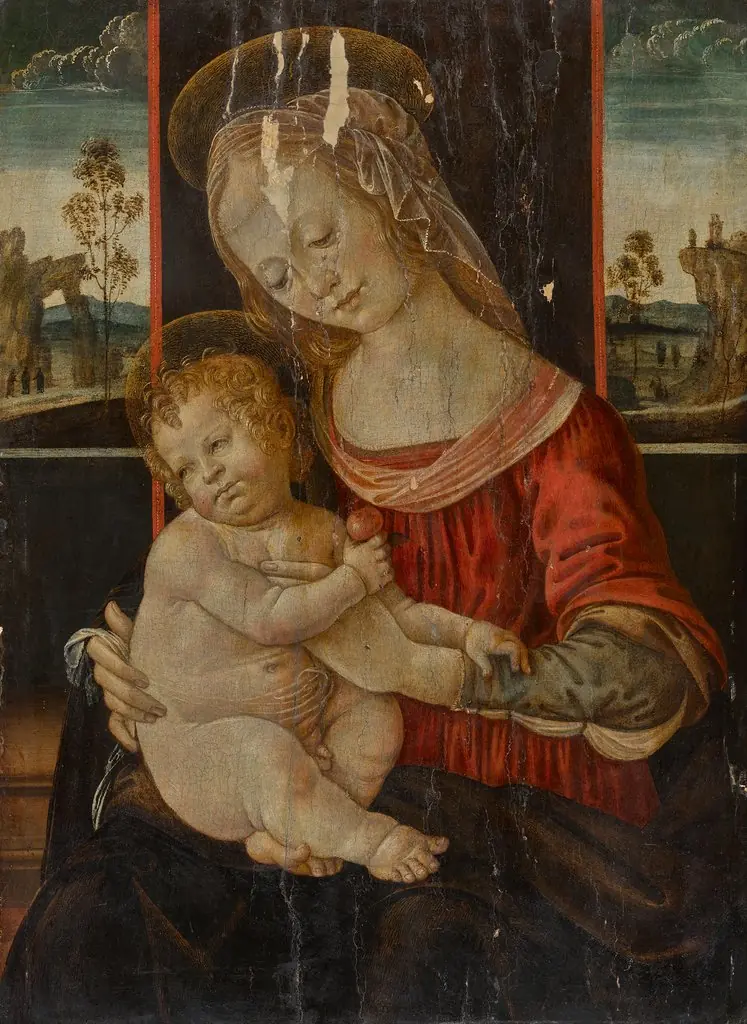
Madonna and Child is a tempera painting by the Early Renaissance artist Follower of Fra Filippo Lippi and Pesellino. It dates from 1470 and is held in the collection of the National Gallery of Art.
About this work
Subject & Meaning
This iconography, rooted in 15th-century devotional practice, conveys maternal tenderness and the theological theme of the Incarnation.
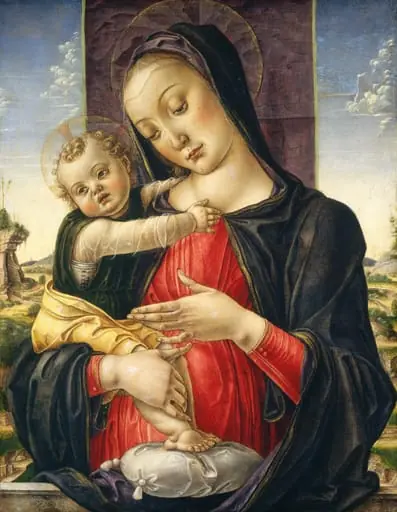
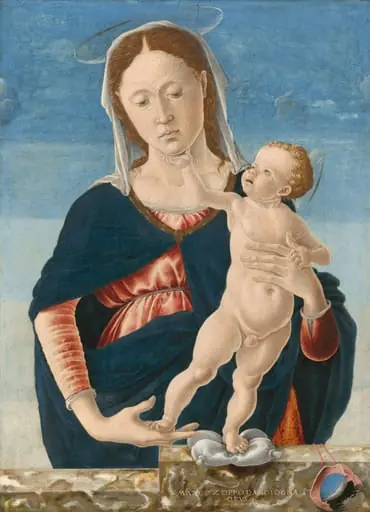
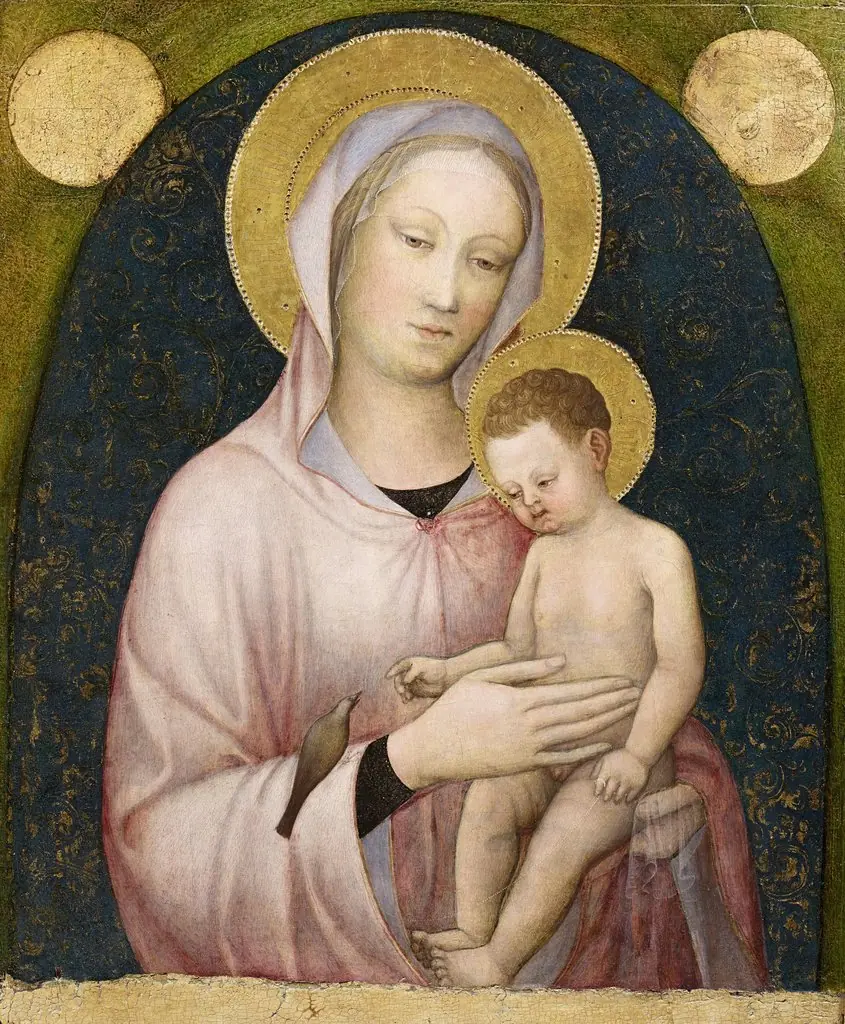
The painting shows the Virgin Mary holding the infant Christ, the traditional Madonna and Child pairing identified in the sources. The records label the work as religious art and specify Mary and the Christ Child as the depicted figures. This iconography, rooted in 15th-century devotional practice, conveys maternal tenderness and the theological theme of the Incarnation. The composition thus functions as a visual meditation on divine motherhood and the sacred humanity of Christ.
Technique & Style
The work is executed in tempera on a poplar wood panel, a small devotional panel measuring approximately 67.2 cm in height by 46 cm in width. The support is a single plank of poplar, typical of early Renaissance panels, and the paint layer consists of tempera pigments bound with egg, applied in thin, even washes to achieve a luminous surface. The composition follows conventional iconography of the Madonna and Child, with the Virgin seated and cradling the infant, rendered in a restrained linear style characteristic of late 15th-century Florentine workshops. No specific information about the painting's current condition is recorded.
History & Provenance
This tempera-on-poplar panel, dated 1470, portrays the Madonna and Child and was reportedly housed in the Cathedral of Siena in the early nineteenth century. Its ownership passed through a private Tuscan collection to Alexander Barker and then to Prince Paul Demidoff, who sold it in Florence in 1880 as La Vierge aux Roses, attributed to Parri Spinelli. After further sales in Paris and London, including at Christie, Manson & Woods on 13 July 1889, it entered the collection of Leo Nardus, from whom Peter A. B. Widener acquired it in 1898.
It remained in the Widener family until Joseph E. Widener gave it to the National Gallery of Art, Washington, D.C., in 1942.
Context
Dated to 1470 and executed in tempera on poplar, this religious panel has a contested authorship, having been linked variously to the workshop of Fra Filippo Lippi, to Pesellino, and to Spinello Aretino. Its devotional format and its passage through a series of Tuscan and European collectors illustrate the patronage and collecting practices of the era and underscore the painting's place within the evolution of Madonna-and-Child imagery in Quattrocento art.
Legacy
Removed from the Cathedral of Siena in the early nineteenth century, the panel passed through a series of private owners before sales in 1880, 1889, and 1898 carried it from the Demidoff collection to Peter A. B. Widener, whose family bequest brought it to the National Gallery of Art in 1942. As part of a major U.S. collection, it has featured in exhibitions and catalogues that shaped the understanding of early Renaissance devotional painting, standing as a representative example of the period's anonymous workshop production.
Overview
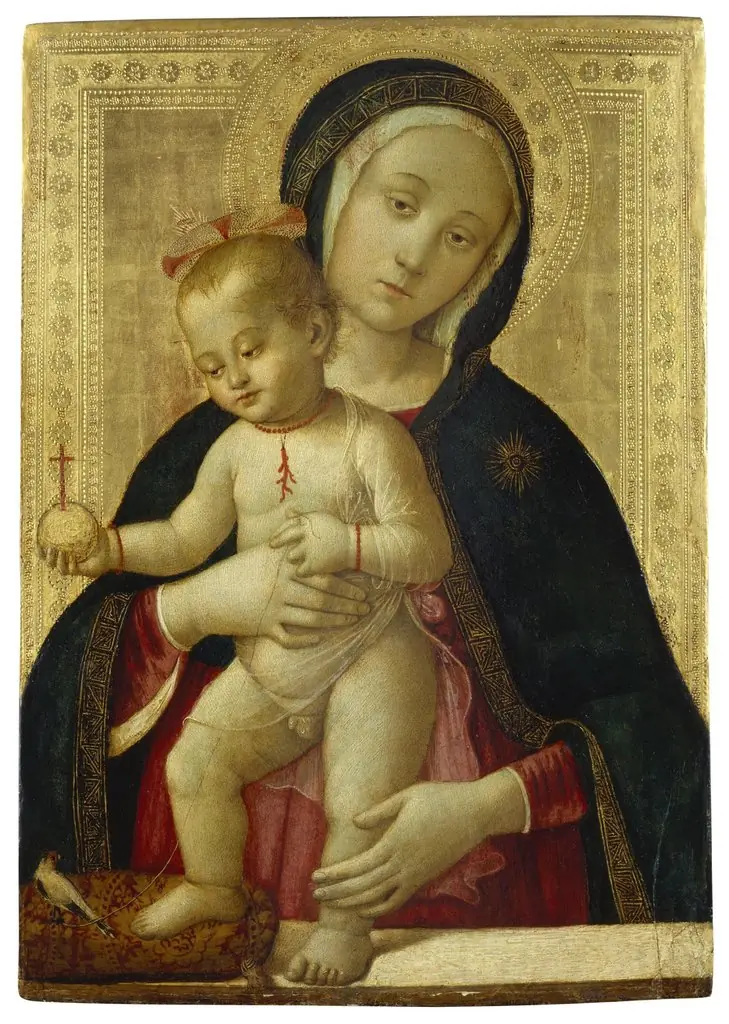
The painting "Madonna and Child" presents the Virgin Mary tenderly holding the infant Jesus. Rendered in tempera on a poplar panel, the artwork features a radiant gold background that highlights the gentle luminescence of their faces. Mary is depicted in a deep blue robe with a red lining, a conventional color scheme in religious iconography of the period. This piece embodies the visual characteristics typical of its artistic era.
Artist & collection