Artwork
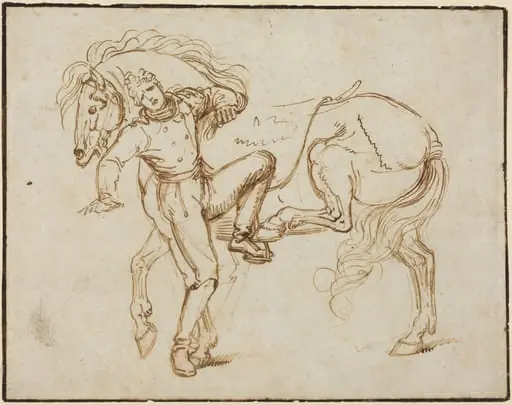
A Man Mounting a Horse
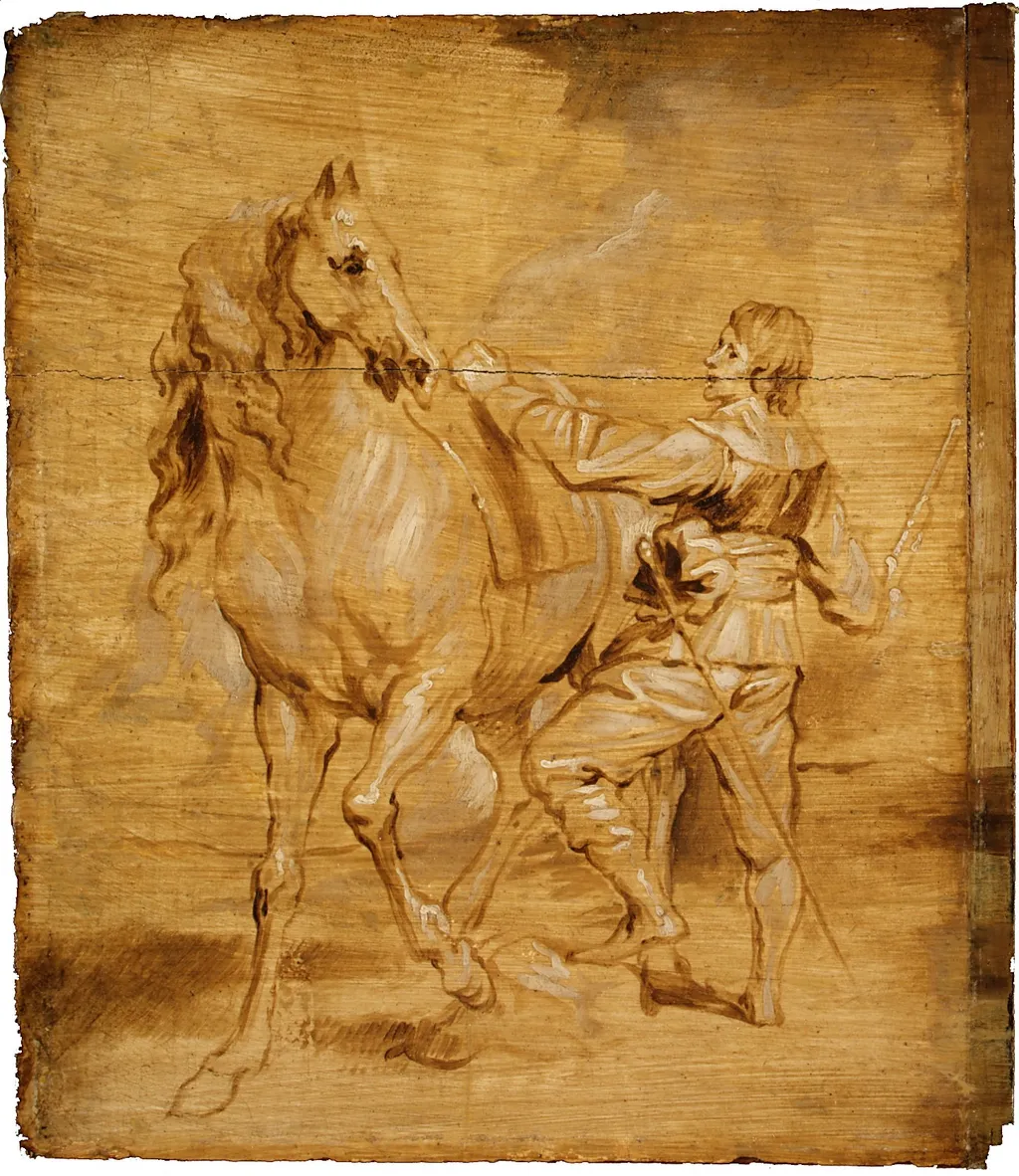
A Man Mounting a Horse is an oil painting by the Flemish Baroque painting artist Anthony van Dyck. It dates from 1630 and is held in the collection of the Metropolitan Museum of Art.
About this work
Technique & Style
The restrained palette and delicate transitions suggest a work intended for close viewing, emphasizing poised movement over descriptive elaboration.
The painting is executed in oil on a wooden panel measuring 25.4 cm in height and 22.2 cm in width. Its compact support lends itself to a refined handling of detail, with the artist employing fluid, economical brushwork to define the horse’s musculature and the rider’s gesture. The composition privileges immediacy and elegance, capturing the moment of mounting with a light touch and subtle tonal modulation rather than elaborate underdrawing.
The restrained palette and delicate transitions suggest a work intended for close viewing, emphasizing poised movement over descriptive elaboration.
The attribution to Anthony van Dyck and the dating to circa 1630 situate it within his early maturity, when he favored intimate equestrian scenes distinguished by grace and economy of means.
History & Provenance
Created in 1630, A Man Mounting a Horse is an oil painting on panel attributed to Anthony van Dyck. The work measures 25.4 cm in height and 22.2 cm in width. It is currently held in the collection of the Metropolitan Museum of Art, where it remains located.
Context
Attributed to Anthony van Dyck, A Man Mounting a Horse dates to 1630, aligning with the artist's mature period following his return to Antwerp. The work is executed in oil on panel, a medium consistent with van Dyck's portraiture and equestrian studies of the era. Held in the collection of the Metropolitan Museum of Art, the painting depicts a man and a horse, capturing a moment of dynamic movement characteristic of the artist's interest in aristocratic life and animal anatomy.
While the attribution links it to van Dyck's wider oeuvre, the specific scholarly consensus on its execution and place within his catalog remains tied to this late 1620s to early 1630s output.
Overview
Anthony van Dyck's painting, "A Man Mounting a Horse," created in 1630, exemplifies the dynamic qualities of the Baroque era. Executed in oil paint, this work captures a moment of action, reflecting the period's interest in realism and motion. It is currently housed in the collection of The Metropolitan Museum of Art, representing a significant piece from the Flemish artist's oeuvre.
Subject & Meaning
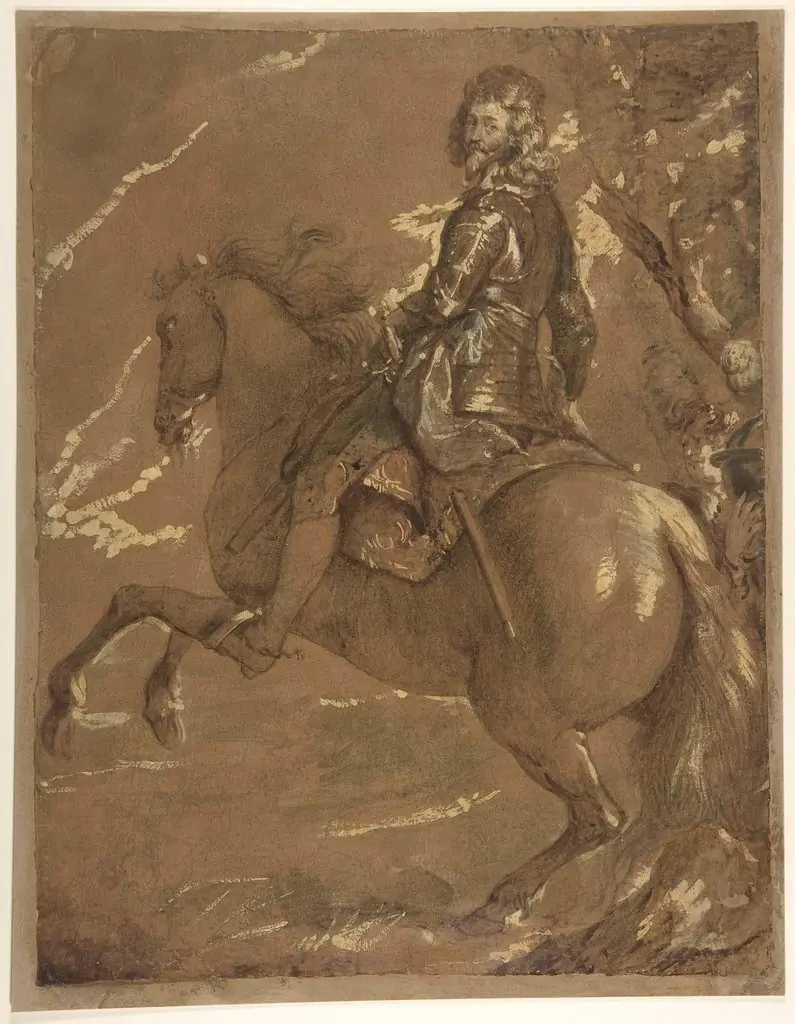
The painting portrays a man in the midst of mounting a horse, a scene rendered with directness. Dressed in typical 17th-century clothing, the figure grips the reins, poised to ascend. The horse is depicted in profile, its head slightly turned towards its rider, suggesting an imminent action.
The composition employs a plain background, directing the viewer's attention entirely to the engaging interaction between the human and animal subjects.
Own this work as a print
Artist & collection
Artist
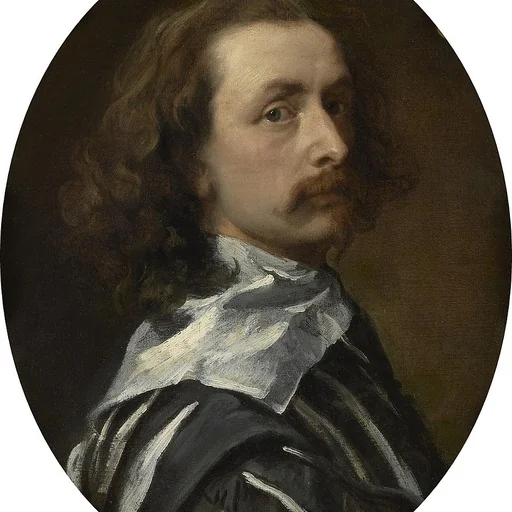
Sir Anthony van Dyck (; Dutch: Antoon van Dijck; 22 March 1599 – 9 December 1641) was a Flemish Baroque artist, who became the leading court painter in England after success in the Spanish Netherlands and Italy.