Artwork
娘義太夫|Female Chanter for Jōruri Puppet Theater
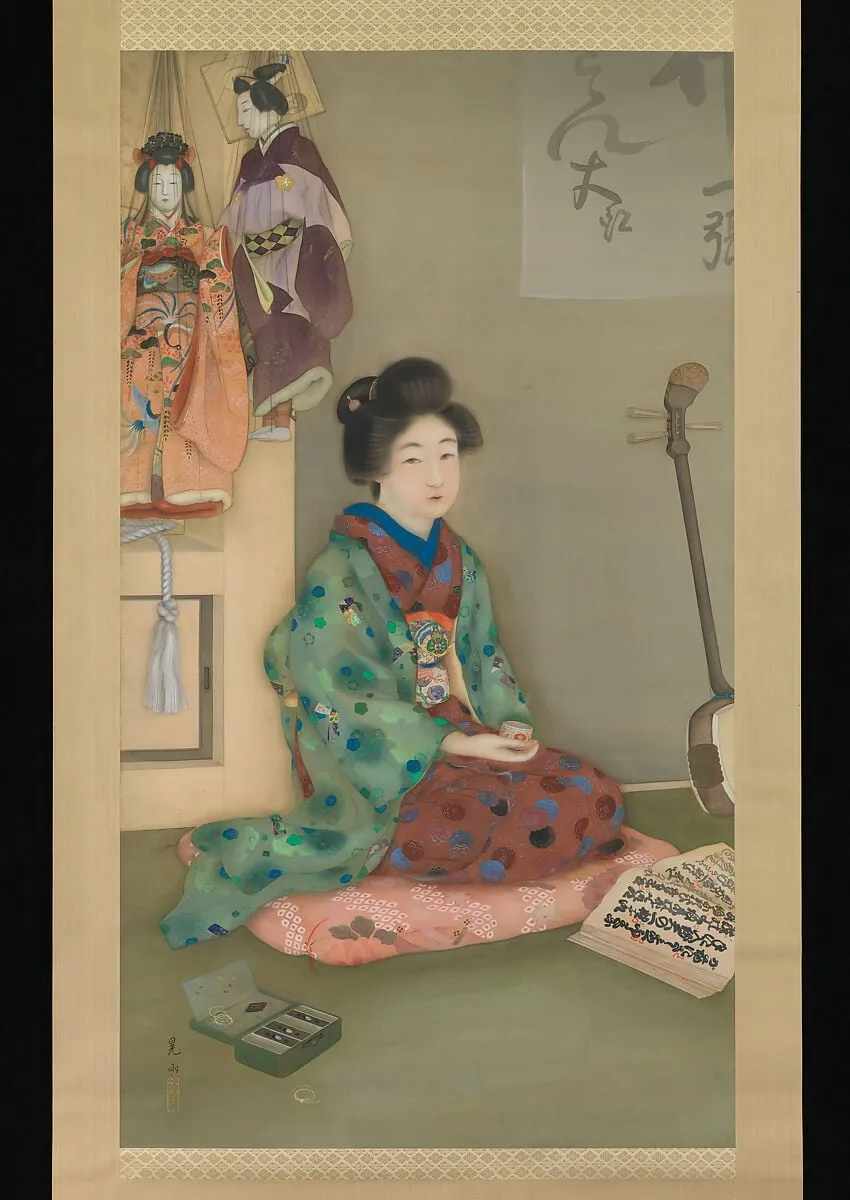
娘義太夫|Female Chanter for Jōruri Puppet Theater is an ink painting by the Joseon dynasty painting artist Arai Kōu. It dates from 1920 and is held in the collection of the Metropolitan Museum of Art.
About this work
Subject & Meaning
These objects serve as the primary iconographic markers identifying her professional role within the traditional Japanese performing arts.
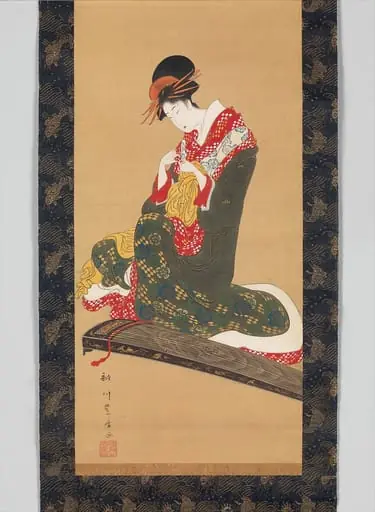
Created in 1920 by Arai Kōu, this hanging scroll portrays a female chanter dedicated to Jōruri puppet theater. The composition centers on a woman, visually defined by her association with two specific elements: a musical instrument and a puppet. These objects serve as the primary iconographic markers identifying her professional role within the traditional Japanese performing arts.
The inclusion of the puppet and instrument explicitly situates the subject within the narrative context of Jōruri, representing the human voice that animates the wooden figures. The work functions as a genre portrait that captures the essential components of this specific theatrical tradition.
Technique & Style
The work is a hanging scroll executed in ink, color, and gold pigment on silk, characteristic of early twentieth-century Japanese portraiture. Arai Kōu painted it in 1920, employing a delicate brushstroke that combines realistic detail with stylized patterning typical of Jōruri puppet theatre imagery. The composition portrays a female chanter accompanied by a shamisen and a marionette, rendered in muted tones accented with gold highlights that emphasize the ceremonial context. The piece is classified as a portrait and is housed in the Metropolitan Museum of Art.
History & Provenance
The hanging scroll Female Chanter for Jōruri Puppet Theater was created by the artist Arai Kōu in 1920, in Japan. The painting entered the collection of the Metropolitan Museum of Art, where it remains housed. It is executed in ink, color, and gold on silk and is classified as a portrait painting depicting a woman, a puppet, and a musical instrument.
Overview
Arai Kōu's "Female Chanter for Jōruri Puppet Theater," created around 1920, is a hanging scroll rendered in ink, color, and gold on silk. This painting captures a performer known as a tayū, a central figure in jōruri puppet theater. The artwork portrays the chanter seated, accompanied by a puppet's head, hinting at the theatrical world she inhabits. It offers a glimpse into the specialized role of these vocal artists.
Artist & collection

 Beauty Admiring a Warbler on a Plum Tree
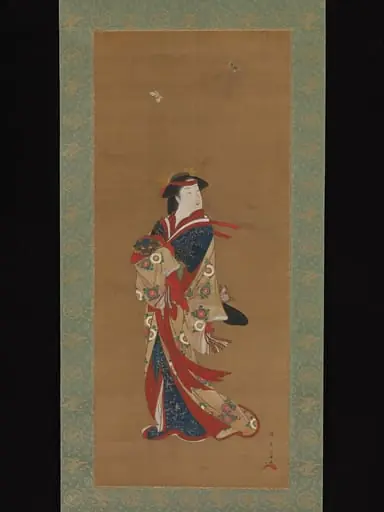 Untitled
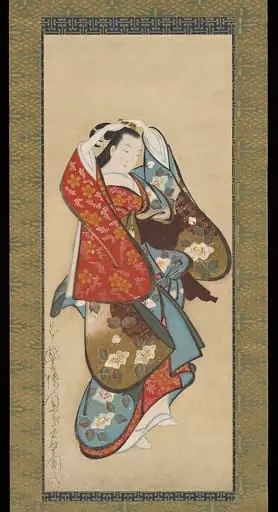 Untitled
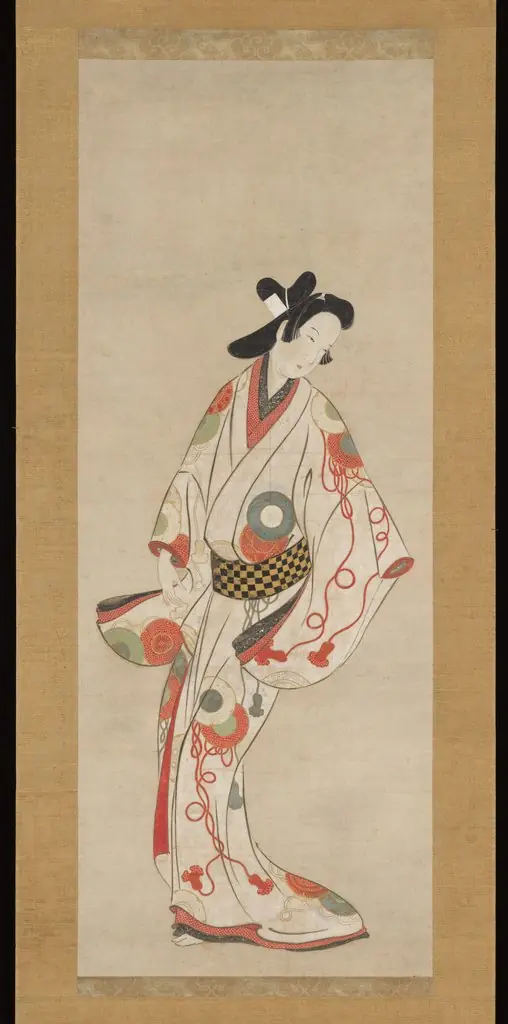 Elegantly Garbed Male Youth
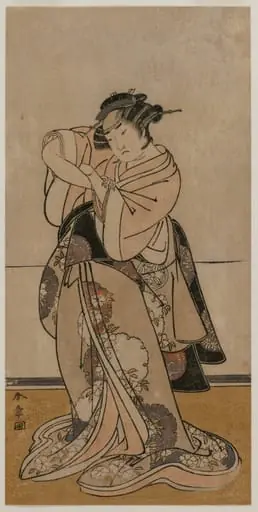 Actor Yamashita Yaozo
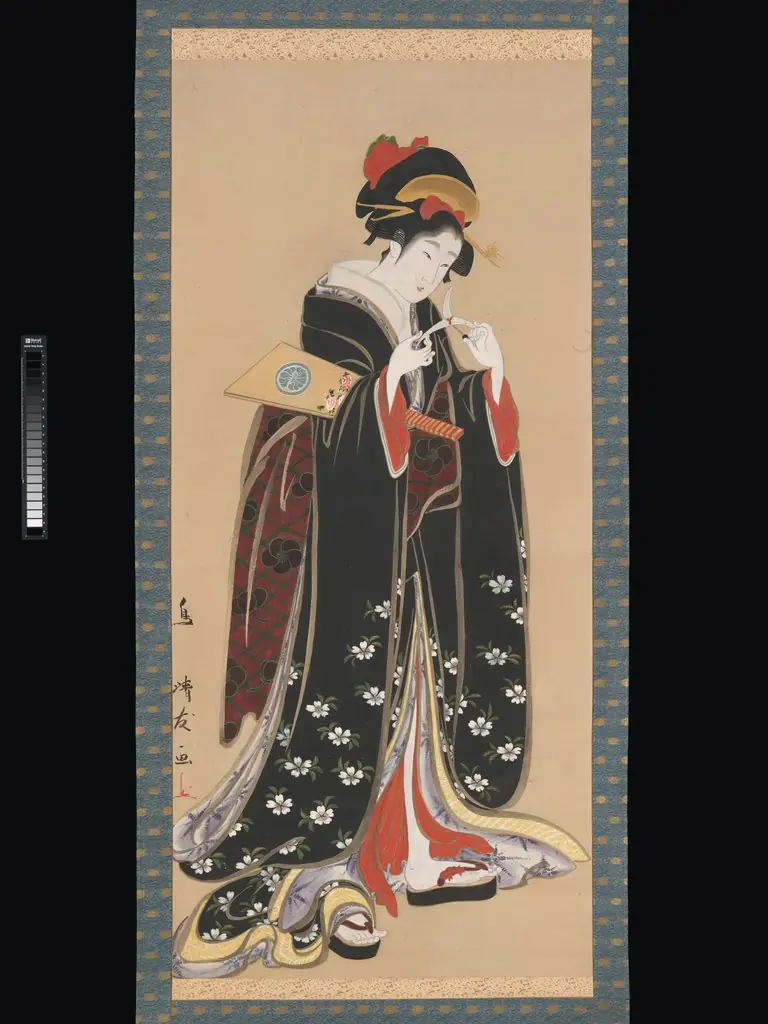 Woman with Battledore and Shuttlecock
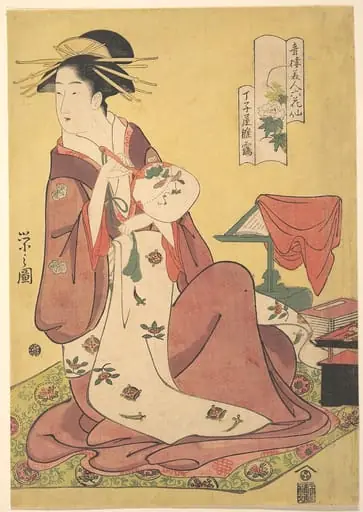 鳥文斎栄之画 「青楼美人六花仙 丁子屋雛鶴鸖」|The Courtesan Hinazuru of the Chōjiya Brothel (Chōjiya Hinazuru), from the series Beauties of the Pleasure Quarters as Six Floral Immortals (Seirō bijin rokkasen)
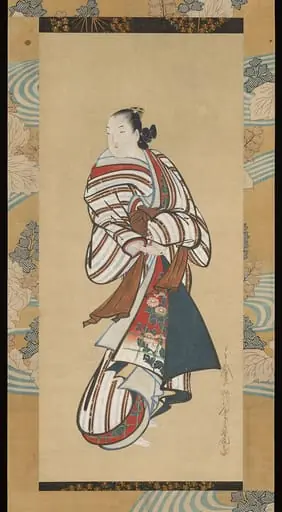 Untitled
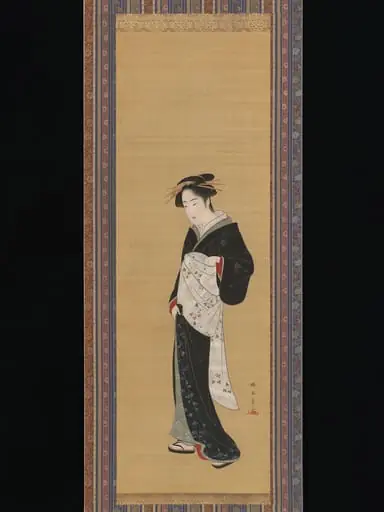 勝川春章筆 立姿美人図|Woman in a Black Kimono
 Untitled