Artwork
Luman Reed
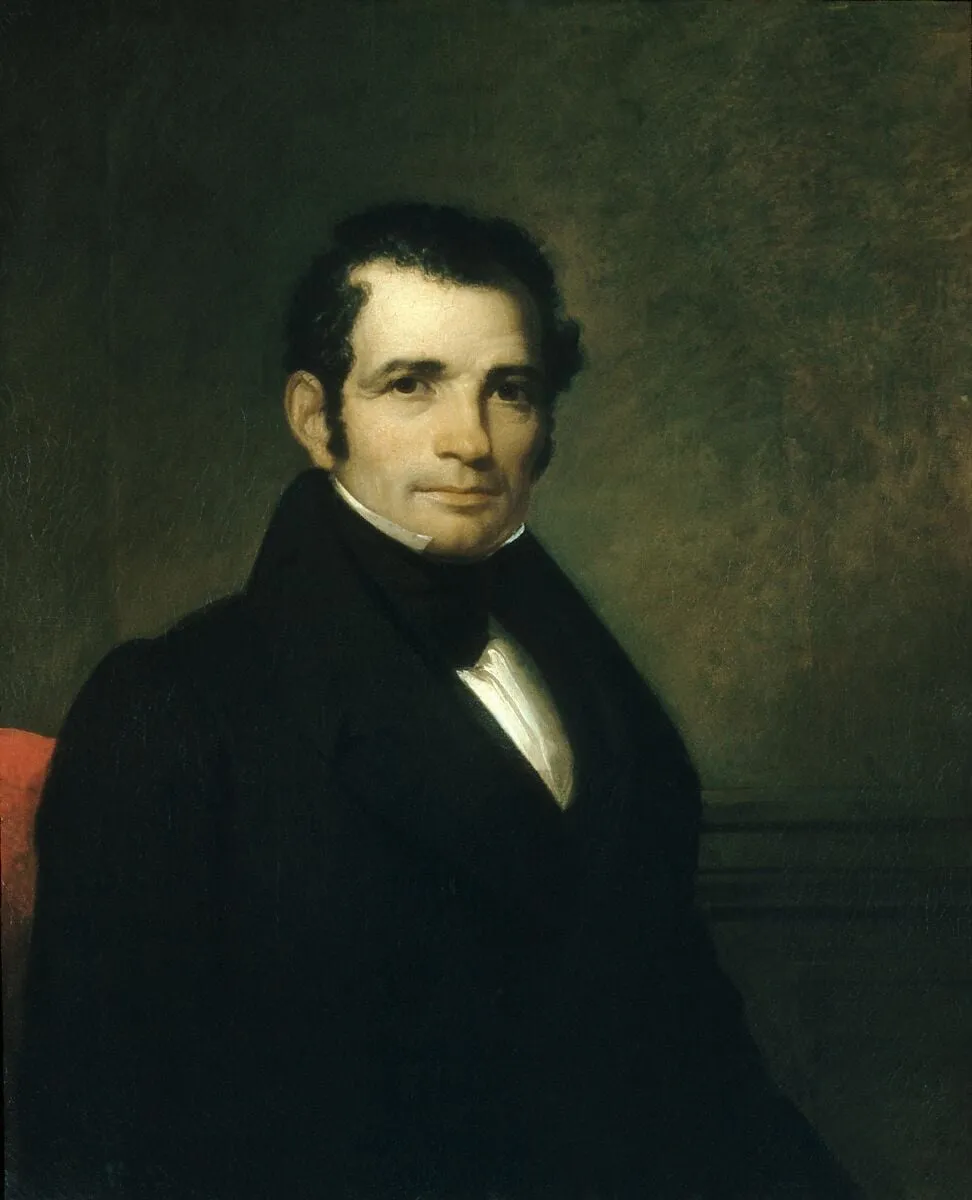
Luman Reed is an oil painting by the Hudson River School artist Asher Brown Durand. It dates from 1835 and is held in the collection of the Metropolitan Museum of Art.
About this work
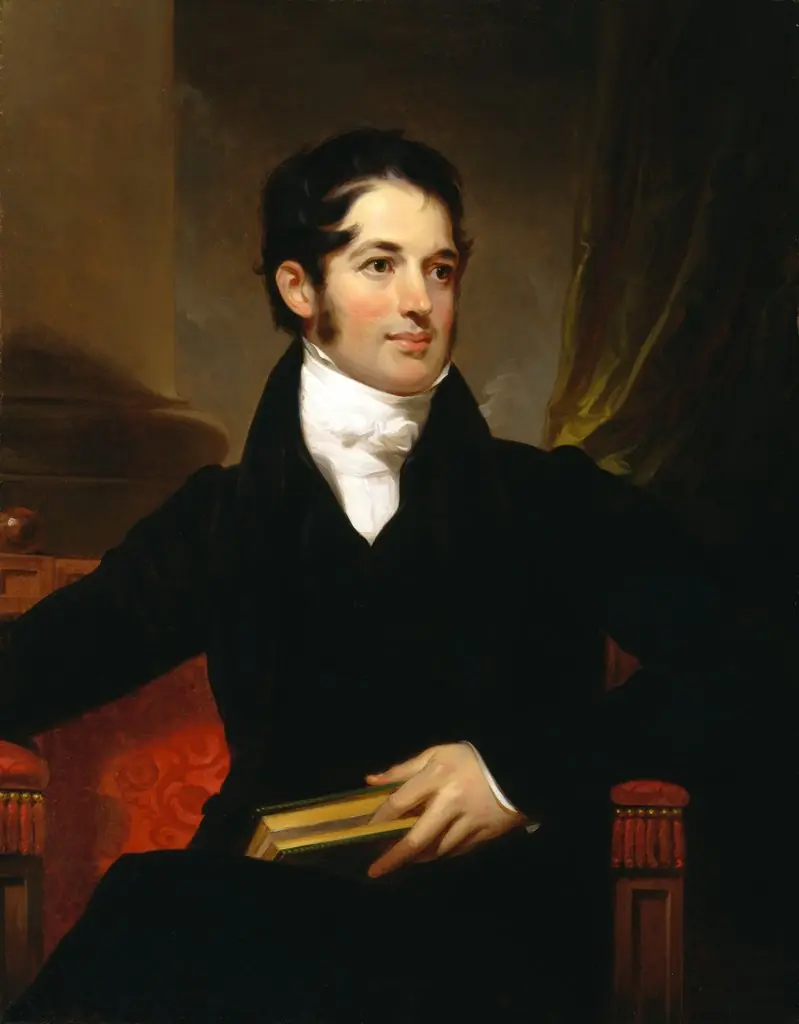
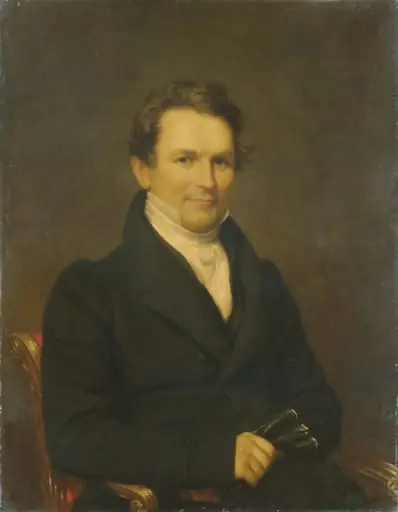
A man in a dark coat sits in a red chair, one hand on a book, his face calm and almost stern. Durand painted Luman Reed in 1835, when most American portraits leaned on grand poses. Here he looks like someone you'd meet in a quiet study, and the coat is painted in loose, tactile strokes.
Technique & Style
The material construction remains consistent with the artist's typical practice of the era, employing durable media intended for long-term display.
Executed in 1835, this portrait of Luman Reed is an oil painting on canvas. The work measures approximately 76.5 by 64.5 units, adhering to standard portrait dimensions of the period. As a piece classified within the American Wing genre, the artwork utilizes traditional oil paints applied to a woven fabric support.
The composition focuses on the singular subject, a man identified as Reed, rendered through the direct application of pigment characteristic of mid-19th-century American portraiture. The material construction remains consistent with the artist's typical practice of the era, employing durable media intended for long-term display. No specific details regarding the current surface condition, handling history, or distinct stylistic maneuvers beyond the medium and subject matter are provided in the available records.
History & Provenance
The painting titled Luman Reed, executed by Asher Brown Durand in 1835, is an oil on canvas portrait measuring 76.5 × 64.5 cm. It was created as a likeness of the New York merchant Luman Reed and entered the collection of the Metropolitan Museum of Art as part of The American Wing. Early ownership records indicate that the work was first held by Jonathan Sturges, who later transferred it to his brother Frederick Sturges, establishing the initial provenance chain documented in museum archives. The painting’s date of inception is recorded as 1835, and its creation is attributed to Durand’s mature period in American genre portraiture.
The portrait of Luman Reed by Asher Brown Durand is held by the Metropolitan Museum of Art, where it is part of the American Wing collection. According to the object's documented provenance, the painting was at one point owned by Jonathan Sturges and Frederick Sturges before entering the museum's holdings. The work is catalogued as an oil on canvas measuring 76.5 by 64.5 centimeters, dated to 1835.
No specific exhibition history beyond its current placement in the Metropolitan Museum of Art's American Wing is recorded in the available sources.
Context
The 1835 portrait by Asher Brown Durand, titled Luman Reed, is listed as a portrait in The American Wing of the Metropolitan Museum of Art. Its oil on canvas format measures 76.5 × 64.5 cm and was originally owned by Jonathan Sturges and Frederick Sturges before entering the museum’s collection. Art historians regard the work as illustrative of early American portraiture and as part of Durand’s broader output within the Hudson River School tradition.
The painting’s provenance and classification highlight its role in tracing the development of 19th‑century American art and the cultural status of its sitter.
Overview
Painted in 1835, Asher Brown Durand's portrait of Luman Reed depicts the New York publisher and art patron seated in a red armchair within a dimly lit interior. The composition centers on Reed, who wears a dark coat and rests one hand upon an open book, suggesting his intellectual engagement and role as a collector. Durand employs soft, directional lighting to illuminate Reed's forehead and collar, contrasting with the deep shadows of the background to create a sense of quiet intimacy.
Unlike the formal, aristocratic poses common in American portraiture of the era, this work presents Reed in a natural, contemplative state, reflecting the artist's shift toward realism and psychological depth. Created during a pivotal moment in Durand's career as he transitioned from engraving to painting, the portrait exemplifies the American Romantic emphasis on individual character and moral seriousness. It stands as a significant document of the Hudson River School circle, capturing the likeness of a key figure who later supported Durand and other landscape painters.
The work remains a definitive example of mid-19th-century American portraiture, valued for its restrained elegance and honest representation of its subject.
Subject & Meaning
This portrait, completed by Durand in 1835, distinguishes itself from many contemporary American works that often featured subjects in idealized or elaborate poses. Instead, Luman Reed is presented without overt heroism, conveying the impression of an ordinary individual encountered in a private, scholarly setting. The artist's choice to depict Reed in this understated manner emphasizes a sense of authenticity and personal presence, departing from the more formal conventions prevalent at the time.

Artist & collection
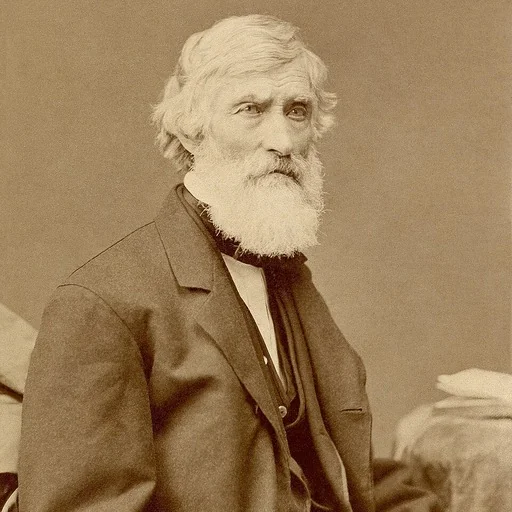
Artist
Asher Brown Durand spent his life in the rolling hills of New Jersey, where the forests and farmland shaped his quiet, deliberate way of seeing.