Artwork
Saint Sebastian
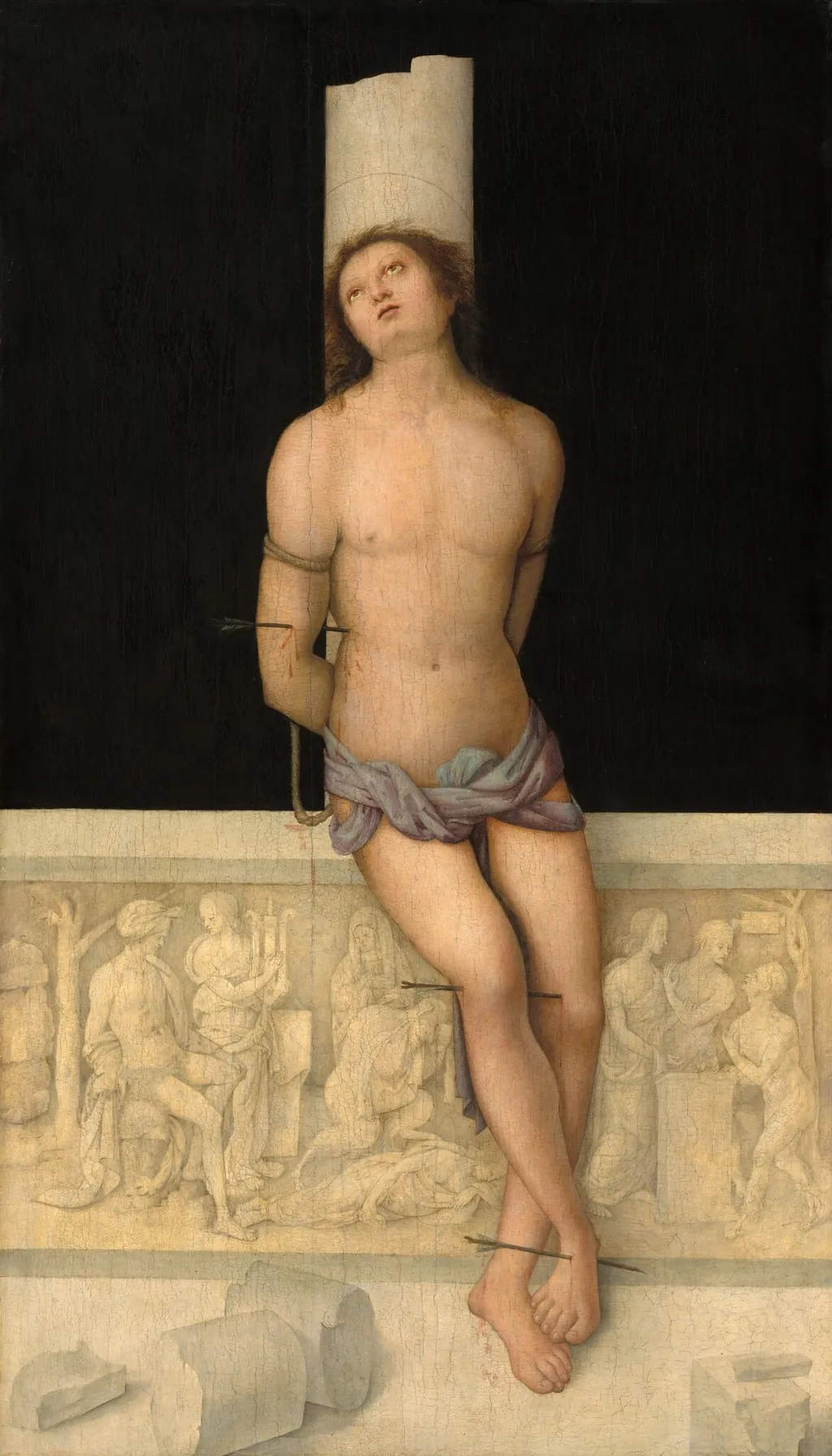
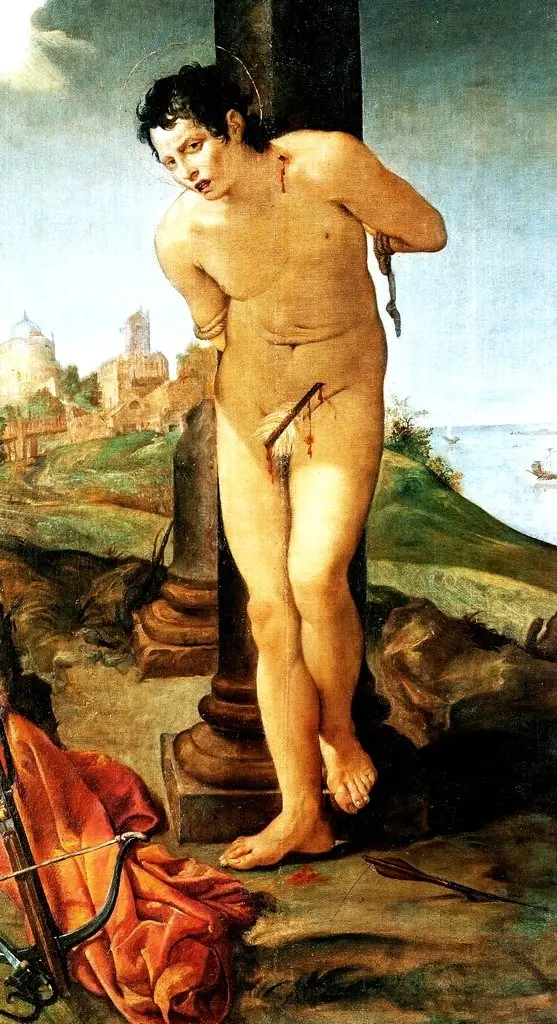
Saint Sebastian is an oil painting by the Early Renaissance artist Amico Aspertini. It dates from 1505 and is held in the collection of the National Gallery of Art.
About this work
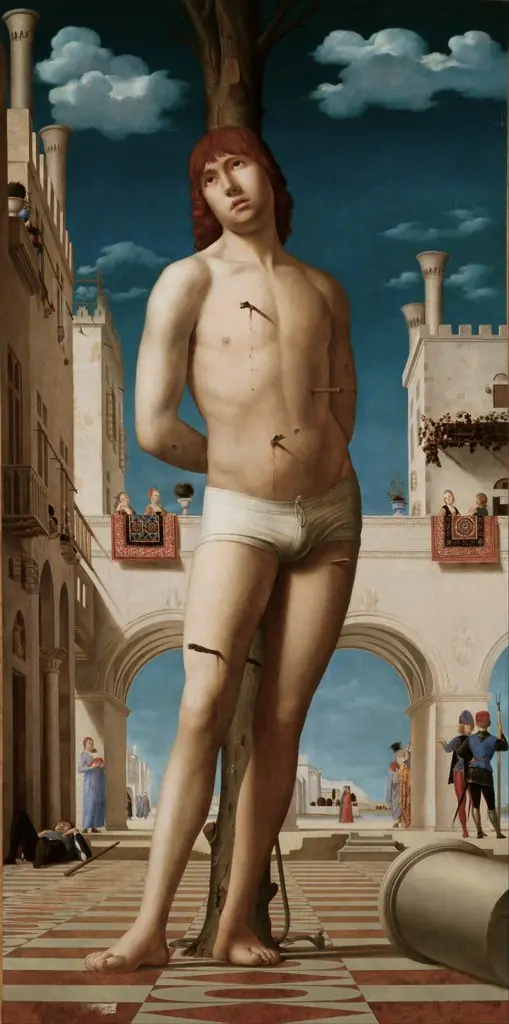
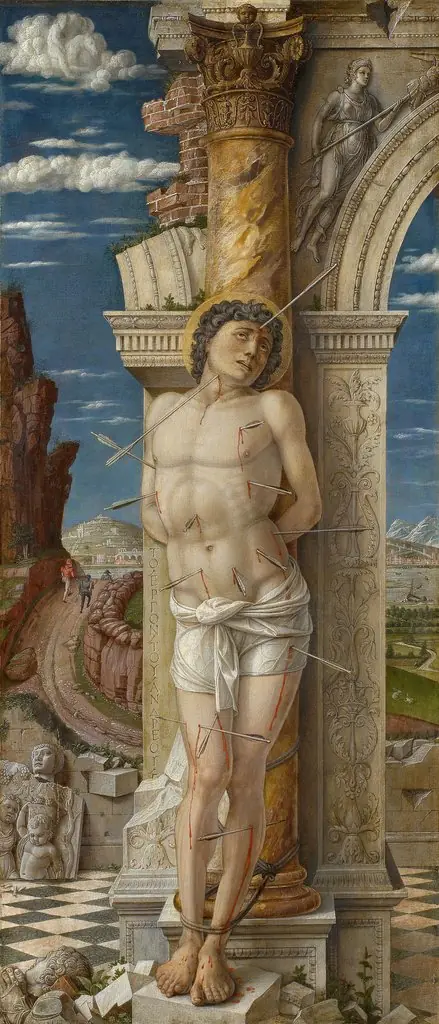
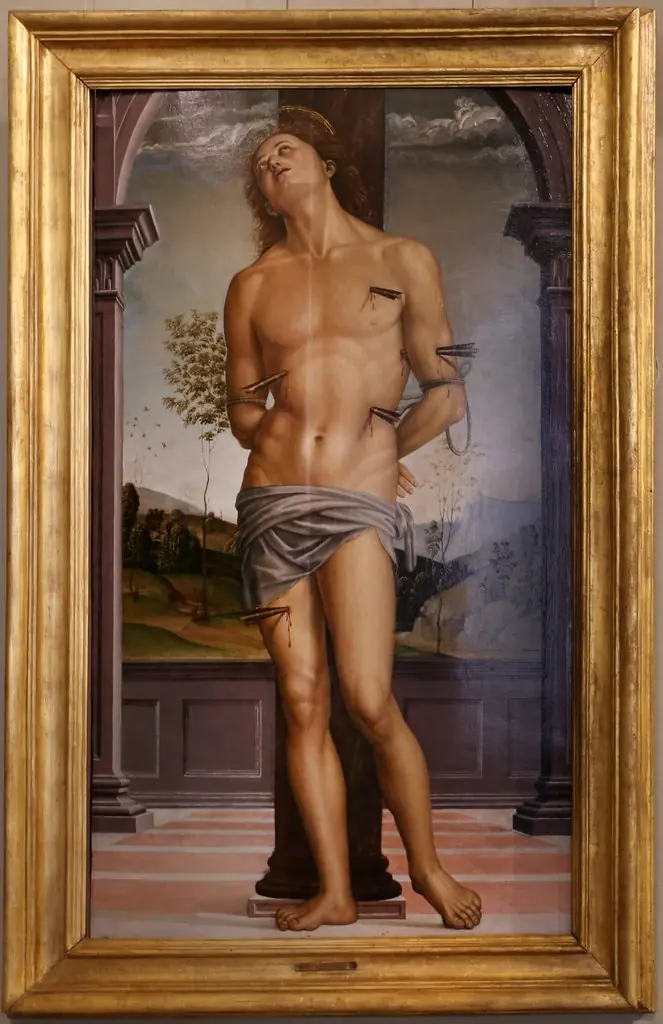
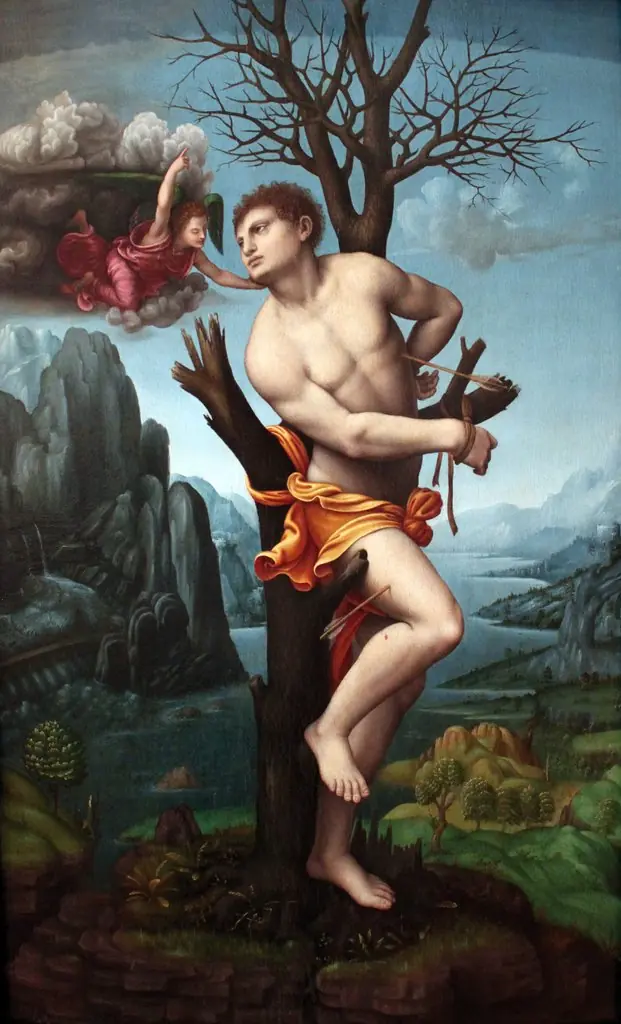
A calm saint stands bound to a tree, pierced by arrows. Amico Aspertini worked in oil on panel, then a newer medium that allowed finer detail and greater realism. Painted around 1505.
Subject & Meaning
The composition links the physical torment to an inner resilience, reflecting the broader theme of martyrdom as a testament to Christian devotion.
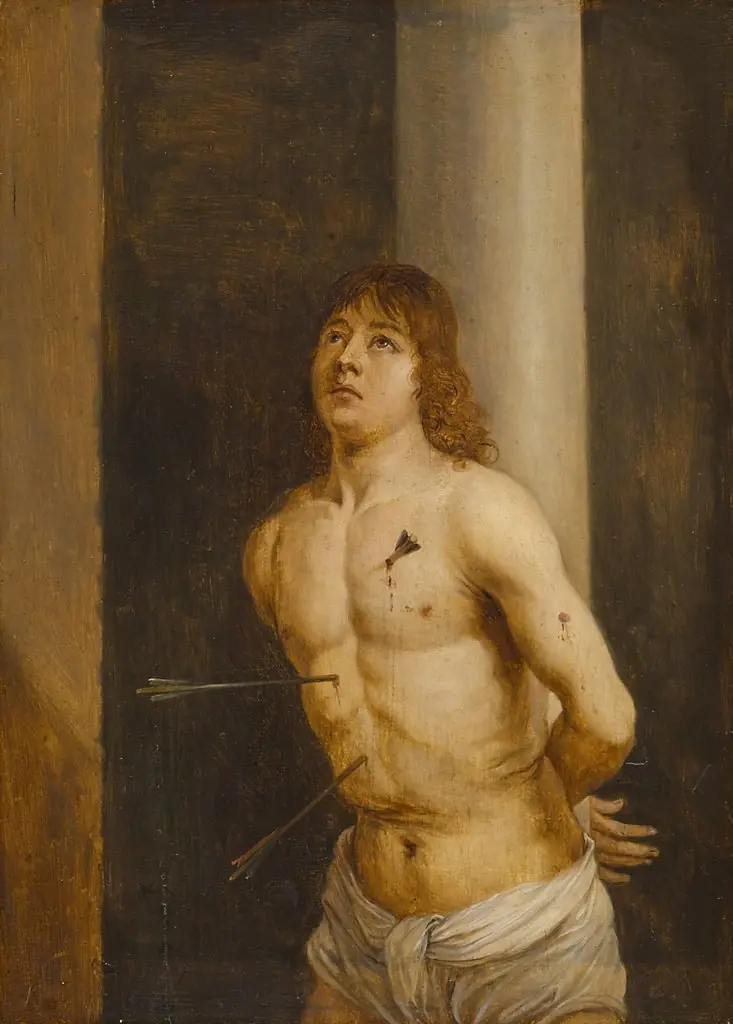
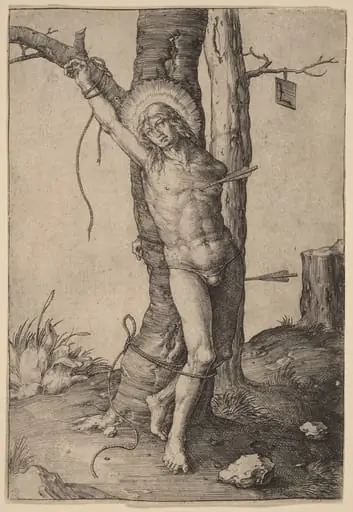
The painting portrays Saint Sebastian, a Christian martyr traditionally shown bound to a post and pierced by arrows. In this work the saint stands upright, his body exposed to a barrage of arrows that symbolize divine trial and the suffering endured for faith. Aspertini’s rendering emphasizes the moment of spiritual fortitude rather than the climax of execution, highlighting the saint’s calm acceptance.
The composition links the physical torment to an inner resilience, reflecting the broader theme of martyrdom as a testament to Christian devotion. The depiction aligns with established iconographic conventions of the early sixteenth century, where Sebastian serves as an emblem of endurance and protective intercession.
Technique & Style
Saint Sebastian is executed in oil on panel, a support and medium combination characteristic of early-sixteenth-century Italian devotional painting. The work measures 114.9 cm in height by 66 cm in width, giving it a markedly vertical format suited to the standing figure of the martyr. The composition is classified within the religious genre and focuses on the martyrdom of Saint Sebastian as its principal subject.
Painted in 1505 by Amico Aspertini, the panel belongs to the Samuel H. Kress Collection at the National Gallery of Art in Washington, D.C., where it has been held since the 1961 gift from the Kress Foundation.
History & Provenance
Created in 1505 by Amico Aspertini, this oil-on-panel painting depicts the martyrdom of Saint Sebastian. Its early ownership history suggests it belonged to Samuel Woodburn in London, likely entering the market through his estate sale at Christie Manson & Woods in June 1860, where it was misattributed to Perugino. Sir John William Ramsden, 5th Baronet, presumably acquired the work at that auction, though it did not appear in his own 1930 estate sale.
By 1931, the panel was located within an anonymous Milanese collection before entering the holdings of Count Alessandro Contini Bonacossi in Florence and Rome. In 1938, Contini Bonacossi sold the piece to the Samuel H. Kress Foundation in New York, which subsequently gifted it to the National Gallery of Art in Washington, D.C., in 1961.
The painting Saint Sebastian by Amico Aspertini (c. 1505) is held by the National Gallery of Art in Washington, D.C., where it belongs to the Samuel H. Kress Collection and entered the museum in 1961 as a gift from the foundation. Its provenance traces back to Samuel Woodburn in London, an 1860 estate sale at Christie Manson & Woods, and ownership by Sir John William Ramsden before it appeared in an anonymous Milanese collection by 1931. The sources do not record any exhibition history for the work.
Context
The painting Saint Sebastian by Amico Aspertini, executed in oil on panel around 1505, exemplifies early sixteenth‑century Italian religious art and is situated within the artist’s transitional style that bridges early and High Renaissance approaches. Its depiction of the martyrdom of Saint Sebastian reflects contemporary devotional interests and has been cited in scholarship on Aspertini’s synthesis of Peruginesque composition with emerging naturalistic detail. The work’s provenance, from a probable Woodburn estate sale through the Kress Foundation to the National Gallery of Art, highlights its significance within American collections of Italian masters.
Academic discussions of the piece often reference its stylistic analysis and its role in illustrating the devotional practices of the period.
Overview
Amico Aspertini's Saint Sebastian, an early Renaissance oil on panel from around 1505, exemplifies the Bolognese painter's distinctive approach. This religious work portrays the Christian martyr Saint Sebastian, a common subject in art history. Aspertini's style, often described as eclectic and idiosyncratic, reflects the artistic shifts occurring during his period, blending established methods with innovative elements.
Artist & collection
Artist
Amico Aspertini, also called Amerigo Aspertini (ca 1474 – 1552), was an Italian Renaissance painter and sculptor whose complex, eccentric, and eclectic style anticipates Mannerism.