Artwork
The Meal
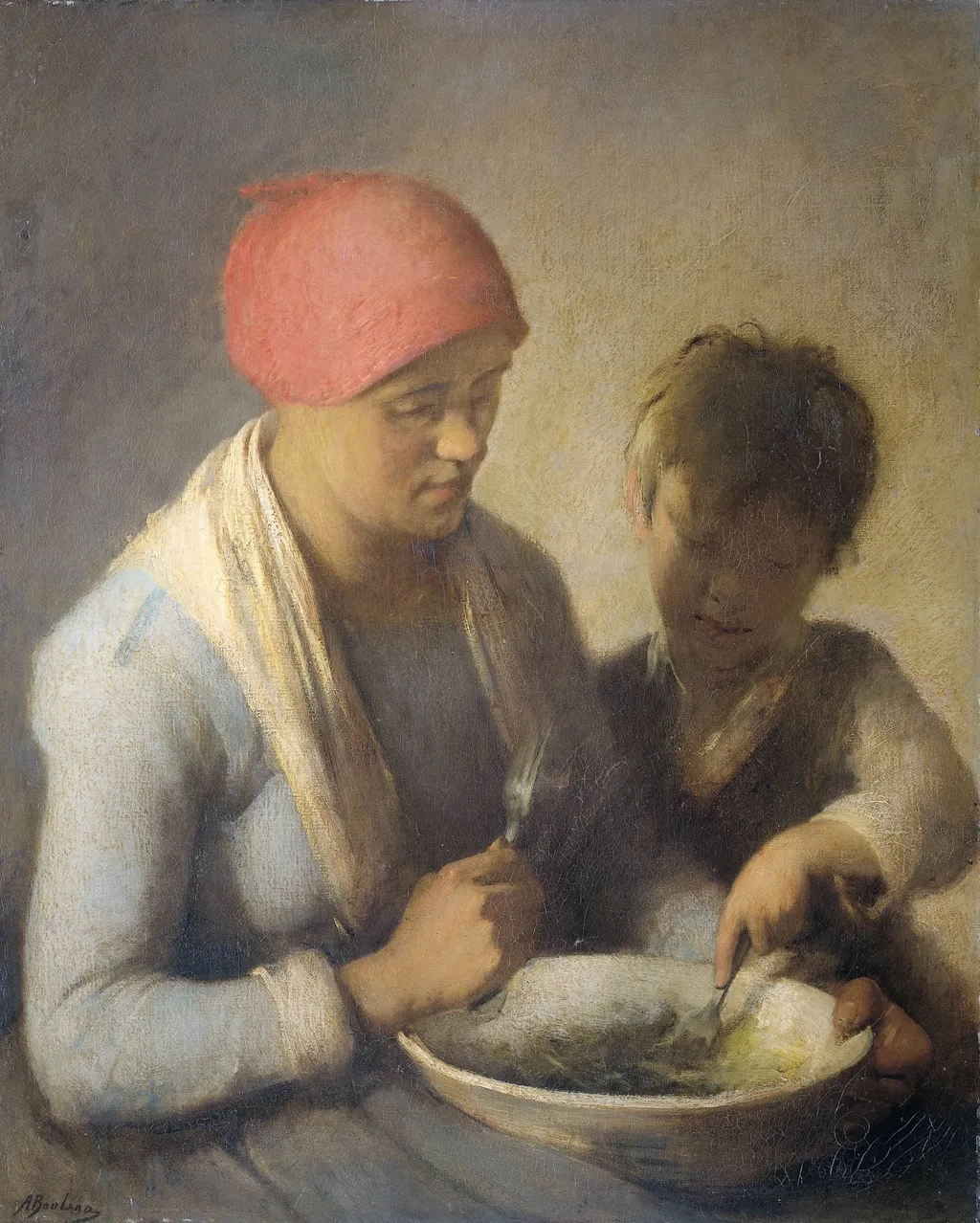
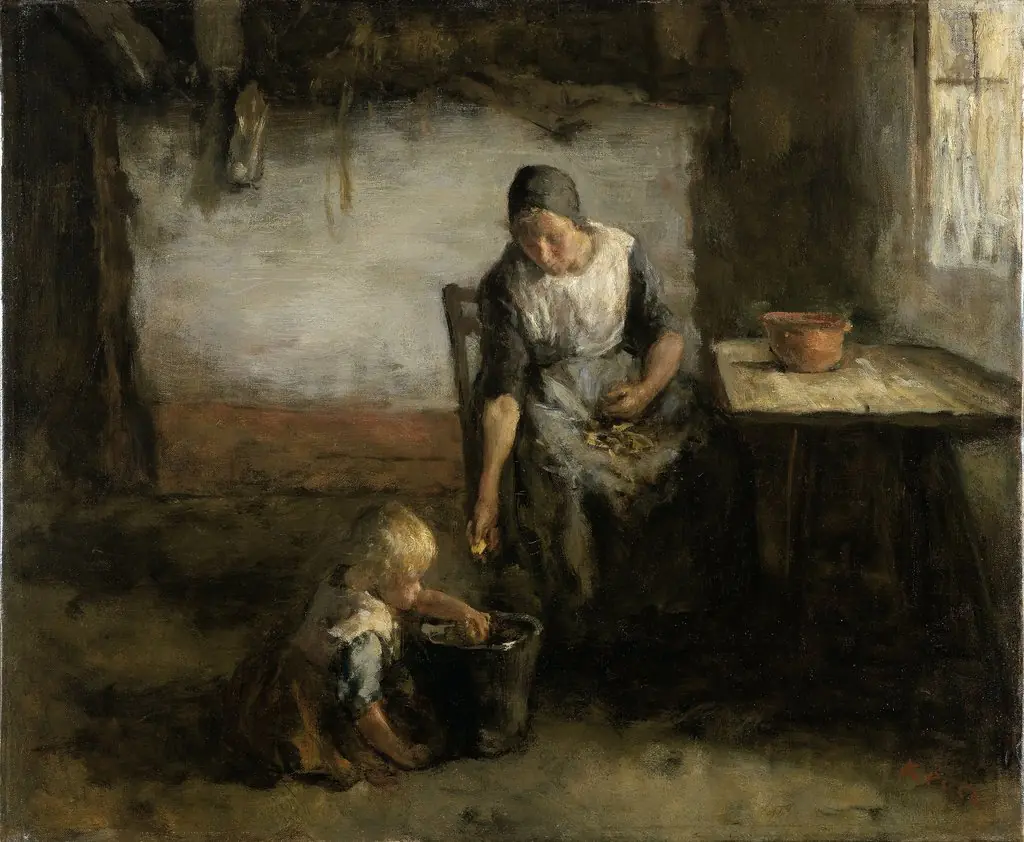
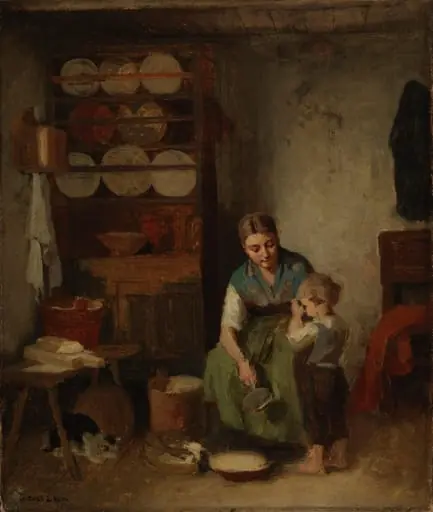
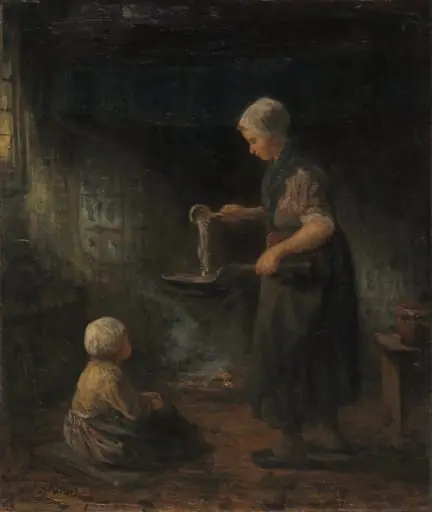
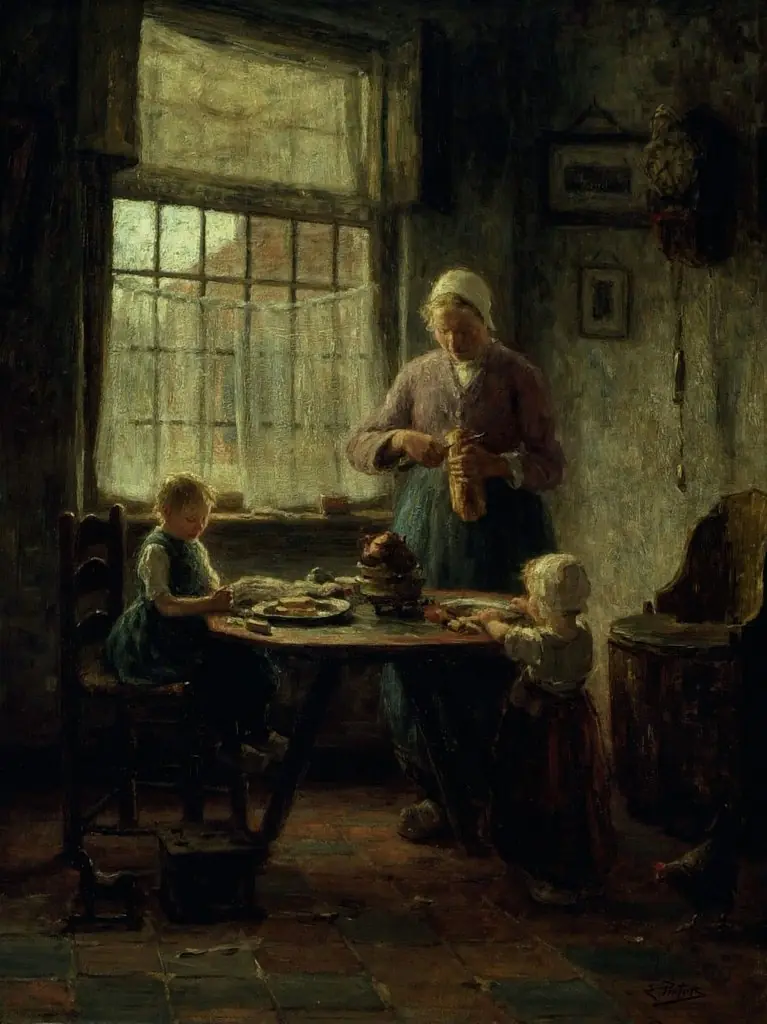
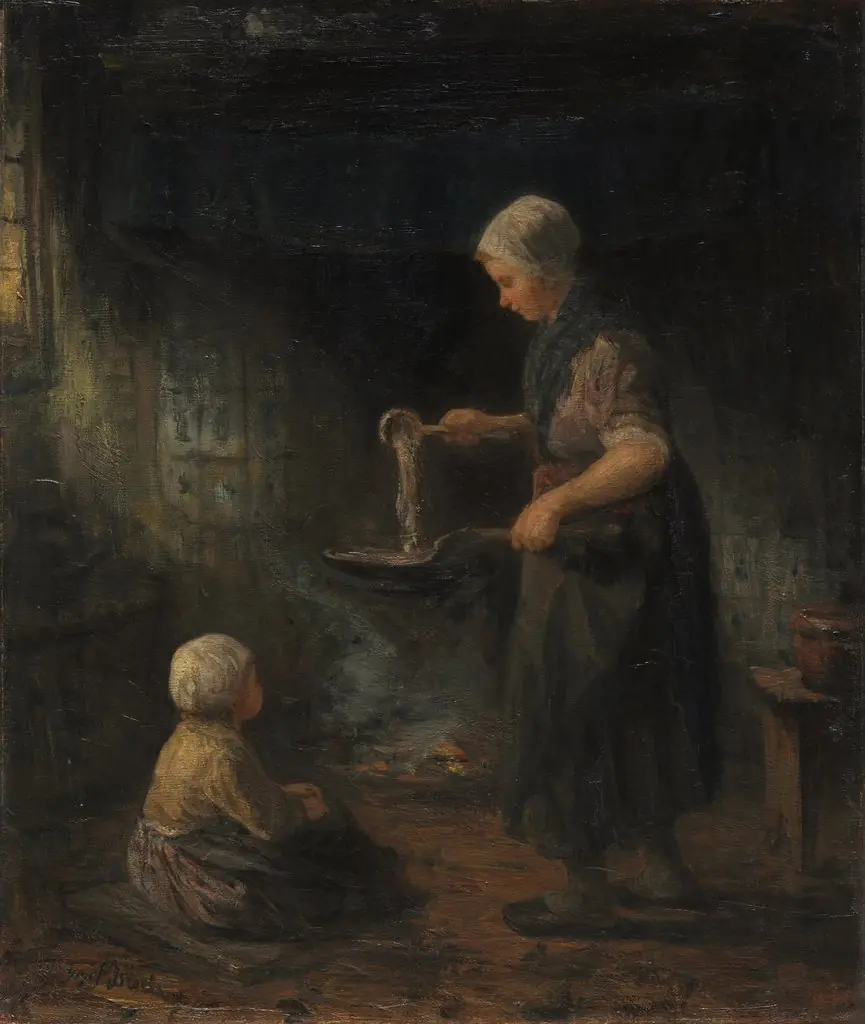
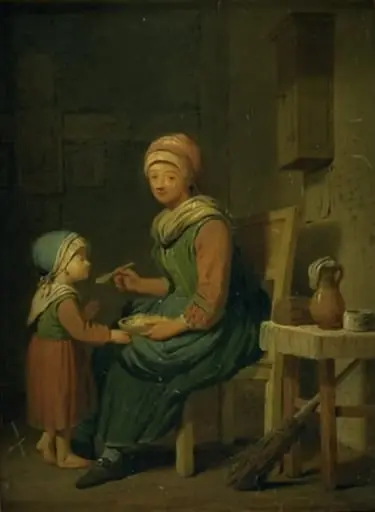
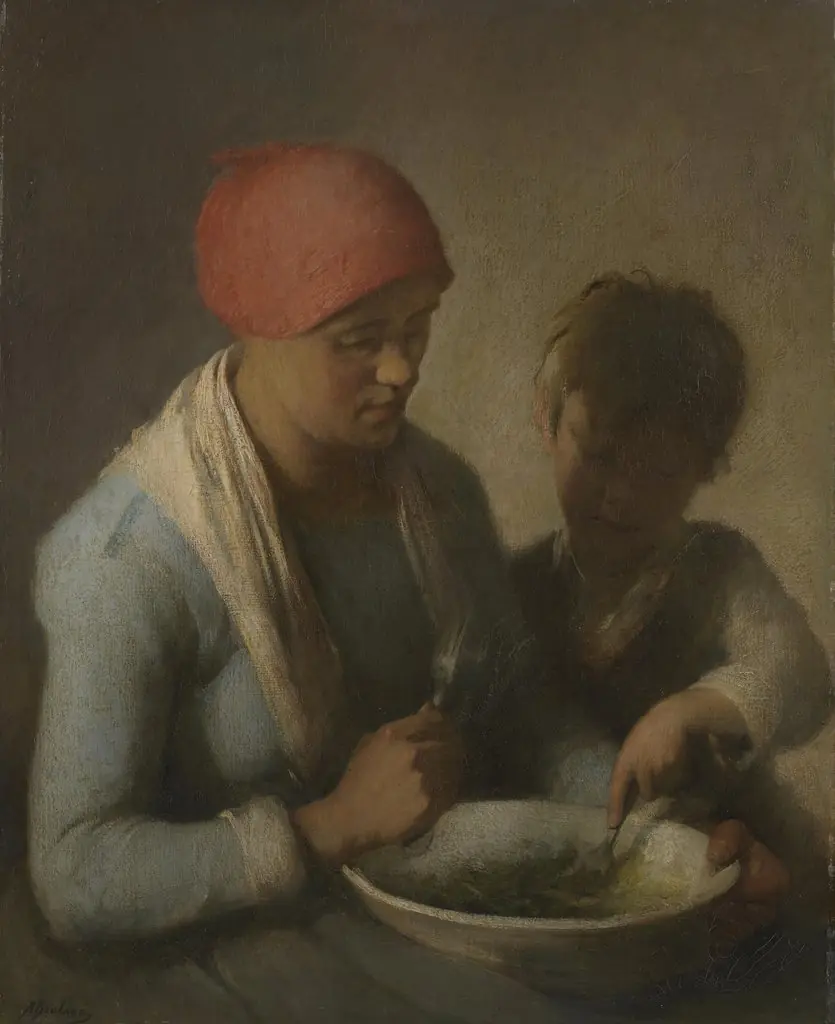
The Meal is an unspecified painting by the Realist artist Auguste Boulard. It dates from 1871 and is held in the collection of the Rijksmuseum.
About this work
Technique & Style
Stylistically, the piece aligns with Boulard's Romantic classification and his later focus on the daily existence of fishermen and rural inhabitants in Cayeux.
The Meal (Le Repas) is an oil painting on canvas executed by Auguste Boulard. The work measures 88 by 73 cm and belongs to the artist's genre scene repertoire, specifically depicting rustic interiors and peasant life. Stylistically, the piece aligns with Boulard's Romantic classification and his later focus on the daily existence of fishermen and rural inhabitants in Cayeux. The painting reflects the influence of the Barbizon School, characterized by a direct engagement with natural subjects and a commitment to portraying the simplicity of working-class environments.
History & Provenance
Auguste Marie Boulard painted The Meal between 1850 and 1892, placing its creation firmly in the latter half of the 19th century.
The work entered the collection of the Luxembourg Museum through state acquisition in 1887, and a second oil on wood titled The Cherry Child was added to the national collection in March 1895.
In 1868, American art dealer George A. Lucas purchased a still life of apples by Boulard for 100 francs, marking one of the earliest documented transactions involving the artist’s work.
The painting was later featured in Galerie Georges Petit’s 1896 Paris exhibition, which played a key role in establishing Boulard’s reputation as a recognized artist of his time.
Context
Auguste Boulard, the painter of The Meal, has been characterized by critics as "the last of the Romantics," a label formalized in the 1994 Louis Senlecq Museum exhibition in L'Isle-Adam bearing that title. Trained initially under Léon Cogniet, he came under the formative influence of Barbizon master Jules Dupré and aligned himself with the Barbizon School's principles of painting directly from nature. He moved within a celebrated Parisian circle on the Île Saint-Louis that included Honoré Daumier, Charles-François Daubigny, Jean-Baptiste-Camille Corot, Jean-François Millet, Théodore Rousseau, and Antoine-Louis Barye.
After settling in Cayeux around 1865, Boulard devoted himself to rustic scenes of peasant and fisher life, the genre to which The Meal belongs. The French press of his day, including writers Jules Comte, Arsène Alexandre, Gonzague Privat, and Eugène Bertol-Graivil, featured his work, and the State placed two of his paintings in the Luxembourg Museum's national collection. A 1896 exhibition at Galerie Georges Petit cemented his standing among his contemporaries, and his posthumous auction in 1900, with catalogue by Georges Petit, underscored his place within the nineteenth-century French tradition.
Legacy
Auguste Boulard's painting The Meal contributed to his reputation as a genre scene painter rooted in rural realism, influencing later artists who valued intimate domestic and peasant narratives. His technique of rendering everyday life with psychological nuance informed subsequent generations of French realists and post-Impressionists. The work's inclusion in public collections and exhibitions, such as the Salon du Champ-de-Mars and Galerie Georges Petit, cemented his posthumous standing as a bridge between Romanticism and Naturalism. Auction records and museum acquisitions, including purchases by the Luxembourg Museum and Musée d'Orsay, reflect sustained scholarly and market interest in his oeuvre. His legacy was further highlighted in the 1994 exhibition at the Louis Senlecq Museum, which framed him as the last of the Romantics, and in 2024, when 60 works from his atelier were sold at auction in L'Isle-Adam, underscoring renewed appraisal of his artistic significance.
Own this work as a print
Artist & collection
Artist
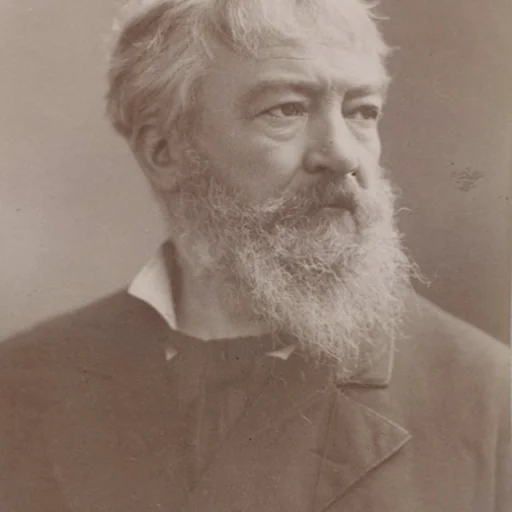
Auguste Boulard (1825–1897) was an artist, born in former 8th arrondissement of Paris.