Artwork
Four Figures on a Step
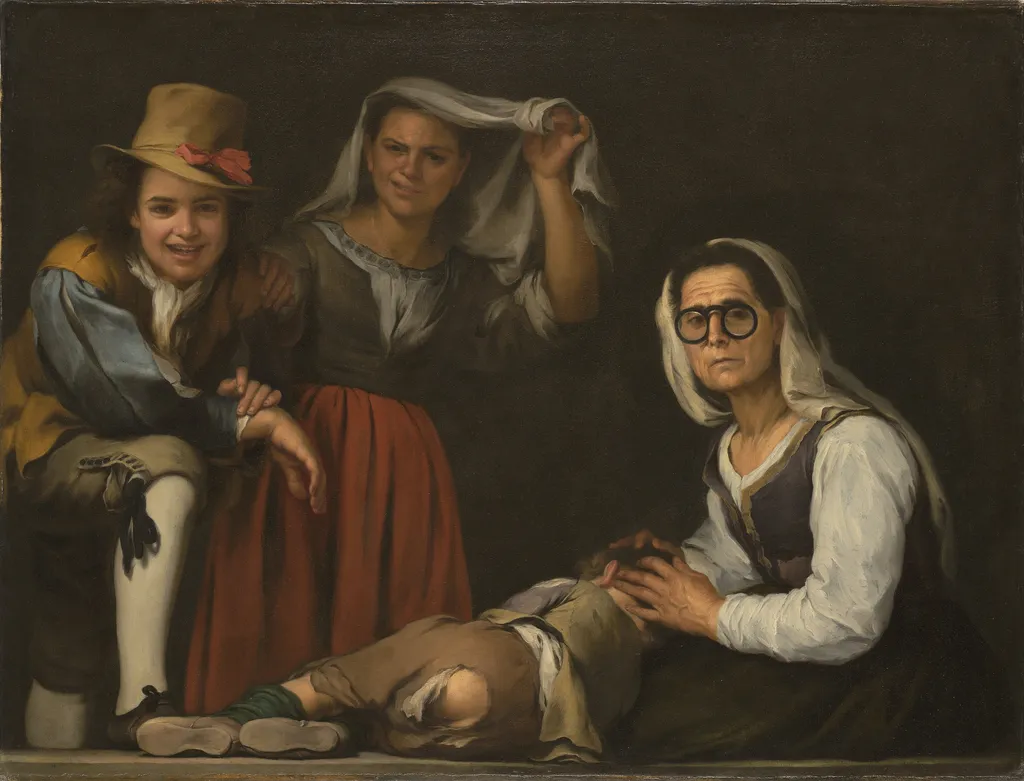
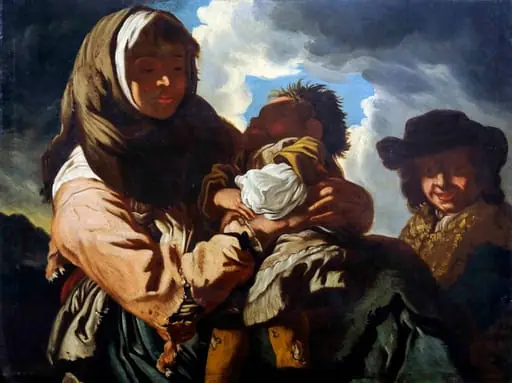
Four Figures on a Step is an oil painting by the Spanish Baroque Tenebrist artist Bartolomé Esteban Murillo. It dates from 1655 and is held in the collection of the Kimbell Art Museum.
About this work
The work may show a bawd, which makes it unusual in his output and almost unheard of in the Spanish art of his time.
Four Figures on a Step is an oil painting by the Spanish artist Bartolomé Esteban Murillo, dated around 1655. It shows a small group of people standing on a step, a subject Murillo rarely chose.
The work may show a bawd, which makes it unusual in his output and almost unheard of in the Spanish art of his time. It was bought by the Kimbell Art Museum in 1984 from the heirs of Charles Russell Feldman.
Check out more works at the Kimbell Art Museum.
Overview
Four Figures on a Step is an oil painting on canvas executed by the Spanish artist Bartolomé Esteban Murillo around the middle of the 1650s. The work measures a modest size and depicts a compact group of individuals gathered on a low step. It is part of the collection of the Kimbell Art Museum in Fort Worth, Texas, which acquired the canvas in the mid‑1980s.
Subject & Meaning
The composition presents four figures, one of whom may be interpreted as a bawd, a prostitute or madam, standing amid the others. This identification, based on the figures’ attire and gestures, sets the scene apart from Murillo’s more familiar religious and genre subjects, suggesting a rare glimpse into the artist’s engagement with morally ambiguous urban life.
Technique & Style
Executed in oil, the painting displays Murillo’s characteristic soft modeling of flesh and subtle handling of light, yet the palette is comparatively muted, emphasizing the earthy tones of the step and the figures’ garments. The brushwork is restrained, allowing the forms to emerge with a quiet naturalism that aligns with the artist’s broader Baroque sensibility while addressing an unusual theme.
History & Provenance
After remaining in private hands for centuries, the canvas entered the estate of film producer Charles Russell Feldman. In 1984 the Kimbell Art Museum purchased the work from Feldman’s heirs, adding it to its European holdings and making it accessible for public viewing and scholarly research.
Context
Murillo’s oeuvre is dominated by devotional scenes and tender depictions of children; a secular genre piece featuring a possible bawd is virtually unheard of in 17th‑century Spanish painting. The rarity of such subject matter reflects both the artist’s limited forays into the darker aspects of city life and the broader cultural reticence toward openly portraying vice in contemporary Spanish art.
Own this work as a print
Artist & collection
Artist
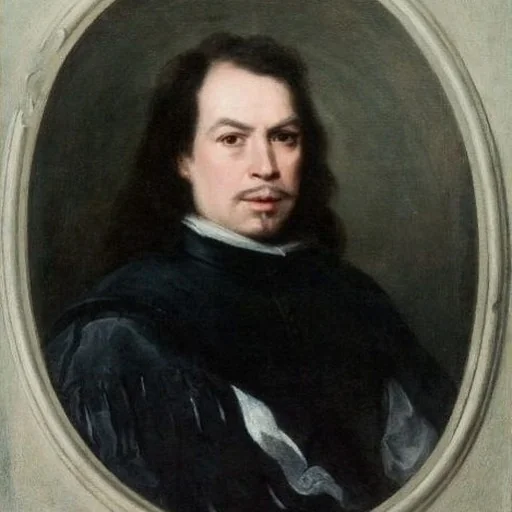
Bartolomé Esteban Murillo ( mure-IL-oh, m(y)uu-REE-oh, Spanish:; late December 1617, baptised 1 January 1618 – 3 April 1682) was a Spanish Baroque painter.