Artwork
The Death of the Virgin
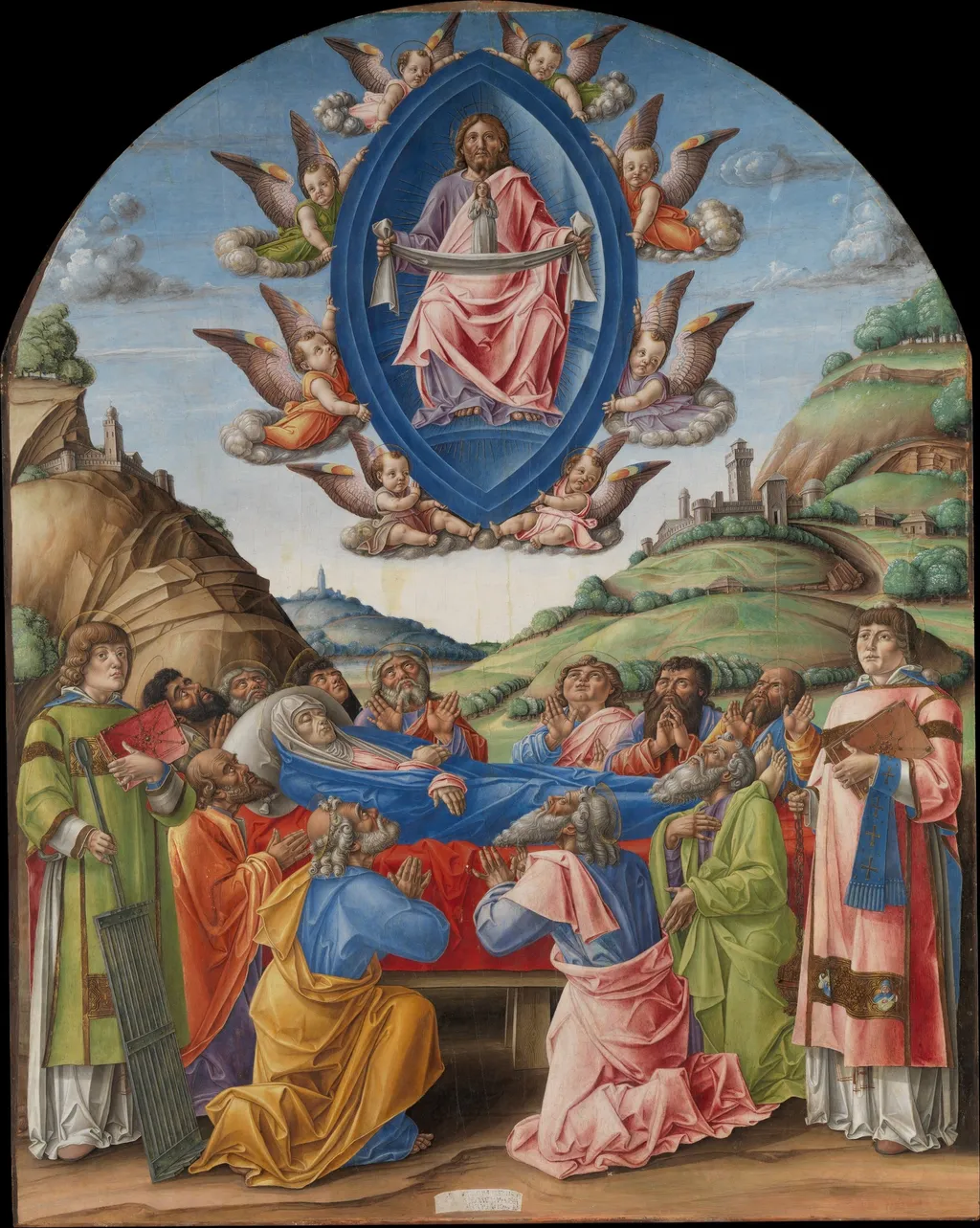
The Death of the Virgin is a tempera painting by the Early Renaissance artist Bartolomeo Vivarini. It dates from 1493 and is held in the collection of the Metropolitan Museum of Art.
About this work
Subject & Meaning
Created in 1485 by Bartolomeo Vivarini, the work belongs to the genre of religious art and utilizes tempera on panel to convey this sacred narrative.
The painting depicts the Death of the Virgin, a religious subject centered on the final moments of the Virgin Mary. The composition features Mary as the main subject, surrounded by the figures of Christ and an angel, illustrating the moment of her transition. Created in 1485 by Bartolomeo Vivarini, the work belongs to the genre of religious art and utilizes tempera on panel to convey this sacred narrative.
The iconography focuses on the specific event of Mary's death rather than her assumption, presenting the scene with the solemnity characteristic of late 15th-century devotional imagery. The inclusion of Christ and an angel underscores the theological significance of the event within the Christian tradition, marking the work as a representation of the Virgin's passing.
Technique & Style
Bartolomeo Vivarini’s The Death of the Virgin (1485) is executed in tempera on a wooden panel, a characteristic medium and support for late 15th-century Venetian painting [1, 2]. The work measures approximately 189.9 by 149.9 centimeters, reflecting the substantial scale typical of devotional altarpieces [2]. Vivarini’s technique demonstrates precise, controlled brushwork, with fine linear detailing in drapery folds and figural contours, aligning with the artist’s adherence to Gothic conventions tempered by early Renaissance influences.
The tempera medium, applied in thin, opaque layers, yields a luminous yet matte surface, while gold leaf embellishments, visible in halos and decorative motifs, enhance the sacred atmosphere [1]. Stylistically, the composition exhibits a hierarchical arrangement of figures, with elongated proportions and delicate facial modeling, though the handling remains relatively flat compared to contemporaneous experiments in spatial depth.
History & Provenance
The painting known as The Death of the Virgin was executed in 1485 by Bartolomeo Vivarini using tempera on panel, a work classified as religious art. Its creation is documented in contemporary records that attribute the piece to the Venetian painter and place its execution in the late fifteenth century. Since its completion, the work has been part of the collection of the Metropolitan Museum of Art, where it remains on public display, indicating a continuous provenance that traces from the artist’s workshop to the museum’s custody. The dating is anchored to the year 1485, as recorded in the source material.
The painting is held in the collection of the Metropolitan Museum of Art. According to the Wikidata record, its location is the Metropolitan Museum of Art, and it forms part of that institution's holdings as a work by Bartolomeo Vivarini dated 1485. No specific inventory or accession number is provided in the available sources, and no exhibition history is documented.
The work, executed in tempera on panel with dimensions of 189.9 by 149.9 cm, depicts the Death of the Virgin with accompanying figures of Christ, Mary, and angels.
Legacy
The Death of the Virgin by Bartolomeo Vivarini, executed in tempera around 1485, is represented in the Metropolitan Museum of Art, where its inclusion in the museum’s collection has sustained scholarly interest in late‑fifteenth‑century Venetian religious painting. The work’s iconography, depicting the moment of the Virgin’s death surrounded by angels and Christ, exemplifies the devotional emphasis of the period and has been cited in studies of devotional art in Northern Italy. Its preservation and public display have contributed to a continued reputation as a significant, though relatively obscure, example of the era’s artistic treatment of Marian mortality, influencing later interpretations of death imagery in Renaissance art.
Overview
Bartolomeo Vivarini's The Death of the Virgin, executed in 1493, depicts the Dormition of the Virgin Mary within a domestic interior that opens onto a landscape of green hills and distant architecture. The composition centers on the Virgin lying in state on a bed, surrounded by the apostles who display varied gestures of grief and contemplation. Vivarini arranges the figures in a semi-circle, utilizing bright robes of red, blue, and gold to create a rhythmic visual flow that guides the viewer's eye across the scene.
Above the earthly gathering, a luminous figure of the Virgin ascends, encircled by a host of small angels holding symbolic objects such as scrolls and musical instruments. Painted in tempera, the work reflects the artist's late style, bridging the rigorous spatial logic of the Venetian Quattrocento with a heightened emotional intensity characteristic of his final years. Created near the end of Vivarini's career, this altarpiece demonstrates his mastery in balancing narrative clarity with decorative richness, maintaining the devotional focus typical of Venetian religious art while showcasing his distinctive handling of light and color.
Context
The theme of the Dormition or Death of the Virgin was a widely revered subject throughout medieval and Renaissance Christian art. It served to emphasize Mary's unique role in salvation history and her ultimate glorification. Such depictions were often commissioned for churches and devotional spaces, providing the faithful with a visual aid for contemplating divine mysteries and the promise of eternal life.
Own this work as a print
Artist & collection
Artist
Bartolomeo or Bartolommeo Vivarini (c. 1432 – c. 1499) was an Italian Renaissance painter, known to have worked from 1450 to 1499.

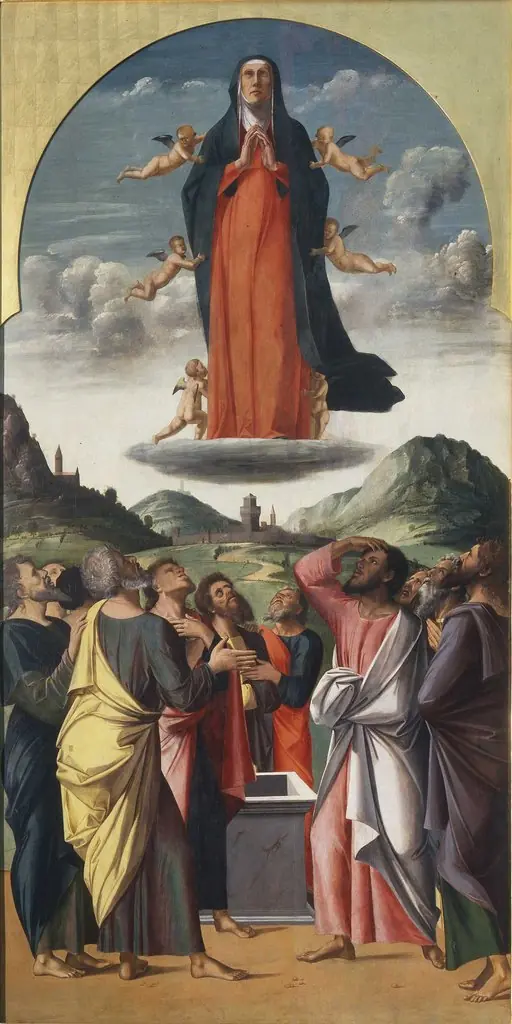 Annunciation
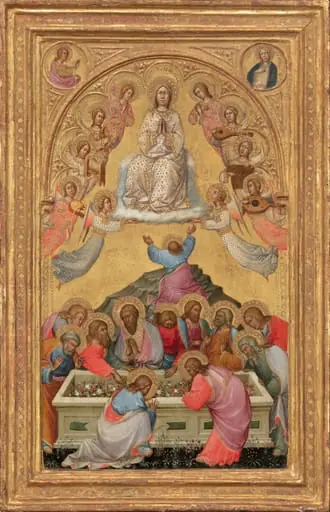 The Assumption of the Virgin with Busts of the Archangel Gabriel and the Virgin of the Annunciation
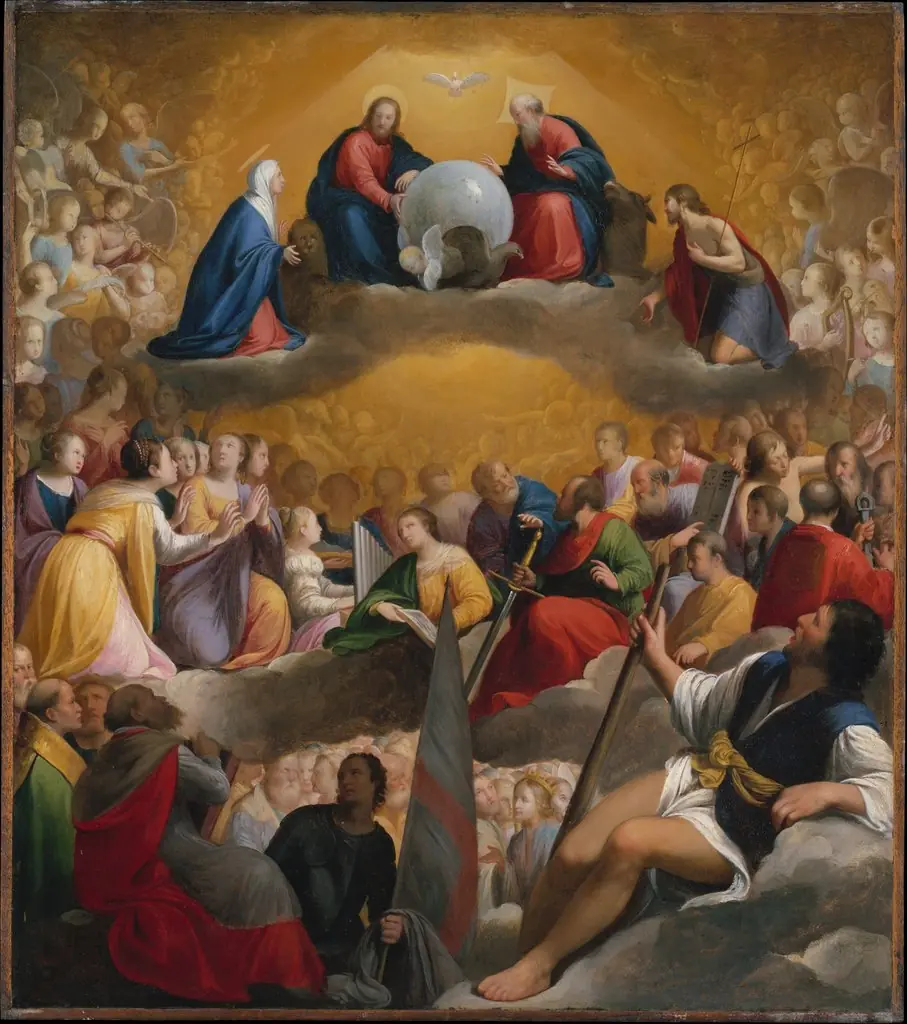 Paradise
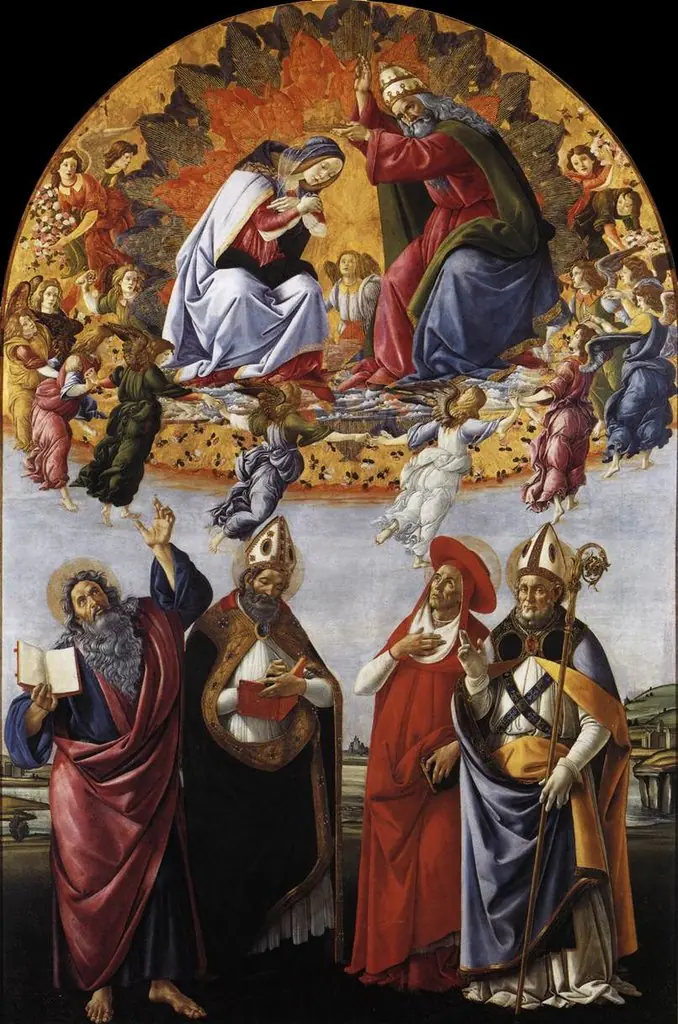 Coronation of the Virgin
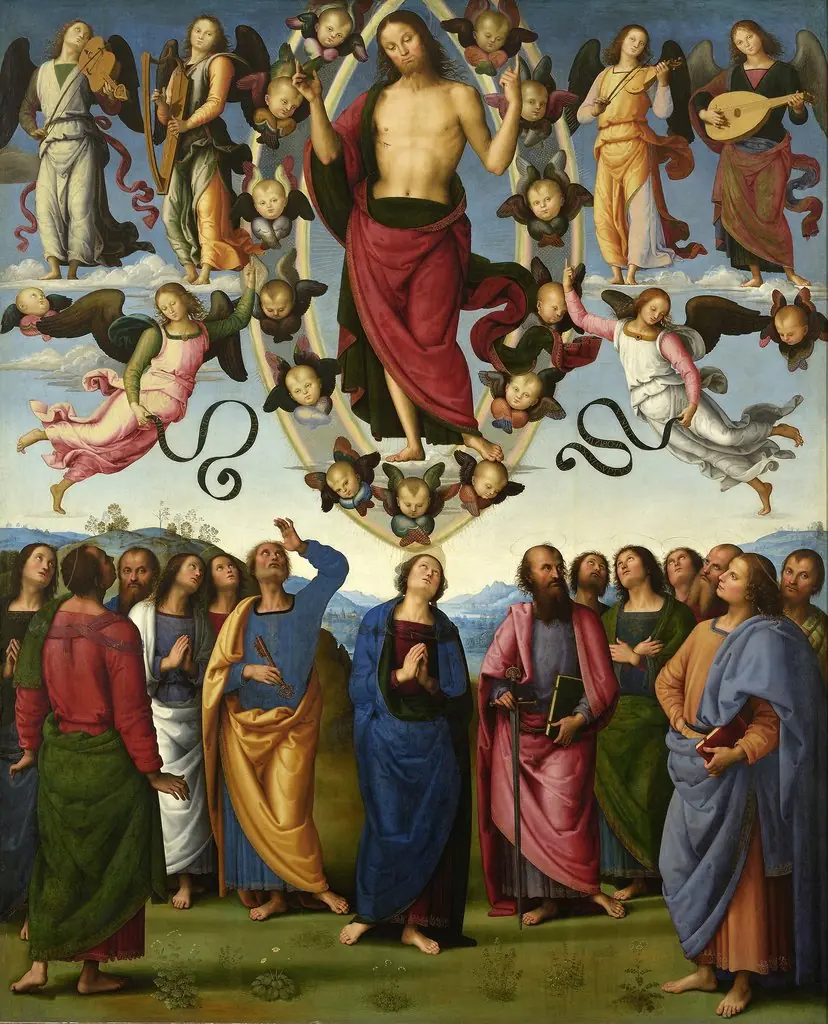 Ascension of Christ
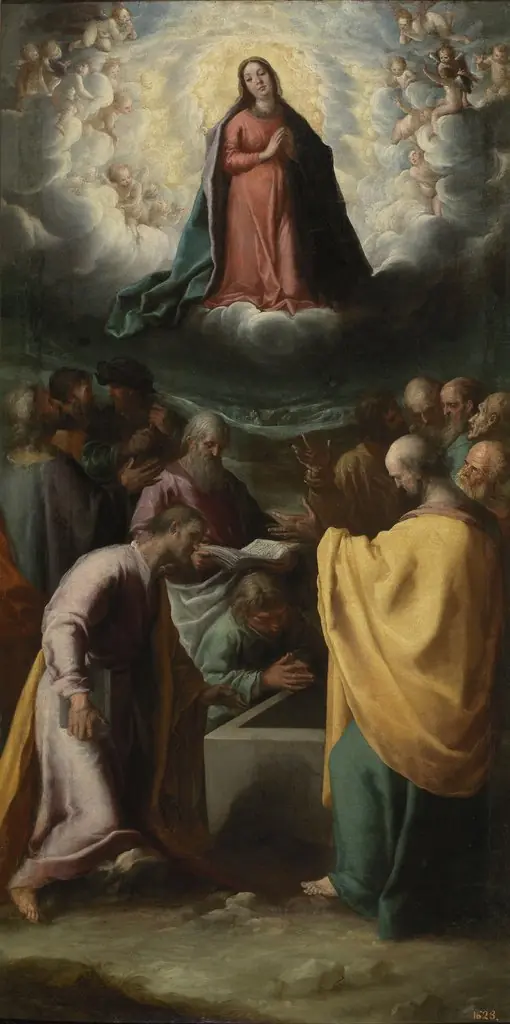 The Assumption of the Virgin
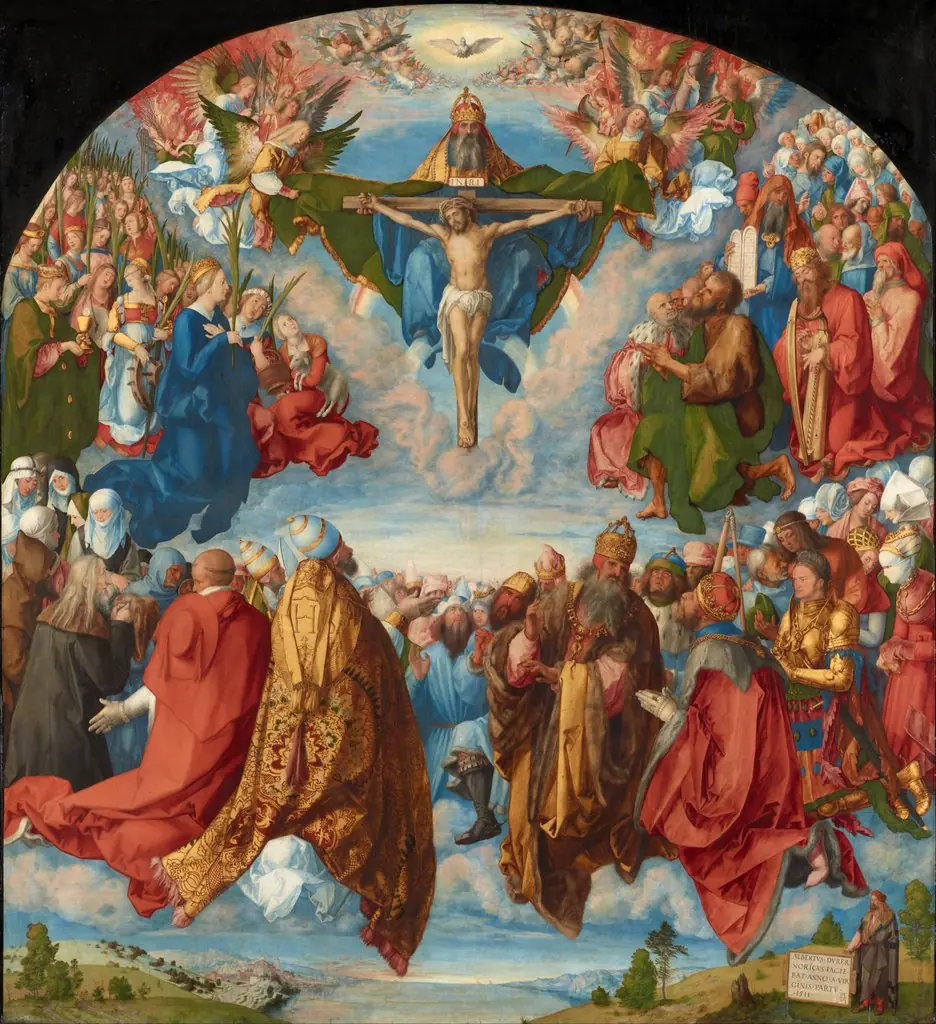 Adoration of the Trinity
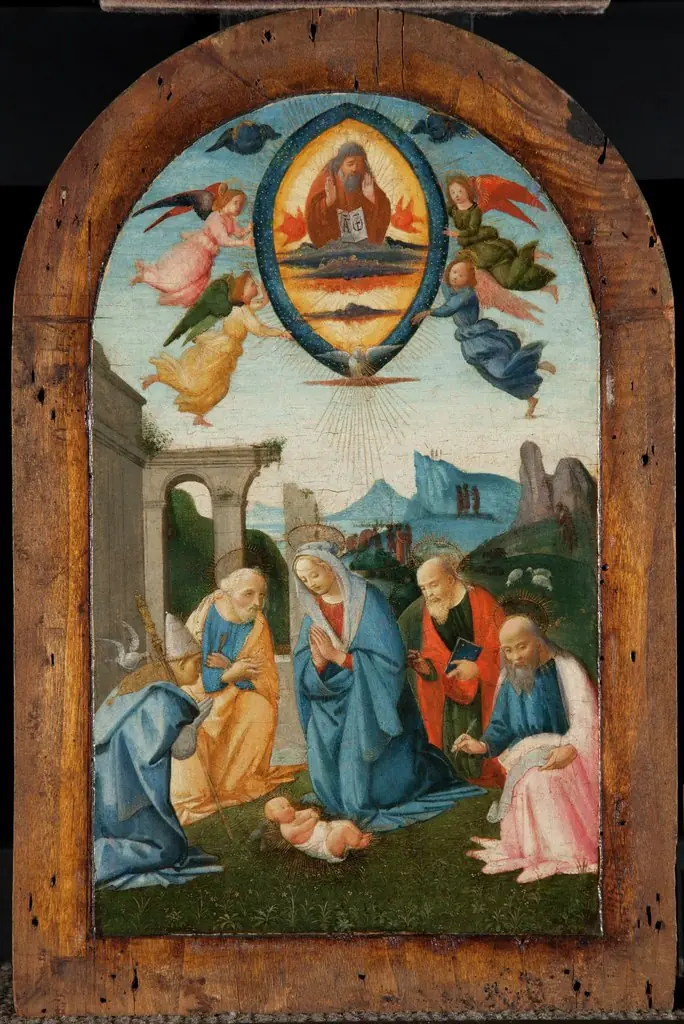 The Madonna and Four Saints Adoring the Infant Jesus
 Madonna and Child Enthroned with Saints
 Incarnation of Jesus by Piero di Cosimo
 Altarpiece from Thuison-les-Abbeville: The Ascension
- Death of the Virgin