Artwork
Madonna and Child
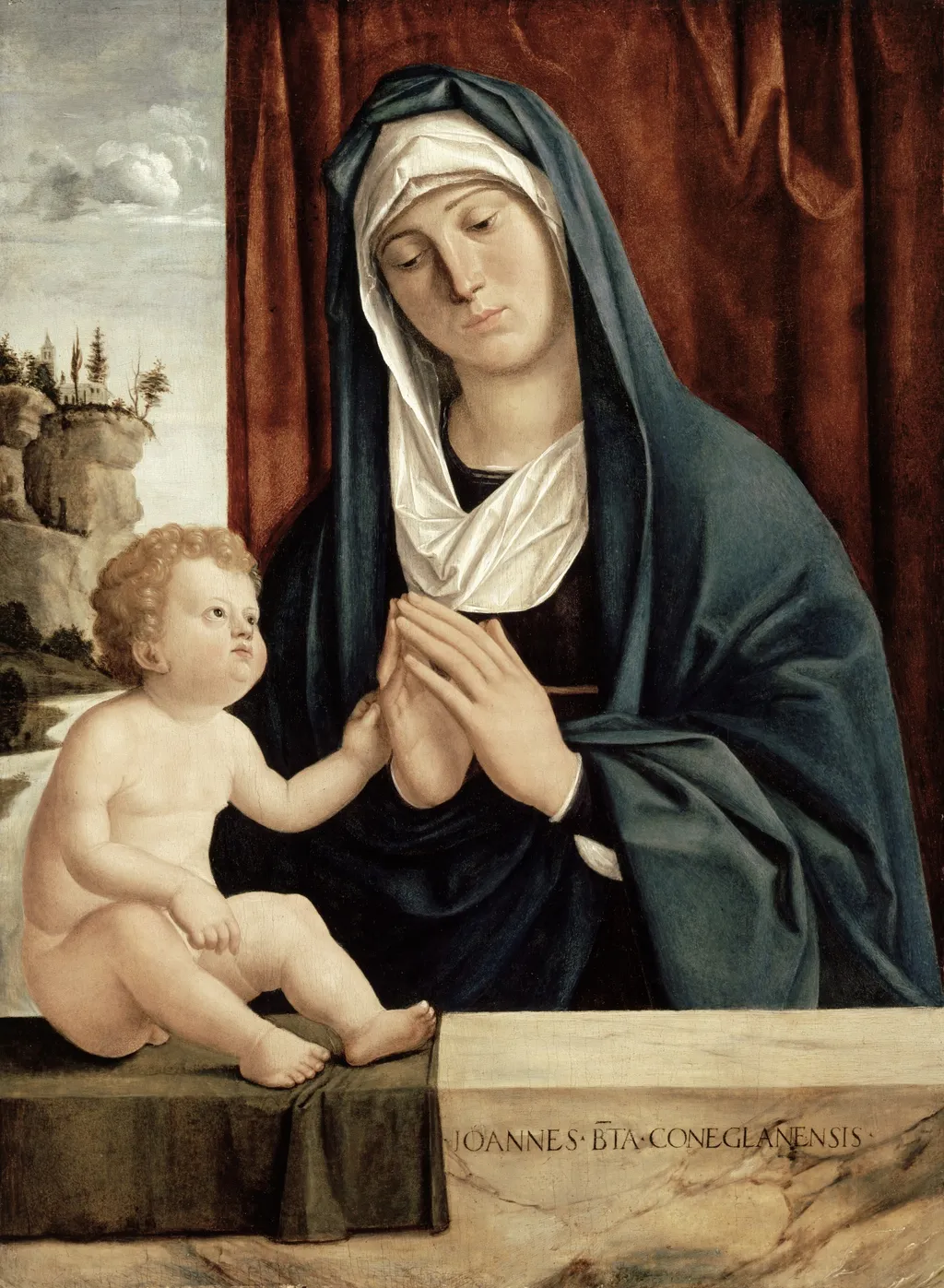
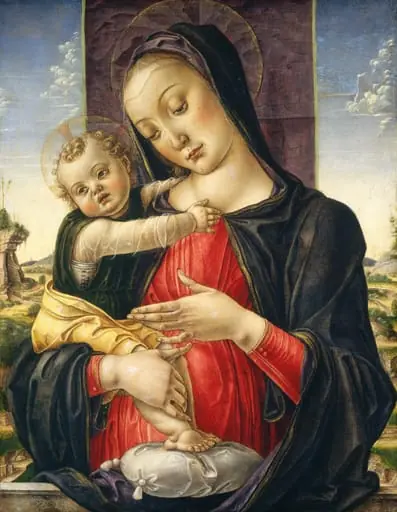
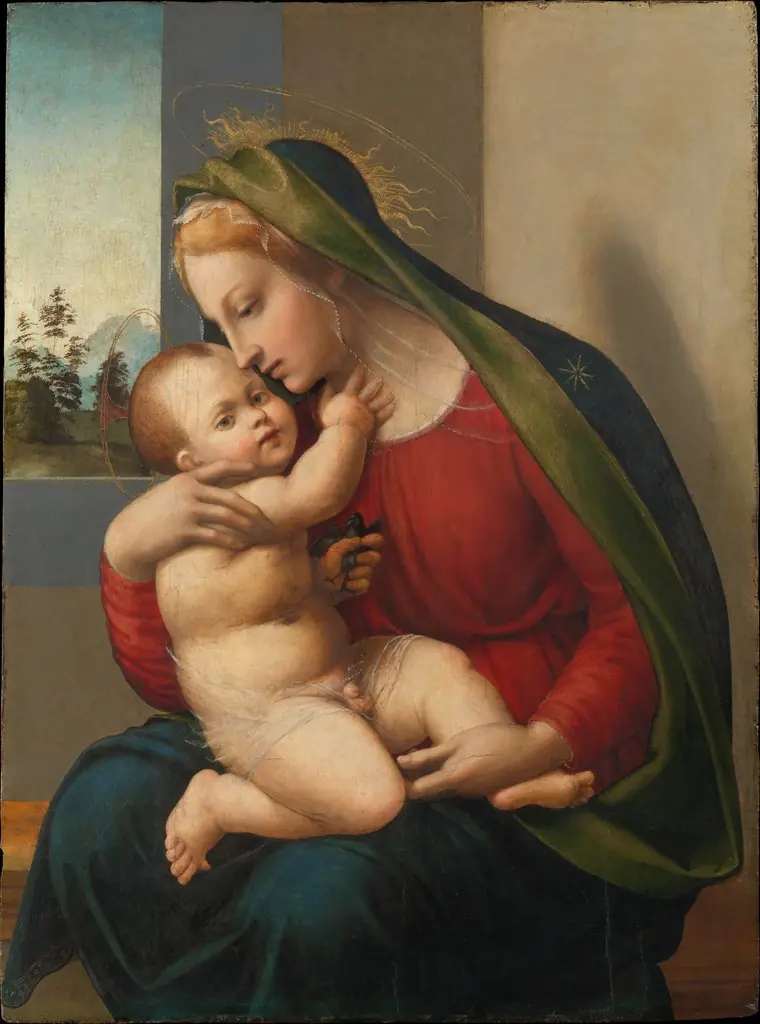
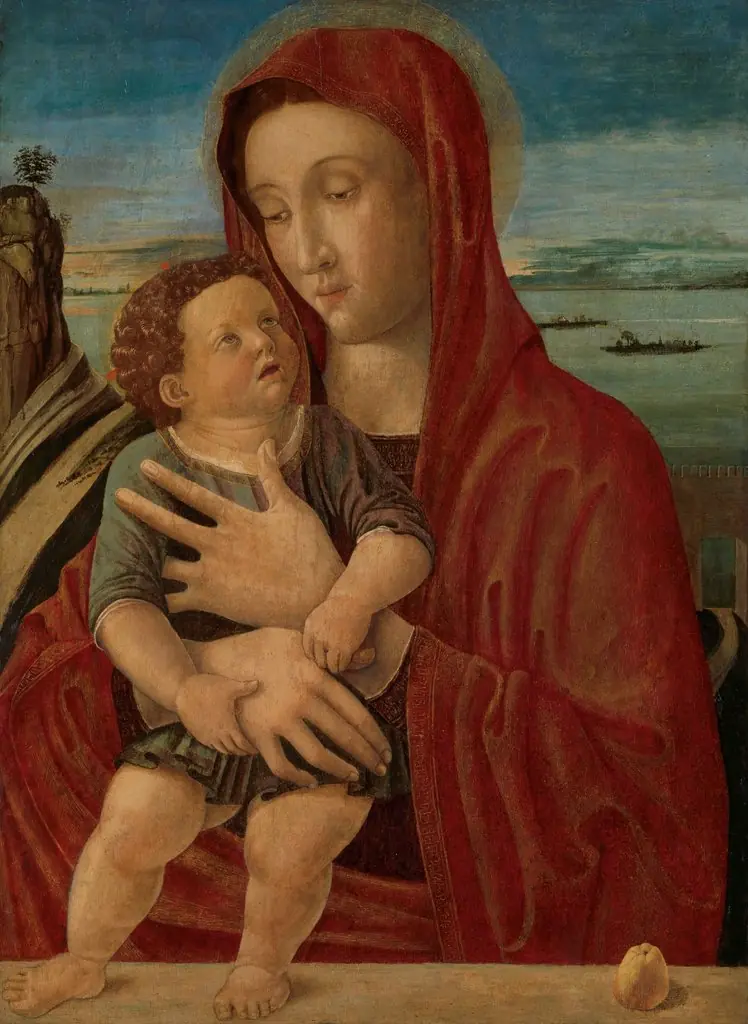
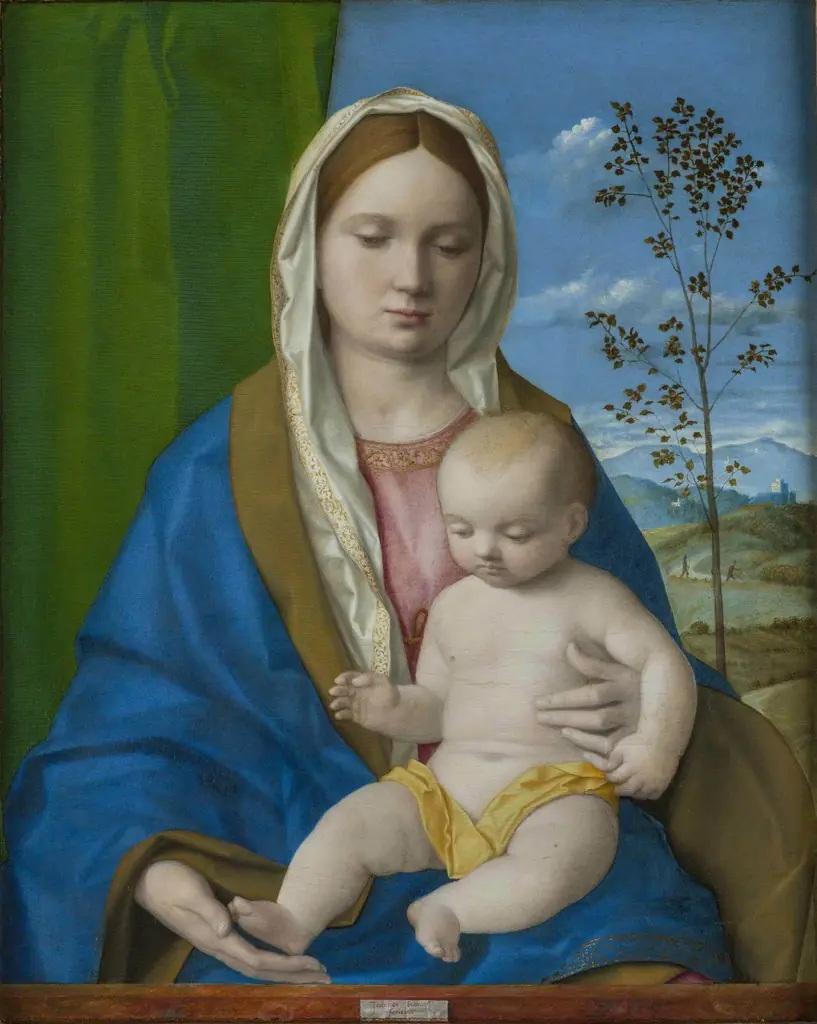
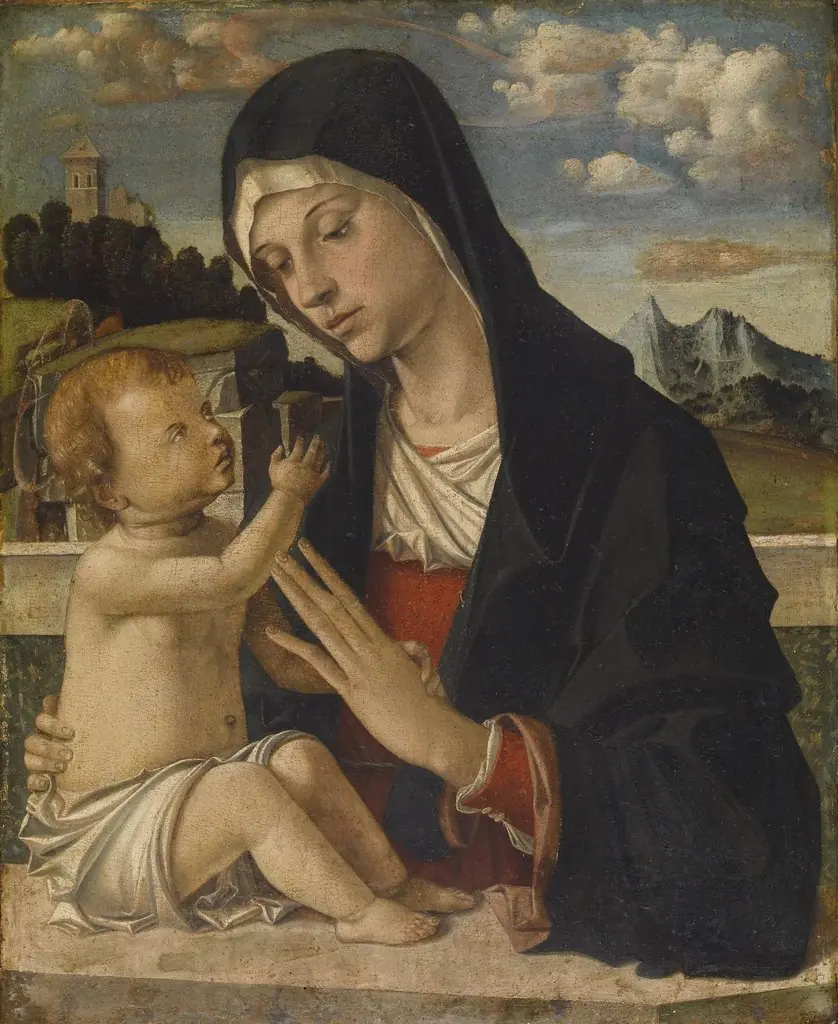
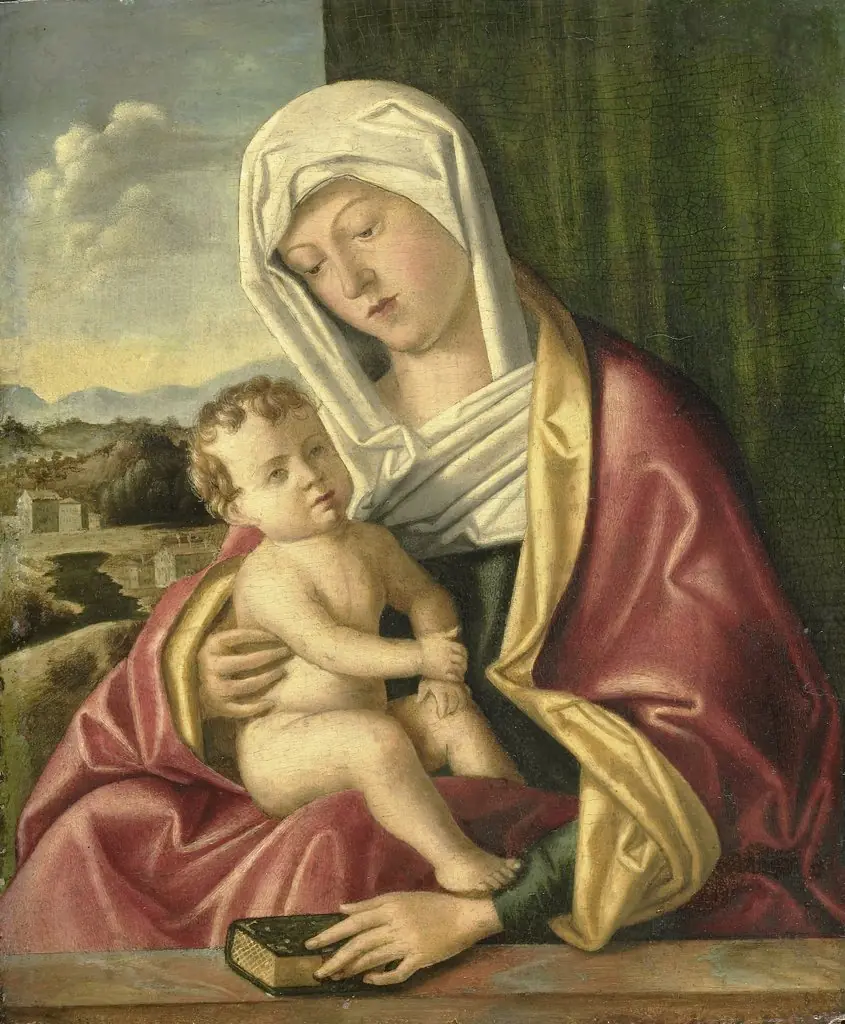
Madonna and Child is an oil painting by the Venetian Renaissance artist Giovanni Battista Cima da Conegliano. It dates from 1500 and is held in the collection of the Detroit Institute of Arts.
About this work
Subject & Meaning
The work portrays the Virgin Mary holding the infant Christ, a traditional subject in Christian art that signifies maternal tenderness and divine incarnation.
The work portrays the Virgin Mary holding the infant Christ, a traditional subject in Christian art that signifies maternal tenderness and divine incarnation. The composition emphasizes the intimate connection between mother and child, reinforcing theological themes of protection and spiritual nurture. Symbolic elements such as the marble parapet and the child's gesture of blessing convey both sacred authority and human vulnerability.
The painting’s formal qualities, oil on panel, restrained palette, and careful rendering of texture, reflect the transitional style of late 15th‑century Venetian devotional art, bridging the devotional intimacy of the Early Renaissance with the more naturalistic approaches of the High Renaissance. Its iconography aligns with contemporary devotional practices that encouraged meditation on the humanity of Christ through the figure of Mary.
Technique & Style
The Madonna and Child is executed in oil paint on a wood panel, a technique consistent with Cima da Conegliano's late fifteenth-century practice. The painted surface measures 64.5 × 47.9 cm, mounted within a frame of approximately 84.1 × 68.3 × 6 cm. The composition places the Virgin behind a marble parapet with her hands joined in prayer, while the Christ Child sits on the parapet and reaches toward her. The artist's signature, JOANNES BTA CONEGLANENSIS, appears in the lower right corner.
Stylistically, the work belongs to the religious genre and reflects the Venetian Renaissance tradition of devotional half-length Madonna imagery, with the parapet serving as a familiar spatial device separating the sacred figures from the viewer.
The panel support and oil medium allow for the smooth modeling and refined surface finish typical of Cima's small devotional paintings of this period.
History & Provenance
The Madonna and Child by Giovanni Battista Cima da Conegliano was created between 1499 and 1502 as an oil painting on a wood panel. The work bears the artist's signature, "JOANNES BTA CONEGLANENSIS," in the lower right corner. Following its creation, the painting entered Scottish and English collections around 1842.
It was subsequently acquired by James E. Scripps, who donated it to the Detroit Institute of Arts in 1889, where it remains part of the permanent collection.
The painting is held in the collection of the Detroit Institute of Arts. It entered the museum in 1889 as a gift from James E. Scripps, having previously resided in Scottish and English collections since approximately 1842. The work is executed in oil on a wood panel measuring 64.5 by 47.9 cm and is mounted within a larger frame.
While the artist signed the piece in the lower right corner, specific inventory or accession numbers are not detailed in the available records. No specific exhibition history is documented in the provided sources.
Context
The work was painted by Giovanni Battista Cima da Conegliano between 1499 and 1502, as documented in museum records and scholarly summaries.
The painting entered the Detroit Institute of Arts collection in 1889 through a donation by James E. Scripps, having previously been held in collections in Scotland and England.
It is executed in oil on wood panel, measuring 64.5 cm in height and 47.9 cm in width, and depicts the Virgin Mary holding the infant Christ Child within a marble parapet.
The attribution and dating have been confirmed through stylistic analysis and archival research, situating the piece within the Venetian school of the late 15th century.
Legacy
The painting is regarded as an early example of the sacra conversazione format, in which the Virgin and Child occupy a defined space within a composed architectural setting. Its compositional clarity and devotional focus influenced later Venetian treatments of the subject, particularly the work of Giovanni Bellini and his workshop. The composition was widely reproduced in prints and engravings during the 16th century, helping to standardise the visual vocabulary of private devotion in Northern Italy.
Contemporary scholarship cites the work as a reference point for the development of Marian imagery in the Cinquecento, and its inclusion in the Detroit Institute of Arts collection has made it accessible for comparative study of early Renaissance devotional art.
The attribution to Cima da Conegliano was established through stylistic analysis of drapery and facial modeling, and the work has been featured in major exhibitions on Venetian Renaissance painting, including the 1985 exhibition "Titian and the Venetian Renaissance" at the Metropolitan Museum of Art. Its scholarly significance is reinforced by its documented provenance from Scottish and English collections before its acquisition by James E. Scripps in 1889, a trajectory that illustrates the trans‑Atlantic movement of Renaissance works in the 19th century.
Overview
Giovanni Battista Cima’s Madonna and Child, executed in oil on wood between 1499 and 1502, measures roughly 64.5 × 47.9 cm. The panel is set within a larger frame of about 84 × 68 × 6 cm. The work entered the Detroit Institute of Arts in 1889 as a gift from James E. Scripps, after passing through Scottish and English collections from the early 1840s.
Own this work as a print
Artist & collection
Artist
Giovanni Battista Cima da Conegliano
Giovanni Battista Cima, also called Cima da Conegliano (c. 1459 – c. 1517), was an Italian Renaissance painter, who mostly worked in Venice. He can be considered part of the Venetian school, though he was also…

 Madonna and Child with Saint Jerome and Saint John the Baptist
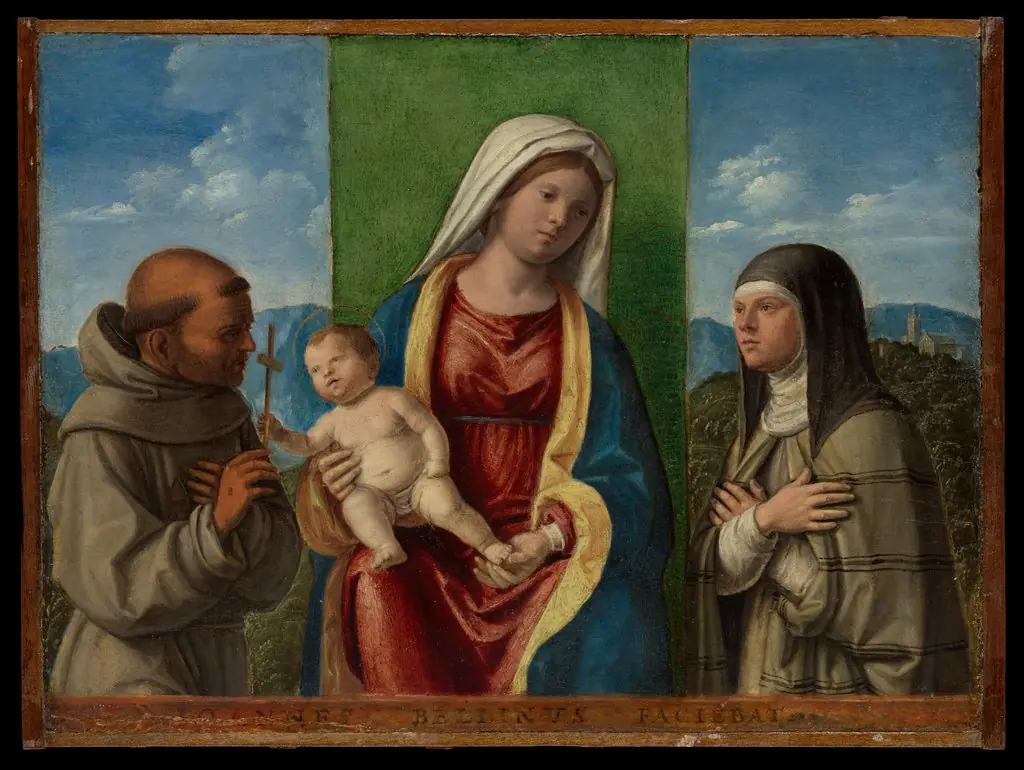 Madonna and Child with Saints Francis and Clare
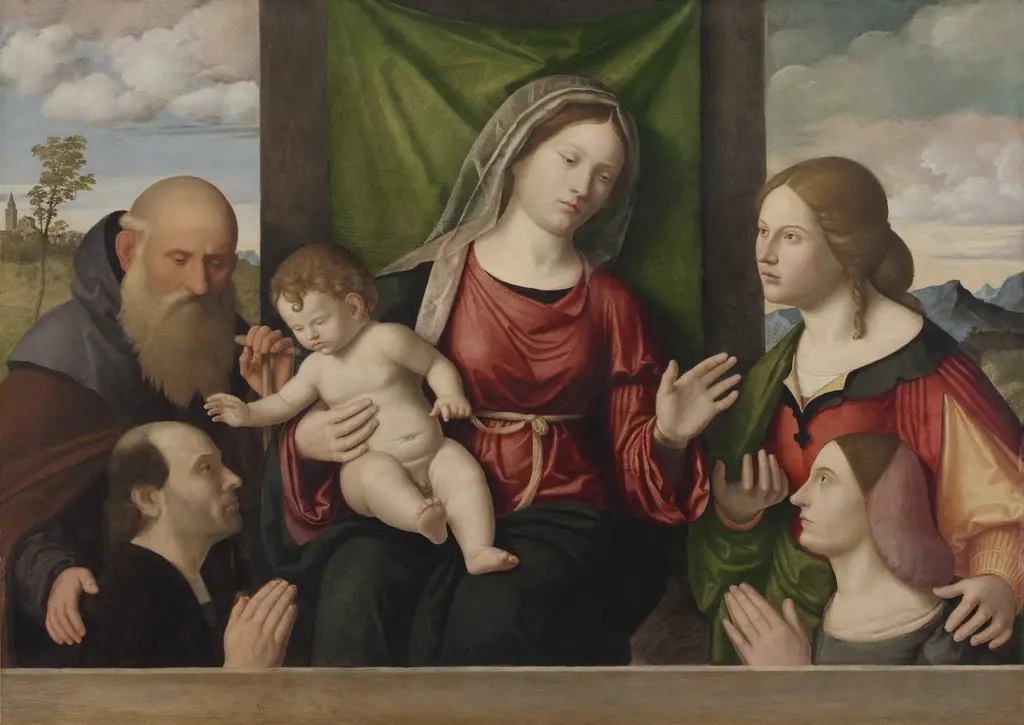 Virgin and Child with Saints and Donors
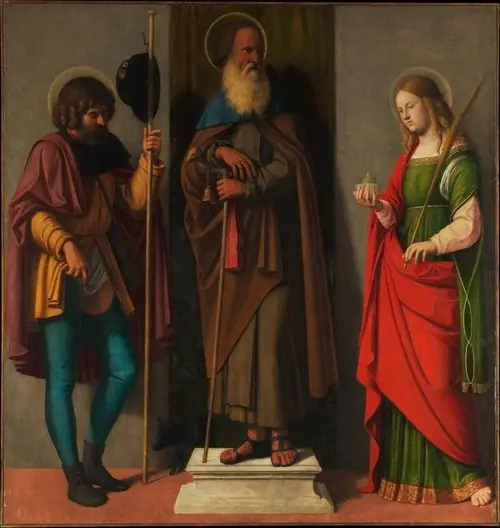 Saints Roch, Anthony Abbot and Lucy
 Saint Helena
 Saint Jerome in the Wilderness
 Virgin and Child
 The Judgement of Midas. The Musical Contest between Apollo and Marsyas