Artwork
Incarnation of Jesus by Piero di Cosimo
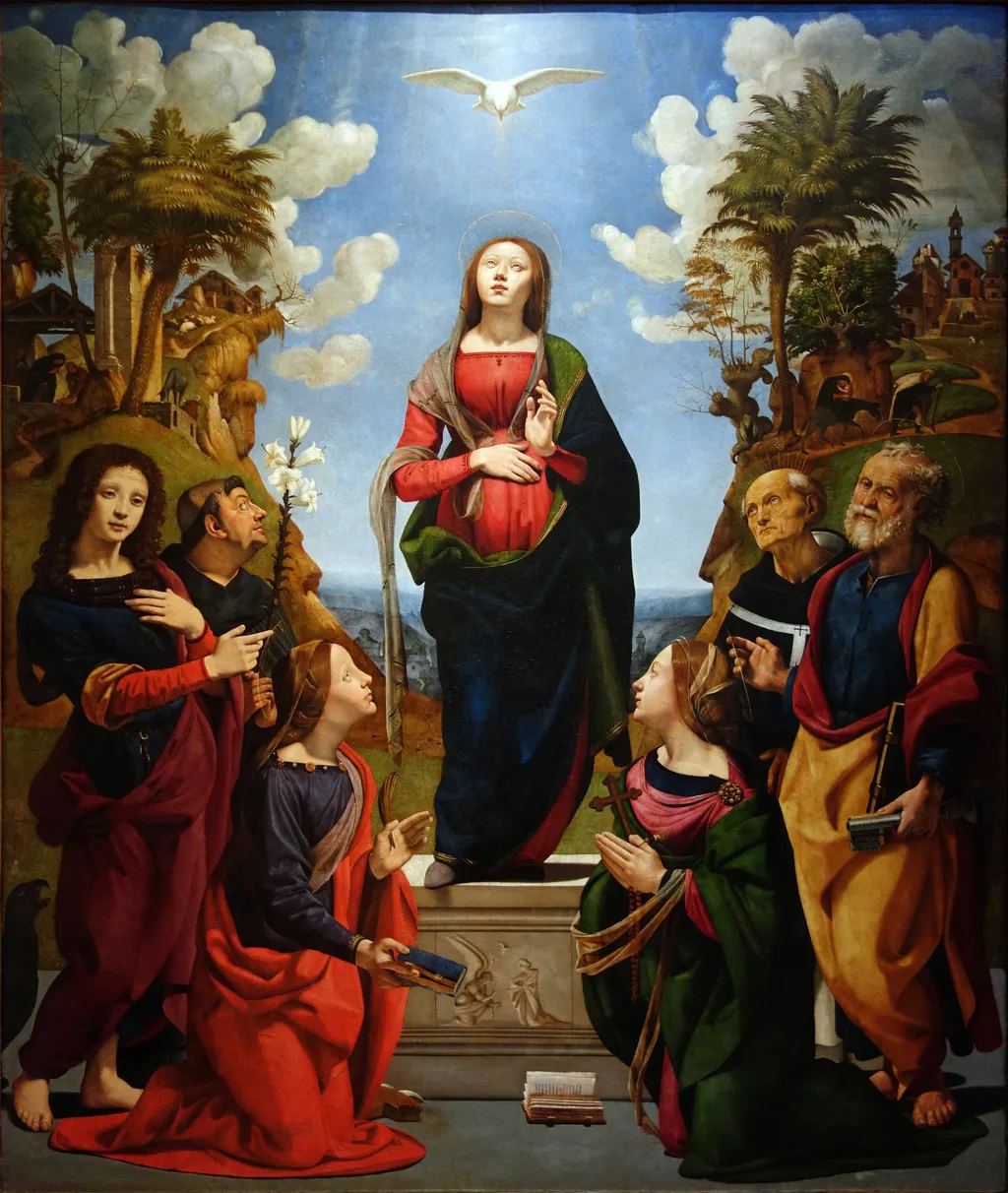
Incarnation of Jesus by Piero di Cosimo is a tempera painting by the Early Renaissance artist Piero di Cosimo. It dates from 1500 and is held in the collection of the Uffizi Gallery.
About this work
This egg tempera painting shows a religious scene with saints and the Virgin Mary. Piero di Cosimo worked on it between 1485 and 1505. It lives in Florence’s Uffizi Gallery today.
The artist used tempera, a paint made with egg yolk. This method was common in the 1400s. The painting mixes bright colors with careful details.
Want to see more? Look up tempera.
Subject & Meaning
Mary stands centrally on a marble pedestal featuring a bas-relief of the Annunciation, her hand resting on her pregnant belly to emphasize the conception.
The painting depicts the rare theological subject of the Incarnation, distinguishing itself from standard Annunciation scenes by focusing on the moment the divine light physically enters the Virgin's womb. Mary stands centrally on a marble pedestal featuring a bas-relief of the Annunciation, her hand resting on her pregnant belly to emphasize the conception. Above her, the Holy Spirit appears as a dove emitting a realistic beam of light rather than traditional golden rays, illuminating a fallen book that serves as a Flemish-inspired still life.
Six saints flank the Virgin in a symmetrical, pyramidal arrangement: John the Evangelist points to Christ within Mary, while Catherine of Alexandria and Margaret of Antioch kneel in the foreground. The background landscape includes rocky spurs displaying narrative scenes of the Nativity, the Announcement to the Shepherds, and the Flight into Egypt. Buildings on the right likely represent the sanctuary of Montesenario, referencing the Servite order who commissioned the work.
Technique & Style
The painting is executed in egg tempera on a wooden panel, measuring 206 cm in height and 172 cm in width. It depicts the Virgin Mary standing centrally on a marble pedestal, with a dove of the Holy Spirit hovering above her, illuminated by a distinct shaft of divine light that bathes her figure and the surrounding scene. Six saints are arranged symmetrically around her: Saint John the Evangelist gestures toward the Virgin's womb, Saint Philip Benizi holds a lily, Saints Catherine of Alexandria and Margaret of Antioch kneel with attributes of martyrdom, and Saints Antoninus and Peter stand in supporting roles. The composition unfolds within a complex landscape of rocky ravines framing scenes from the Nativity, Annunciation to the Shepherds, and the Flight into Egypt, with architectural elements in the distance referencing the Servite monastery of Montesenaro. The work demonstrates a pyramidal composition, careful contrapposto in standing figures, and a blend of devotional symbolism with naturalistic detail.
History & Provenance
The Incarnation of Jesus by Piero di Cosimo was created for the Tebaldi Chapel in the Basilica of the Santissima Annunziata in Florence and was originally installed there with a predella. Cardinal Leopoldo de' Medici acquired the work in 1670, and it entered the Uffizi collection in 1804. The painting is dated to around 1505, with some scholarly debate suggesting a range between 1495 and 1505, and occasionally proposing an earlier date near 1498 based on stylistic analysis. It is an egg tempera work on panel measuring 206 cm in height and 172 cm in width. Preparatory drawings for the composition are documented in the Kunsthalle Bremen and the Biblioteca Reale in Turin, though the former was destroyed during World War II. The work remains in the Uffizi Gallery today.
The painting is held in the Uffizi Gallery in Florence. It originated in the Tebaldi Chapel of the Basilica della Santissima Annunziata, where it was once accompanied by a predella. Cardinal Leopoldo de' Medici acquired the work in 1670, and it was transferred to the Uffizi in 1804, where it remains in the collection.
No specific inventory or accession number is recorded in the available sources, and no exhibition history beyond its successive locations in the Annunziata and the Uffizi is documented.
Context
The Incarnation of Jesus by Piero di Cosimo occupies a distinctive niche in Renaissance art history, particularly within the evolving devotional practices of the late 15th and early 16th centuries. Executed circa 1505, likely in egg tempera on panel measuring 206 x 172 cm (SOURCE 2, SOURCE 4, SOURCE 5), the work was originally commissioned for the Tebaldi Chapel in the Basilica della Santissima Annunziata, Florence (SOURCE 3). Its subsequent acquisition by Cardinal Leopoldo de' Medici in 1670 and transfer to the Uffizi Gallery in 1804 cemented its institutional context (SOURCE 3, SOURCE 4). Unlike more common depictions of the Annunciation, this painting presents the Incarnation as a distinct theological moment, focusing on the Virgin Mary's physical and spiritual reception of Christ, symbolized by the dove of the Holy Spirit descending upon her (SOURCE 3, SOURCE 6). Art historians note its complex iconography, integrating Marian devotion with narrative elements from the Life of the Virgin, including the Adoration of the Magi, Annunciation to the Shepherds, and Flight to Egypt within the landscape (SOURCE 3, SOURCE 6). The composition employs a pyramidal structure centered on Mary, flanked by six saints in a carefully balanced arrangement that directs visual focus to the central figure (SOURCE 3, SOURCE 6). This arrangement, combined with the intricate landscape featuring rocky outcrops and narrative scenes, reflects Piero di Cosimo's characteristic blend of meticulous detail and symbolic complexity within the broader context of Florentine religious art (SOURCE 6). Its placement within the Uffizi's collection, alongside works by other Renaissance masters, underscores its significance as a representative example of devotional painting from the period, studied for both its technical execution and its unique theological interpretation (SOURCE 5). Scholarship continues to engage with its dating, with some attributing it to the late 1490s based on comparative stylistic analysis with Leonardo da Vinci's influence, though the consensus places it firmly in the early 16th century (SOURCE 5).
Legacy
Piero di Cosimo’s *Incarnation of Jesus* has long been recognized for its inventive approach to a rarely depicted theological subject. Scholars note the work’s originality in merging the Incarnation with a sacra conversazione, a compositional choice that distinguishes it within Renaissance religious art (source 5). The painting’s dynamic use of light, departing from conventional golden rays to a naturalistic beam illuminating the Virgin, alongside its Flemish-inspired still-life details, reflects Piero’s idiosyncratic synthesis of influences, including Leonardo da Vinci (sources 3, 5, 6). Acquired by Cardinal Leopoldo de’ Medici in 1670 and later transferred to the Uffizi, the work entered a major public collection, ensuring its visibility to subsequent generations of artists and viewers (sources 3, 4, 5, 6). Its inclusion in the Uffizi’s holdings has cemented its reputation as a key example of Piero’s eccentric yet innovative late-Quattrocento style, often cited in discussions of his delayed engagement with High Renaissance developments (sources 3, 5).
Own this work as a print
Artist & collection

Artist
Piero di Cosimo, also known as Piero di Lorenzo, was an Italian Renaissance painter, who continued to use an essentially Early Renaissance style into the 16th century.

 Himmelfahrt Mariens
 Madonna and Child Enthroned with Saints
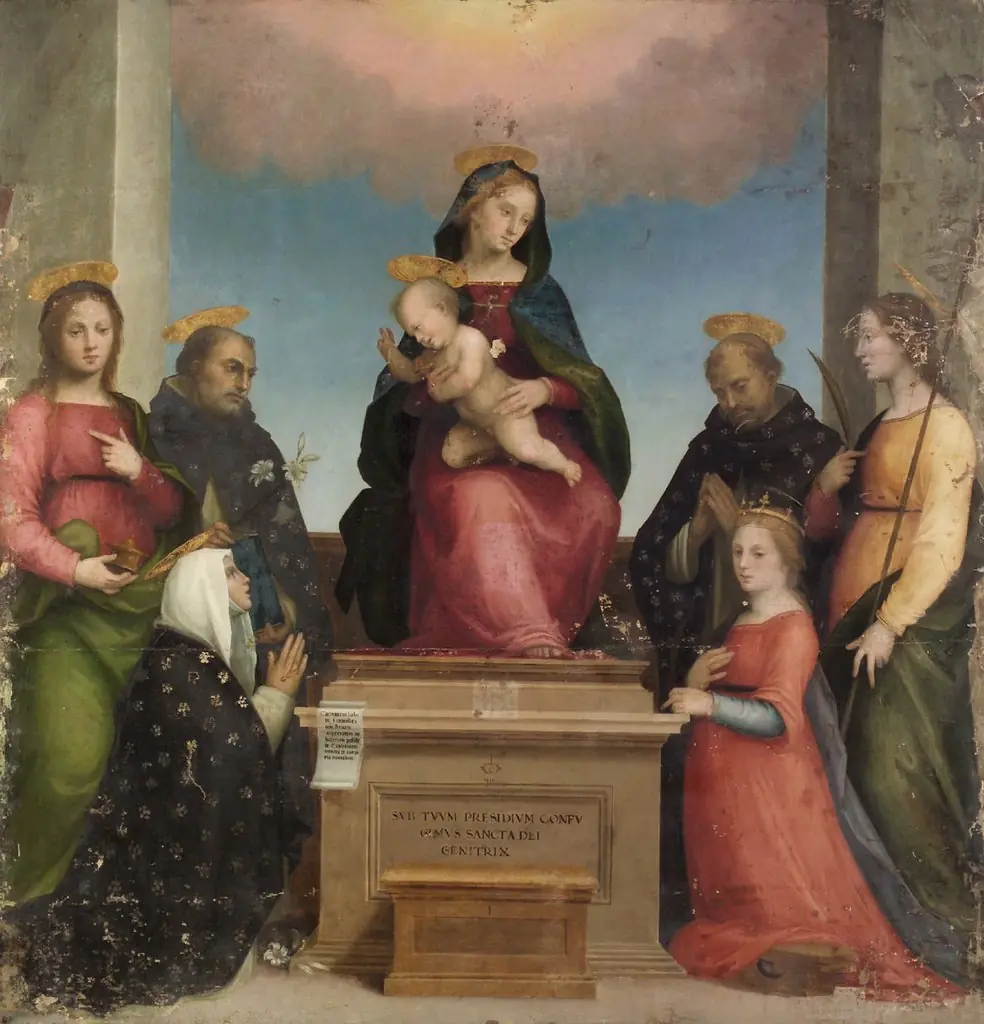 Maria mit Kind und den Hll. Katharina von Siena, Katharina von Alexandrien, Maria Magdalena, Dominikus, Petrus Martyr und einer Märtyrerin
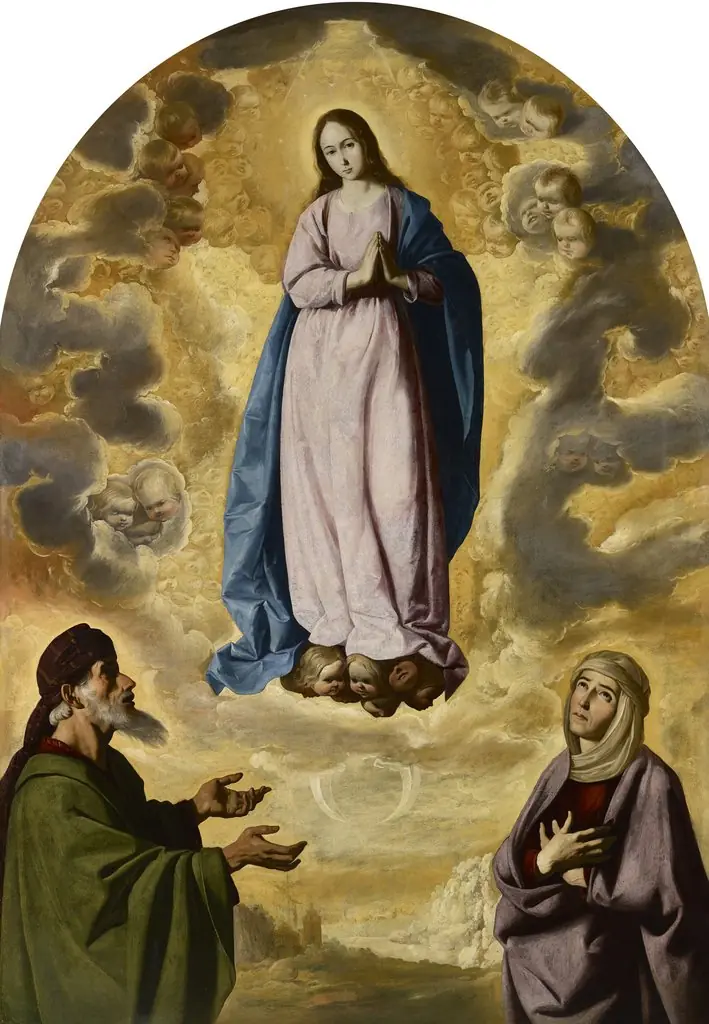 The Immaculate Conception with Saint Joachim and Saint Anne
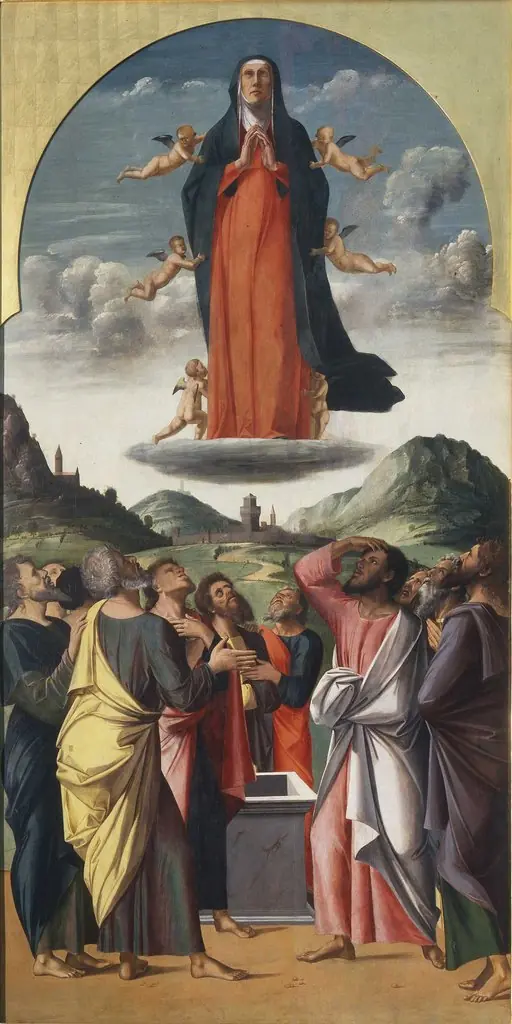 Annunciation
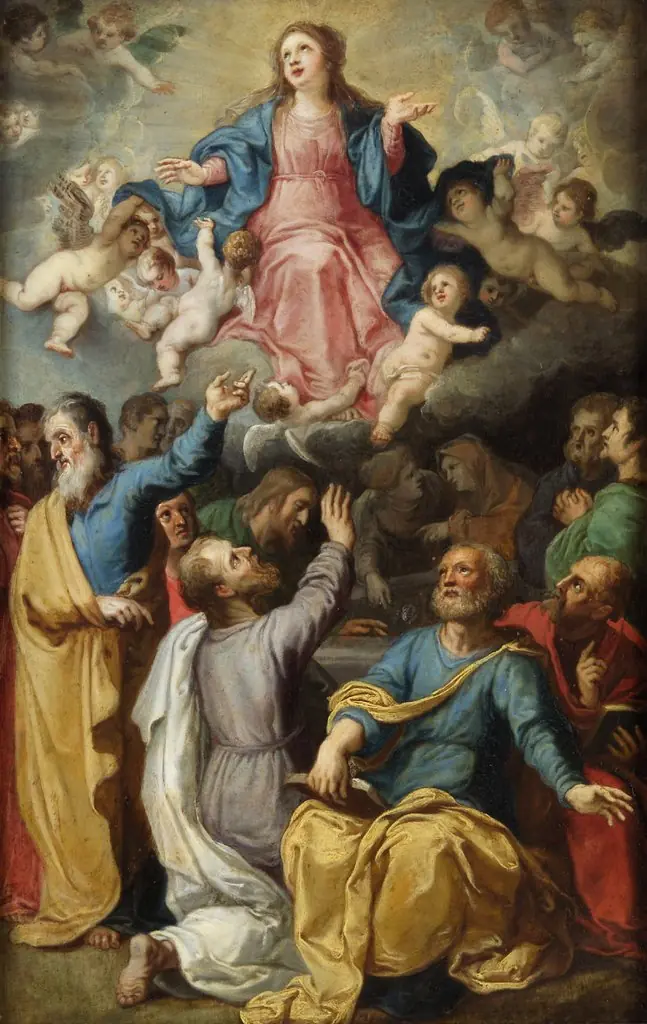 Assumption of Mary
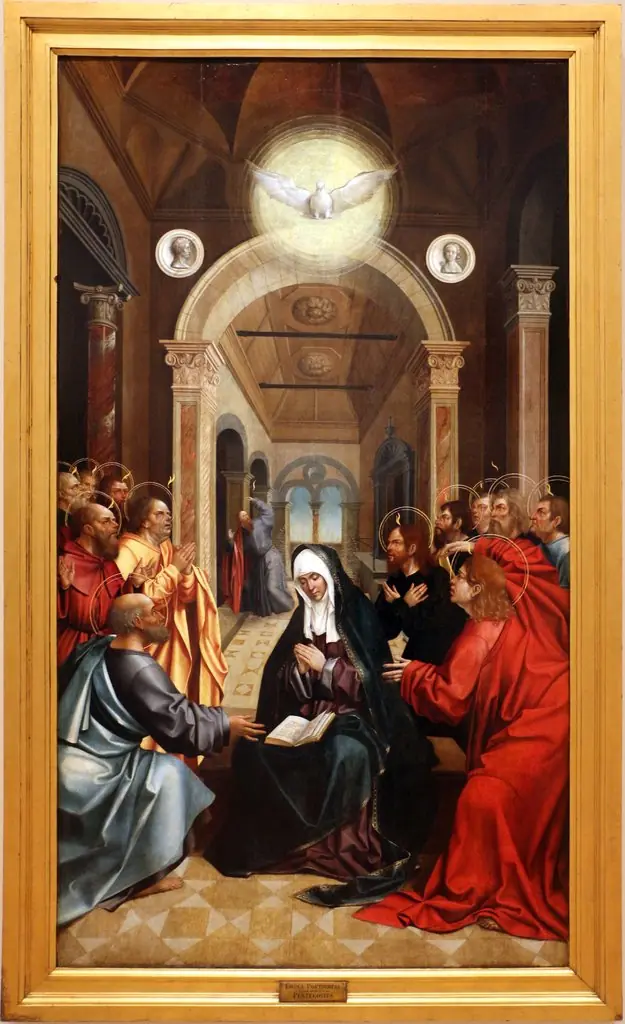 Pentecost
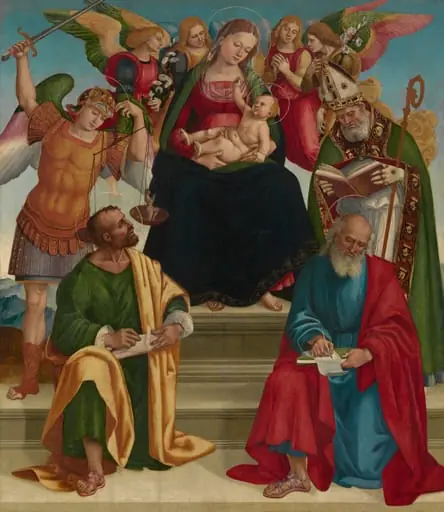 Madonna and Child with Saints and Angels
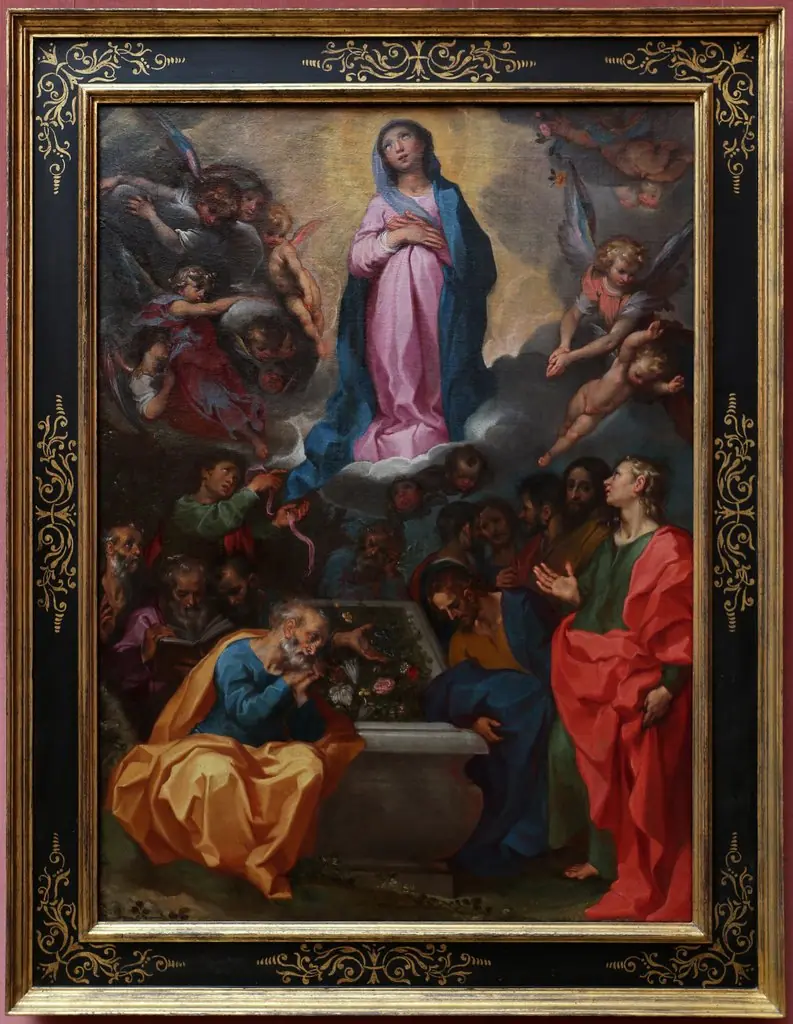 Die Himmelfahrt Mariae
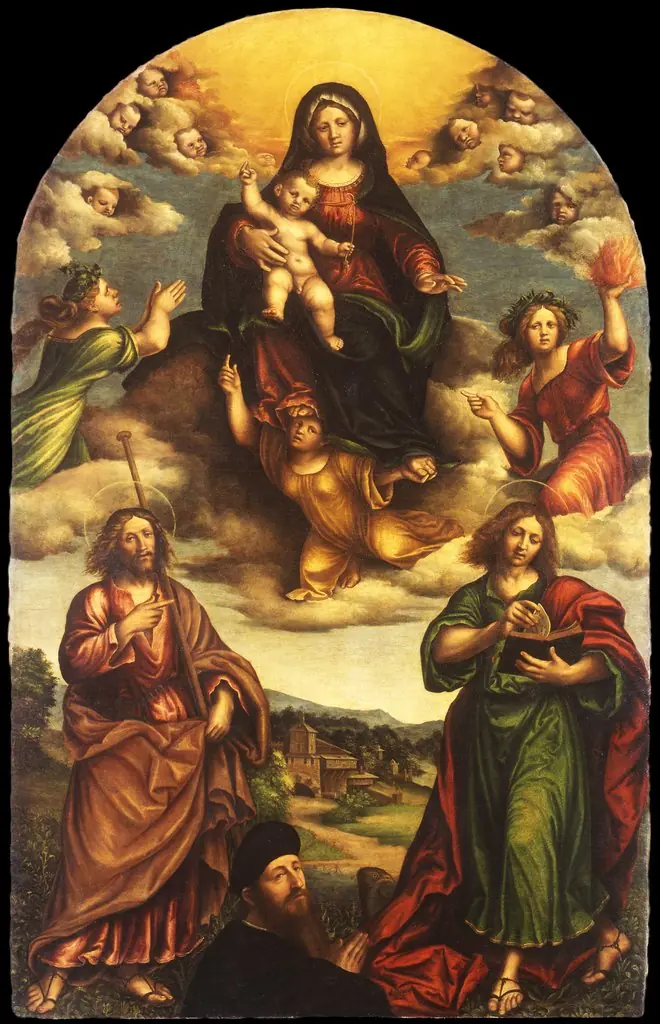 The Virgin with Blessing Child and Saints
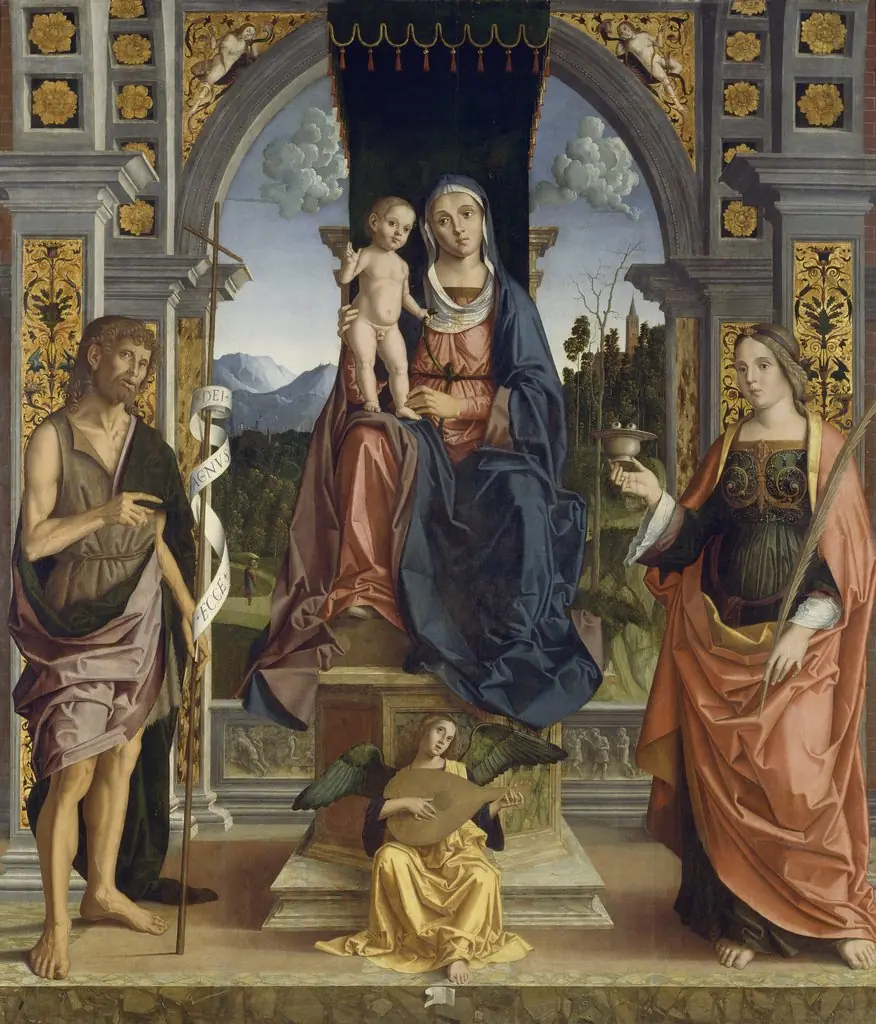 The Virgin and Child Enthroned, with Saints John the Baptist and Lucy
- Ascension of Christ