Artwork
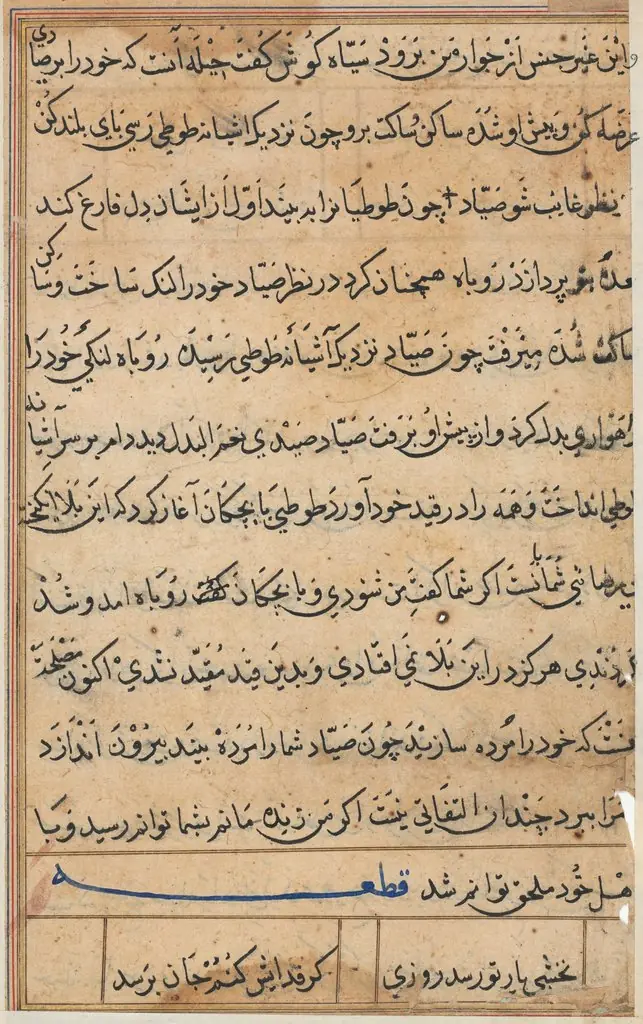
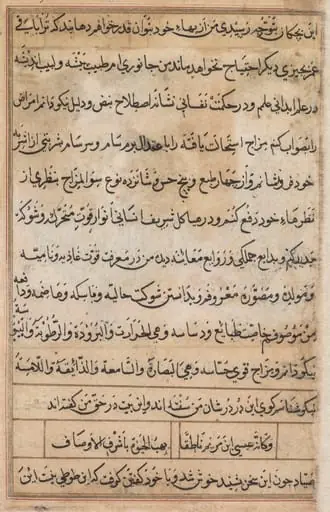
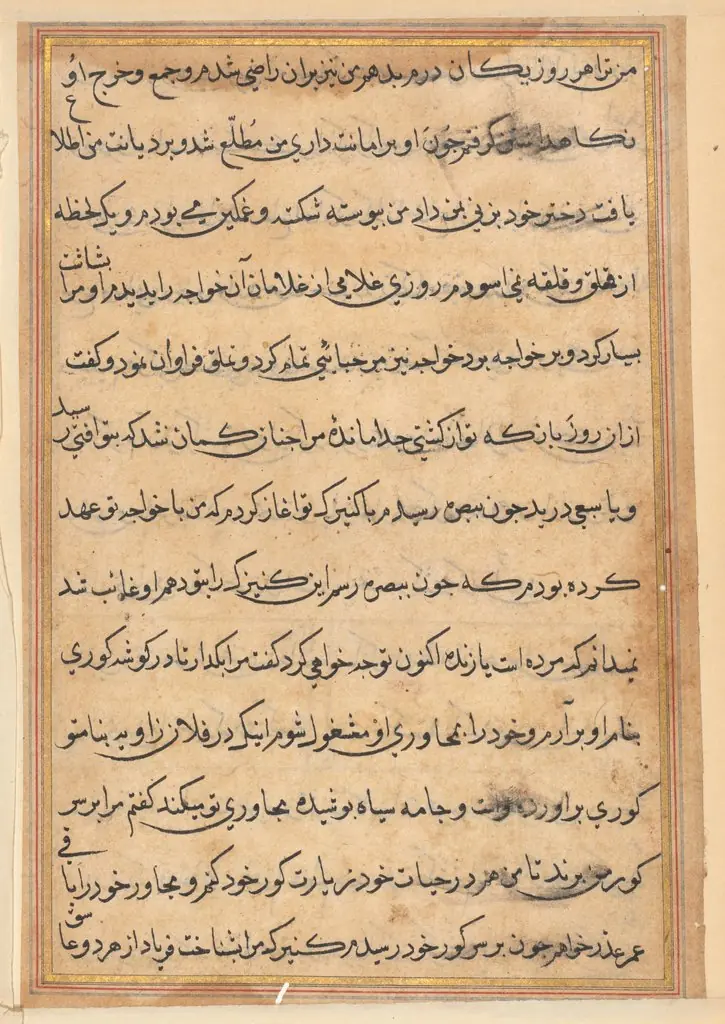
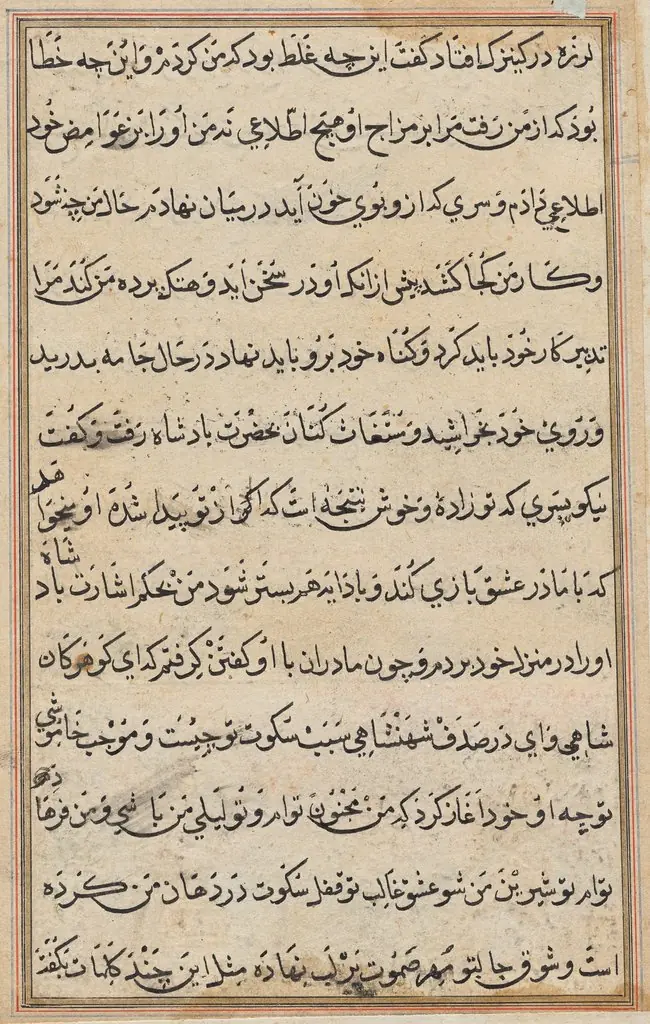
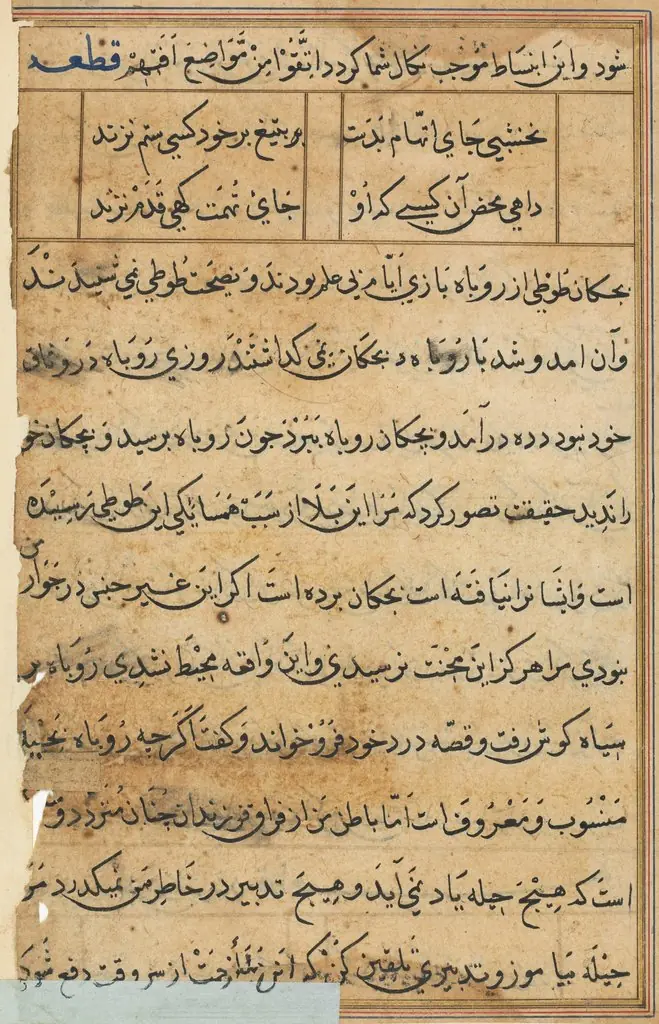
Page from Tales of a Parrot (Tuti-nama): text page
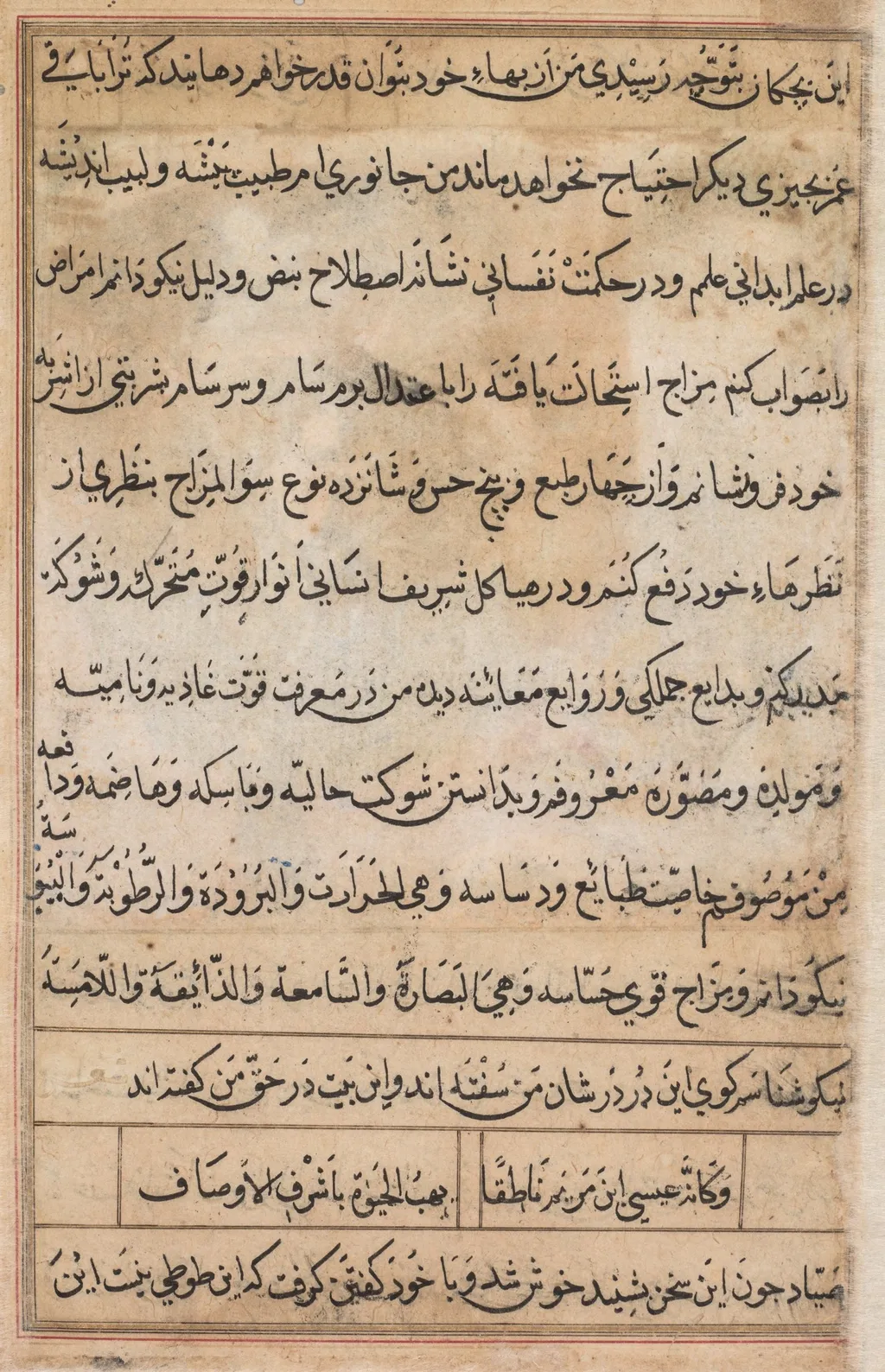
Page from Tales of a Parrot (Tuti-nama): text page is an unspecified painting by the Mughal Painting artist Basawan. It dates from 1560 and is held in the collection of the Cleveland Museum of Art. This illuminated page originates from the 16th‑century Persian manuscript known as the Tales of a Parrot (Tuti‑nama).
About this work
Technique & Style
Executed circa 1560 by Basawan, it functions as a text page within the Tuti-nama manuscript, reflecting the narrative illustration style of the period.
The page is a miniature painted on paper, exemplifying Mughal book illustration technique with fine brushwork and restrained coloration. Executed circa 1560 by Basawan, it functions as a text page within the Tuti-nama manuscript, reflecting the narrative illustration style of the period. The work originates from the Mughal imperial workshop and is housed in the Cleveland Museum of Art collection.
Formal qualities include delicate line rendering, flattened spatial depth, and a focus on decorative patterning characteristic of 16th-century Indian manuscript painting. The handling of figures and ornamental borders demonstrates the synthesis of Persianate compositional conventions with indigenous Indian sensibilities.
Condition details are not specified in available documentation, but the work is cataloged as a painting within the museum's South Asian art holdings.
History & Provenance
Created in 1560 within the Mughal Empire, this text page from the Tales of a Parrot (Tuti-nama) is attributed to the artist Basawan. The work was produced during the early phase of Mughal manuscript illumination, a period when Basawan was active. While the specific commissioning patron for this individual leaf is not detailed in the provided records, it originated as part of a larger manuscript cycle.
The page subsequently entered the collection of the Cleveland Museum of Art, where it is currently held under the accession number 1962.279.35.b.
Context
Basawan, a prominent Mughal painter active in the late 16th century, created a text page from the Tuti-nama (c. 1560), exemplifying the collaborative manuscript production within the imperial atelier. This folio, housed in the Cleveland Museum of Art, reflects the synthesis of Persian narrative traditions with Indian artistic sensibilities characteristic of Akbar's reign, situating the work within the broader context of Mughal manuscript illumination where text and image functioned interdependently. Scholarship emphasizes Basawan's role in naturalistic figure rendering and dynamic compositions, influencing later Rajput and Deccan painting schools, though his specific contributions remain studied through extant manuscript attributions rather than documented biographical records.
Overview
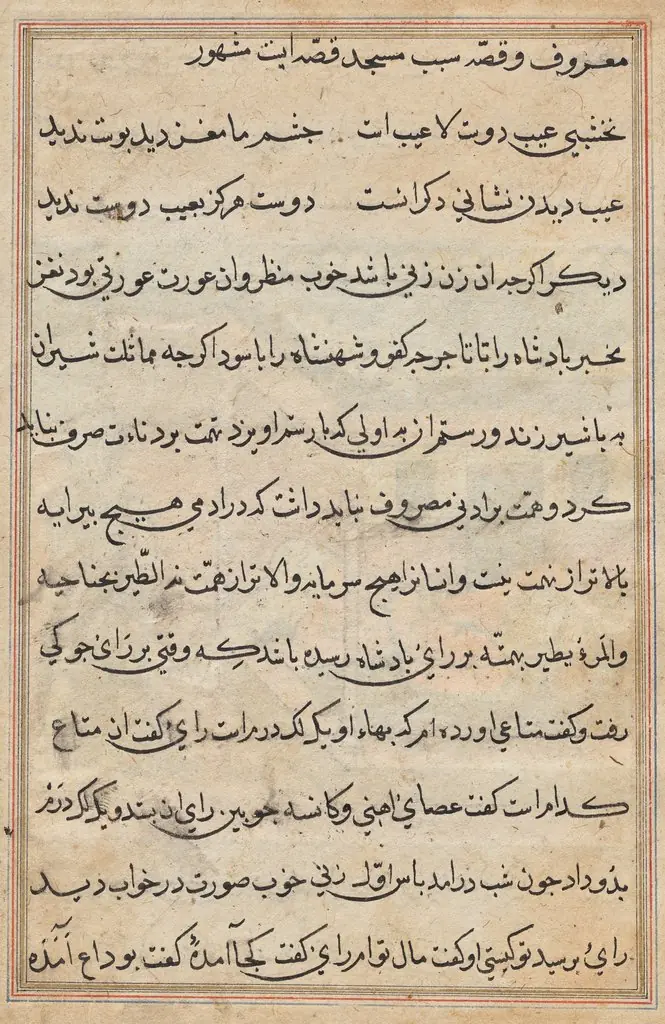
This illuminated page originates from the 16th‑century Persian manuscript known as the Tales of a Parrot (Tuti‑nama). Executed by the artist Baswan around 1560, it consists of a single sheet of paper densely covered with black calligraphic text, framed at the bottom by a thin red border containing a brief inscription. The piece is part of the collection of the Cleveland Museum of Art.
Subject & Meaning
The page presents a segment of the Tuti‑nama narrative, a moral and didactic collection of stories traditionally illustrated for courtly audiences. The densely packed script conveys the tale’s verses, while the modest red marginal note may identify the section or provide a scribe’s comment, reflecting the work’s function as a literary, rather than purely decorative, object.
Own this work as a print
Artist & collection
Artist
Basāwan, or Basāvan, was an Indian miniature painter in the Mughal style. He was known by his contemporaries as a skilled colorist and keen observer of human nature, and for his use of portraiture in the illustrations…

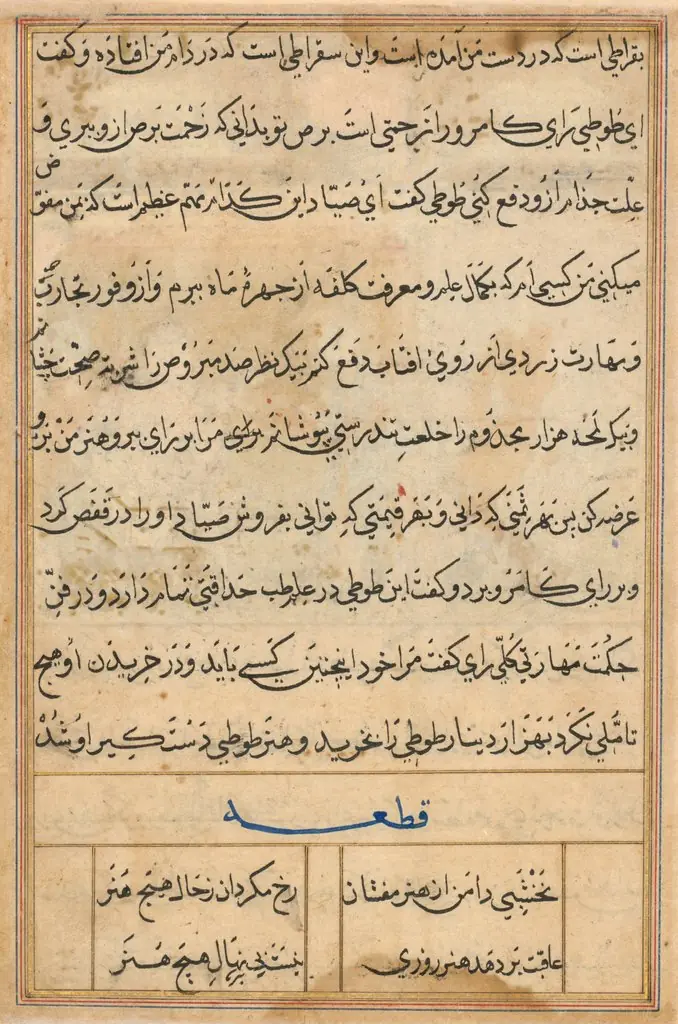 Page from Tales of a Parrot (Tuti-nama): text page
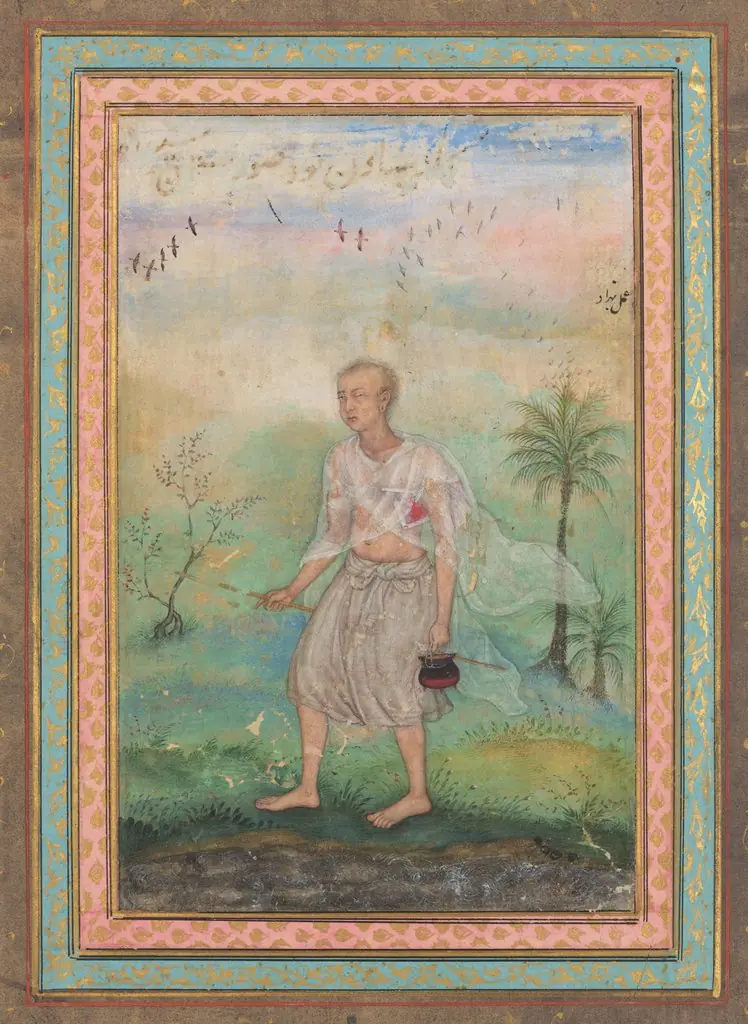 Jain Ascetic Walking Along a Riverbank
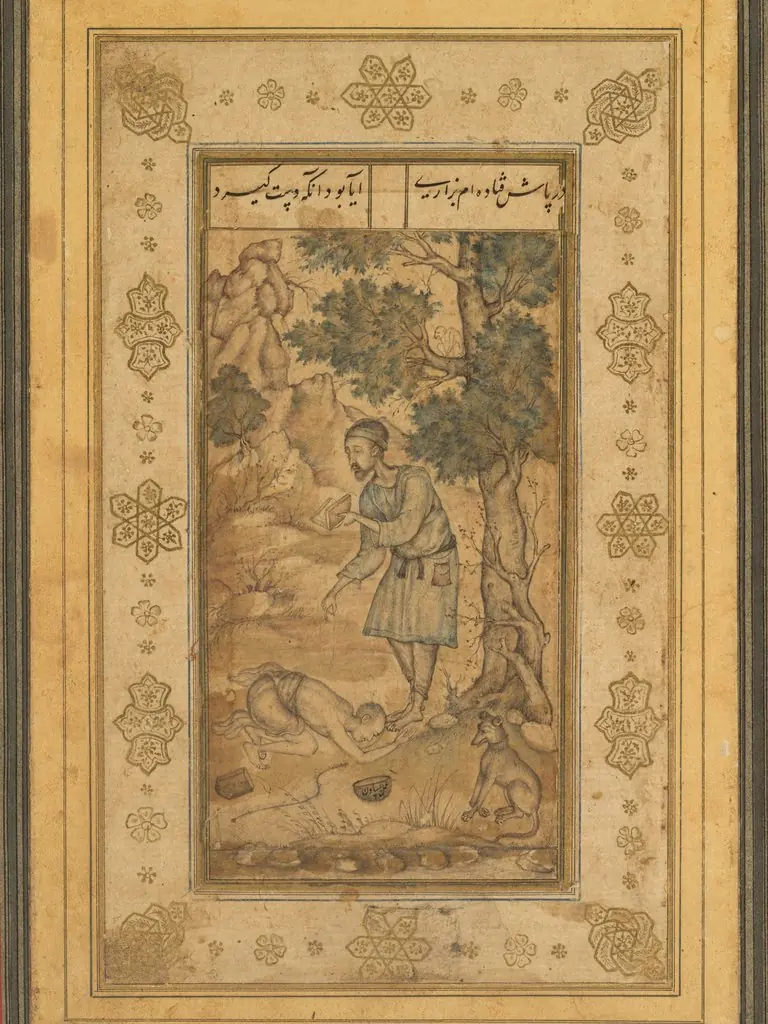 A mendicant bowing before a holy man, from the Prince Salim Album
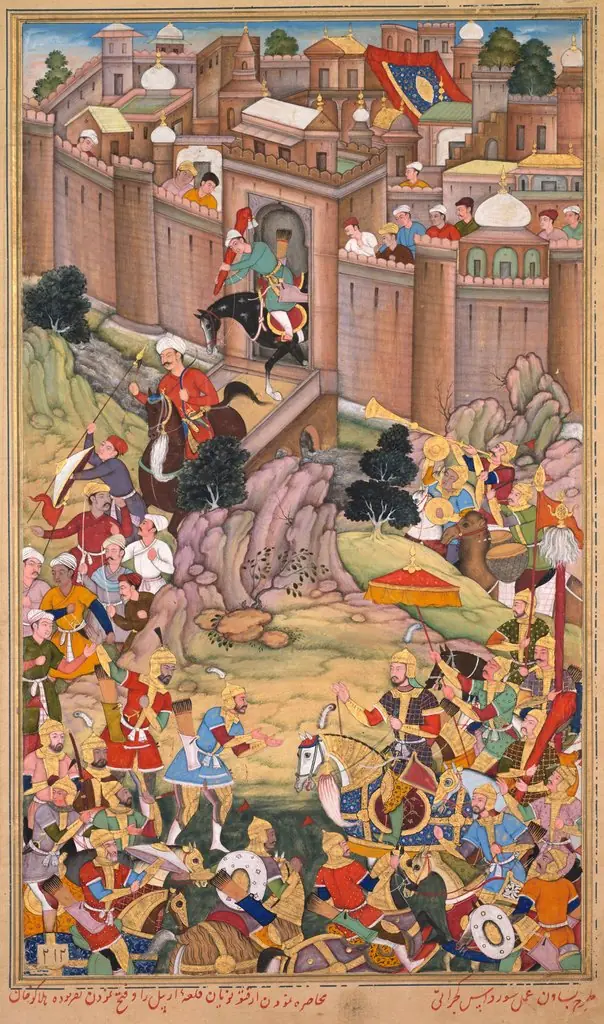 The siege of Arbela in the era of Hulagu Khan, from a Chingiz-nama (Book of Chingiz Khan) of the Jami al-tavarikh (Compendium of Chronicles) of Rashid al-Din (Persian, 1247–1318)
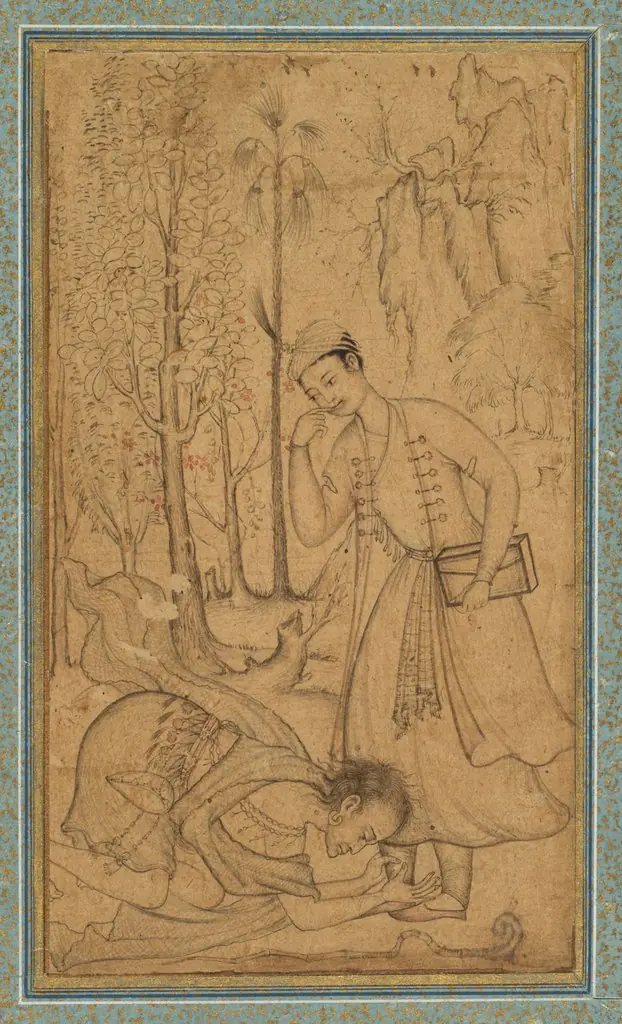 A holy man prostrating himself before a learned prince
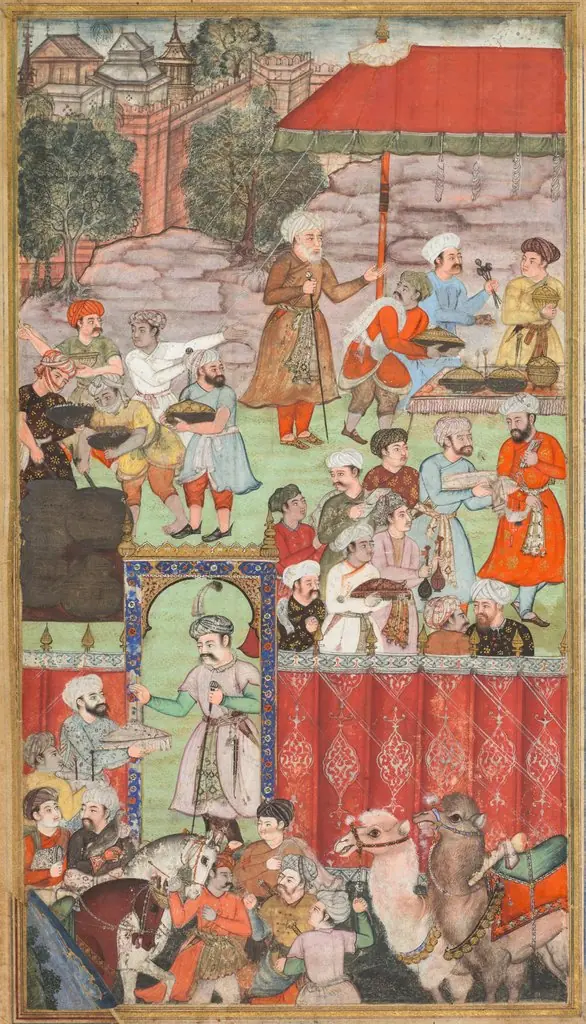 A feast for Babur hosted by his half-brother Jahangir Mirza in Ghazni in May 1505, from a Babur-nama (Memoirs of Babur)
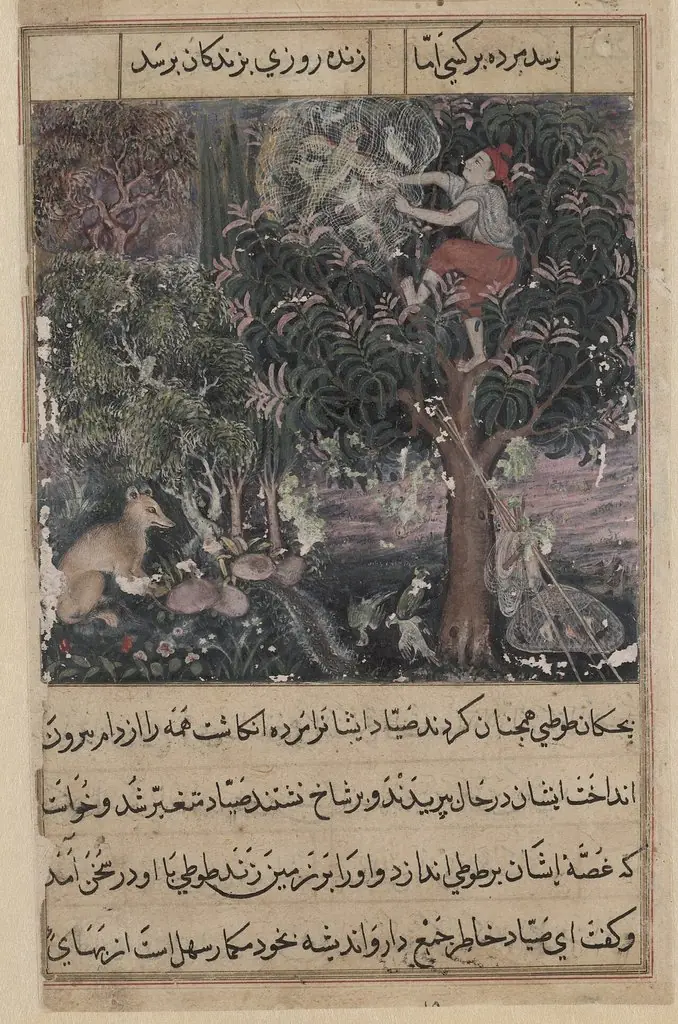 The hunter throws away the baby parrots, who pretend to be dead, and captures the mother, from a Tuti-nama (Tales of a Parrot): Fifth Night
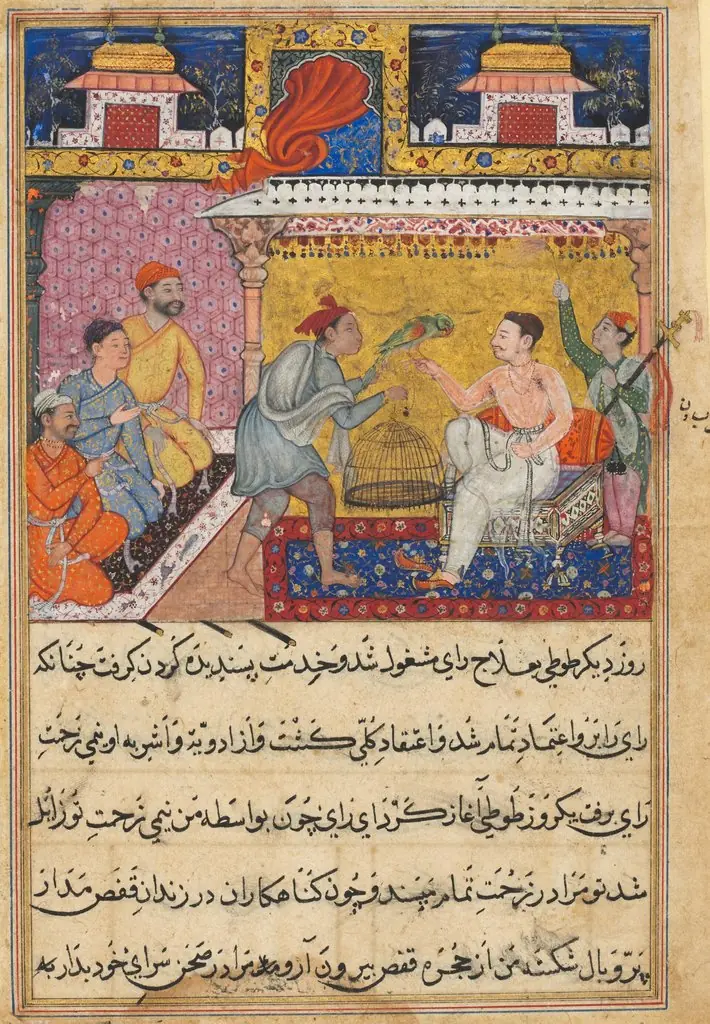 The hunter offers the mother parrot to the king of Kamarupa, from a Tuti-nama (Tales of a Parrot): Fifth Night
 Page from Tales of a Parrot (Tuti-nama): text page
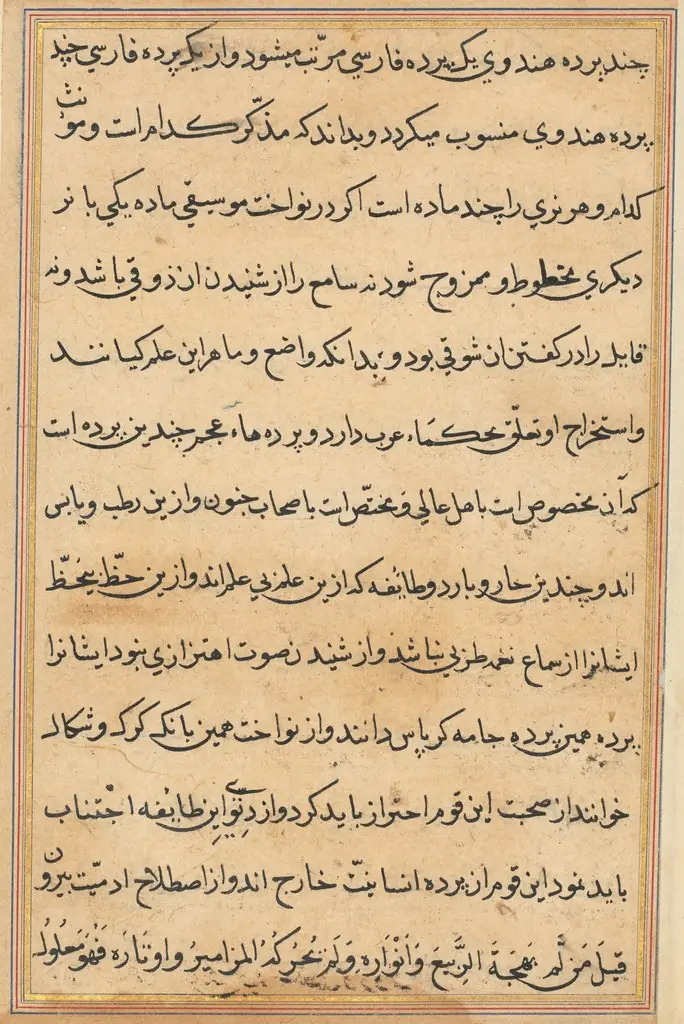 Page from Tales of a Parrot (Tuti-nama): text page
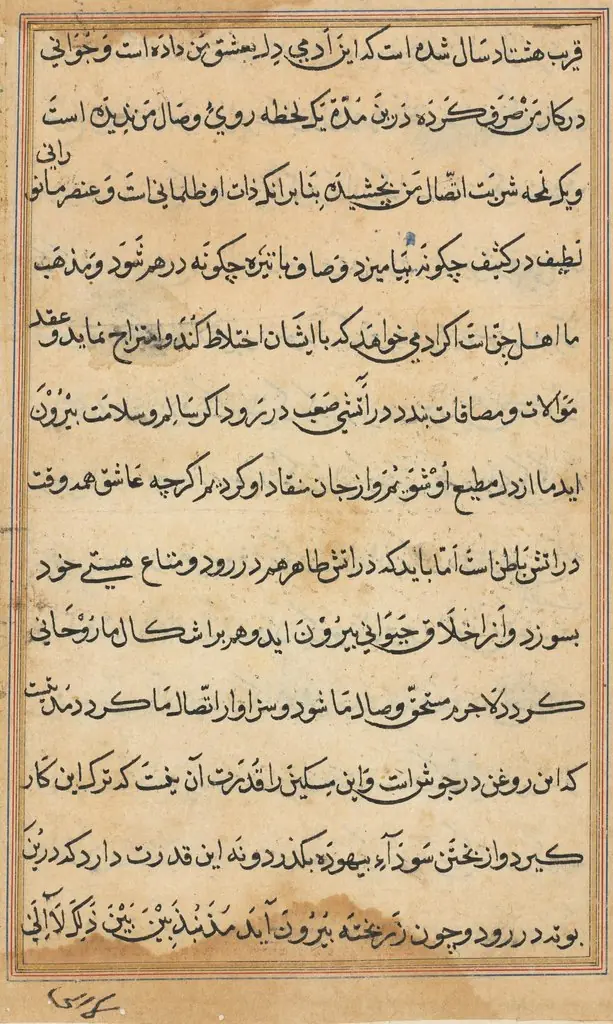 Page from Tales of a Parrot (Tuti-nama): text page
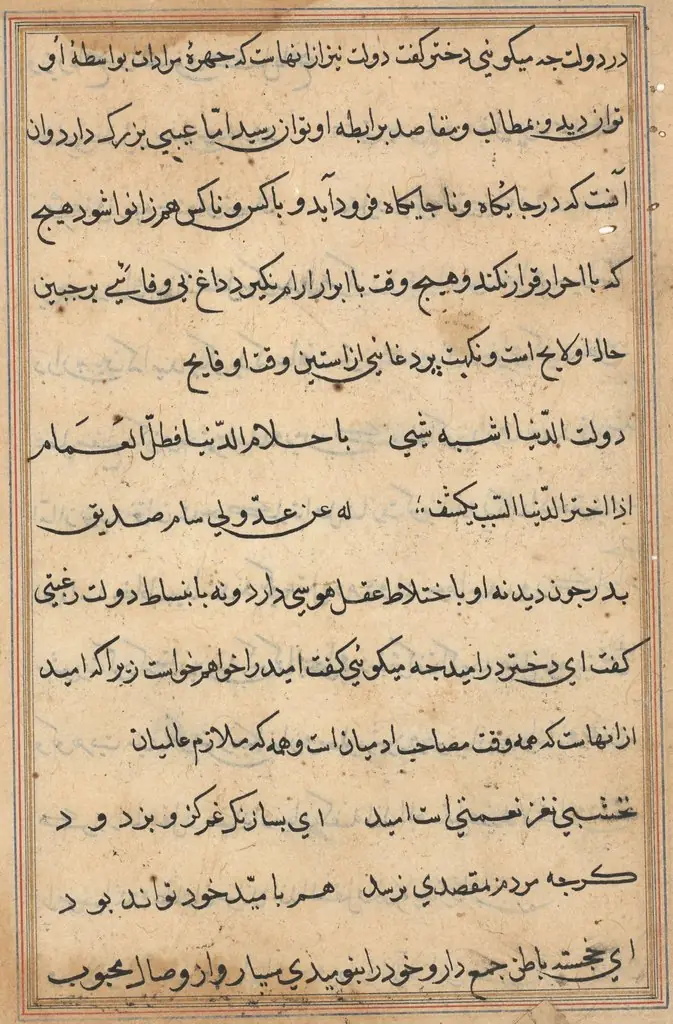 Page from Tales of a Parrot (Tuti-nama): text page
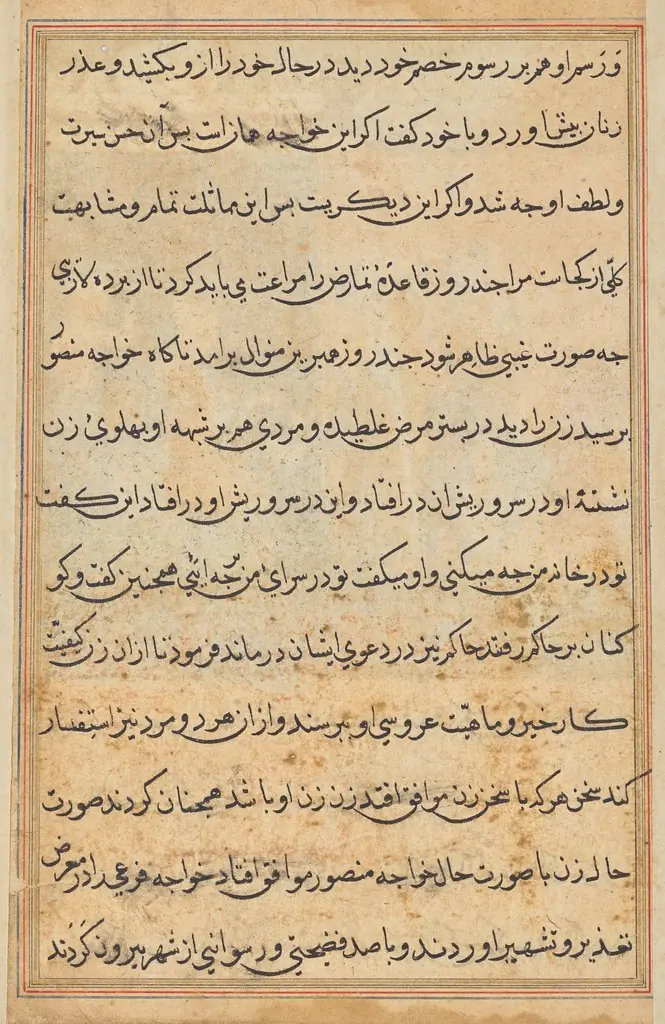 Page from Tales of a Parrot (Tuti-nama): text page
 Page from Tales of a Parrot (Tuti-nama): text page
 Page from Tales of a Parrot (Tuti-nama): text page
 Page from Tales of a Parrot (Tuti-nama): text page
 Page from Tales of a Parrot (Tuti-nama): text page