Artwork
Jain Ascetic Walking Along a Riverbank
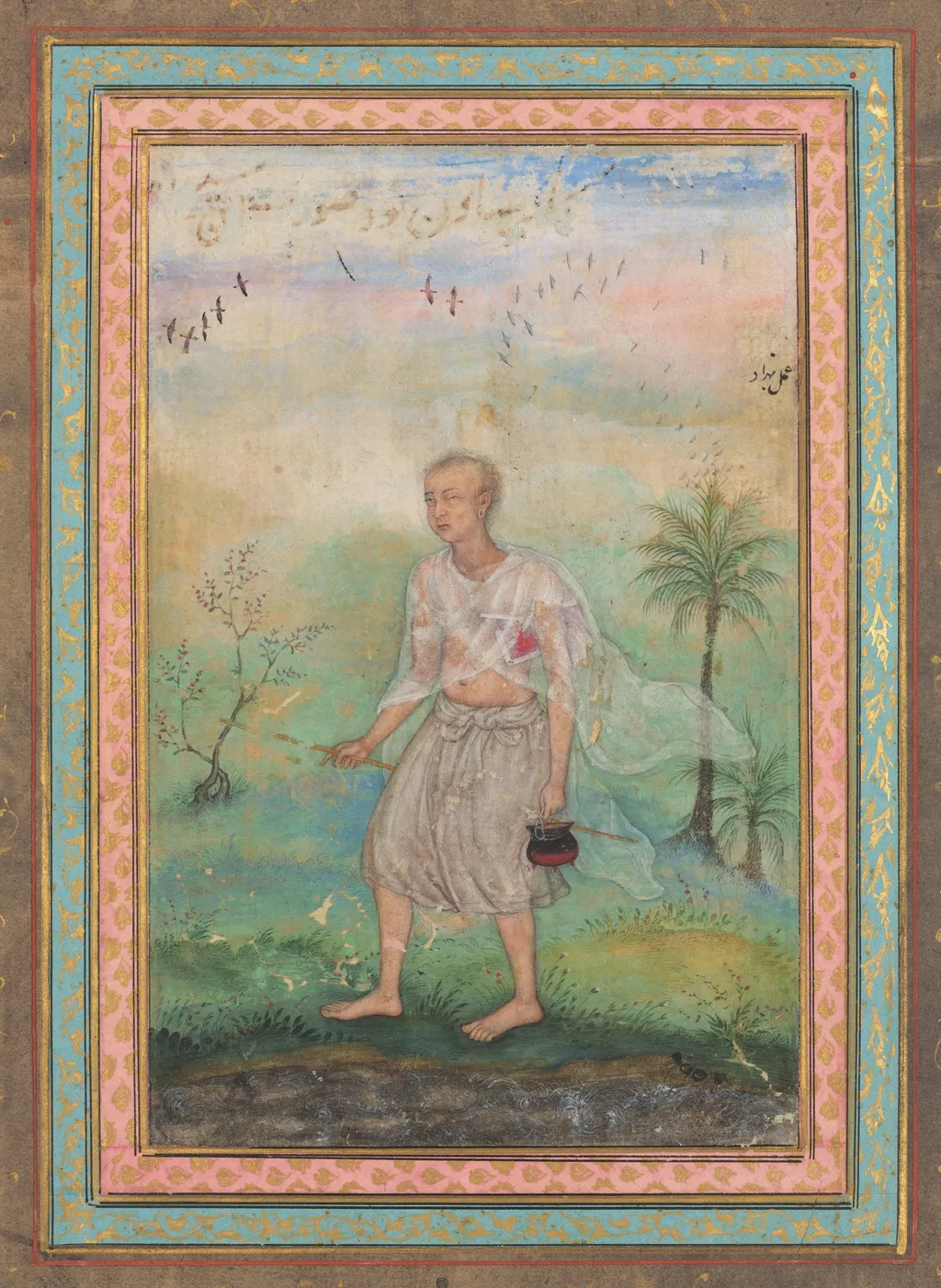
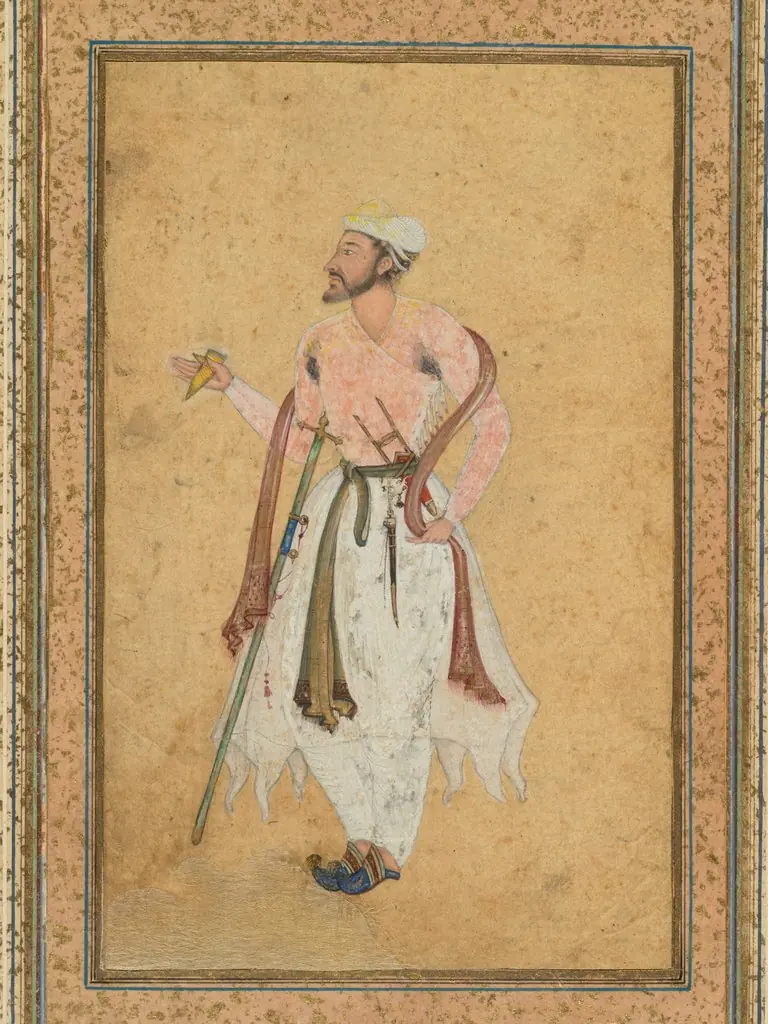
Jain Ascetic Walking Along a Riverbank is an unspecified painting by the Mughal Painting artist Basawan. It dates from 1600 and is held in the collection of the Cleveland Museum of Art. Created around 1600 by the Indian painter Baswan, this small-scale work depicts a solitary ascetic strolling beside a river.
About this work
Technique & Style
The painting is executed in tempera on paper, depicting a Jain ascetic in motion along a riverbank with subtle gradations of line and muted earth tones.
The painting is executed in tempera on paper, depicting a Jain ascetic in motion along a riverbank with subtle gradations of line and muted earth tones. The composition emphasizes fluid drapery and delicate contour work characteristic of Basawan’s Mughal-era style, with fine brush handling that conveys both spiritual stillness and physical movement. The support is paper, typical of Indian miniatures from the period, and the work retains its original handling integrity with no noted conservation interventions.
Formal qualities include restrained color palette, precise draftsmanship, and a balanced spatial arrangement that reflects the synthesis of Persian miniature traditions with indigenous Indian sensibilities.
History & Provenance
The painting Jain Ascetic Walking Along a Riverbank is attributed to the Mughal court artist Basawan and dated to circa 1600, placing its creation within the Mughal Empire. No surviving record identifies a specific patron or commission for the work. Its modern provenance begins with its acquisition by the Cleveland Museum of Art, where it entered the collection in 1967 under accession number 1967.244 and has remained there since. Earlier ownership history is not documented in the available sources.
The painting Jain Ascetic Walking Along a Riverbank is held in the collection of the Cleveland Museum of Art in Cleveland. The work, created by the artist Basawan around 1600, bears the inventory number 1967.244. This attribution and accession detail are recorded in the museum's holdings for the piece, which originated in the Mughal Empire.
Context
Created around 1600 by the Mughal artist Basawan, Jain Ascetic Walking Along a Riverbank exemplifies the sophisticated synthesis of Persian and Indian traditions characteristic of the late sixteenth-century Mughal Empire. Basawan, active from approximately 1560 to 1600, was a pivotal figure in the imperial atelier, known for his innovative approach to portraiture and narrative illustration. This work, now held in the collection of the Cleveland Museum of Art, reflects the era's growing interest in depicting diverse religious subjects and naturalistic landscapes.
The painting serves as a significant testament to the artistic flourishing under the Mughal court, where Basawan's mastery helped define the visual language of the period.
Overview
Created around 1600 by the Indian painter Baswan, this small-scale work depicts a solitary ascetic strolling beside a river. The figure is barefoot, clad in a simple white robe, and carries a modest pot and a walking stick. The surrounding landscape features a wet, grassy bank, a flowering tree, a palm, and a pale sky dotted with birds, all framed by decorative borders of pink, blue and gold motifs.
Subject & Meaning
The central figure represents a Jain mendicant, embodying the religious ideals of renunciation and humility. His calm, weary expression and modest attire convey a life of ascetic discipline, while the act of walking along the river suggests a contemplative journey toward spiritual purification.
Own this work as a print
Artist & collection
Artist
Basāwan, or Basāvan, was an Indian miniature painter in the Mughal style. He was known by his contemporaries as a skilled colorist and keen observer of human nature, and for his use of portraiture in the illustrations…

 Page from Tales of a Parrot (Tuti-nama): text page
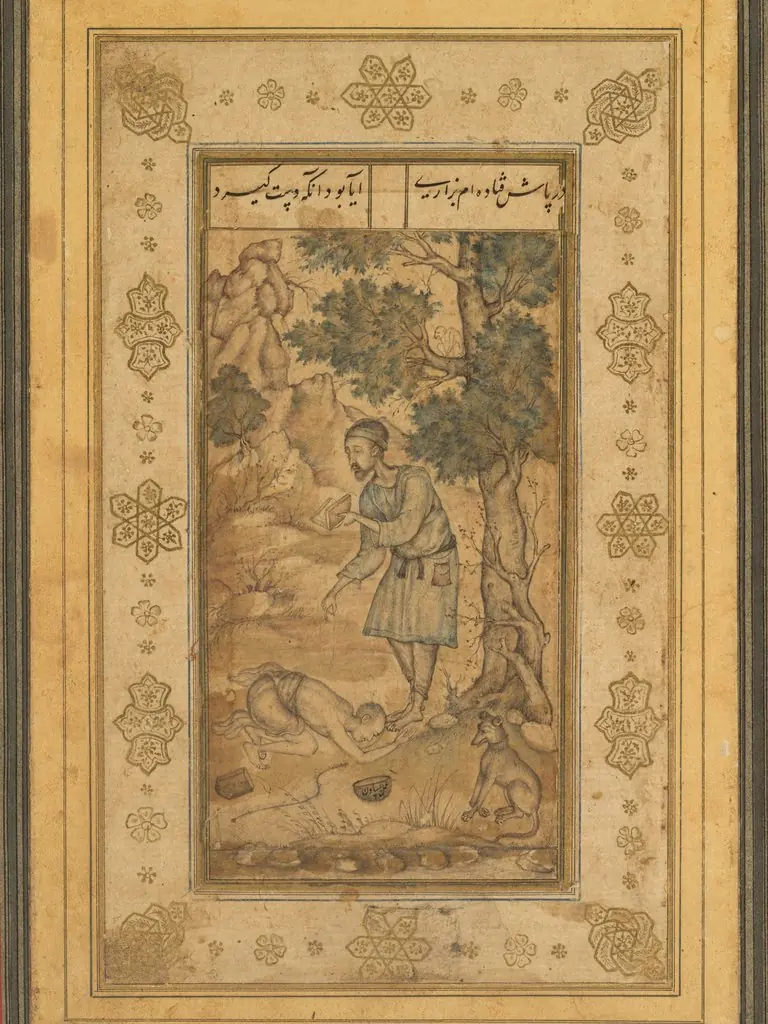 A mendicant bowing before a holy man, from the Prince Salim Album
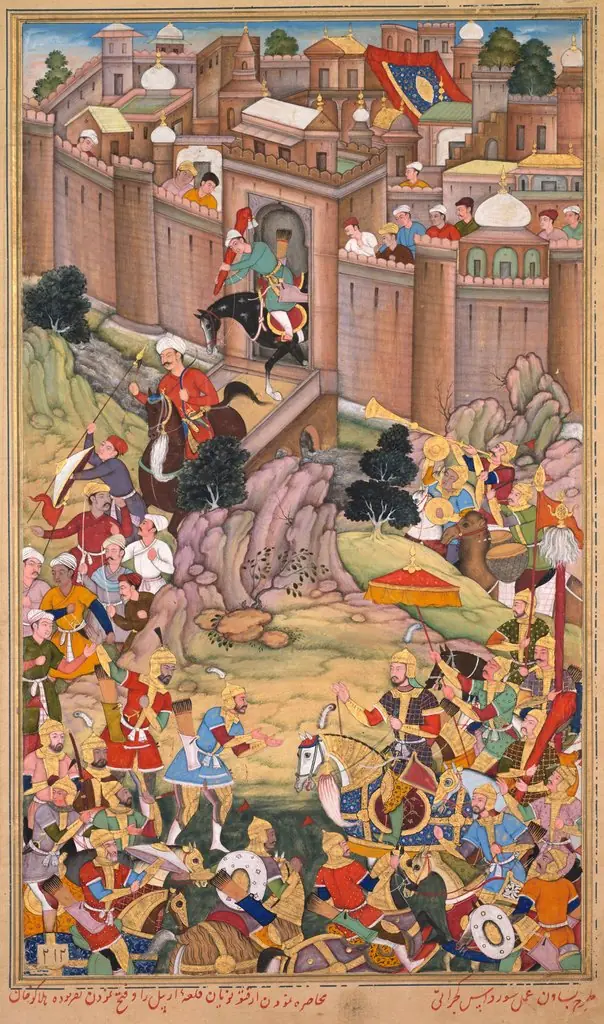 The siege of Arbela in the era of Hulagu Khan, from a Chingiz-nama (Book of Chingiz Khan) of the Jami al-tavarikh (Compendium of Chronicles) of Rashid al-Din (Persian, 1247–1318)
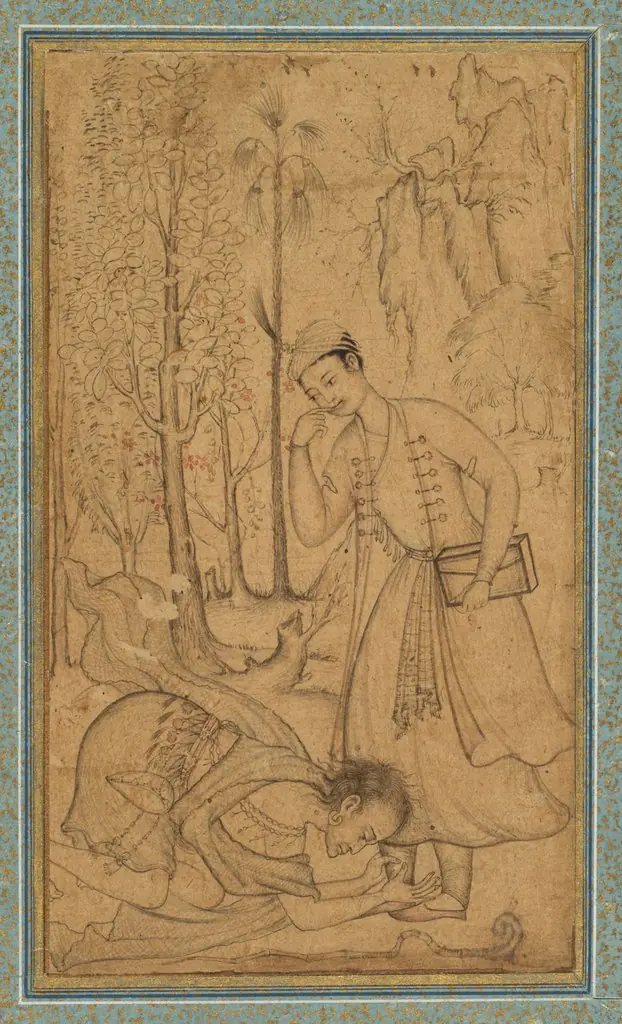 A holy man prostrating himself before a learned prince
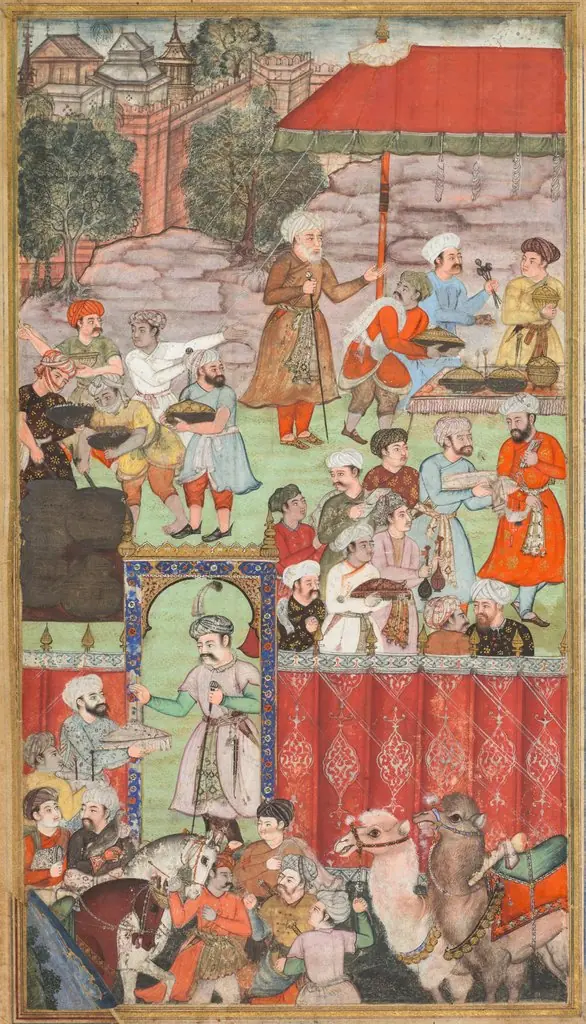 A feast for Babur hosted by his half-brother Jahangir Mirza in Ghazni in May 1505, from a Babur-nama (Memoirs of Babur)
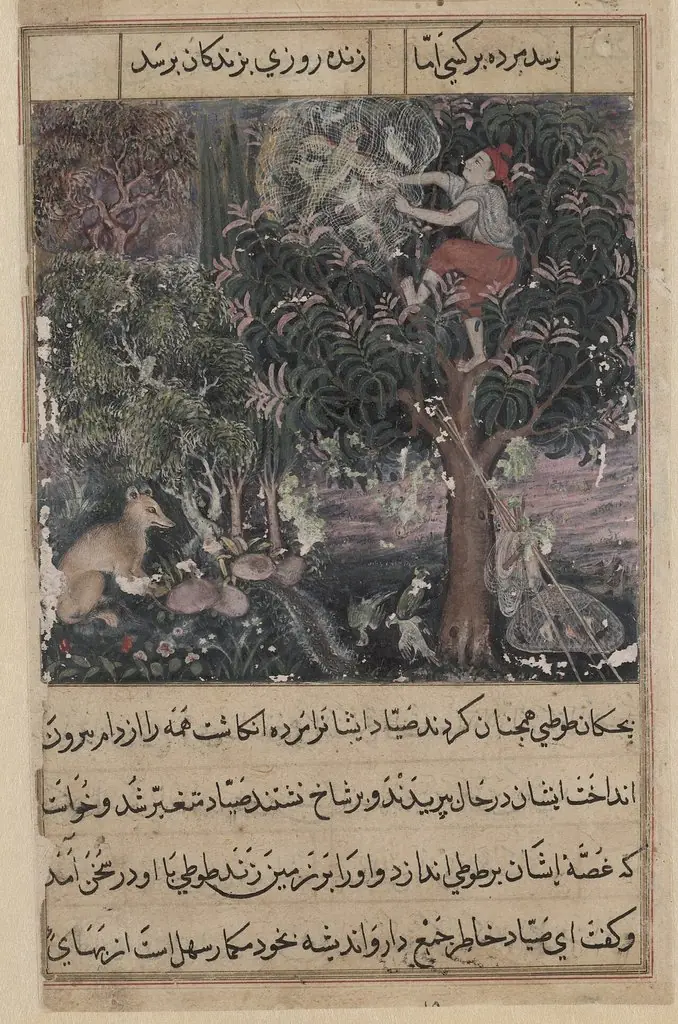 The hunter throws away the baby parrots, who pretend to be dead, and captures the mother, from a Tuti-nama (Tales of a Parrot): Fifth Night
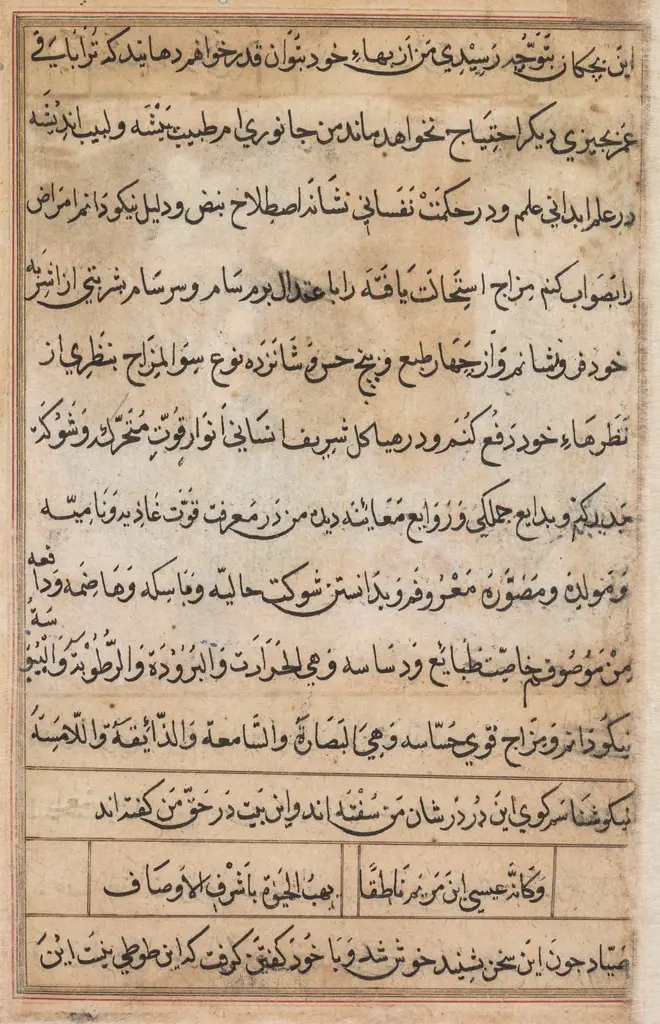 Page from Tales of a Parrot (Tuti-nama): text page
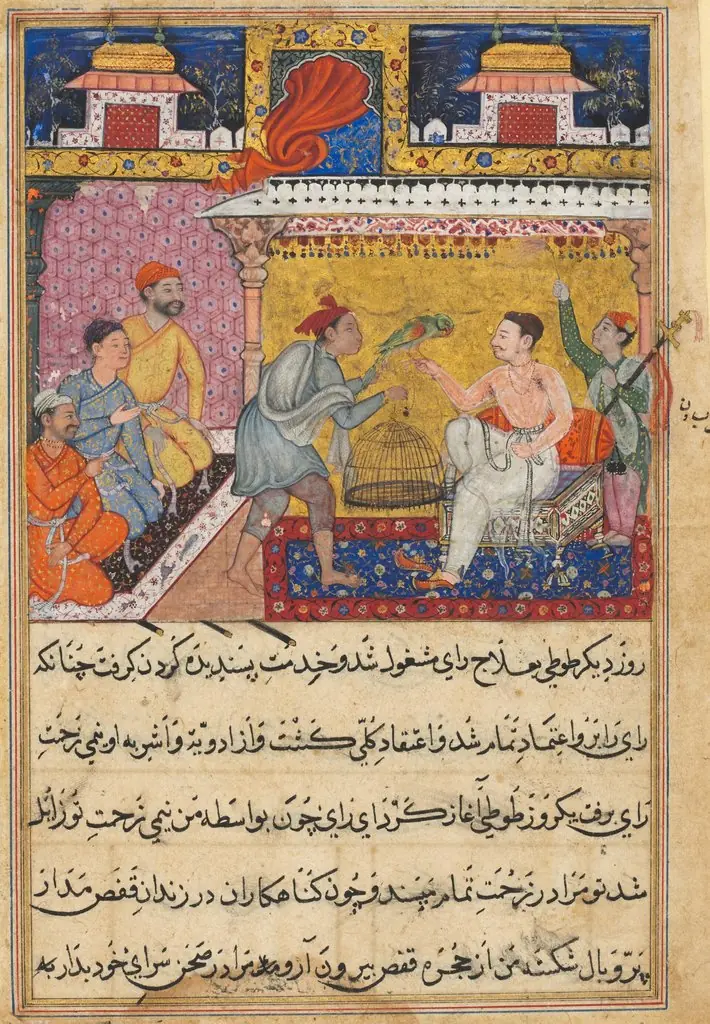 The hunter offers the mother parrot to the king of Kamarupa, from a Tuti-nama (Tales of a Parrot): Fifth Night