Artwork
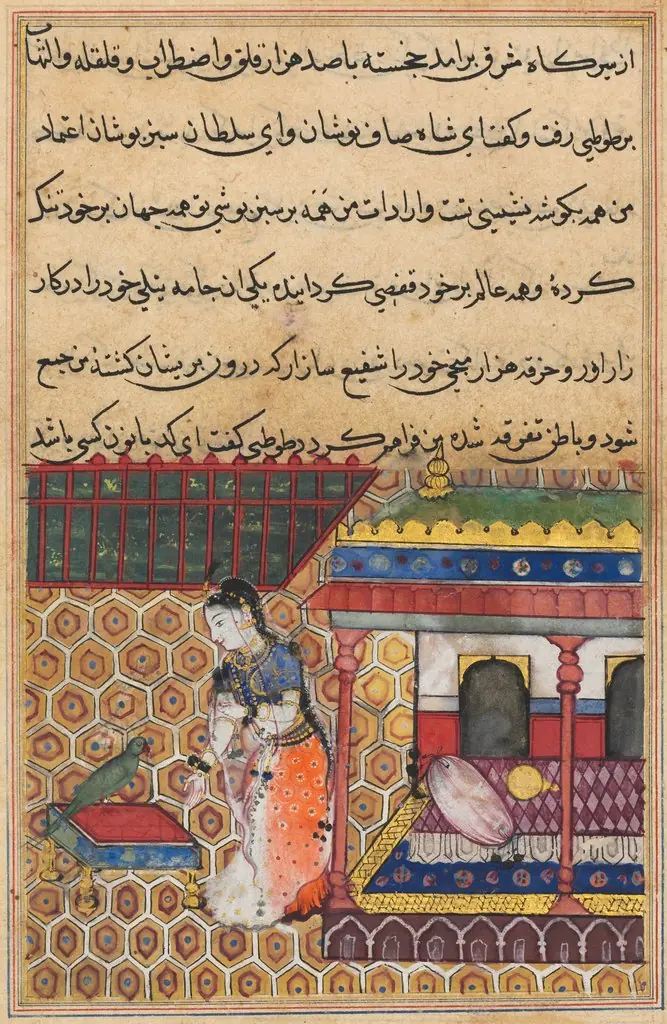
The hunter offers the mother parrot to the king of Kamarupa, from a Tuti-nama (Tales of a Parrot): Fifth Night
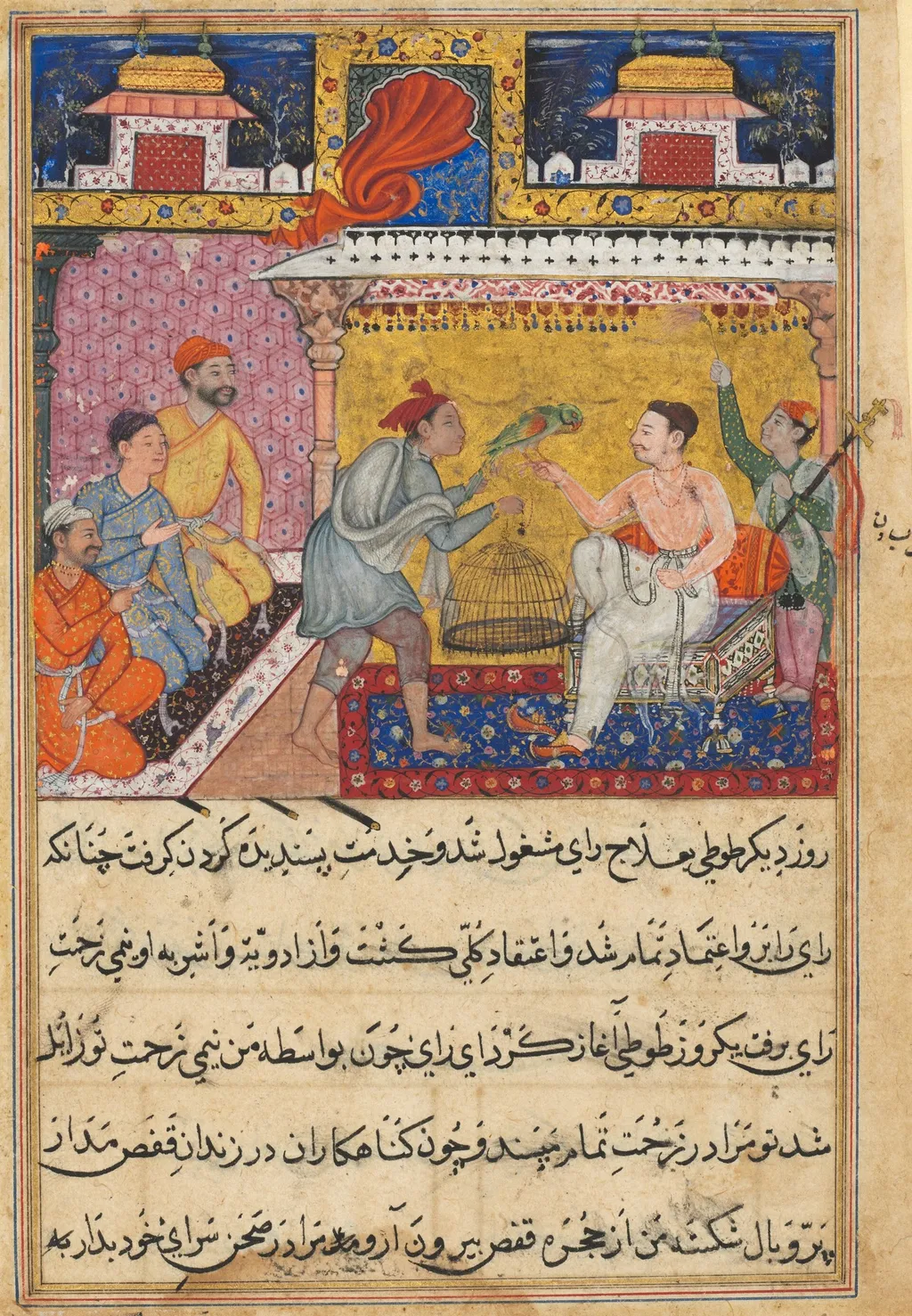
The hunter offers the mother parrot to the king of Kamarupa, from a Tuti-nama (Tales of a Parrot): Fifth Night is an unspecified painting by the Mughal Painting artist Basawan. It dates from 1560 and is held in the collection of the Cleveland Museum of Art. Created in 1560 by the Mughal court painter Baswan, this miniature illustrates a narrative from the Tuti‑nama, a collection of parrot tales.
About this work
Subject & Meaning
The miniature illustrates a moment from the Fifth Night of the Tuti-nama where a hunter presents a mother parrot to the king of Kamarupa. In Mughal manuscript painting, parrots often symbolize love and fidelity, while the act of offering a gift to a ruler conveys loyalty and diplomatic respect. The scene thus conveys both the hunter's devotion and the king's authority over natural wonders.
History & Provenance
It has been exhibited in the museum’s galleries and included in the 1963 Cleveland Museum of Art exhibition “Indian Miniature Painting.
The painting was created in 1560 during the Mughal Empire period, as indicated by the internal record and confirmed by the Cleveland Museum of Art’s Wikidata entry.
It entered the Cleveland Museum of Art’s collection in 1962 as part of an acquisition numbered 1962.279.36.b.
The painting is held by the Cleveland Museum of Art, where it is recorded as Tuti-nama, Fifth Night: The hunter offers the mother parrot to the king of Kamarupa, accessioned 1962.279.36.b.
It has been exhibited in the museum’s galleries and included in the 1963 Cleveland Museum of Art exhibition “Indian Miniature Painting.”
Overview
Created in 1560 by the Mughal court painter Baswan, this miniature illustrates a narrative from the Tuti‑nama, a collection of parrot tales. The work is part of the Cleveland Museum of Art’s collection and portrays a ceremonial exchange between a hunter and the ruler of Kamarupa.
Technique & Style
Executed in the fine brushwork typical of Mughal miniatures, the painting employs a bright palette of blues, reds, yellows and whites. Delicate detailing appears in the patterned textiles, the birdcage on a red‑blue rug, and the ornamental throne, demonstrating the artist’s skill in rendering texture and surface decoration on a small scale.
Context
The scene derives from the fifth night of the Tuti‑nama, a literary work that uses parrot stories to convey moral and courtly themes. Such illustrations were common in Mughal manuscripts, serving both decorative and didactic purposes within elite patronage.
Own this work as a print
Artist & collection
Artist
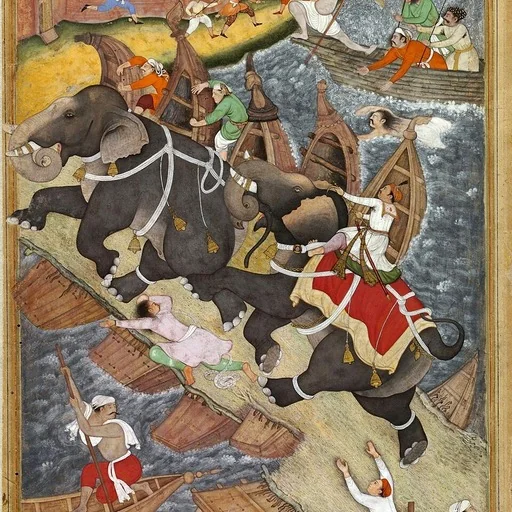
Basāwan, or Basāvan, was an Indian miniature painter in the Mughal style. He was known by his contemporaries as a skilled colorist and keen observer of human nature, and for his use of portraiture in the illustrations…

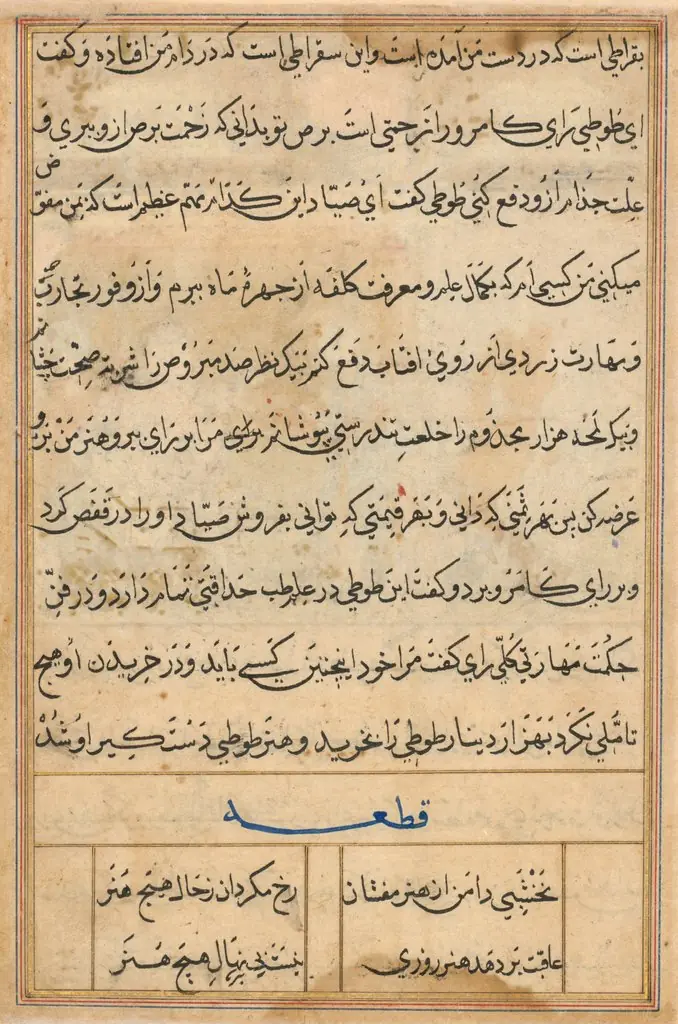 Page from Tales of a Parrot (Tuti-nama): text page
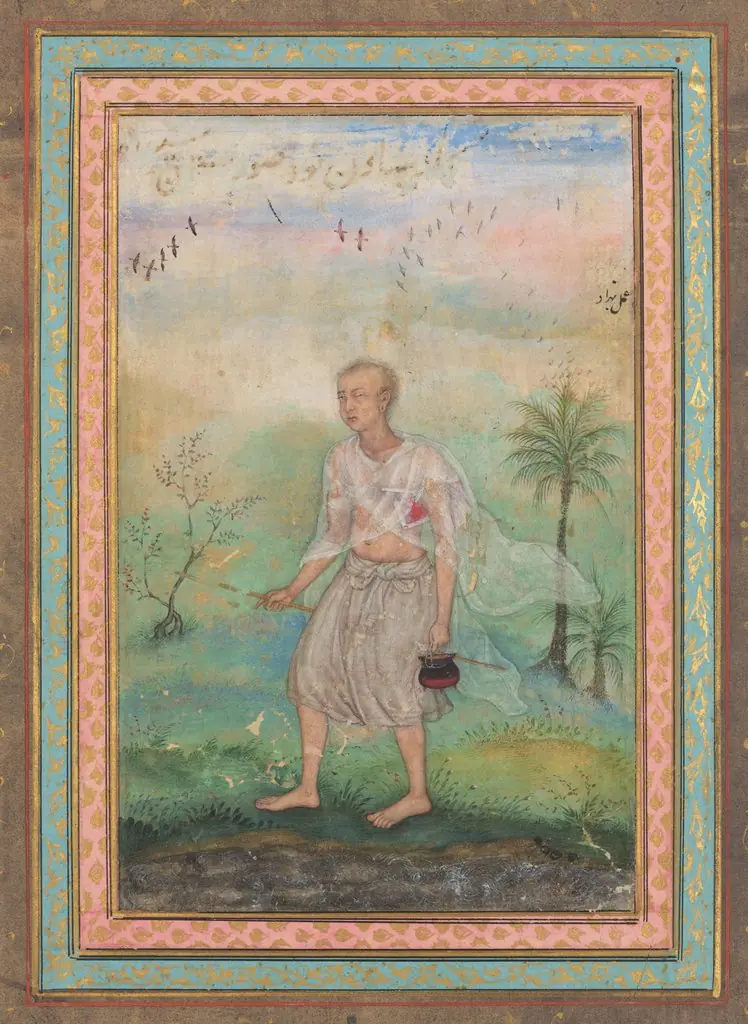 Jain Ascetic Walking Along a Riverbank
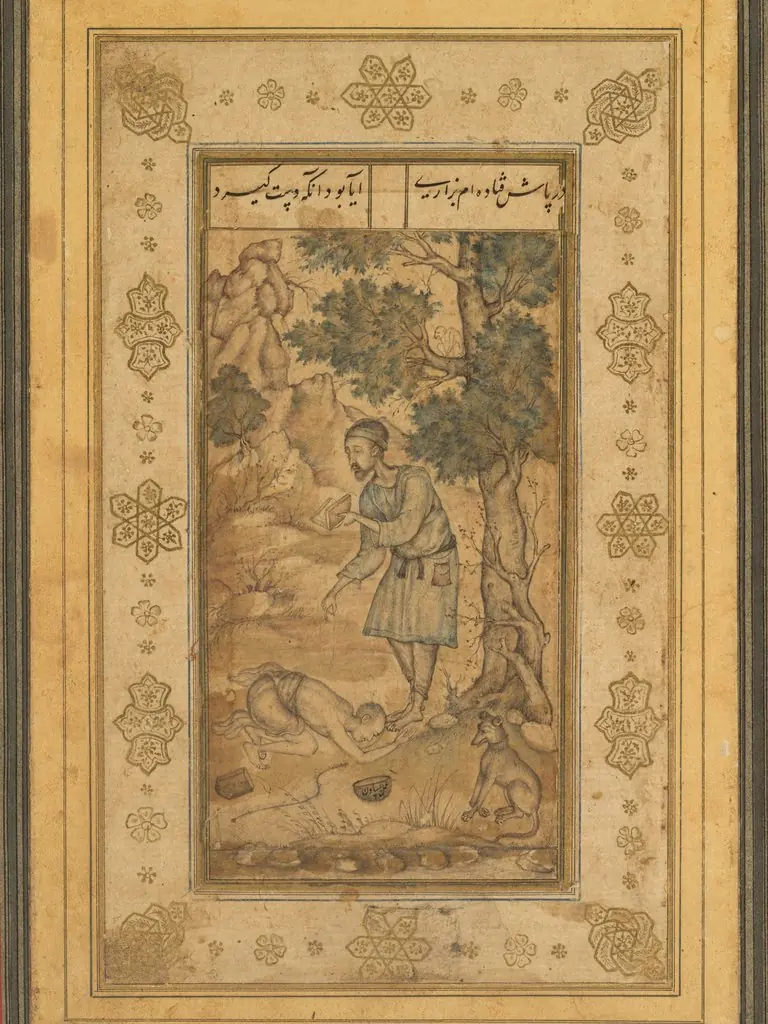 A mendicant bowing before a holy man, from the Prince Salim Album
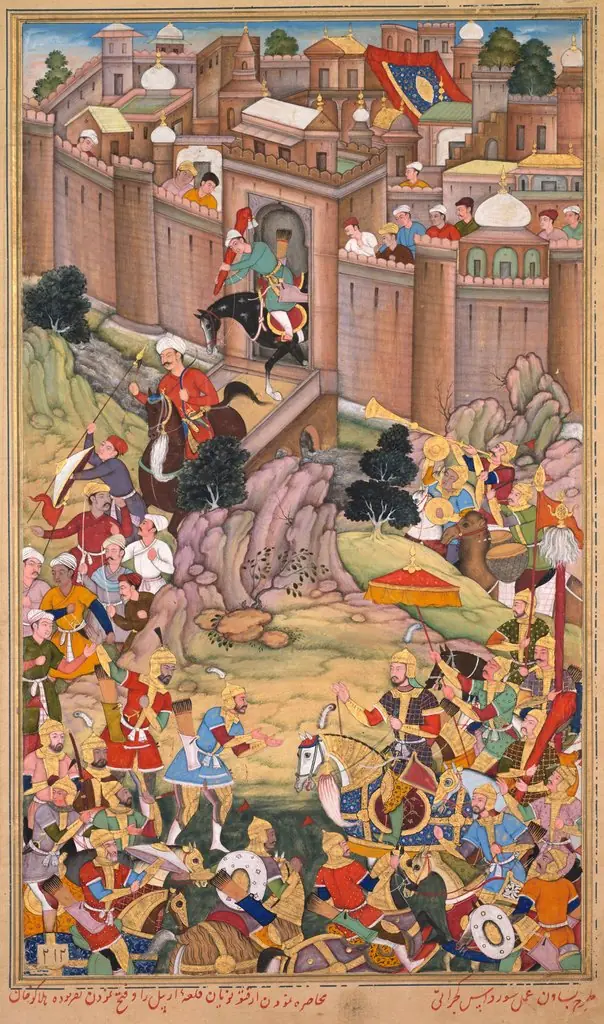 The siege of Arbela in the era of Hulagu Khan, from a Chingiz-nama (Book of Chingiz Khan) of the Jami al-tavarikh (Compendium of Chronicles) of Rashid al-Din (Persian, 1247–1318)
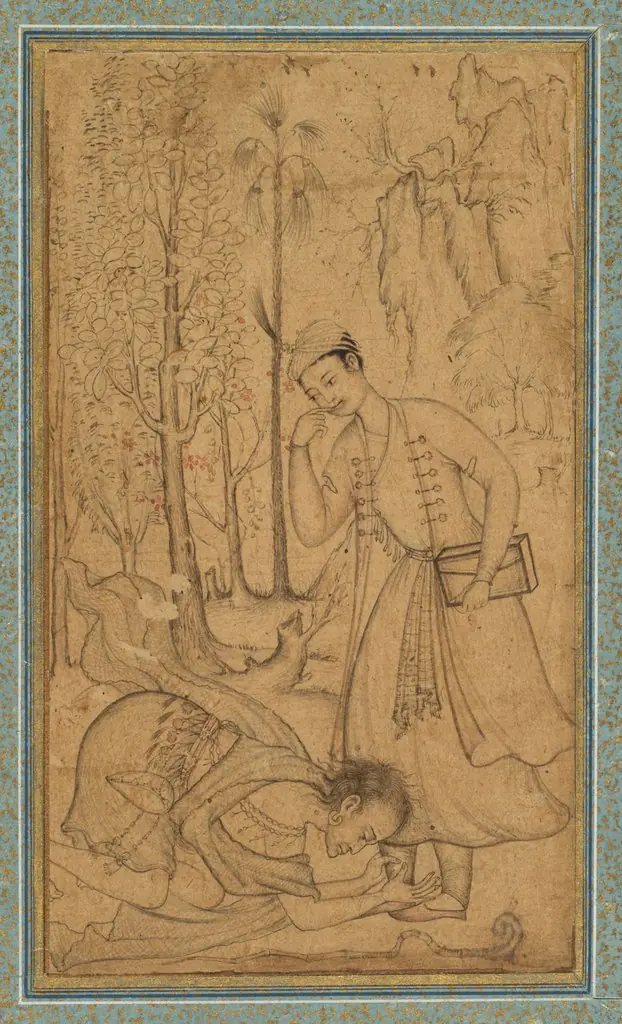 A holy man prostrating himself before a learned prince
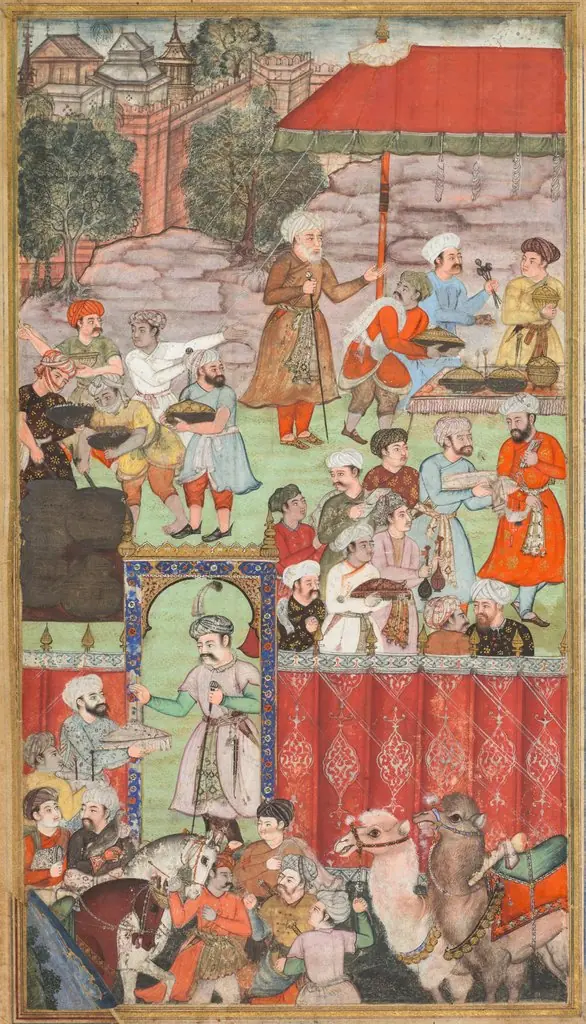 A feast for Babur hosted by his half-brother Jahangir Mirza in Ghazni in May 1505, from a Babur-nama (Memoirs of Babur)
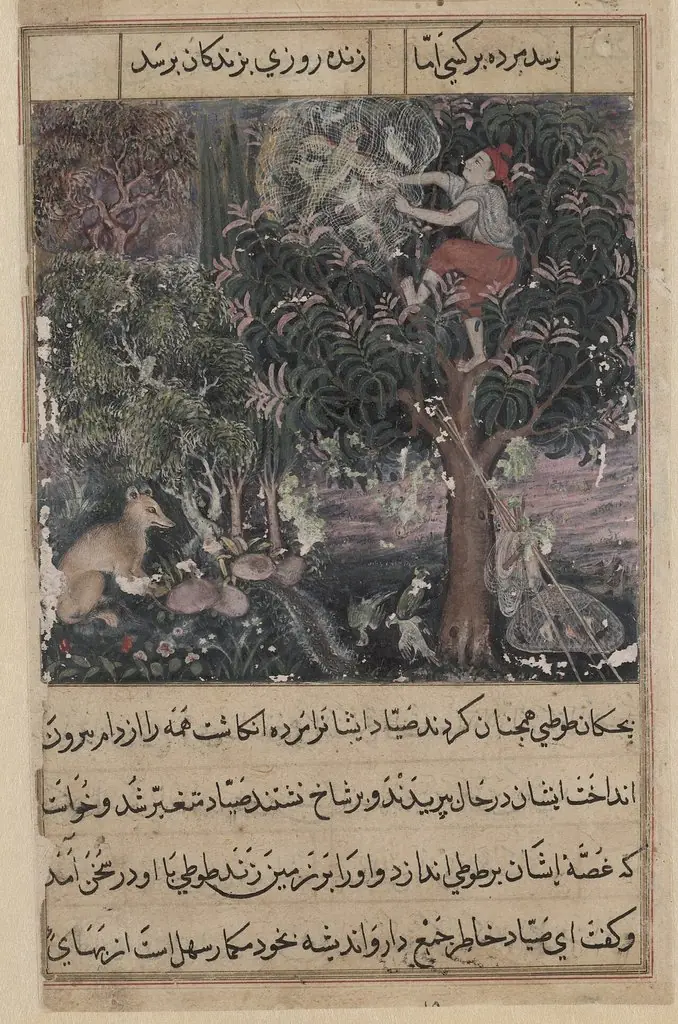 The hunter throws away the baby parrots, who pretend to be dead, and captures the mother, from a Tuti-nama (Tales of a Parrot): Fifth Night
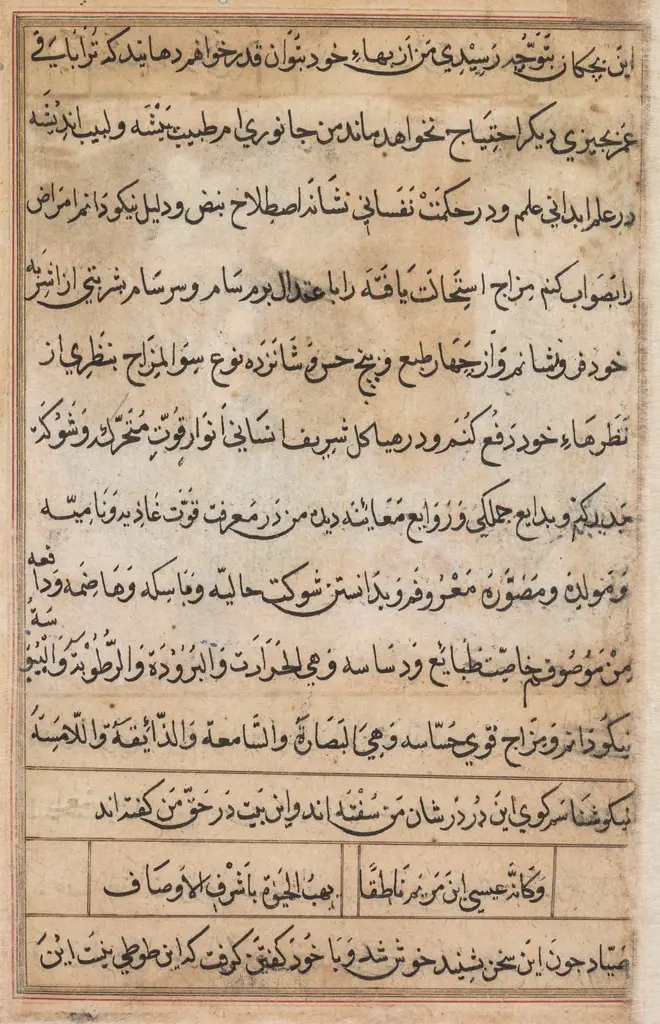 Page from Tales of a Parrot (Tuti-nama): text page
- The hunter offers the mother parrot to the king of Kamarupa, from a Tuti-nama (Tales of a Parrot): Fifth Night
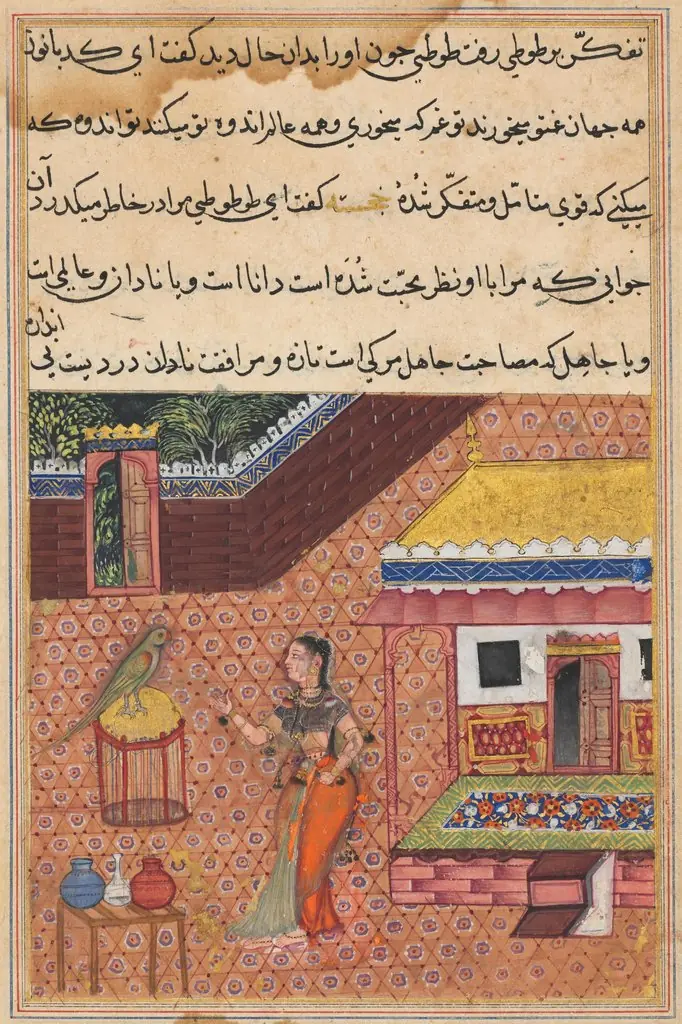 The parrot addresses Khujasta at the beginning of the thirty-fourth night, from a Tuti-nama (Tales of a Parrot)
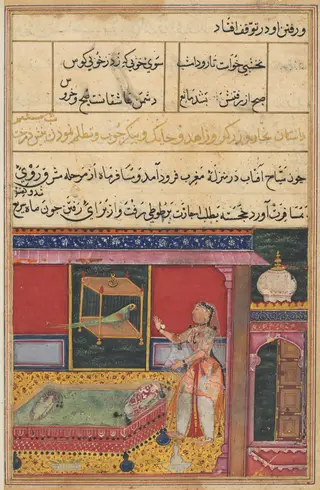 The Parrot Addresses Khujasta at the Beginning of the Sixth Night, from a Tuti-nama (Tales of a Parrot)
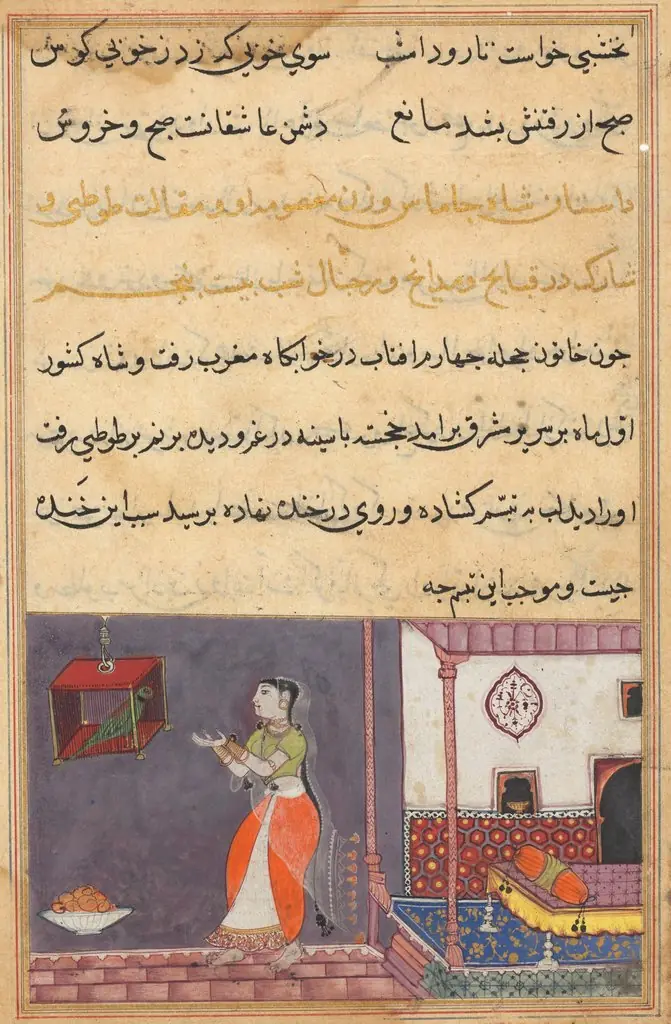 The Parrot Addresses Khujasta at the Beginning of the Twenty-fifth Night, from a Tuti-nama (Tales of a Parrot)
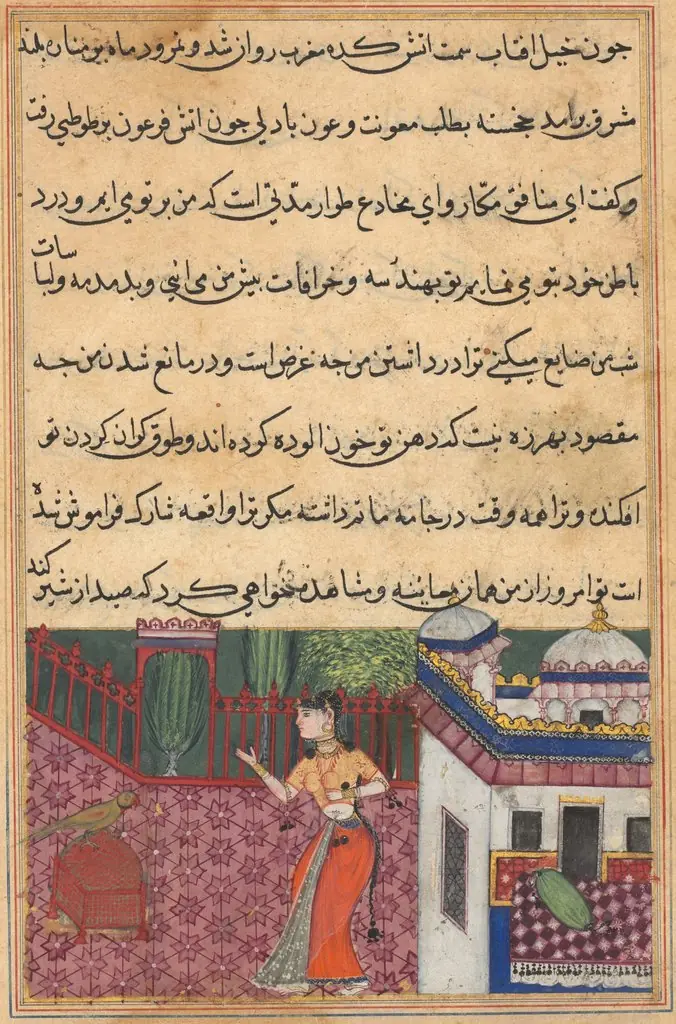 The parrot addresses Khujasta at the beginning of the thirty-third night, from a Tuti-nama (Tales of a Parrot)
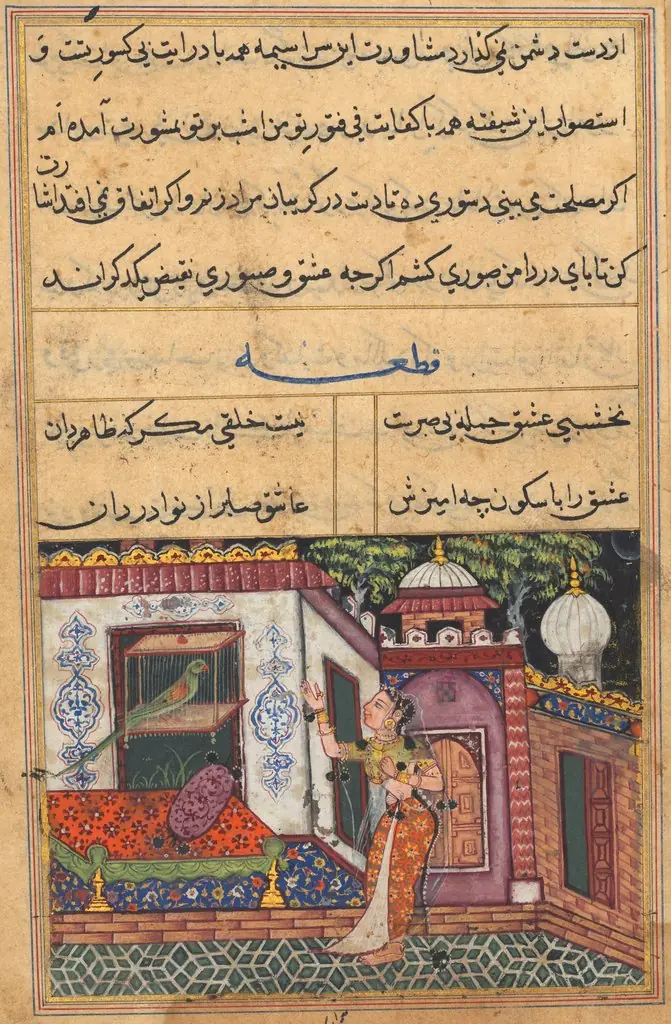 The Parrot Addresses Khujasta at the Beginning of the Eleventh Night, from a Tuti-nama (Tales of a Parrot)
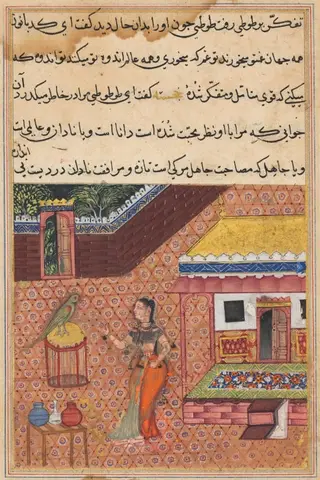 The parrot addresses Khujasta at the beginning of the thirty-fourth night, from a Tuti-nama (Tales of a Parrot)
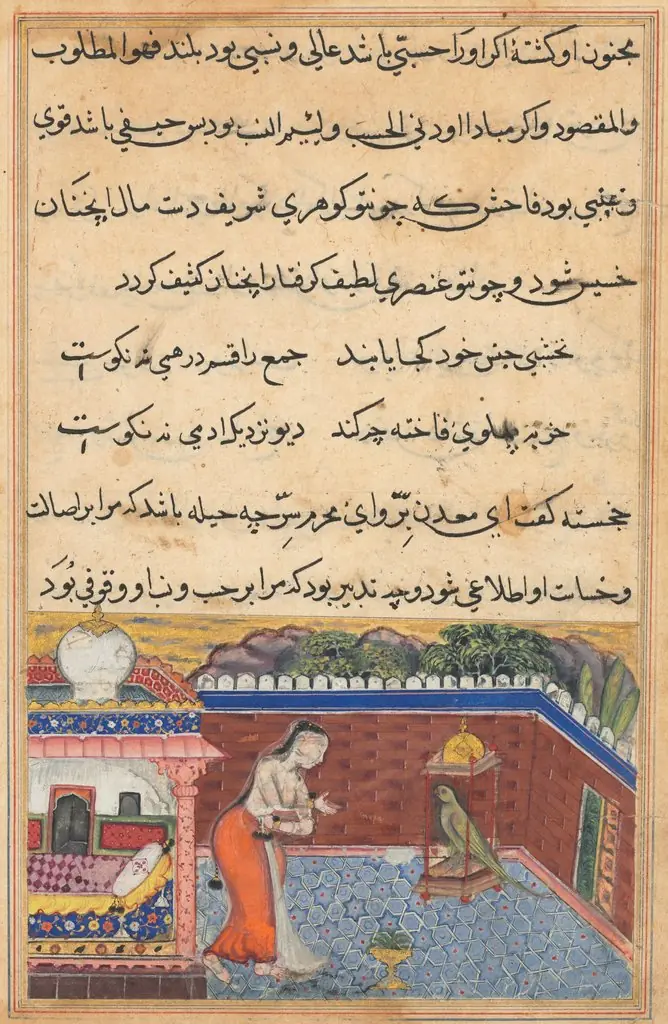 The parrot addresses Khujasta at the beginning of the thirty-first night, from a Tuti-nama (Tales of a Parrot)
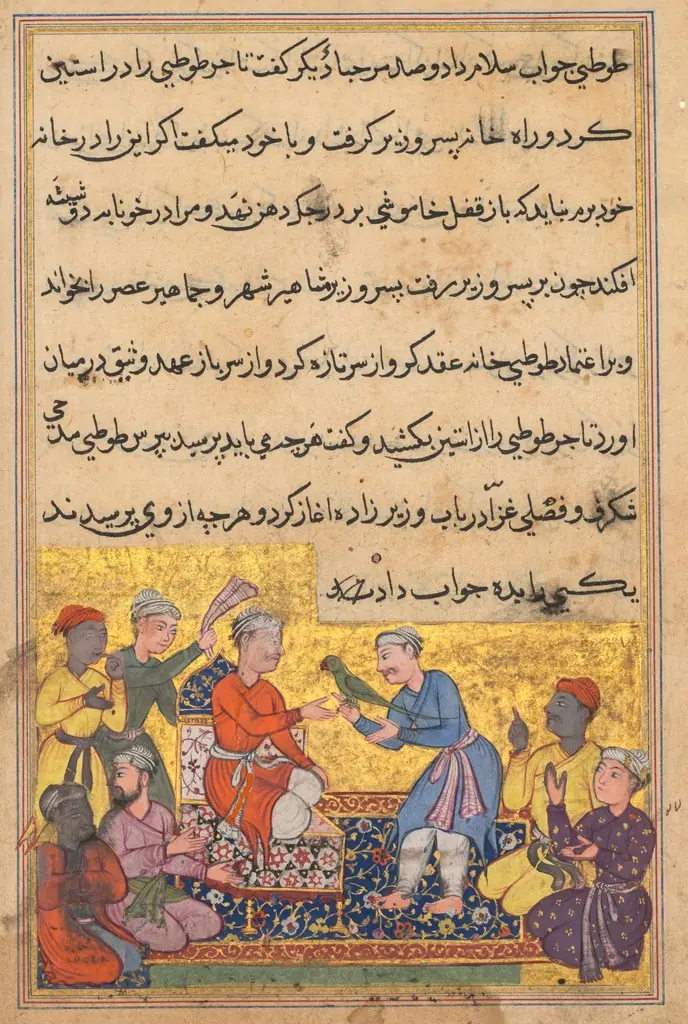 The magic parrot of the merchant talks to the vizier’s son, from a Tuti-nama (Tales of a Parrot): Tenth Night
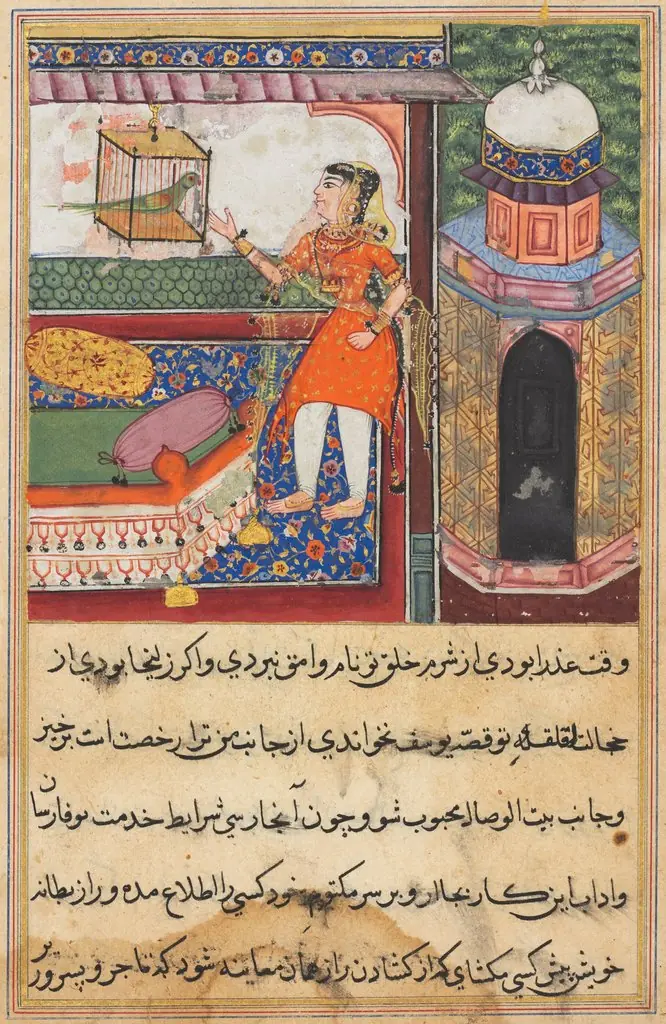 The Parrot Addresses Khujasta at the Beginning of the Tenth Night, from a Tuti-nama (Tales of a Parrot)
 The parrot addresses Khujasta at the beginning of the thirty-eighth night, from a Tuti-nama (Tales of a Parrot)