Artwork
Shepherd with Cow and Two Sheep
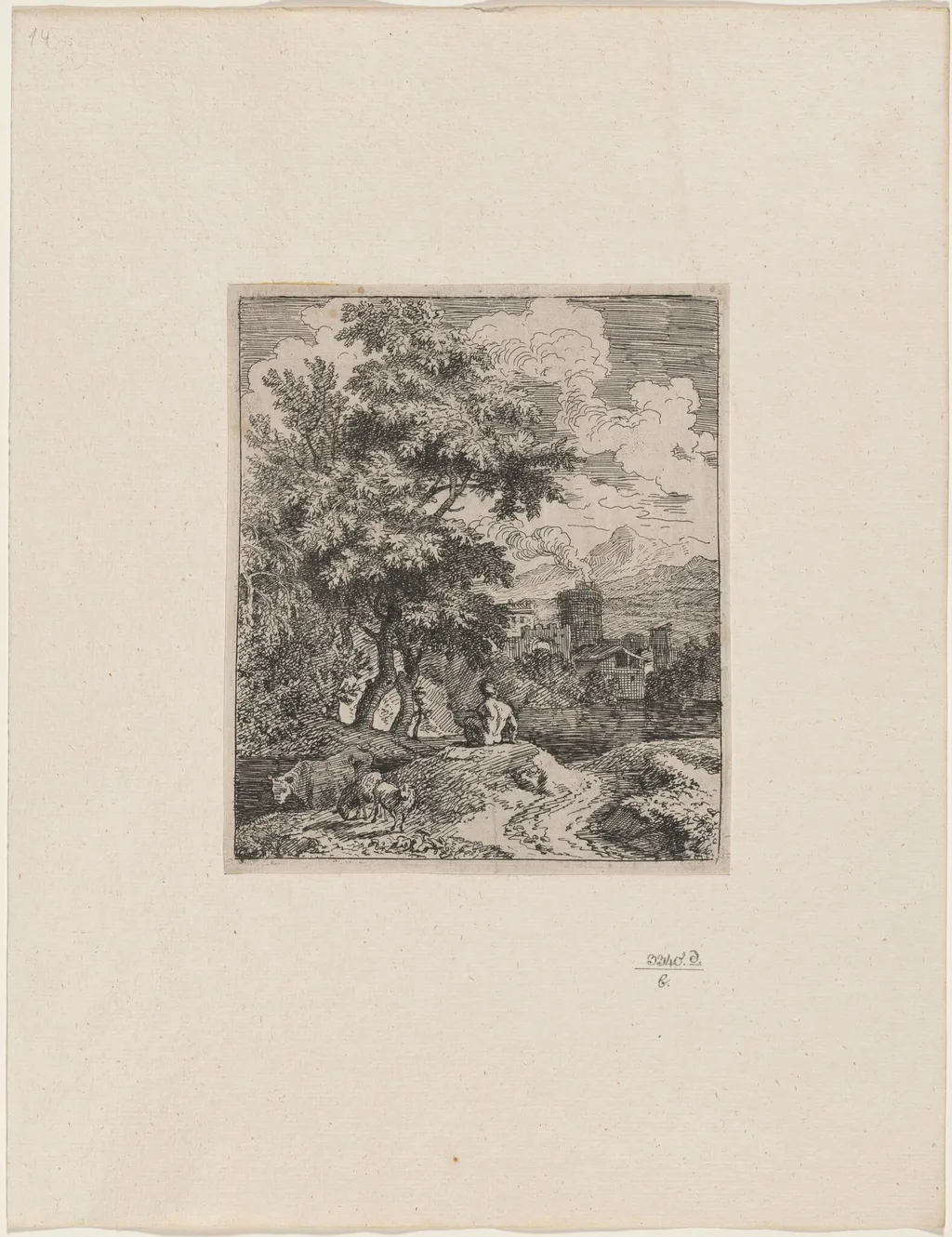
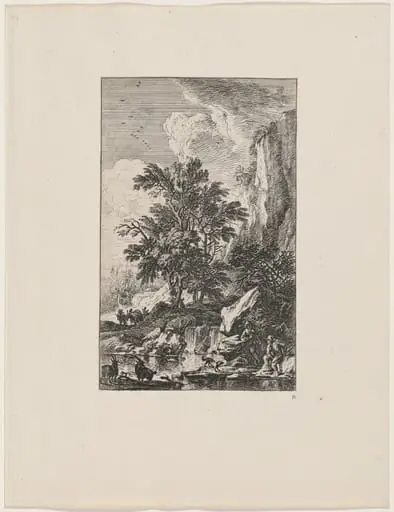
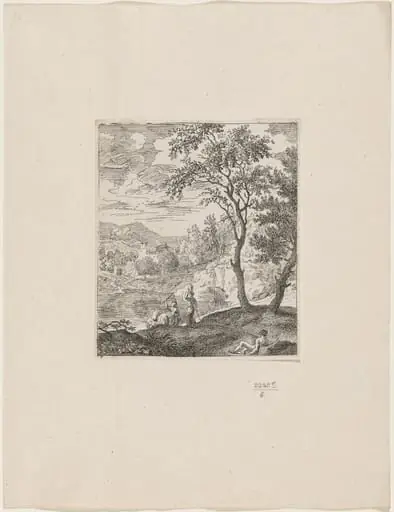
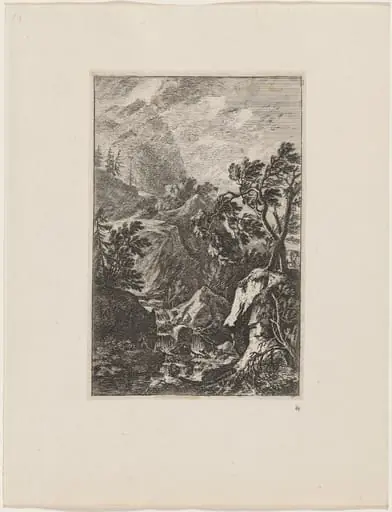
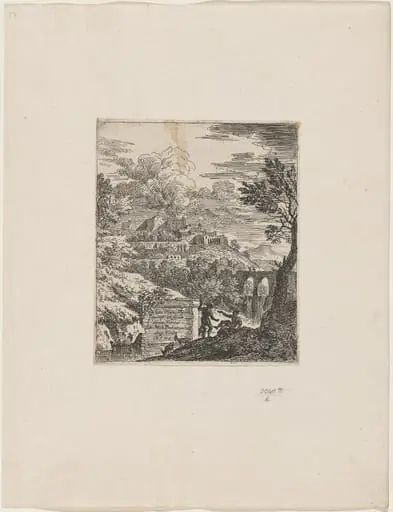
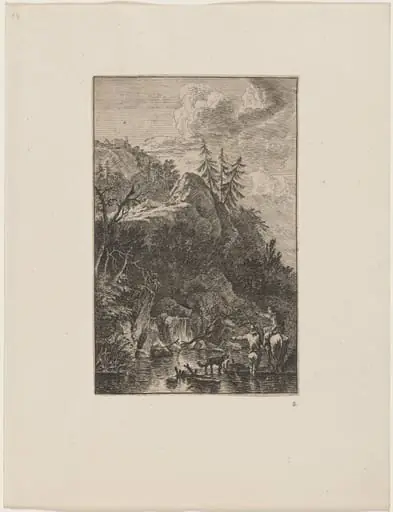
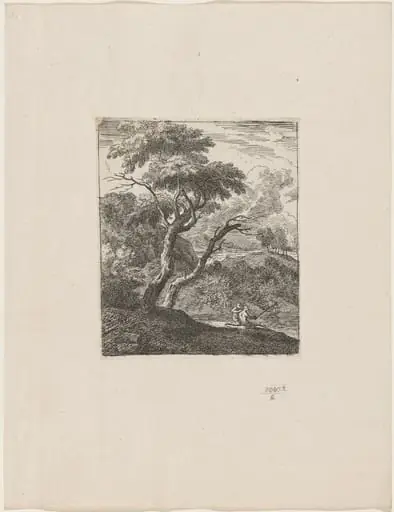
Shepherd with Cow and Two Sheep is an ink print by the Baroque artist Joachim Franz Beich. It dates from 1712 and is held in the collection of the National Gallery of Art.
About this work
Overview
A prominent tree anchors the composition at the water's edge, while a small structure and rolling hills recede into the distance, establishing a sense of depth.
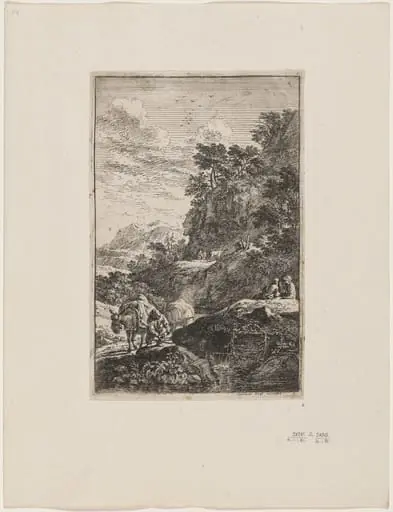
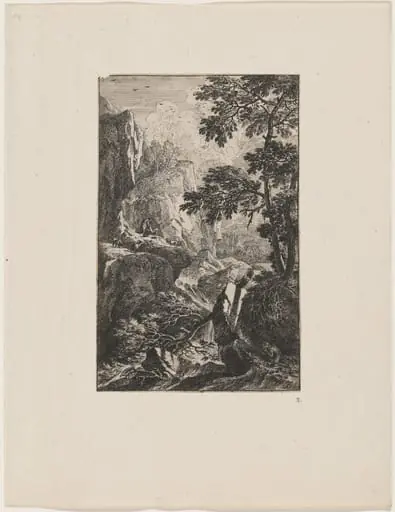
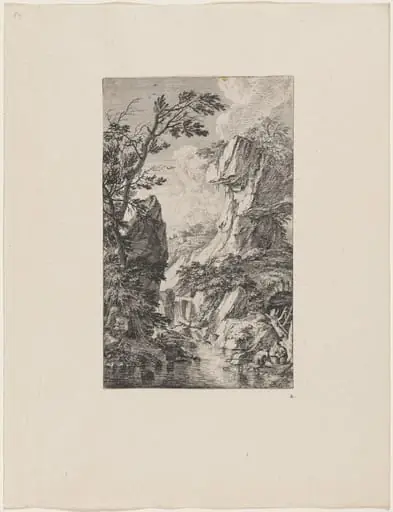
Created in 1712, 'Shepherd with Cow and Two Sheep' is an etching on laid paper by Joachim Franz Beich, a German artist active in the early 18th century. The work depicts a tranquil pastoral landscape centered on a shepherd attending to a cow and two sheep near a riverbank. A prominent tree anchors the composition at the water's edge, while a small structure and rolling hills recede into the distance, establishing a sense of depth.
Beich employs fine, delicate lines to render the interplay of light and shadow, creating a soft, atmospheric quality characteristic of his etched landscapes. This piece reflects Beich's engagement with the pastoral genre, which was popular among German artists of the period, and demonstrates his technical skill in translating naturalistic scenes into the linear medium of etching. The work stands as a representative example of his output during the final years of his documented career, showcasing his ability to evoke quiet rural life through careful observation and precise draftsmanship.
Subject & Meaning
The composition centers on a solitary shepherd who watches over a cow and two sheep beside a riverbank. A mature tree leans close to the water’s edge, while a modest structure and distant hills recede into the background, suggesting a peaceful, everyday moment in rural life.
Technique & Style
Beich employs delicate line work to model light and shadow, allowing areas of light wash to suggest depth without resorting to heavy cross‑hatching. The subtle gradations of tone create an atmospheric quality, while the careful rendering of foliage and animal forms demonstrates the artist’s command of the etching medium.
History & Provenance
The print originates from the early 1700s, a period when German artists frequently produced pastoral subjects for the burgeoning market of prints. Although specific ownership records are scarce, the work is catalogued among Beich’s known prints and appears in several collections of early modern German graphic art.
Own this work as a print
Artist & collection