Artwork
Study for "Riverfront No. 1"
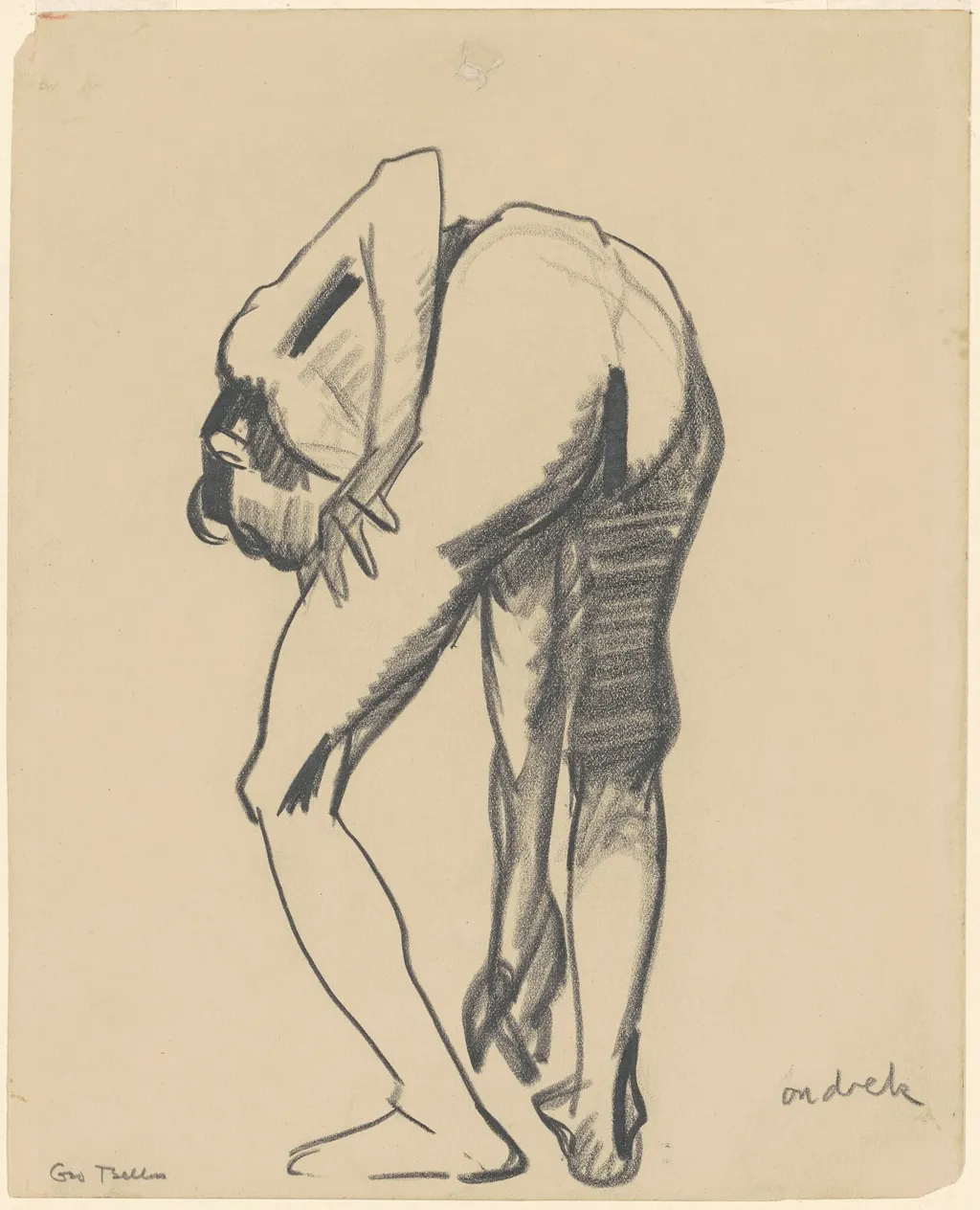
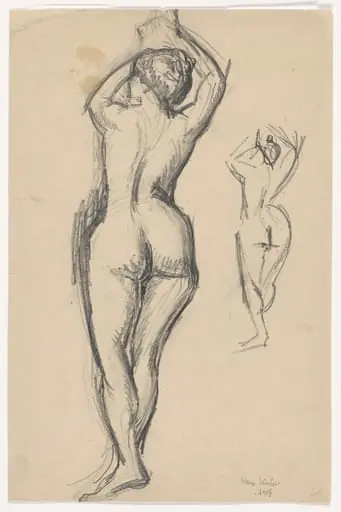
Study for "Riverfront No. 1" is a crayon drawing by George Bellows. It dates from 1915 and is held in the collection of the National Gallery of Art.
- Inscription
- Inscribed:lower left in graphite: Geo Bellows; lower right in black conté crayon: on dock
About this work
Overview
The subject's arms are crossed behind the head, and one hand grasps a piece of cloth or a scarf, introducing a textural contrast to the solid form of the body.
George Bellows' Study for "Riverfront No. 1" (1915) is a preparatory drawing executed in conté crayon on wove paper. The work depicts a solitary figure viewed from behind and the side, captured in a moment of repose with the torso bent forward. The subject's arms are crossed behind the head, and one hand grasps a piece of cloth or a scarf, introducing a textural contrast to the solid form of the body.
Bellows employs loose, rapid strokes characteristic of his energetic draftsmanship, utilizing dark shading to model the musculature of the back while reserving lighter, more delicate marks for the fabric. Created during the height of his career as a leading American Realist, this study served as a direct exploration of anatomy and gesture for the larger, more complex composition of "Riverfront No. 1." The piece exemplifies Bellows' ability to capture the immediacy of the human form and his mastery of tonal variation using dry media, reflecting the Ashcan School's commitment to observing contemporary life with unvarnished directness.
Subject & Meaning
The drawing depicts a solitary figure seen from behind and in profile, slightly bent forward. The person’s arms are crossed behind the head, and one hand grasps a cloth or scarf, suggesting a moment of pause or contemplation within an urban riverside setting.
Technique & Style
Bellows employed a soft conté crayon, allowing him to blend tones smoothly and render both deep shadows on the body and lighter, more tentative strokes for the fabric. The lines are loose and rapid, emphasizing the dynamism of the pose rather than fine detail.
History & Provenance
Created circa 1915, the study was likely kept by Bellows as a working reference for the larger composition. Its survival provides insight into the artist’s preparatory process during a prolific period of his career focused on New York’s waterfront scenes.
Own this work as a print
Artist & collection
Artist
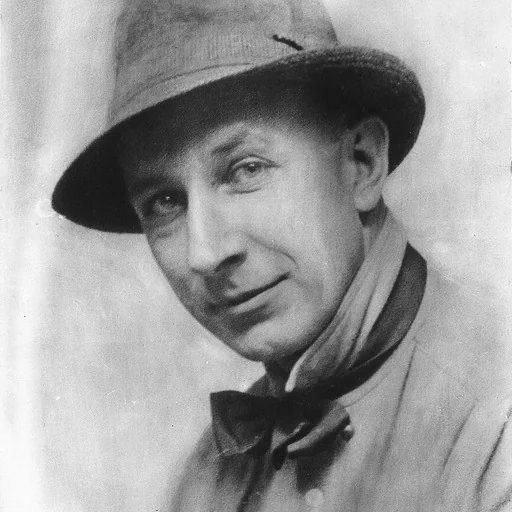
George Wesley Bellows (August 12 or August 19, 1882 – January 8, 1925) was an American realist painter, known for his bold depictions of urban life in New York City.