Artwork
Portrait of a Gentleman
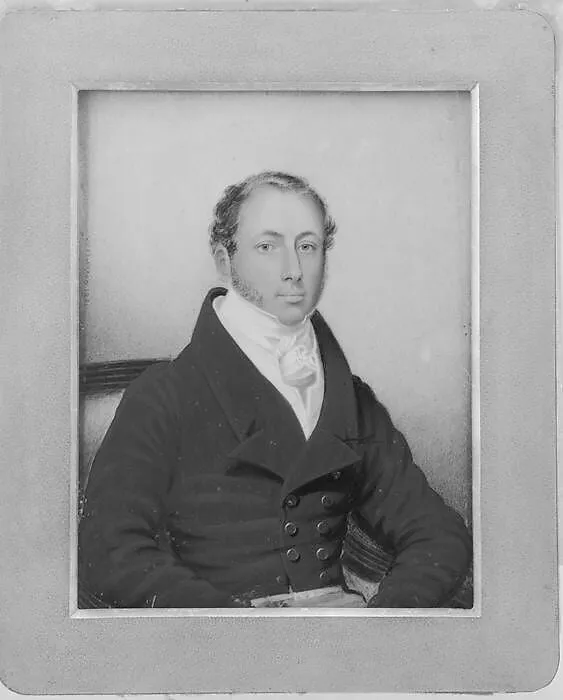
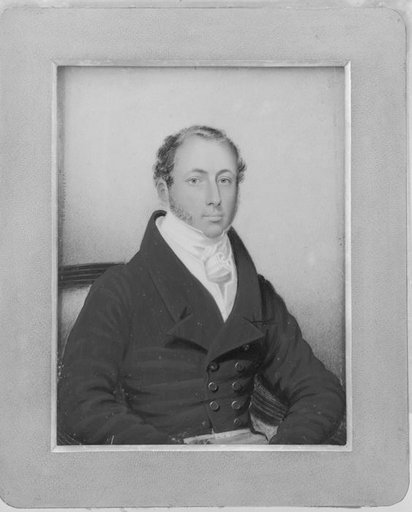
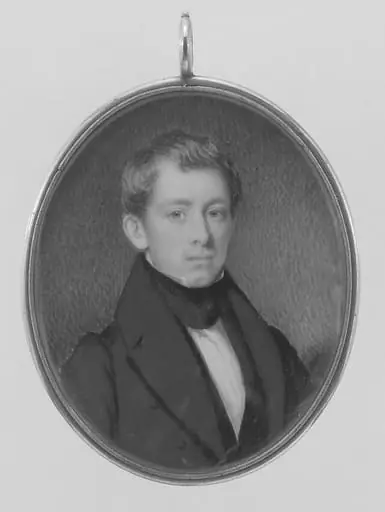
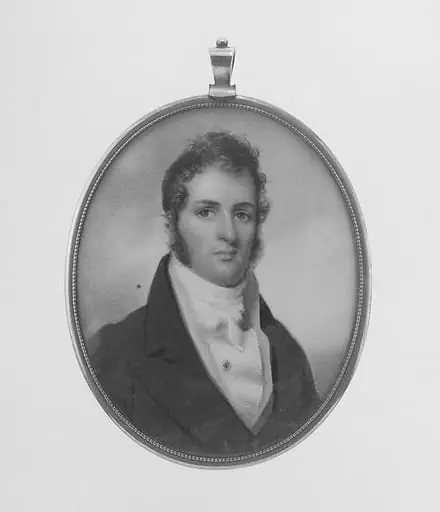
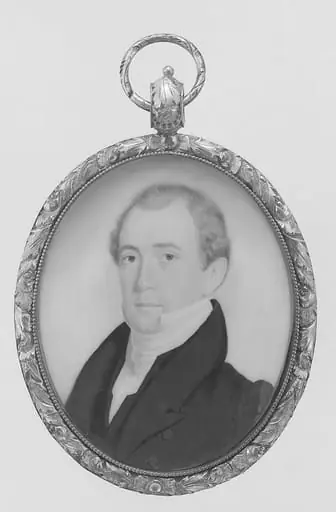
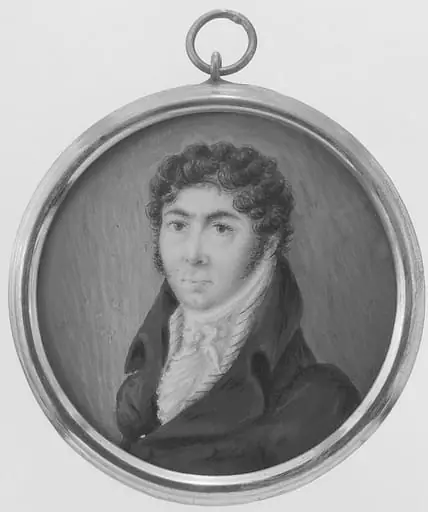
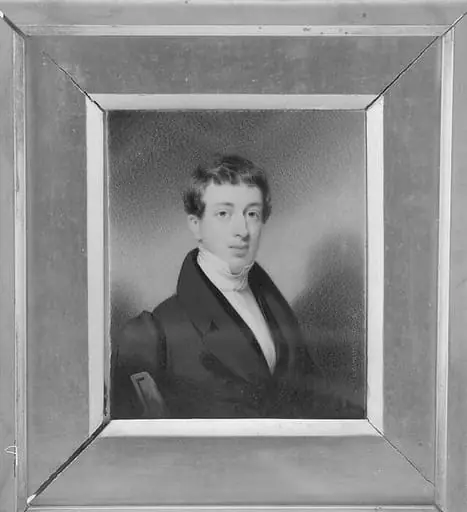
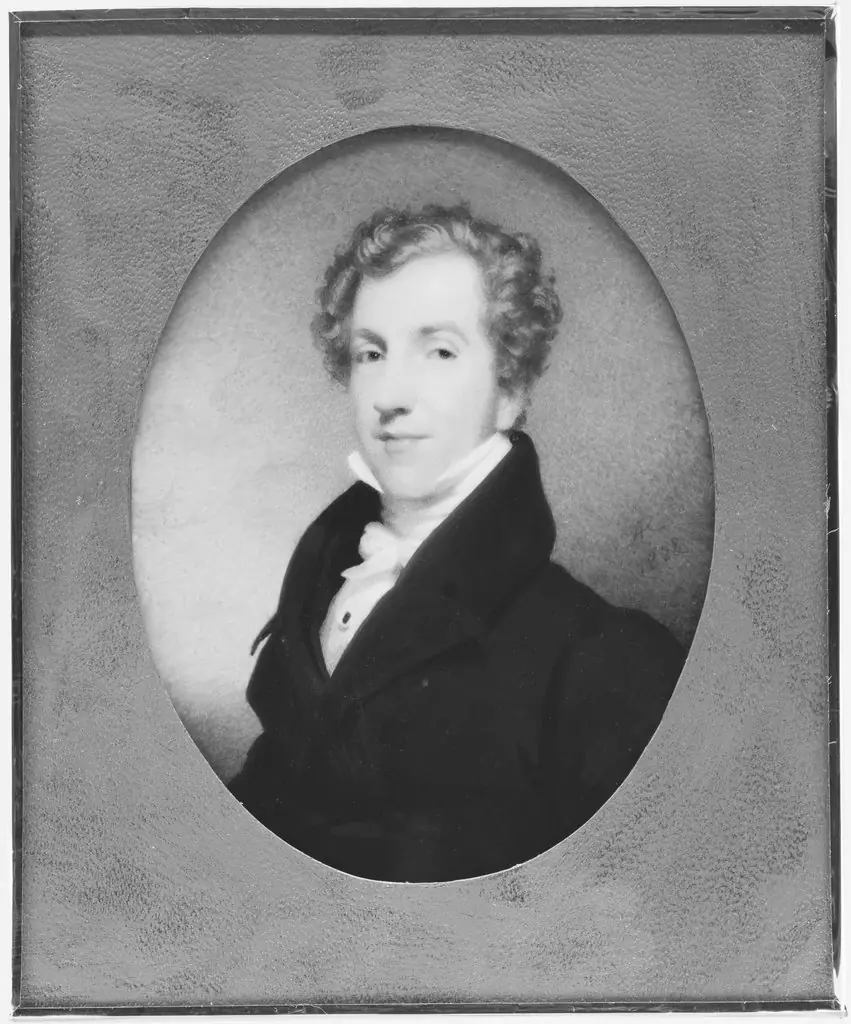
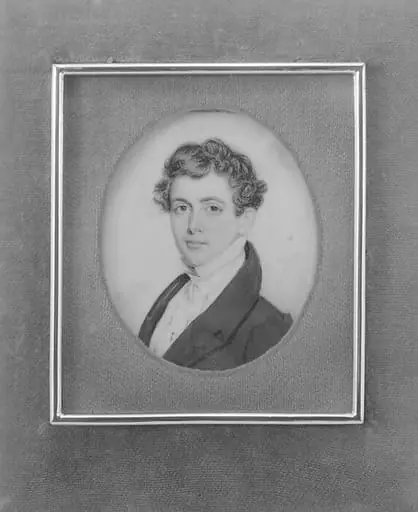
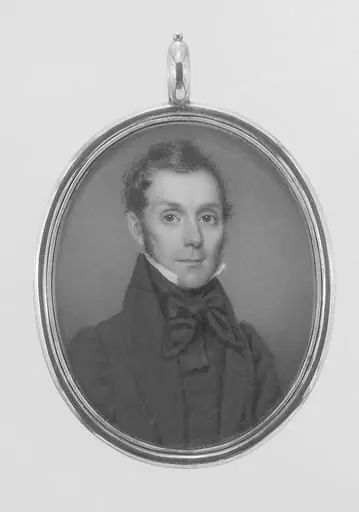
Portrait of a Gentleman is a watercolor painting by the American Folk Art artist William Hudson Jr.. It dates from 1821 and is held in the collection of the Metropolitan Museum of Art.
About this work
Subject & Meaning
in 1821, the piece functions as a formal portrait intended to capture the likeness of this individual.
The artwork depicts a single male subject, identified simply as a man within the composition. Created by William Hudson Jr. in 1821, the piece functions as a formal portrait intended to capture the likeness of this individual. As a watercolor on ivory, the work adheres to the conventions of early 19th-century miniature portraiture, prioritizing the accurate representation of the sitter's features.
The Metropolitan Museum of Art classifies the piece strictly as a portrait of a man, with no additional specific iconographic details or symbolic elements attributed to the subject in the available records. The work represents the standard genre practice of the era, focusing on the visual documentation of the gentleman without explicit narrative or allegorical context provided in the source data.
Technique & Style
Executed in 1821 by William Hudson Jr., this portrait utilizes watercolor applied to an ivory support, a medium characteristic of miniature painting traditions. The work presents a bust-length depiction of a male subject, adhering to the conventions of the portrait genre. Physically, the piece measures 11.1 cm in height and 8.8 cm in width, indicating a small-scale format intended for intimate viewing.
The combination of translucent watercolor pigments with the smooth, luminous surface of the ivory allows for delicate modeling of the sitter's features. While specific details regarding the artist's brushwork or the object's current conservation status are not explicitly detailed in the available records, the material choice defines its formal quality as a refined, portable likeness typical of early nineteenth-century American portraiture.
History & Provenance
Portrait of a Gentleman is a watercolor on ivory painted by American artist William Hudson Jr. in 1821, as documented in the work’s catalogue entry and corroborated by its Wikidata record. The piece was created as a portrait of an unidentified gentleman and was later acquired by the Metropolitan Museum of Art, where it remains on view within the American Wing’s portrait genre. Its inception date is recorded as 1821‑01‑01, and the work’s dimensions and subject align with the description of a male sitter.
The painting’s provenance reflects a direct transfer from the artist’s studio to the museum’s collection, establishing the Met as its current owner.
The watercolor on ivory is held by the Metropolitan Museum of Art, where it is classified within The American Wing. According to the Wikidata record, it is part of the museum's collection and located at the Metropolitan Museum of Art. No specific accession number, acquisition date, or exhibition history is documented in the available sources.
Overview
William Hudson Jr. completed this watercolor portrait of an unidentified man in 1821. Rendered on a small piece of ivory, the artwork exemplifies a popular yet intricate form of miniature painting from the early 19th century. It offers a direct and intimate depiction of its subject, characteristic of the period's portraiture and belonging to the American Wing collection.
Context
William Hudson Jr. produced this work in America during a period when many aspiring artists still sought formal training in Europe. His practice within the United States highlights the developing artistic infrastructure and patronage networks emerging domestically. This context underscores the evolving identity of American art in the early 19th century.
Artist & collection