Artwork
View of Dresden
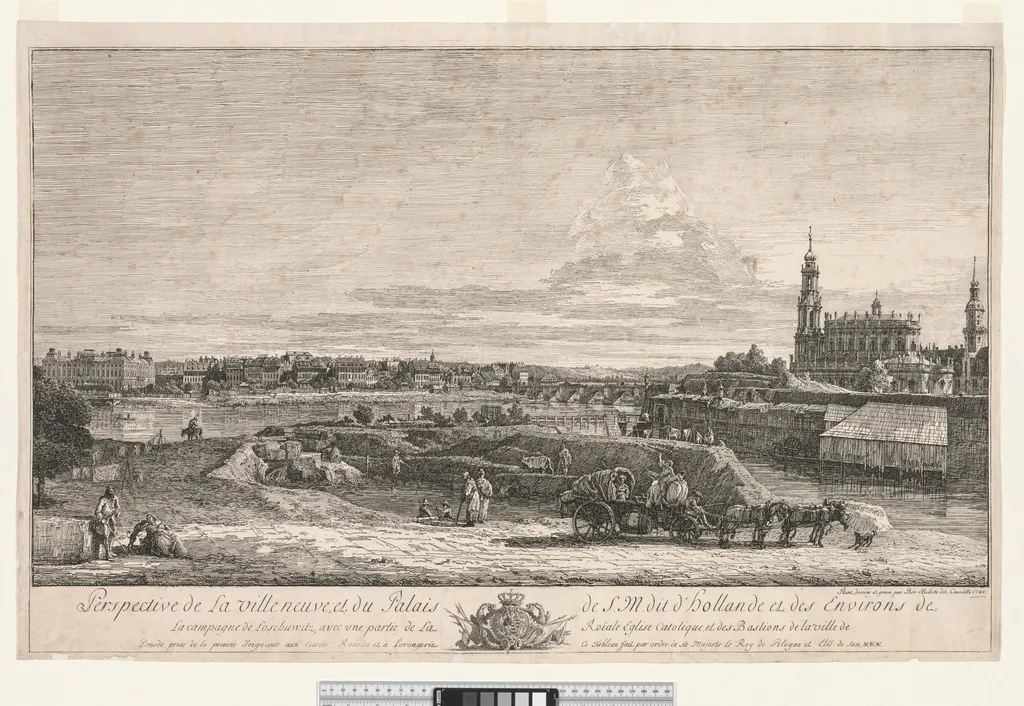
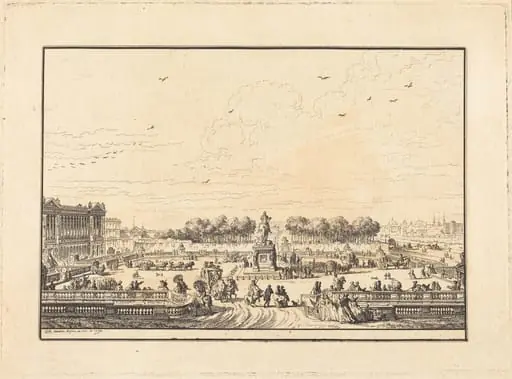
View of Dresden is a print by the Baroque artist Bernardo Bellotto. It dates from 1748 and is held in the collection of the Cleveland Museum of Art.
- Accession no.
- 1962.108
- Credit line
- Gift of The Print Club of Cleveland
About this work
Overview
Created in 1748, this print by Bernardo Bellotto depicts the German city of Dresden with precise topographical accuracy. Executed in ink and wash, it captures the urban layout along the Elbe River, emphasizing architectural landmarks and natural contours. The work is part of a series documenting Central European cities and is now held in the collection of The Cleveland Museum of Art.
Subject & Meaning
The scene presents Dresden as a thriving urban center, with the Frauenkirche and other civic structures anchoring the composition. Figures scattered along the riverbank and streets suggest daily activity, reinforcing the city’s vitality. Bellotto’s intent was not merely decorative but documentary, offering a record of urban life during the mid-18th century under the rule of the Saxon electors.
Technique & Style
Bellotto employed fine linear detail and subtle tonal gradations to render architecture and landscape. His use of perspective creates depth, while careful attention to light and shadow enhances the realism of buildings and terrain. The style reflects the influence of his uncle, Canaletto, yet Bellotto’s approach is more restrained, favoring accuracy over theatricality.
History & Provenance
The print was made during Bellotto’s time in Dresden, where he served as court painter to Augustus III of Poland. It was likely produced as a record for the Saxon court and later entered private collections before being acquired by The Cleveland Museum of Art in the 20th century. Its survival reflects its value as both artistic and historical documentation.
Context
In the mid-1700s, European courts commissioned topographical views to assert cultural prestige. Bellotto’s work aligned with this trend, combining cartographic precision with artistic skill. Dresden, then a center of arts and science, was a favored subject for such depictions, reflecting its status as a hub of Enlightenment-era patronage.
Legacy
Bellotto’s views of Dresden became key references for later urban documentation and restoration efforts, especially after the city’s destruction in World War II. His precise renderings provided architects and historians with invaluable visual data, ensuring his work retained practical relevance long after its creation.
Own this work as a print
Artist & collection
Artist
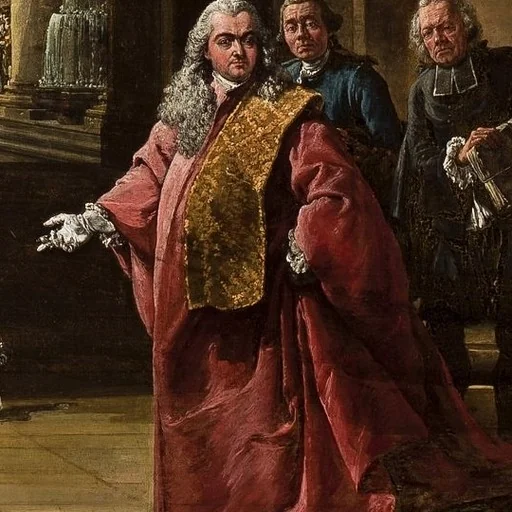
Bernardo Bellotto, was an Italian urban landscape painter or vedutista, and printmaker in etching famous for his vedute of European cities – Dresden, Vienna, Turin, and Warsaw.

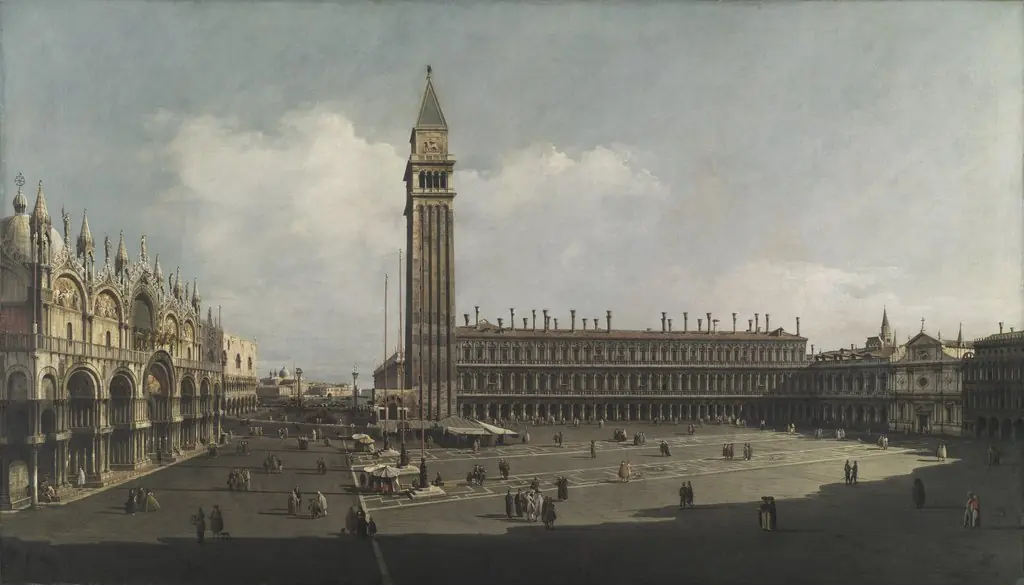
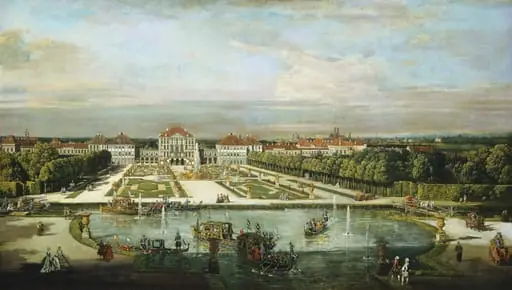
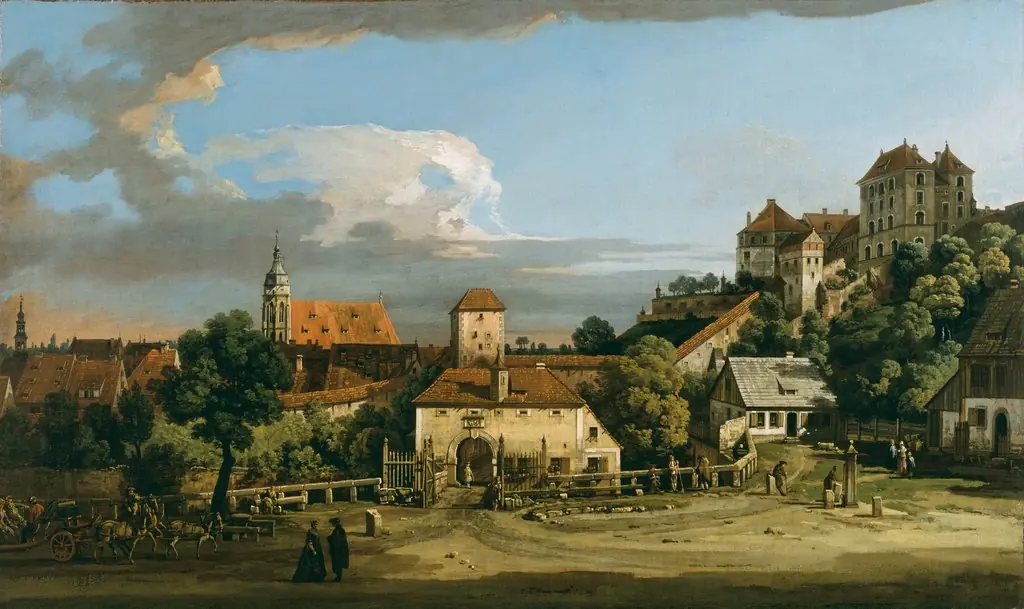
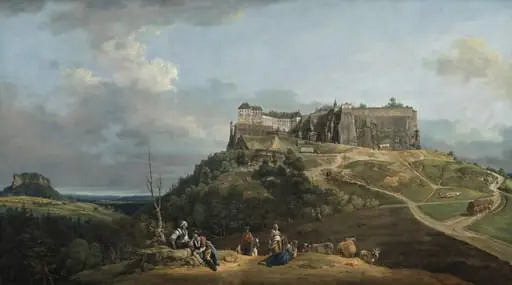
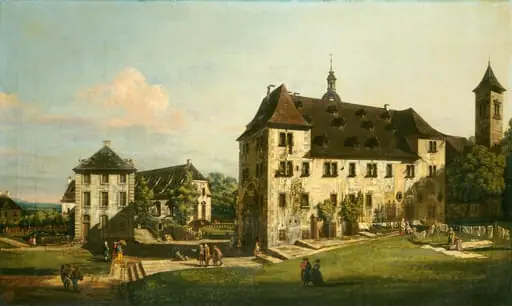
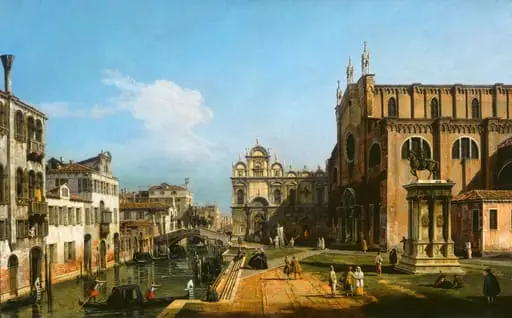
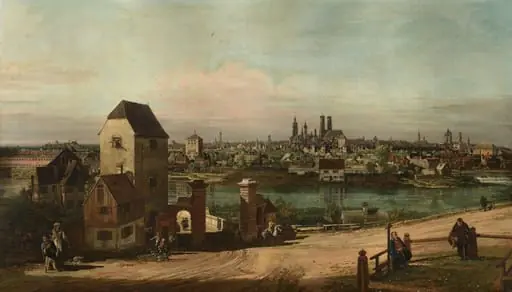
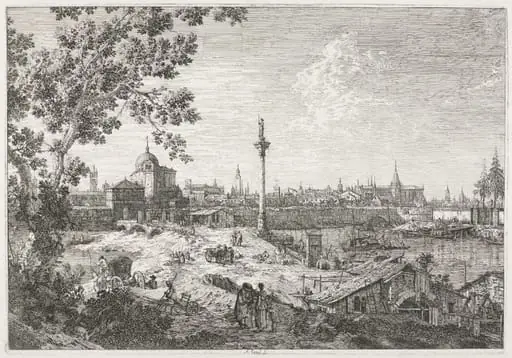
- Views: Imaginary View of Padua
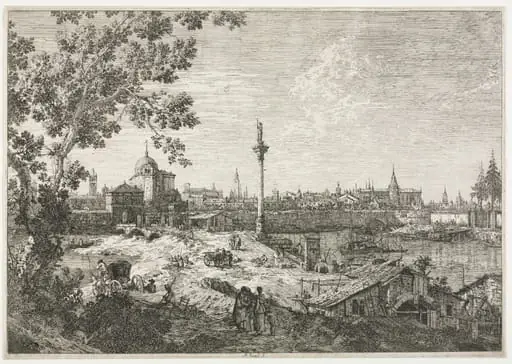 Panorama of a City on a River
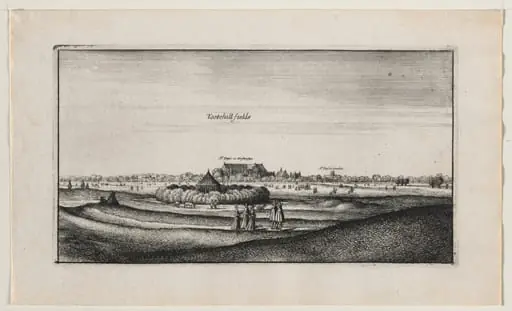 Tothill Fields
![View of Nuremberg from the East [left section], by Hanns Lautensack](https://artifactworldgallery.com/img/hanns-lautensack--view-of-nuremberg-from-the-east-left-section--53a897f84943df87-w320.webp) View of Nuremberg from the East [left section]
View of Nuremberg from the East [left section]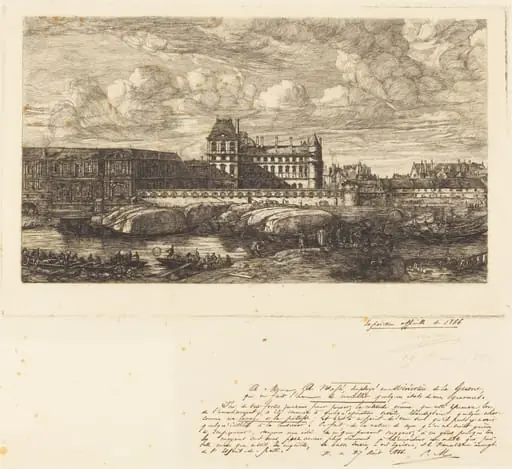 L'ancien Louvre d'après une peinture de Zeeman, 1651 (The Old Louvre, from a Painting by Zeeman, 1651)
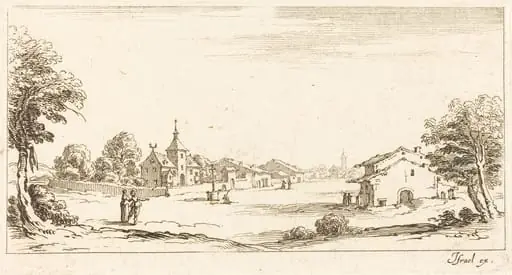 Landscape
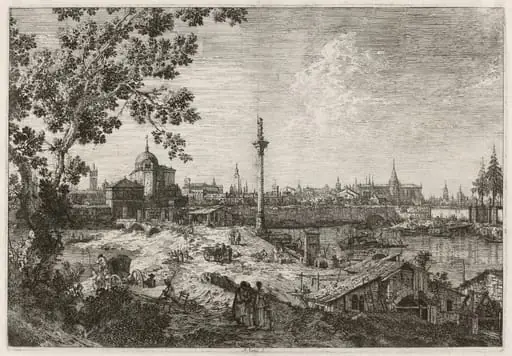 Imaginary View of Padua
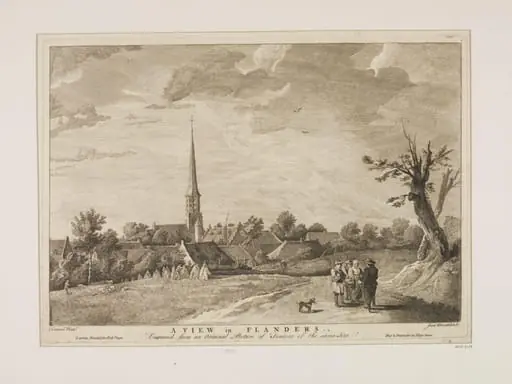 A View in Flanders
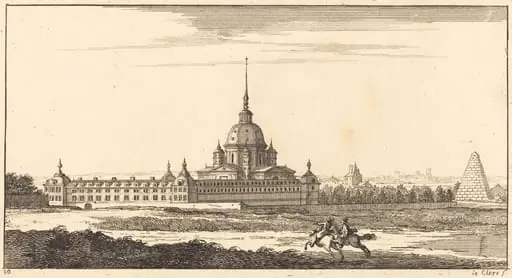 Landscape with Monastery
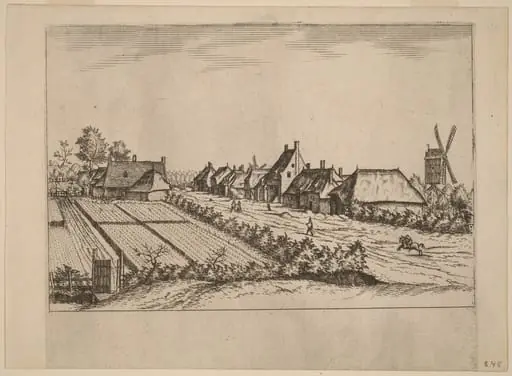 Fields and a Village Road with Post Mill
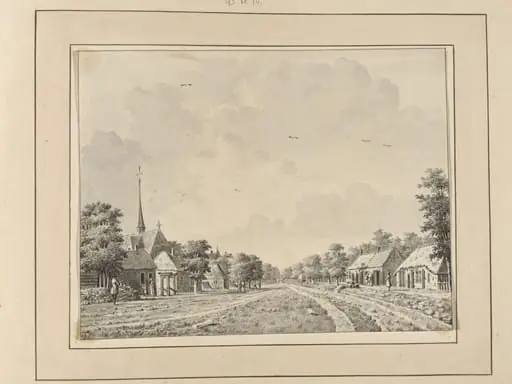 Untitled
 Place de Louis XV