Artwork
The Sermon of St. John the Baptist
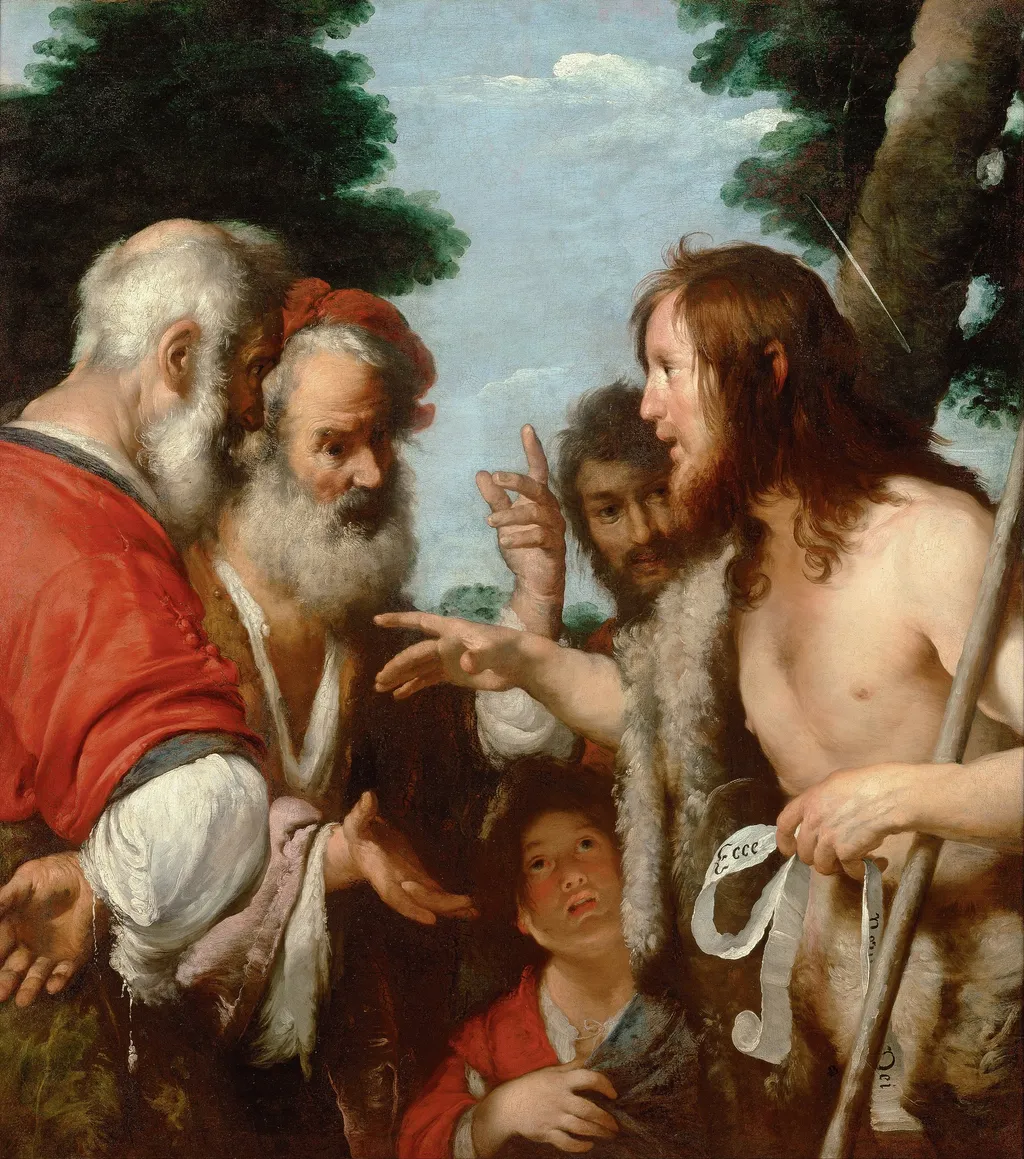
The Sermon of St. John the Baptist is an unspecified painting by the Early Baroque Italian artist Bernardo Strozzi. It dates from 1644 and is held in the collection of the Kunsthistorisches Museum.
About this work
Subject & Meaning
As the forerunner of Christ, he embodies themes of penitence, spiritual preparation, and the transition from the Old to the New Covenant.
The painting depicts St. John the Baptist delivering a sermon, a scene drawn from the New Testament tradition of the prophet-preacher who proclaimed repentance in the wilderness and heralded the coming of Christ. Strozzi focuses on the act of preaching itself, presenting the bearded saint as the central figure addressing an unseen audience.
The depiction of John the Baptist carries layered symbolism rooted in Christian iconography. As the forerunner of Christ, he embodies themes of penitence, spiritual preparation, and the transition from the Old to the New Covenant. His beard, noted as a depicted attribute, signals his ascetic life in the wilderness and his identity as an Old Testament-style prophet.
The sermon motif emphasizes the verbal proclamation of the Gospel, while the religious genre of the work situates the image within the Counter-Reformation tradition of using dramatic religious subjects to inspire devotion and moral reflection in viewers.
History & Provenance
The Sermon of St. John the Baptist is a religious painting created by Bernardo Strozzi in 1644. The work depicts John the Baptist and is currently held in the collection of the Kunsthistorisches Museum. While the specific commission details and the full chain of ownership prior to its museum acquisition are not detailed in the provided records, the creation date is firmly established as 1644. The painting measures 135 cm in height and 120 cm in width.
Legacy
The painting's impact is evident in its continued presence in major collections and scholarly discourse, particularly through its display at the Kunsthistorisches Museum where it remains part of the permanent holdings. Its representation of St. John the Baptist with a distinctive beard has been noted in art historical analyses of Baroque religious imagery, influencing interpretations of the saint's portrayal in later works. The artwork's provenance and location at the Kunsthistorisches Museum in Vienna have contributed to its recognition as a significant example of 17th-century Venetian religious painting.
Overview
Bernardo Strozzi’s The Sermon of St. John the Baptist (1644) is an oil painting that belongs to the early Italian Baroque. Executed by the Genoese artist who later worked in Venice, the work is part of the collection of the Kunsthistorisches Museum in Vienna.
Technique & Style
Strozzi employs a pronounced chiaroscuro, contrasting bright illumination on the principal figures with deeper shadows in the surrounding landscape. The handling of light creates a three‑dimensional effect, while the loose brushwork and warm palette reflect the Baroque interest in drama and movement.
Context
Created during a period when Venetian painters were adapting the dramatic vigor of Roman Baroque, the work illustrates how Strozzi merged his Genoese training with the luminous colourism of Venice, contributing to the development of a distinctly Venetian Baroque idiom.
Own this work as a print
Artist & collection
Artist
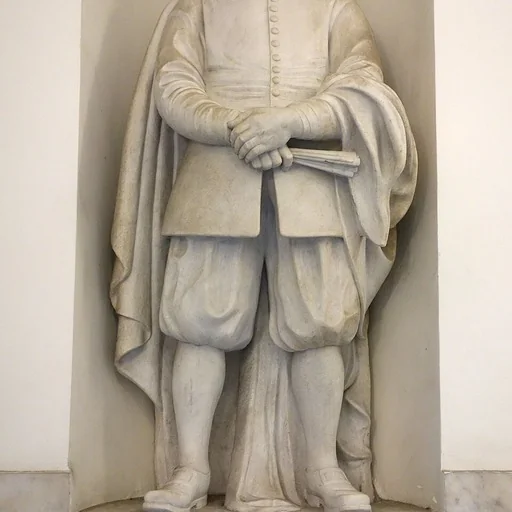
Bernardo Strozzi, named il Cappuccino and il Prete Genovese (c. 1581 – 2 August 1644), was an Italian Baroque artist who was a painter and engraver. A canvas and fresco artist, his wide subject range included history,…

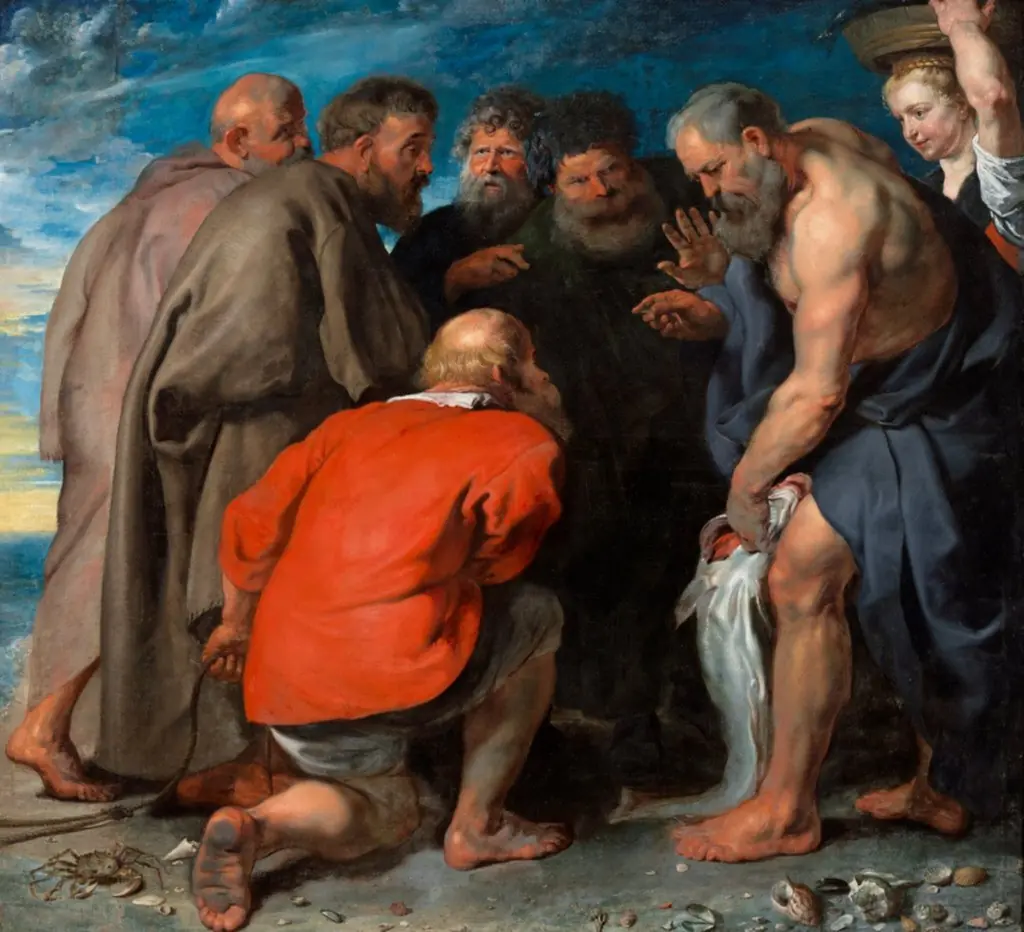 Saint Peter Finding the Tribute Money
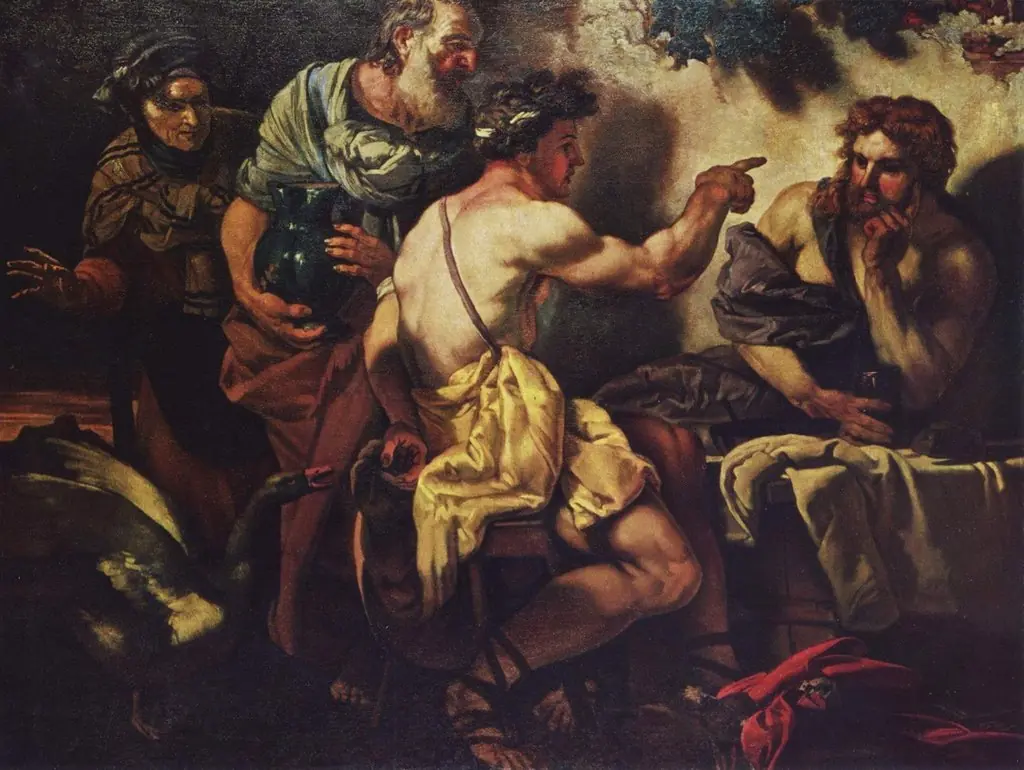 Jupiter and Mercury at Philemon and Baucis
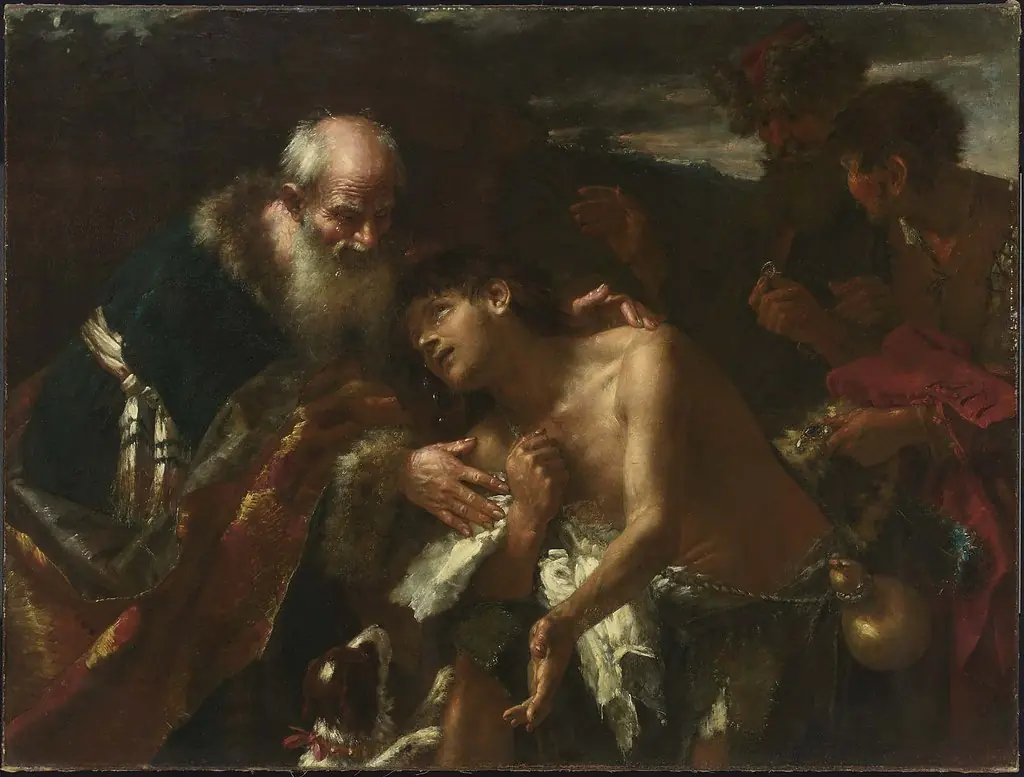 The Return of the Prodigal Son
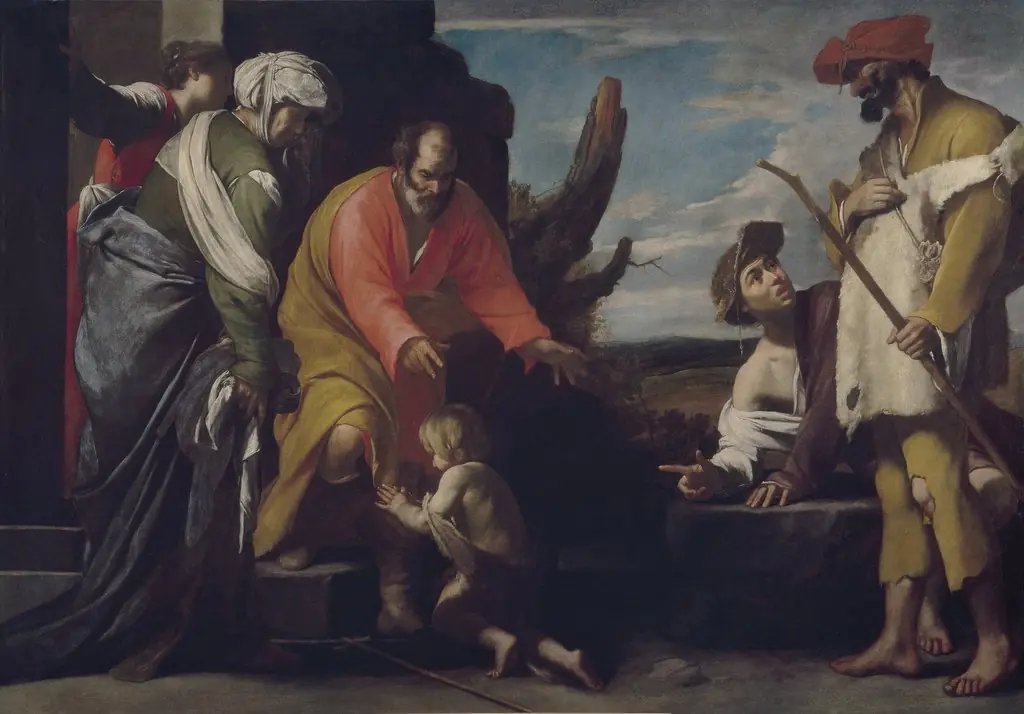 Saint John the Baptist says goodbye to his Parents
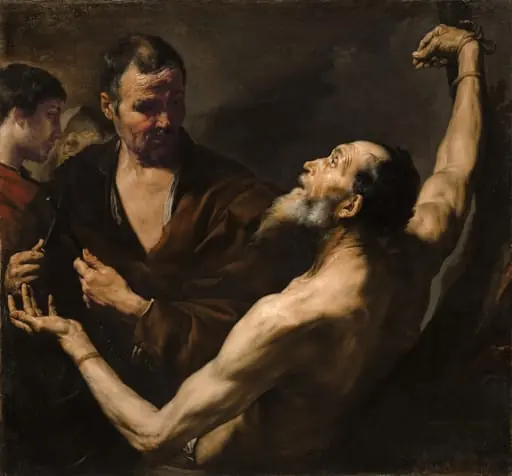 The Martyrdom of Saint Bartholomew
 Moses and the Messengers from Canaan
 Moses before the Burning Bush
 Meleager and Atalanta
 Saint John Preaching in the Wilderness
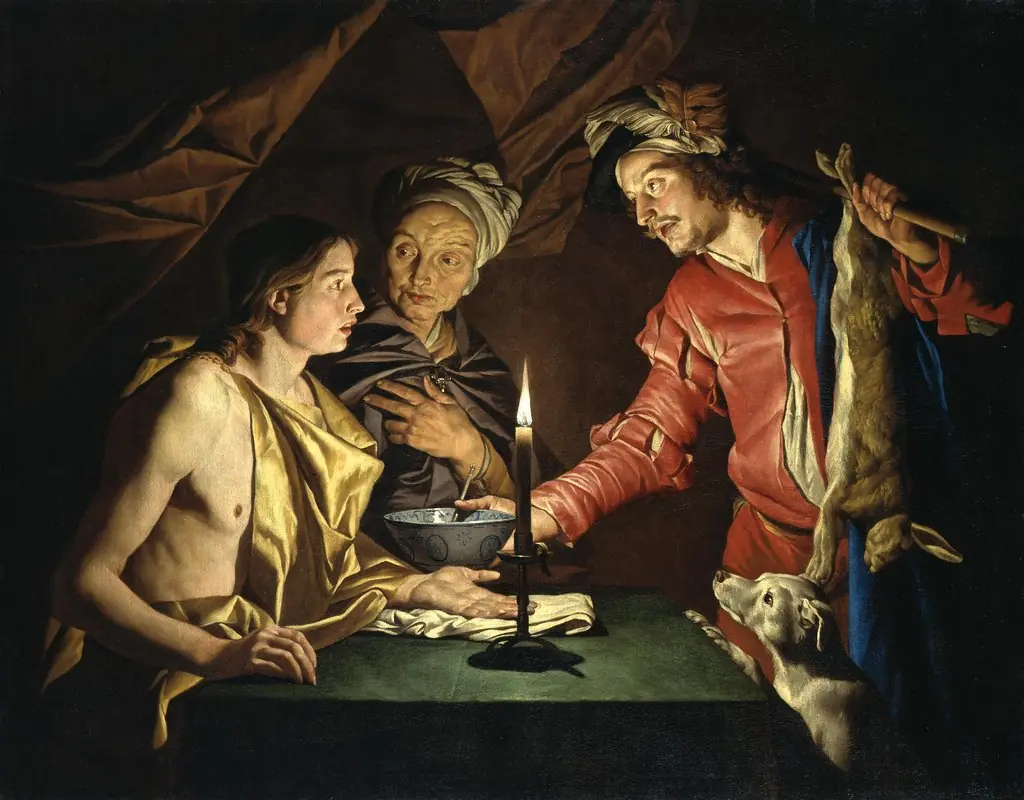 Esau, returning hungry from the hunt, sells his first birthright to Jacob for a pottage of lentils(Genesis 25:31)
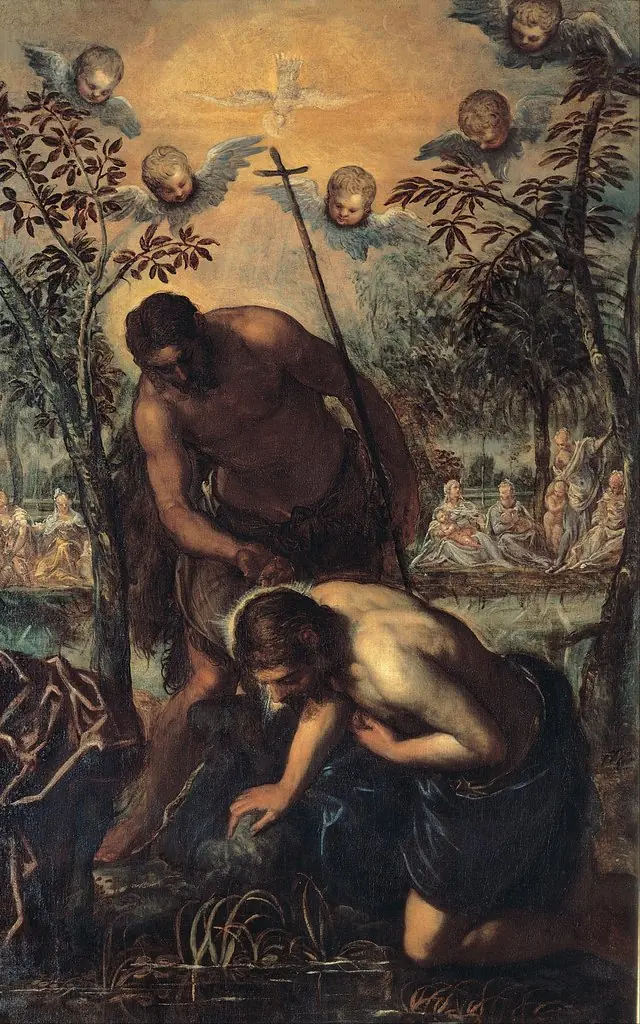 Baptism of Christ
- John the Baptist Preaching