Artwork
Untitled
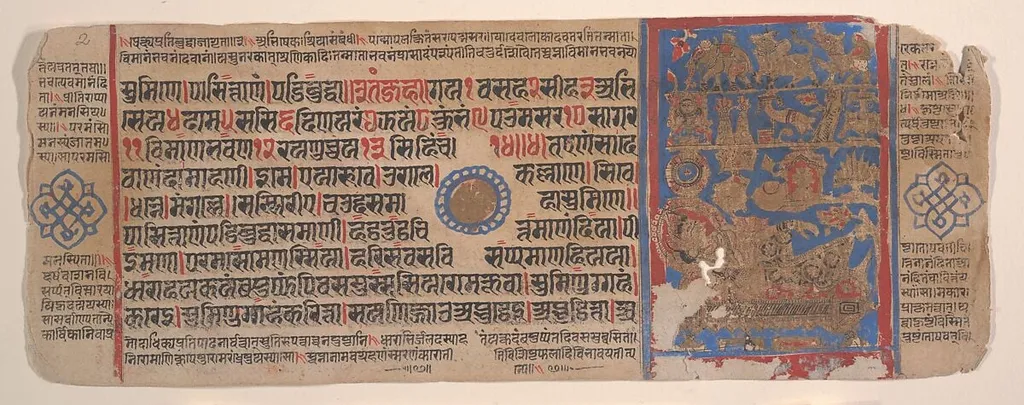
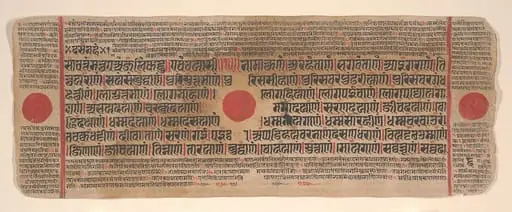
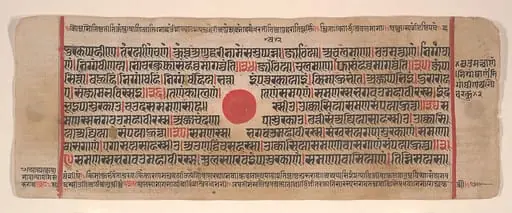
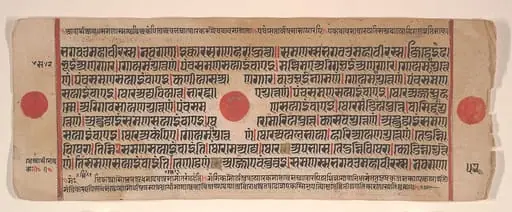
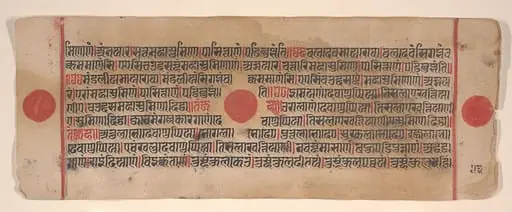
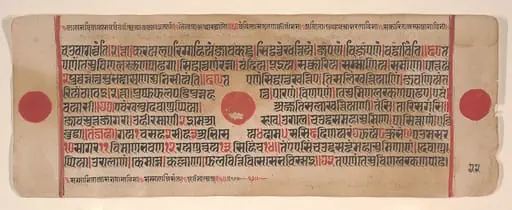
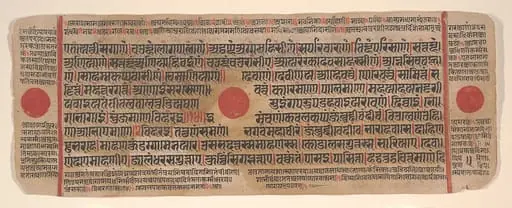
Untitled is a watercolor painting by the Indian Miniature artist Bhadrabahu. It dates from 1449 and is held in the collection of the Metropolitan Museum of Art.
About this work
Technique & Style
The handling of the medium suggests a devotional intent, with the integration of gold enhancing the spiritual significance of the composition.
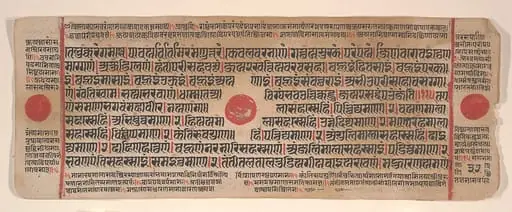
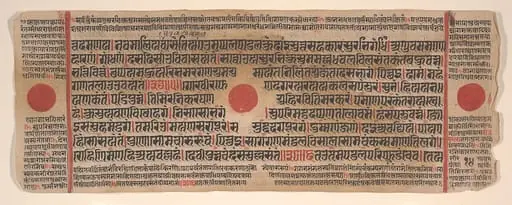
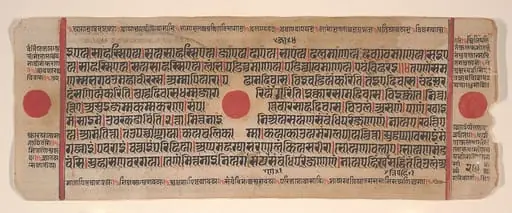
Created in 1449 in India, this religious painting by Bhadrabahu is executed on a paper support using ink, opaque watercolor, and gold. The work measures 11.4 cm in height and 28.9 cm in width, presenting a horizontal format typical of the genre. The artist employs a combination of pigment and metallic leaf to depict Jainism, utilizing the reflective quality of gold alongside opaque watercolors to define the figures and narrative elements.
The handling of the medium suggests a devotional intent, with the integration of gold enhancing the spiritual significance of the composition. The piece remains part of the Metropolitan Museum of Art's collection, preserving the original materials and stylistic approach of mid-15th-century Indian manuscript illumination.
History & Provenance
The work is attributed to Bhadrabahu and dated 1449, aligning with the artist’s known period of activity. It entered the collection of the Metropolitan Museum of Art as accession 57.51.38.2, where it is catalogued among religious paintings depicting Jain themes. The small horizontal format and materials, ink, opaque watercolor, and gold on paper, support its placement within 15th-century western Indian Jain manuscript traditions.
The painting Untitled by Bhadrabahu, dated to 1449, is held in the collection of the Metropolitan Museum of Art in New York. Its official accession number is 57.51.38.2. The work, executed in ink, opaque watercolor, and gold on paper, measures 11.4 cm in height and 28.9 cm in width.
While the sources confirm its current location and cataloging details within the museum's holdings, no specific exhibition history, past loan records, or display dates are provided in the available documentation.
Overview
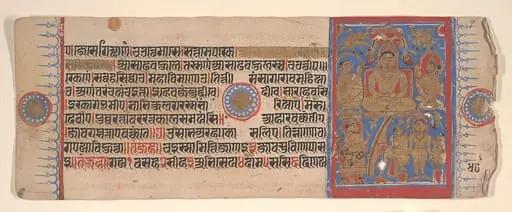
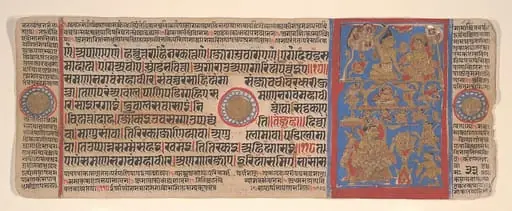
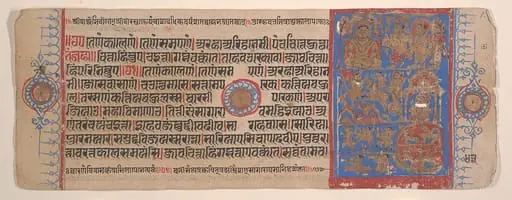
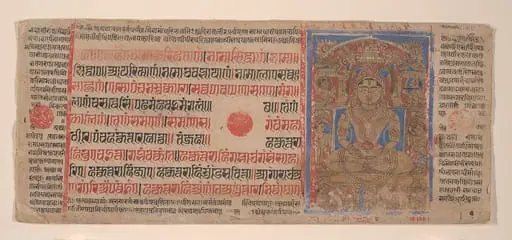
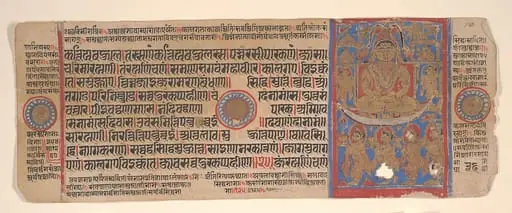
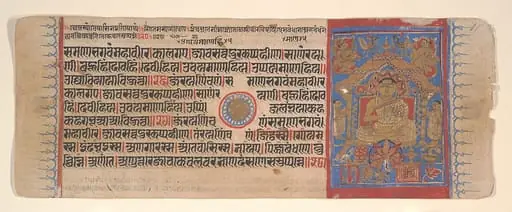
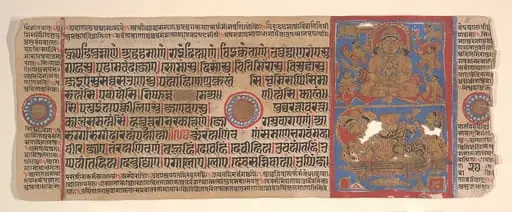
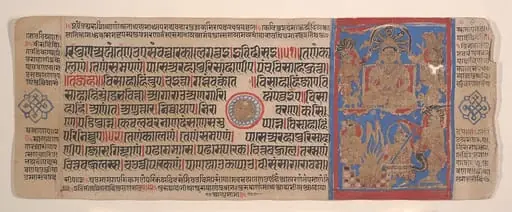
This untitled painting, created by Bhadrabahu in 1449, employs ink, opaque watercolor, and gold on paper. The work is a religious depiction central to Jainism, originating from a manuscript in Gujarat, India. It portrays a seated monk, symbolizing the spiritual teachings and practices inherent to the faith. The use of gold highlights the sacred nature of the subject matter.
Subject & Meaning
The artwork centers on a Jain monk, depicted in a cross-legged posture on a red cushion, holding a sacred book. This imagery underscores the core tenets of Jainism, a religion emphasizing non-violence and meticulous living. The floating gold dots surrounding the figure are not merely decorative; they visually convey the profound sanctity and spiritual significance attributed to the monk's teachings and the faith itself.
Context
This painting originated as part of a Jain manuscript produced in Gujarat, a region in western India historically significant for its rich tradition of Jain art and scholarship. Such manuscripts served as important vehicles for disseminating religious texts and teachings, often adorned with intricate illustrations that visually reinforced the spiritual narratives and philosophical principles of Jainism for devotees.
Artist & collection