Artwork
Untitled
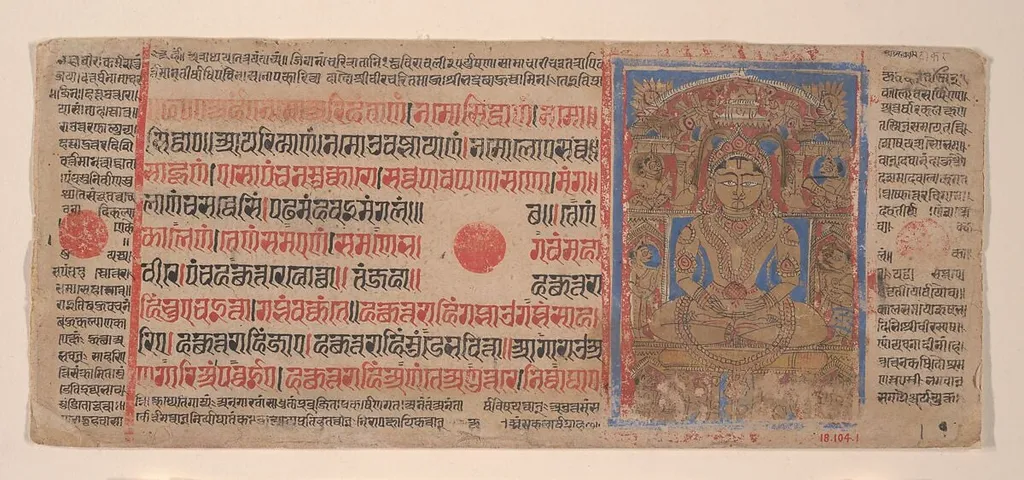
Untitled is a watercolor painting. It dates from 1461 and is held in the collection of the Metropolitan Museum of Art.
About this work
Technique & Style
The work is executed in ink, opaque watercolor, and gold on paper, a combination typical of refined manuscript illumination and religious painting traditions.
The work is executed in ink, opaque watercolor, and gold on paper, a combination typical of refined manuscript illumination and religious painting traditions. The support measures 11.1 cm in height and 25.7 cm in width, suggesting a small-scale, intimate format likely intended for private devotion or inclusion in a codex. The use of gold alongside opaque watercolor indicates a luxurious, carefully finished surface, while the ink underdrawing would have provided precise linear definition.
Stylistically, the work belongs to the religious genre, produced in India in 1461, reflecting the period's conventions for devotional imagery.
History & Provenance
The painting is dated to 1461, with a specific inception date of 20 October 1461. It was created in India. The work is classified as a religious painting, executed in ink, opaque watercolor, and gold on paper. The Metropolitan Museum of Art holds the painting in its collection.
The work is held in the collection of the Metropolitan Museum of Art, where it is recorded as part of the museum's holdings of paintings. Made in India in 1461, it is catalogued as an anonymous religious painting executed in ink, opaque watercolor, and gold on paper. The Wikidata record for the work confirms its placement at the Metropolitan Museum of Art and its religious genre classification.
No specific inventory or accession number is documented in the available sources, and no exhibition history is recorded.
Overview
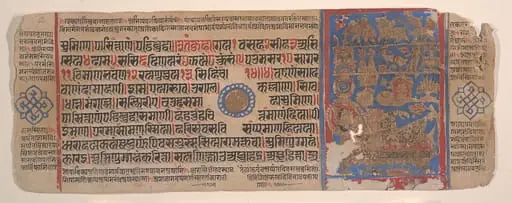
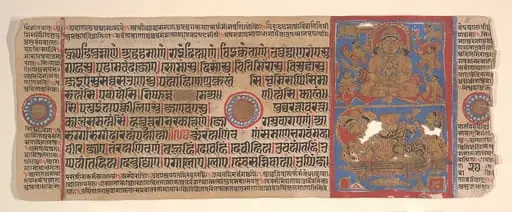
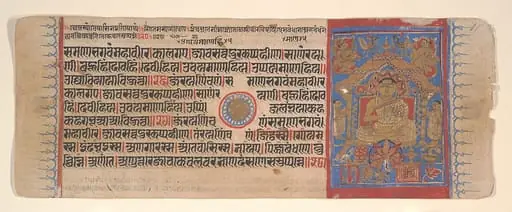
The work, titled Untitled, is executed on paper with a combination of ink, opaque watercolor, and gold leaf. A seated figure, depicted in a cross‑legged posture, occupies the central space, framed by a vivid border of blue and red. Intricate gold detailing accentuates the figure, while surrounding text appears in black and red ink along the left margin.
Subject & Meaning
The central figure’s meditative pose suggests a contemplative or spiritual theme, though no explicit narrative is provided. The surrounding border and decorative gold work create a sense of reverence, while the bilingual‑looking inscription, rendered in a non‑English script, adds an element of mystery, hinting at cultural or religious significance that remains unidentified.
Context
Although the piece is linked to the Renaissance movement, its use of gold and script suggests influences from Eastern manuscript traditions as well. The combination of media and the presence of non‑Latin text indicate a cross‑cultural exchange typical of late medieval and early modern artistic practices, reflecting a period of artistic synthesis.
Artist & collection

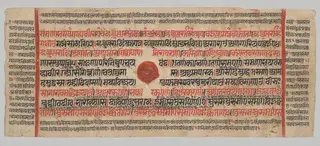
- Text, Folio 2 (recto), from a Kalpa-sutra
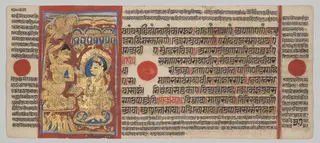 Mahavira's Initiation Tonsure, Folio 37 (verso), from a Kalpa-sutra
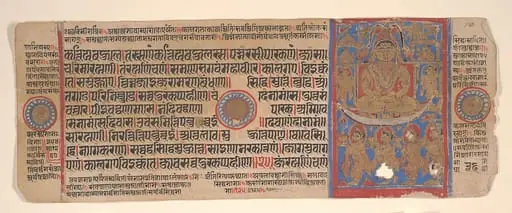 Untitled
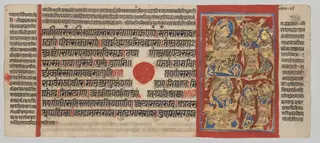 Queen Trishala's Grief and Happiness, Folio 29 (recto), from a Kalpa-sutra
 Untitled
 Untitled
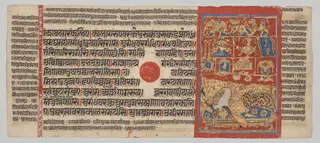 The Fourteen Dreams of Queen Trishala, folio 14 (recto), from a Kalpa-sutra
 Untitled
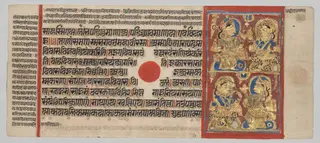 Vigil on the Sixth Night After Mahavira's Birth, Folio 33 (recto), from a Kalpa-sutra
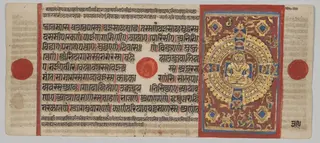 Mahavira's Omniscience and First Teaching (Samavasarana), Folio 39 (verso), from a Kalpa-sutra