Artwork
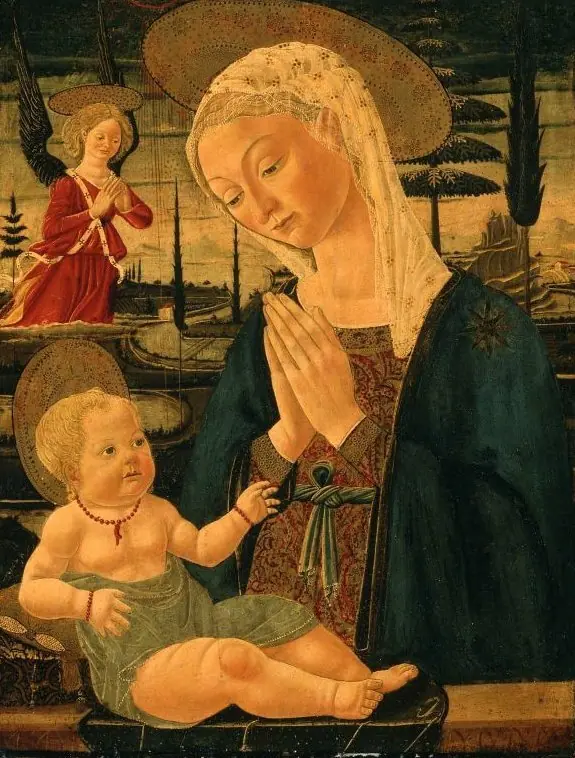
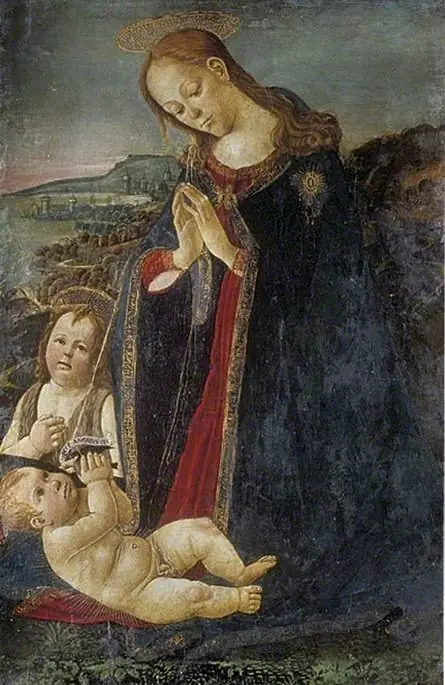
The Virgin Adoring the Child

The Virgin Adoring the Child is an unspecified painting by the Sienese School artist Biagio d'Antonio. It is held in the collection of the National Gallery of Ireland.
About this work
Overview
Biagio d'Antonio’s Virgin Adoring the Child, painted around 1482, is an oil work now in the collection of the National Gallery of Ireland. The composition centers on a kneeling Virgin Mary, clad in a blue mantle over a red garment, and the infant Christ, nude on a blue drapery, set against a muted, rocky landscape.
Subject & Meaning
The painting presents a moment of intimate devotion: Mary’s clasped hands and reverent gaze convey her adoration of the newborn Jesus, who returns the sentiment with a gentle, upward look. The tender interaction underscores themes of maternal love and divine incarnation common in late‑15th‑century devotional imagery.
Technique & Style
Biagio employs chiaroscuro to model the figures, using subtle contrasts of light and shadow that give the bodies a palpable volume. The cool blues of the garments and background are balanced by the warm reds of Mary’s underdress, while the distant rocky terrain and faint architectural hints create a sense of depth without distracting from the central pair.
History & Provenance
Created in the early 1480s, the work entered the National Gallery of Ireland’s holdings in the 20th century, though earlier ownership records are sparse. Its attribution to Biagio d’Antonio rests on stylistic parallels with his documented works from the Florentine school of the period.
Context
The painting reflects the devotional trends of the Italian Renaissance, where intimate portrayals of the Virgin and Child were intended for private contemplation. Biagio’s treatment aligns with contemporary Florentine approaches to naturalism and emotional expression, situating the work within the broader movement toward humanizing sacred subjects.
Artist & collection