Artwork
Behemoth and Leviathan
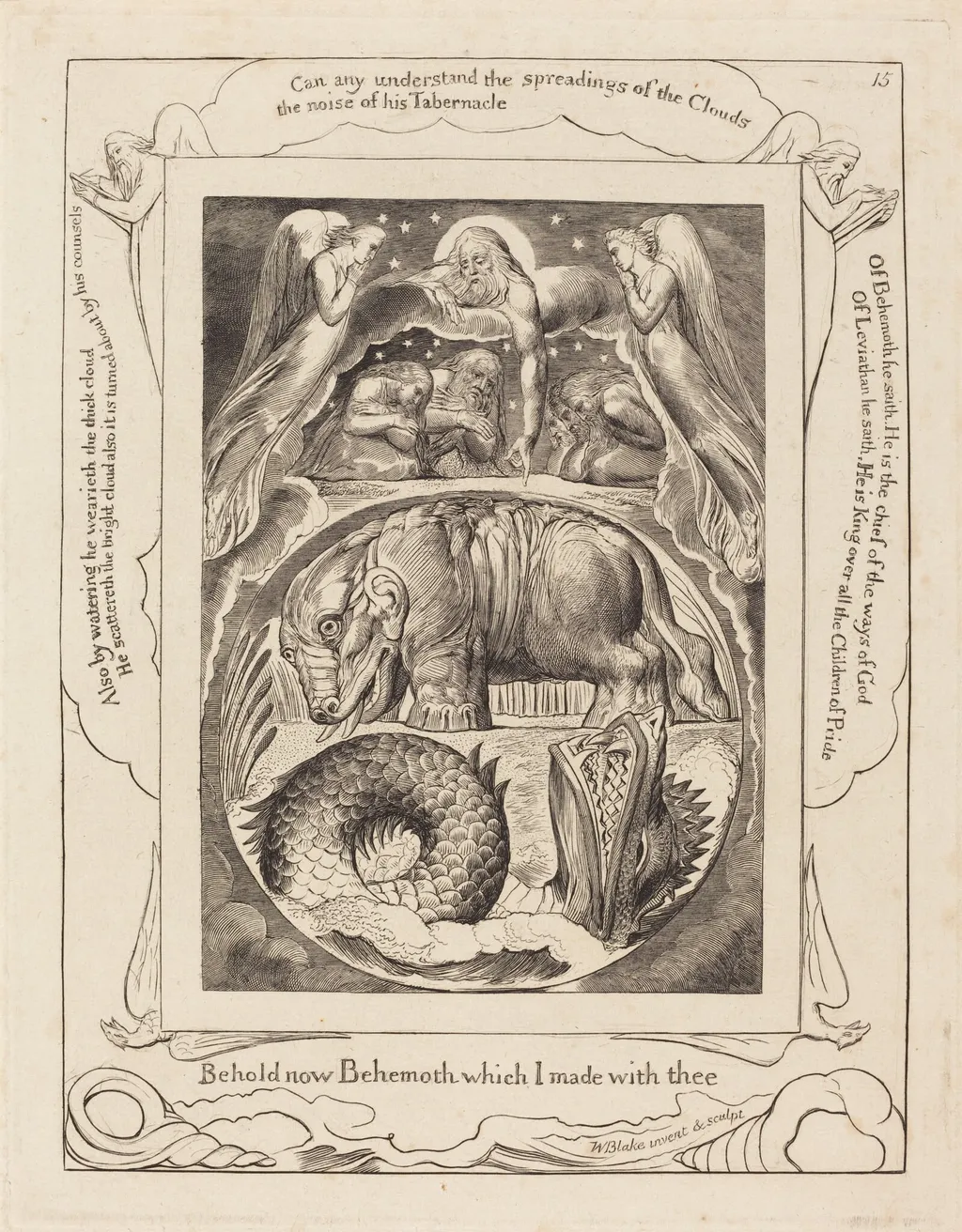
Behemoth and Leviathan is an ink print by the Romanticist artist William Blake. It dates from 1825 and is held in the collection of the National Gallery of Art.
About this work
Overview
The composition draws directly on biblical descriptions, positioning the piece within Blake’s larger body of visionary printmaking.
Created in 1825, Behemoth and Leviathan is an engraving by the English poet‑artist William Blake. Executed in his London studio, the work presents a dramatic tableau in which two colossal beasts dominate a landscape and a sea, while human figures and winged beings observe from above. The composition draws directly on biblical descriptions, positioning the piece within Blake’s larger body of visionary printmaking.
Subject & Meaning
The print juxtaposes the terrestrial monster, rendered with scaly hide and horned head, against a marine leviathan whose open jaws and spiked tail suggest ferocity. Between them, angels and mortals gaze upward, implying a cosmic audience to the creatures’ display. By invoking the biblical Behemoth and Leviathan, Blake engages themes of divine power, chaos, and the prophetic imagination that permeate his poetic and visual oeuvre.
Technique & Style
Blake employed the traditional copper‑plate engraving method, incising fine lines that build subtle gradations of shadow and texture. The intricate hatching creates a sense of depth, especially in the beasts’ musculature and the surrounding clouds. Textual elements from Scripture are integrated into the border, merging image and word, a hallmark of Blake’s hybrid approach to illustration and poetry.
History & Provenance
Although Blake worked largely outside the commercial art market of his day, the 1825 engraving was produced in limited numbers for private circulation. Surviving impressions have passed through several collections, eventually entering public institutions where they are studied as exemplars of Romantic print culture and Blake’s self‑published oeuvre.
Context
The work emerges during a period when Blake was intensifying his exploration of biblical myth and personal revelation. It reflects the broader Romantic fascination with the sublime and the monstrous, while also resonating with contemporary debates about the relationship between humanity, nature, and the divine.
Legacy
Behemoth and Leviathan continues to be cited in scholarship on Blake’s visual language, illustrating his capacity to fuse literary sources with original iconography. The engraving’s complex interplay of text, symbolism, and technical skill informs later studies of printmaking as a vehicle for poetic expression.
Own this work as a print
Artist & collection
Artist
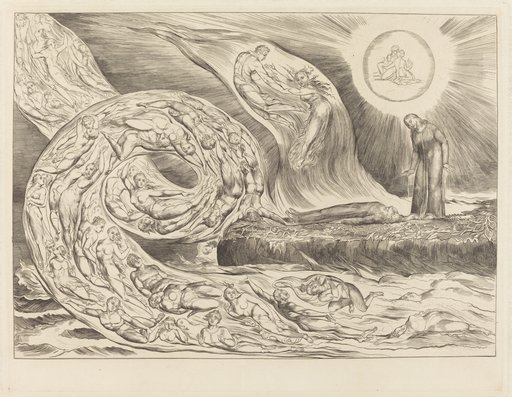
William Blake (28 November 1757 – 12 August 1827) was an English poet, painter and printmaker.

 Job's Evil Dreams
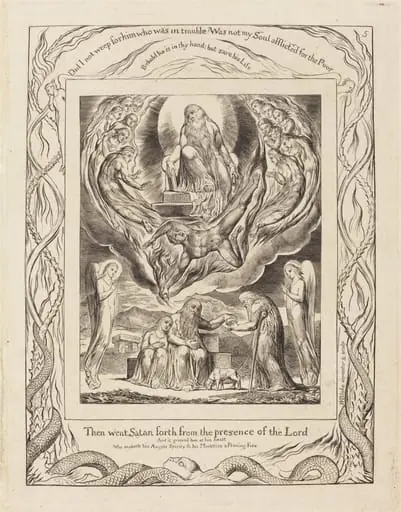 Satan Going Forth from the Presence of the Lord
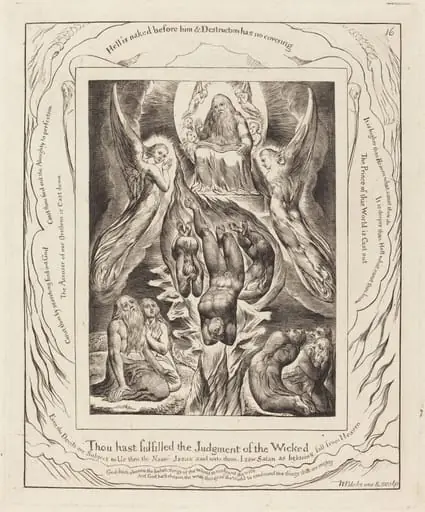 The Fall of Satan
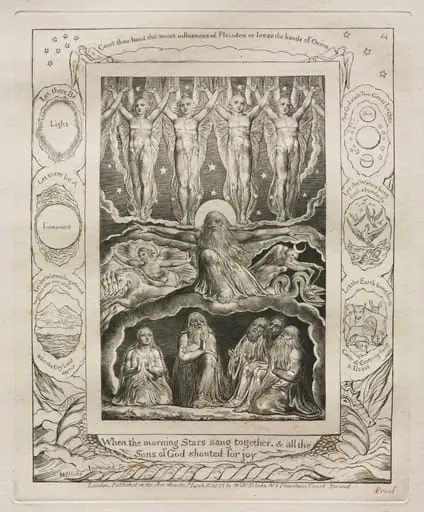 The Book of Job: Pl. 14, When the morning Stars sang together, and all the
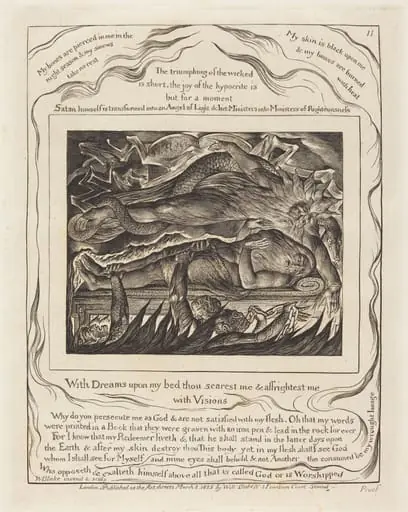 Job's Evil Dreams
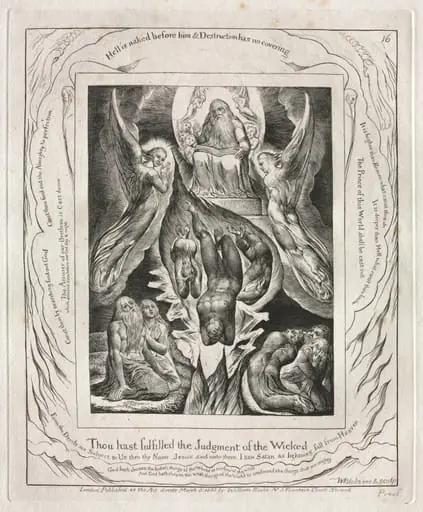 The Book of Job: Pl. 16, Thou hast fulfilled the Judgment of the Wicked
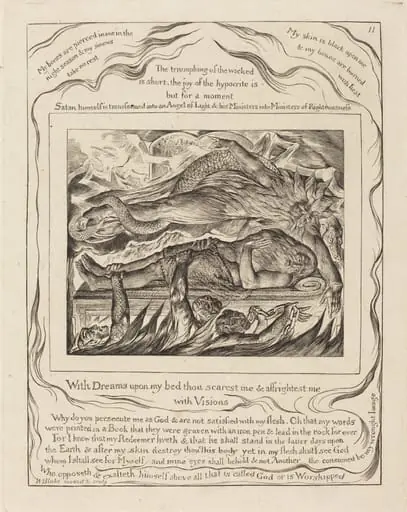
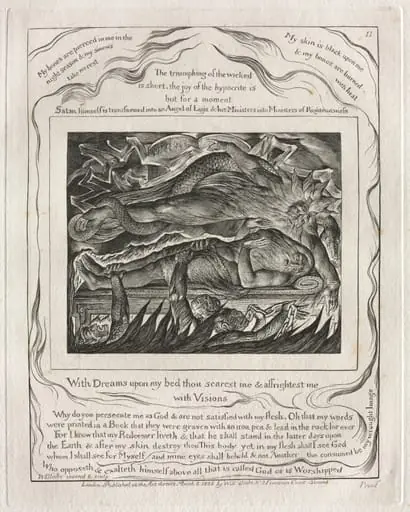 The Book of Job: Pl. 11, With Dreams upon my bed thou scarest me and affrightest me
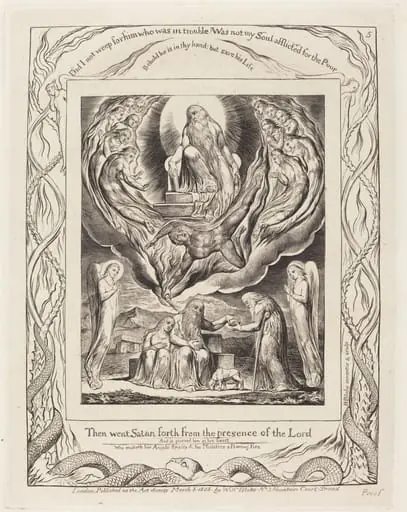 Satan Going Forth from the Presence of the Lord
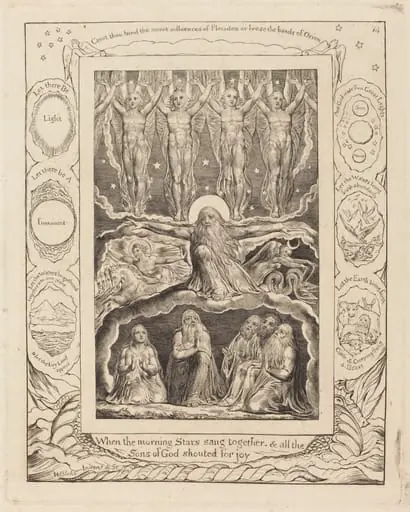 The Creation
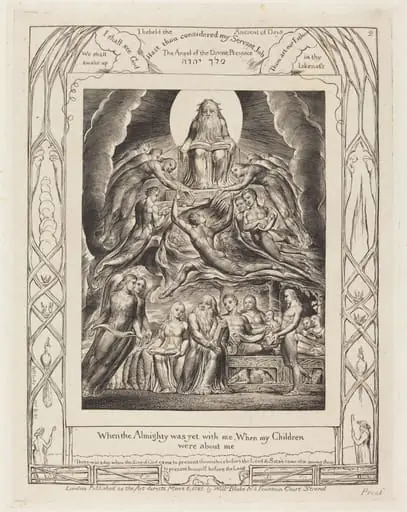 Satan Before the Throne of God